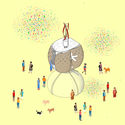
The Vitra Design Museum presents 'Transform! Designing the Future of Energy', an exhibition running from March 23rd to September 1st, 2024. As energy stands as the cornerstone of modern society, the subject encompasses political, social, and environmental dimensions. The exhibition aims to highlight design’s role in the effort to transform the energy sector into a more efficient, reliable, and sustainable one, relying more on renewable sources, smart mobility systems, and moving towards self-sufficient cities.
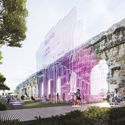
Solar Facades on Bornholm Hospital. Image Courtesy of SolarLab
Environmental degradation has shed light on the need for new sources of energy. A shift in energy sources calls for innovative means of storing energy. For centuries, buildings have proven able to store people, objects, and systems, inviting a conversation about their untapped potential to efficiently store large amounts of energy. In this new era, can buildings go beyond being structures of function to potential reservoirs of power?
The world has just witnessed the hottest months in recorded history, and the outlook is far from optimistic. Rising temperatures are driving greater cooling demands, threatening to trigger a vicious cycle of higher electricity use and carbon emissions. In a planet simultaneously facing unprecedented urbanization and a climate crisis, the intersection of building energy efficiency and cooling technologies has never been more crucial.
Last summer, Spain promoted cleaner transportation by offering free seasonal tickets for suburban and regional trains, which translated into roughly 48 million journeys per month. The initiative hoped to help citizens reduce fuel consumption and reduce the cost of living during the economic uncertainties and rising energy prices. In the summer of 2022, a 30% discount for municipal public transport was announced, with local governments in places like Catalonia topping up to a 60% discount. The program ran between the 1st of September and the 31st of December of last year.
Energy efficiency wall renovation for energy saving. Exterior house wall heat insulation with mineral wool, building under construction. Image via Shutterstock / brizmaker
The buildings and construction sectors are key players in the fight against climate change –Combined, they are responsible for 30% of global final energy consumption and 27% of total energy sector CO2 emissions. Further, energy demand from buildings and construction continues to rise, driven by improved access to energy in developing countries, growing need for air conditioning, greater ownership and use of energy-consuming appliances, and a rapid growth in global floor area. Without targeted policy actions, the energy used in buildings could increase up to around 70% in 2050.
When capital cities like Paris and Berlin resolved to switch off lighting for public buildings and landmarks in July 2022 in order to save energy in the context of the Russian invasion of Ukraine, the cities created a ripple effect throughout central Europe. Images of dark iconic landmarks swept through the media and allowed politicians a momentary act of environmental demonstration. However, designers have started to question the sustainability of this ad hoc step. Seen from a broader perspective the impression arises that this alleged radical action has been part of a rather media-savvy campaign with small effect in cities at night. Further steps are necessary to reassess urban lighting that may have a major impact on energy saving and sustainability.
While approaching Wainscott Beach on Long Island’s South Fork in early December, one could see the most tangible aspect of offshore wind’s New York progress even before hearing the crash of waves: three pillars, each about as tall as the Statue of Liberty, jutting up from the ocean. They were the legs of the Jill, a liftboat from the Gulf of Mexico stationed about a third of a mile off the coast of Long Island’s South Fork.
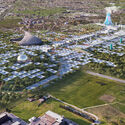
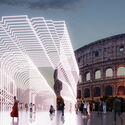
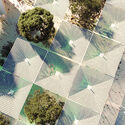
CRA-Carlo Ratti Associati, together with architect Italo Rota and urbanist Richard Burdett, unveiled the master plan for Rome’s bid to host the World Expo in 2030. The project proposes a joint effort from every participating country to contribute to a solar farm that could power the exhibition site and help decarbonize the surrounding neighborhoods. The Expo is proposed to take place in Tor Vergata, a vast area in Rome and home to the eponymous university and a densely inhabited residential district. All the pavilions are designed to be fully reusable, as the area is proposed to be transformed into an innovation district after the event in the hope of revitalizing the somewhat neglected neighborhood. The master plan was developed with several partners, including ARUP for sustainability, infrastructure, and costing, LAND for landscape design, and Systematica for mobility strategy.
The total energy demand from buildings has risen dramatically in recent years. Driven by improved access in developing countries, greater ownership of energy-consuming devices and increasing urban densities, today it accounts for over one-third of global energy consumption and nearly 15% of direct CO2 emissions. As the climate crisis aggravates and its consequences are more visible than ever, the architecture and construction industry must respond accordingly. It must take responsibility for its environmental impact and give priority to reducing energy consumption, whether through design decisions, construction techniques or innovative products. The key lies, however, in not sacrificing aesthetics and comfort in the process.
With buildings glazed on all sides and very brightly as well as monotonously lit rooms, it's no surprise that we long for indoor and outdoor retreats that are less bright. Places with shade from glaring sun, dimmed rooms and exciting contrasts act on the eyes like a welcome oasis. High energy consumption and globally increasing light pollution show how acute the problem of too much light is and the alarming rate of contribution toward climate change. For a better future, it is imperative to explore ways in which we can design and focus on using darkness.
Early last week, the European Commission and the Fundació Mies van der Rohe announced the 40 shortlisted projects of the EU Mies Award, a prize that commends excellence in architecture, highlighting its contribution to sustainable development. In this context, and two years after the European Parliament voted to support the Green Deal, we review the steps taken by the EU in 2021 towards achieving its sustainability goals and shaping a resilient built environment.
Buildings contribute nearly 40% of greenhouse gases to the atmosphere, so the push is on to “get to zero” on many fronts. What happens when ambitious goals like zero energy meet a conventional building industry that’s structured on repetition and cost, in a market that struggles to keep up with massive demand? This is often—too often—our challenge.
The news about real action on climate change tends to track toward the gloomy. It is easy to despair, given the severity of the problem and the time left to properly address it. But there is progress being made in the built environment—just not nearly fast enough to offset emissions elsewhere. In recent years the sector has added billions of square feet of new buildings, but seen energy consumption for the entire sector actually decline. A good chunk of the credit for that accomplishment can go to architect Edward Mazria and his dogged advocacy organization, Architecture2030. Mazria and his team, along with collaborators all over the world, keep doing the unglamorous work of revising building codes, working with mayors, governors, elected officials in Washington (and officials in China), forging new alliances, all while deftly working around the climate obstructionists currently occupying the White House. Recently I talked to Mazria, who spoke from his home in New Mexico, about his take on where we stand. Some of the news, alas, is pretty good.
With the amount of information and technology we currently have, whether from academic research or from the manufacturers of construction products themselves, there is very little room for empiricism and experimentation when we design on the most diverse scales. Even worse is when design specification misconceptions can pose huge costs and headaches. However, long before construction and occupancy of the building, it is possible to clearly understand how the construction will function thermally, its photovoltaic power generation capacity, and even how much power will be required to cool and/or heat it. There are software, tools and applications that allow you to quantify all these design decisions to avoid errors, extra costs, unnecessary waste generation, and ensure the efficiency of all materials applied.
In the mid-aughts, after acquiring an abandoned tech campus in Mountain View, California, Google tapped Clive Wilkinson Architects to fashion a new corporate campus—Googleplex 1.0—out of it.Courtesy Benny Chan/Fotoworks
The energy already embodied in the built environment is a precious unnatural resource. It’s time to start treating it like one.
At its Googleplex headquarters in Mountain View, California, Google has what is arguably one of the most sustainable corporate campuses in America. It has a new million-square-foot complex on a 42-acre landscape, featuring monumental futuristic buildings from Danish architect Bjarke Ingels and British designer Thomas Heatherwick. But these places are not the same place. Although the new campus has no doubt been developed with a sense of environmental duty, the radically sustainable campus is the one next door, which Google has been using since 2003. Foreseeably—and fortunately—they’ll go on using it. Built in 1994, it was once the corporate home of an earlier Palo Alto technology firm, Silicon Graphics.
https://www.archdaily.com/932528/a-new-idea-in-architecture-no-new-buildingsThomas de Monchaux
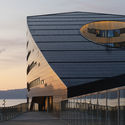
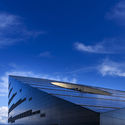
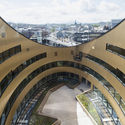
Located in Trondheim, Norway, Powerhouse Brattørkaia, the world’s northernmost energy-positive building, designed by Snøhetta challenges the traditional notions of construction and puts in place new standards for buildings that produce more energy than they consume.
The 2°C Symposium is an opportunity to learn essential technologies, strategies and tools that address climate change at a critical time for our collective future.
In support of World Toilet Day on November 19, SPARK Architects launched their prototype for a 3D printed toilet module titled, "Big Arse Toilet" alongside a slogan stating that "Sparks gives a sh*t." Though the pun-filled humor is definitely attention-grabbing, the project tackles serious issues of hygiene and sanitation as part of the UN initiative to eliminate open defecation by 2025. With the perpetuating cycle of malnutrition, disease, and poverty, poor sanitation is the leading cause in nearly a third of the deaths in low- and middle-income regions in several countries such as India.
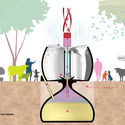
Easily transportable, the toilet module converts human waste into biogas into electricity using a micro combined heat and power (CHP) unit. Essentially producing "free" energy, SPARK's proposal combats the issue of open defecation and uses the abundant natural waste in remote communities in Indian villages where there is low accessibility to electricity.







.jpg?1579877914)


.jpg?1567677328 "© Synlig.no")