Former ArchDaily's Managing Editor. BA in Architecture from Newcastle University, and interested in how overlooked elements of architectural culture —from the media to competitions to procurement processes can alter the designs we end up with.
The RIBA's recent report "City Health Check: How Design Can Save Lives and Money" looks at the relationship between city planning and public health, surveying the UK's 9 largest cities in a bid to improve public health and thereby save money for the National Health Service. The report includes useful information for city planners, such as the idea that in general, it is quality and not quantity of public space that is the biggest factor when it comes to encouraging people to walk instead of taking transport.
Read on for more of the results of the report - and analysis of these results - after the break
In this intriguing and often insightful two-part interview with Section D, Monocle's weekly design radio show, Sir Terry Farrell discusses at length the findings of his review into UK architecture as well as his views on the current state of architecture in the UK and the world. Looking to the future of the profession, Farrell says he sees architects as one of the key contributors to the world's social future: "We live in what we've built, we're an urban-building creature... I call it the urbi-cultural revolution."
Read more about the interview, and listen to both parts of the interview, after the break
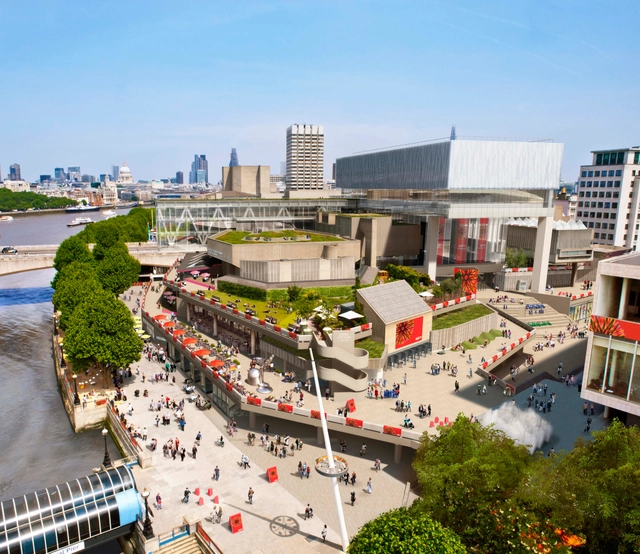
The Southbank Centre has announced that it is delaying its planning applicationonce again.The decision has been prompted by comments from London Mayor Boris Johnson, who last month opined that the skate park should remain in its current location. An official statement from the Southbank Centre said: "it is far from clear how the scheme might now proceed without exposing Southbank Centre to unacceptable levels of financial risk but it has committed to a final three-month search."
However, despite the three-month extension, Chairman Rick Haythornthwaite has all but admitted defeat, saying "we are under no illusions [...] we don’t yet see how we will make it work."
In an article for the New York Times, Michael Kimmelman gets to the bottom of an unusual local dispute: a McDonald's in Queens, New York is kicking out groups of elderly Koreans who are out-staying their 20-minute welcome (and who have no access to community spaces nearby). The story raises an important question: how can we design our cities with elder populations in mind (a generation on track to out-number all others in the next few years)? You can read this poignant tale in full here.
When it comes to designing schools, security is always a big issue. This fact was thrown into sharp focus in December of 2012 after the Sandy Hook Tragedy in Newtown, Connecticut. Last year, we featured an article discussing how design can deal with tragedy - both in order to prevent it and how to deal with the aftermath. Now, a report by Building Design and Construction investigates the measures that could prevent dangerous incidents. While they admit "it’s impossible to stop an armed madman who is hell-bent on killing", the report has a number of simple and sensible recommendations which aid in preventing and responding to a threat. You can read the report here.
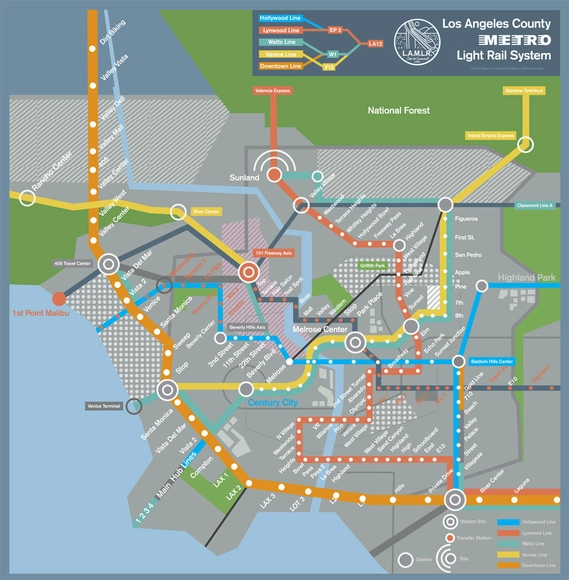
In his review of Spike Jonze's movie "Her", LA Times architecture critic Christopher Hawthorne explains a rather comforting aspect of the movie: instead of the dystopia that usually characterizes films set in the future, "Her" is set in a future version of LA which is more dense, has better public transport (with a subway map with a story all of its own) and has managed to overcome its dependence on the car. No wonder this film has touched a chord with architects and urban designers. Read the full review here.
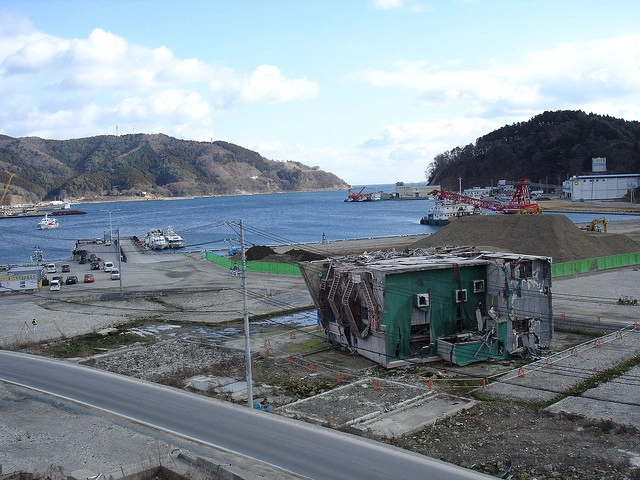
Almost 3 years after the earthquake and tsunami that devastated the North-East coastline of Japan, this article on Arcspace examines the current - unsettling - state of rebuilding in the Tōhoku region. According to former residents and architects working for Architecture for Humanity, plans neither address what the people want nor sufficiently provide protection in the event of a similar disaster. Furthermore, with Japan now preparing for the 2020 Olympics, it seems the Tōhoku region is being neglected. Read more on the story here.
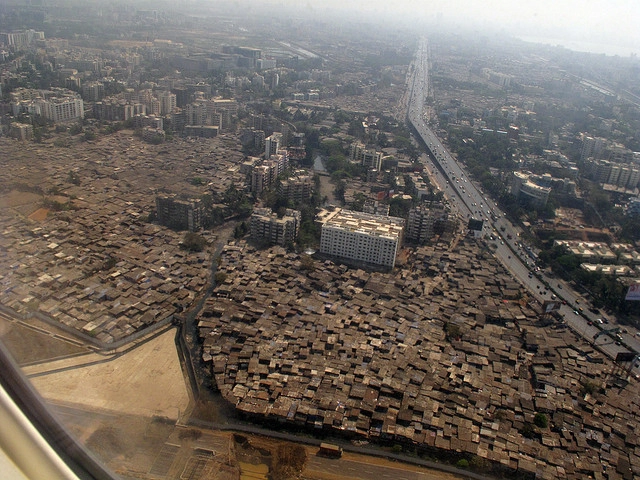
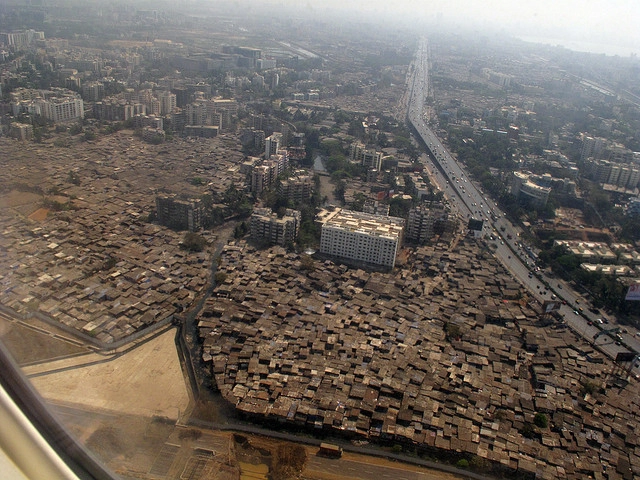
In a recent article for the Atlantic Cities, Richard Florida examines some new research from MIT that criticizes the idea that slums are a natural stage in the modernization of cities, showing that many slums continue to persist and even grow in cities/countries experiencing increased prosperity. Rather than economic growth, argues Florida, accountable governments and institutions make much more of an impact on slum development. You can read the full article here.
Earlier this week, the Guardian launched its new Cities website, which - as discussed by Oliver Wainwright in his opening article will be "an open platform for critical discussion and debate about the issues facing the world's metropolitan centres". In this introduction, Wainwright offers a fast-paced rundown of some of the major challenges facing cities, from technology to transport, housing to high streets, and economic to environmental disasters. You can read his full article here.
For the recent Axel Springer SE Media Campus in Berlin, OMA's proposal (shown) is up against designs by two of OMA's past employees.. Image Courtesy of Axel Springer SE
It is difficult to even imagine an architectural practice more influential than OMA. Not only has Koolhaas' practice completed high-profile buildings worldwide, but it has also been the incubator for some of the world's most famous architects, with many striking out alone after a period working under Rem. This article in the Wall Street Journal profiles some of the latest crop of "graduates", including Bjarke Ingels and Ole Scheeren, who have founded their own practices in the last decade and are now acting as some of OMA's biggest competitors. You can read the full article here.
There are few recent trends in urbanism that have received such widespread support as cycling: many consider cycling the best way for cities to reduce congestion and pollution, make cities more dense and vibrant, and increase the activity and therefore health of citizens. Thus, it's no surprise a number of schemes have been proposed worldwide to promote cycling as an attractive way to get around.
However, recently it seems that many cycling schemes are running into bumpy ground. Read on to find out more.
When it comes to global cities, New York City may be one of the most prominent - but it is also relatively young. Just 400 years ago, Manhattan island was mostly covered in forests and marshes. In his talk at TEDx Long Island City, Eric Sanderson discusses the city's radical changes in land use over the past four centuries, and begins to contemplate what the next four might look like. How can we take a city like New York and make it as efficient as the forest it replaced? In a bid to uncover the ideas that might make this possible, he introduces Manhatta 2409 - an online tool which maps/compares the historic and current land use of Manhattan and allows users to propose new uses. Learn more in the video above.
Peter Eisenman, the founder of IAUS. Image Courtesy of an-onymous.com
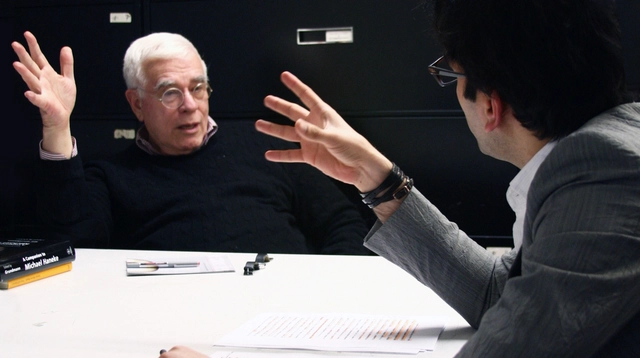
In this in-depth article on Design Observer, Belmont Freeman examines the resurgence of interest in the Institute for Architecture and Urban Studies, Peter Eisenman's radical, theory-based school that existed from 1967-1985, and questions: what has been the Institute's legacy in the 30 years since its demise? Read Freeman's thoughts in the full article here.
In this article on the Atlantic Cities, Richard Florida delves into recent research by Edward Glaeser, the author of Triumph of the City, which investigates the emergence in recent decades of mega-cities in developing nations. Though cities have long been connected to prosperity he points out that in these new cities, residents remain poor. The answer it seems is linked to our globalized economy, as well as the under prepared governments in these countries. However Glaeser and Florida don't see this as a reason for panic, or to abandon urbanization, but rather to ensure that urbanization is supported more effectively by government. You can read the full article here.
If You Build It is a documentary following the story of high school students in Windsor, a small and downtrodden rural town in Bertie County, North Carolina. In this setting, architects Emily Pilloton and Matt Miller started Project H, an educational initiative designed to not only improve the education of these disadvantaged young people, but also to reach out to the wider community and make real change.
Read on for more about Project H and the If You Build It documentary
In honor of Thom Mayne's birthday today, we're sharing this video interview from Danish Website Louisiana. In it Thom Mayne introduces his building at 41 Cooper Square by saying "I wanted to produce something that was off, and was not at all systematic in any normal architectural sense." Ultimately, the form of the building is, he says, an attempt to engage withNew York City, understanding Cooper Union as a key part of the city's incredible intensity of intellectual creative capital. He also discusses how the building - despite its avant garde form - won over the local community. Enjoy!
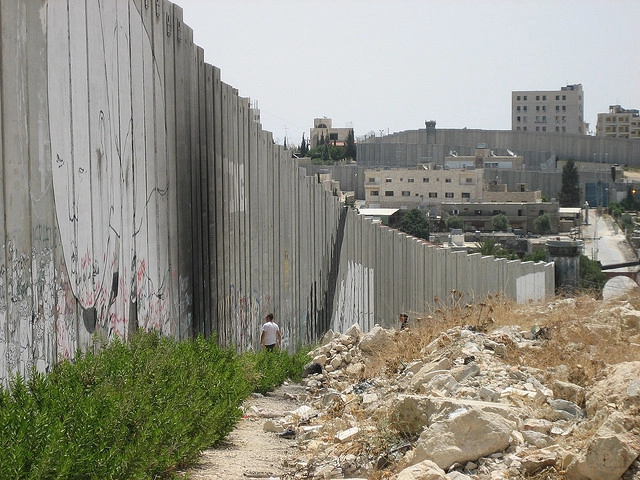
In response to the death of former Israeli Prime Minister Ariel Sharon last week, Eyal Weizman has written an interesting investigation into how the controversial politician used architecture and urban planning as a tool in the ongoing Israeli-Palestinian conflict, deploying settlements like military tactics rather than simply as housing strategy. The piece is an insightful examination of how power and even violence can be manifest in design, as evidenced by Sharon's "architecture of occupation". You can read the full article here.






.jpg?1390400182&format=webp&width=640&height=580)