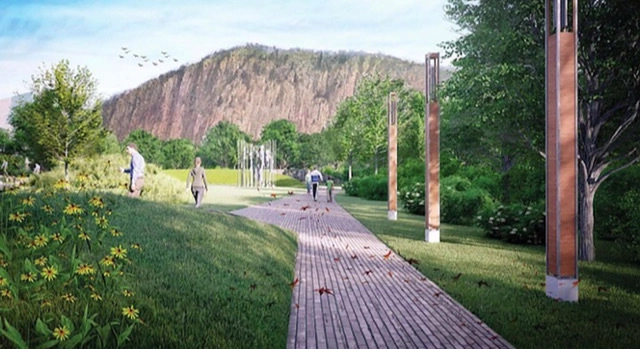
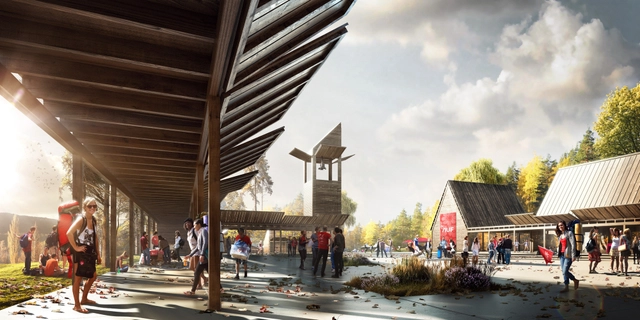
Svigals + Partners has designed a Memorial Garden in honor of victims of gun violence in New Haven, Connecticut. Developed in collaboration with a partnership of concerned mothers, the scheme emerged from efforts by New Haven school teacher Marlene Miller Pratt, whose 18-year-old son was killed in 1988.
Working pro bono since April 2018, Svigals + Partners have designed the garden to be flanked by engraved stone pavers and lamppost wind chimes. Before culminating in a serene, protected, circular plaza, the scheme leads visitors past an original sculpture titled “The Lost Generation.” As visitors walk past, the sculpture depicts abstract human figures and are revealed and concealed depending on the visitor standpoint.
https://www.archdaily.com/911089/svigals-plus-partners-design-memorial-to-gun-violence-victims-in-connecticutNiall Patrick Walsh
The Sandy Hook Permanent Memorial Commission announced the final design has been unanimously selected for the memorial in Newtown, Connecticut. The Clearing by Ben Waldo and Daniel Affleck of SWA Group was officially recommended by the commission, and the Board of Selectmen will make final approvals this month. Chosen out of three concepts unveiled in May, the winning memorial honors the 26 victims and survivors of the 2012 shooting at Sandy Hook Elementary School.
Memorials play an integral role in marking significant people, moments, or events. In recent years, they have become glorifications of tragedy by attempting to express unimaginable horrors in poetic and beautiful ways. The issue with the many forms that memorials take is that they seek to placate the immediate reaction and hurt of an event, an understandable societal reaction, but one that often feels rote and hallow.
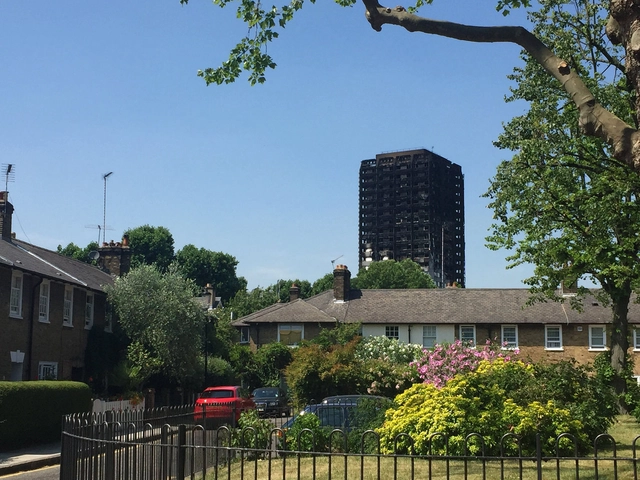
But what if memorials sought to preserve the memory of those affected by offering a solution that addressed how the tragedy occurred? The international response to tragedy has, by default, become to install a statue, build a wall, create a healing water feature, erect an aspirational sculptural object, or simply rename a park. None of these responses are inherently bad—they’re usually well-meaning and on occasion quite moving—but there is another approach available to us: changing the public perception of memorials by looking at them through the lens of solutions, encouraging people to think of them as a testament or proper response to tragedy, not just a plaque that over time goes unnoticed. While this approach might be difficult in some instances, the case of Grenfell Tower fire in London presents a rather obvious solution.
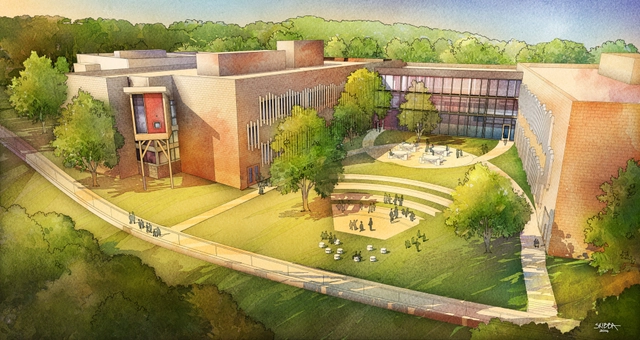
Just over two years have passed since the tragic shooting at Sandy Hook Elementary School in Newtown, Connecticut. Thanks to an 89% vote by Sandy Hook's residents in favor of demolishing the old building the site now sits empty - awaiting the construction of Svigals + Partners' design for a replacement building which is not only tasked with being a high level teaching facility, but also with sensitively addressing the collective trauma which inevitably remains a part of the site's history.
With such a challenging history to the site, how is it possible to balance the emotional needs of a community with the functional needs of an educational institution? We spoke to Jay Brotman AIA, a partner at Svigals, to find out.
When it comes to designing schools, security is always a big issue. This fact was thrown into sharp focus in December of 2012 after the Sandy Hook Tragedy in Newtown, Connecticut. Last year, we featured an article discussing how design can deal with tragedy - both in order to prevent it and how to deal with the aftermath. Now, a report by Building Design and Construction investigates the measures that could prevent dangerous incidents. While they admit "it’s impossible to stop an armed madman who is hell-bent on killing", the report has a number of simple and sensible recommendations which aid in preventing and responding to a threat. You can read the report here.
Over a month has passed since the Sandy Hook tragedy. Its surviving students have gone back to school, albeit at another facility (decorated with old posters to make it feel familiar), and are working on putting this tragic event behind them. The nation is similarly moving on - but this time, with an eye to action.
The goal is obvious: to prevent a tragedy like this from ever happening again. The means, less so. While President Obama’s recent gun control policy offers some solutions, it’s by no means the only way. Indeed, opinions vary - from clamping down on gun control, to better addressing the root cause of mental illness, to even arming teachers in the classroom.
The design world has similarly contributed to the debate. A recent article in ArchRecord questioned how, in the wake of Sandy Hook, we should design our schools: “While fortress-like buildings with thick concrete walls, windows with bars, and special security vestibules may be more defensible than what is currently in vogue, they are hardly the kind of places that are optimal for learning.”Indeed, turning a school into a prison would be the design equivalent of giving a teacher a rifle. You would, of course, have a more “secure” environment - but at what cost?
As America and the world considers how we can move on after these traumas, I’d like to take a moment to consider what role design could play. If the answer is not to turn our schools into prisons, then what is? Can design help address the root causes of violence and make our schools less vulnerable to tragedy? If so, how?