Former ArchDaily's Managing Editor. BA in Architecture from Newcastle University, and interested in how overlooked elements of architectural culture —from the media to competitions to procurement processes can alter the designs we end up with.
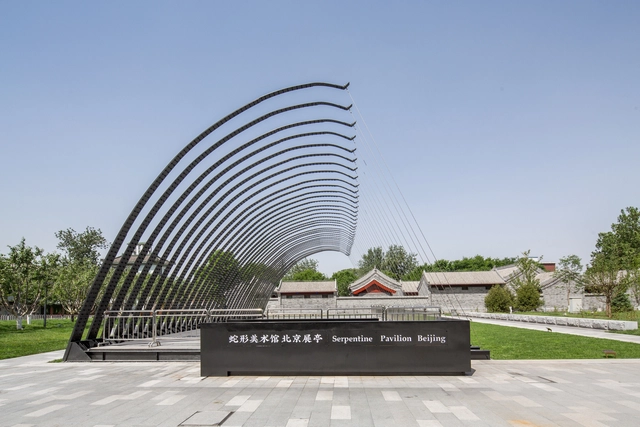
A new Serpentine Pavilion has opened in Beijing, China, marking the first time the prestigious program has been implemented away from its usual home at the Serpentine Gallery in Hyde Park, London. Designed by JIAKUN Architects, the pavilion was commissioned by The Serpentine Galleries working in partnership with WF CENTRAL, and is located just 600 meters away from Beijing's Forbidden City.
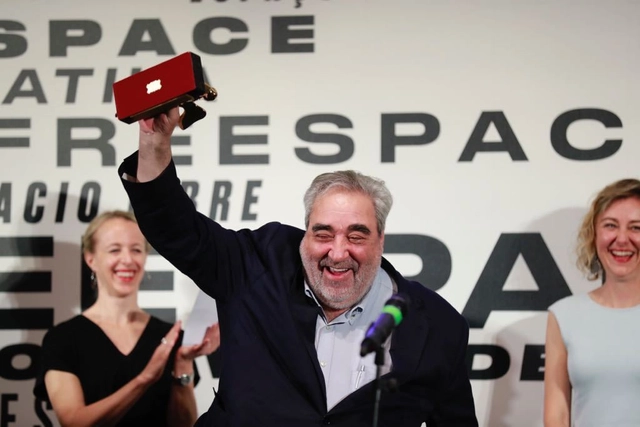
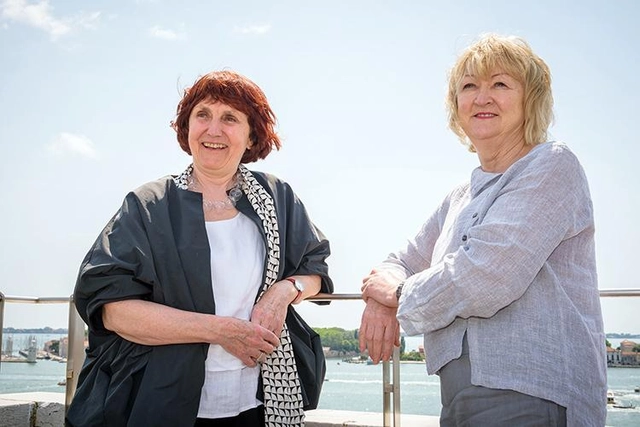
The curators of the 2018 Venice Biennale Yvonne Farrell and Shelley McNamara of Grafton Architects have announced the winning contributions to the 16th International Architecture Exhibition. Selected with the help of jury members Frank Barkow, Sofia Von Ellrichshausen, Kate Goodwin, Patricia Patkau, and Pier Paolo Tamburelli, the winners of the Golden Lion for Best National Participation went to Switzerland. Meanwhile, in the Freespace exhibition curated by Farrell and McNamara at Venice's Arsenale, Eduardo Souto de Moura will take home the Golden Lion for Best Participant in the International Exhibition.
With the opening of the 16th Venice Architecture Biennale comes a look at the first ever contribution by the Holy See, an exhibition that brings together architects to design chapels that, after the Biennale, can be relocated to sites around the globe.
Located in a wooded area on the Venetian island of San Giorgio Maggiore, 10 chapels by architects including Norman Foster, Eduardo Souto de Moura, and Smiljan Radic, are joined by the Asplund Chapel by MAP Architects. This 11th structure serves as a prelude to the other chapels, while reflecting on Gunnar Asplund's 1920 design for the Woodland Chapel.
Balkrishna Doshi, the 90-year-old architect who became the first ever Indian winner of the architecture world's most prestigious award earlier this year, will present his Pritzker Prize Laureate Lecture entitled "Paths Uncharted" on Wednesday 16th May at 6:30 pm ET. The event is hosted by The University of Toronto’s John H. Daniels Faculty of Architecture, Landscape, and Design, at the school's new home in the Daniels Building at One Spadina Crescent. The lecture will be one of the first events at the new building and marks the 40th anniversary of the Pritzker Prize. 2018 will also be the first year that the award is presented in Canada.
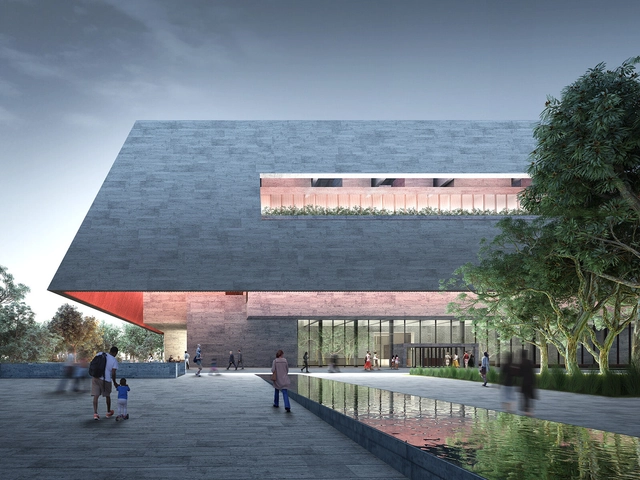
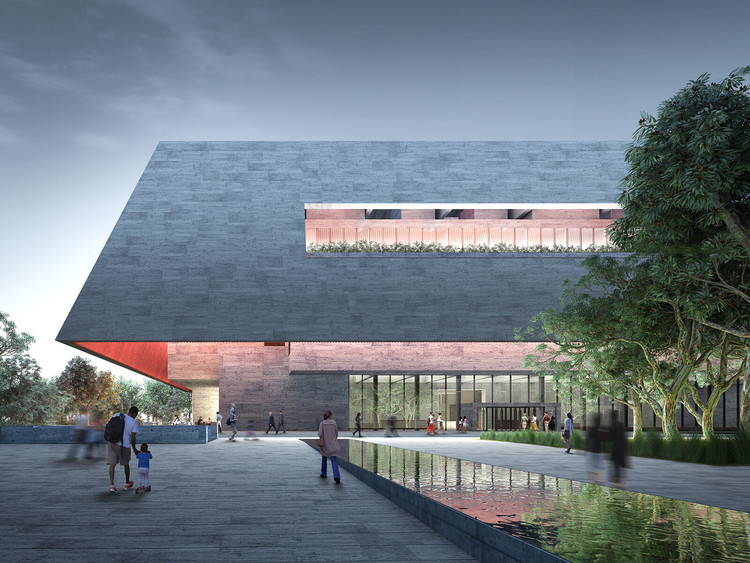
The Adelaide Contemporary is planned to transform the site of the former Royal Adelaide Hospital (oRAH), and will feature exhibition, research, and education spaces situated in a public sculpture park and community meeting place. The museum will also notably host the Gallery of Time, a first-of-its-kind space to exhibit Aboriginal art alongside art from Europe and Asia, inviting visitors to see Australian art in a global context. The six designs are now being displayed in an online gallery created by competition organizer Malcolm Reading Consultants, and in a public exhibition being held in Adelaide at the Art Gallery of South Australia.
As part of our 2018 Venice Architecture Biennale coverage we present the proposal for the Chinese Pavilion. Below, the participants describe their contribution in their own words.
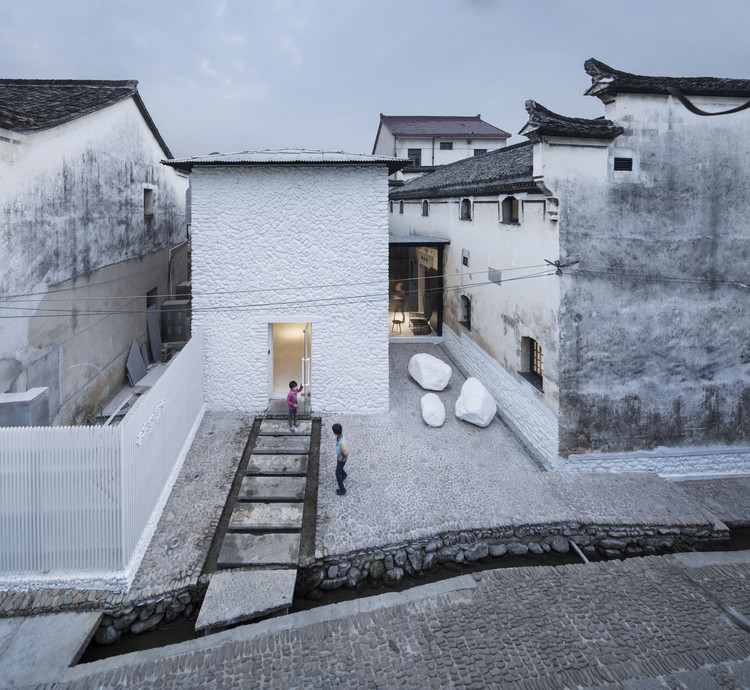
The motivation for this exhibition is more than just xiangchou, a Chinese term that refers to nostalgia for rural lands. We return to the countryside where Chinese culture originated to recover forgotten values and overlooked possibilities; from there, we will build a future countryside. – Li Xiangning (Curator)
One of the major challenges facing contemporary built environments is the future of rural development. In China, the countryside has become a new frontier for experiments in this area, and the country is developing its countryside at a speed and scale unseen in the West. Drawn by the promise of boundless opportunity, architects, artists, developers—as well as capital flow—are converging in rural areas across the nation.
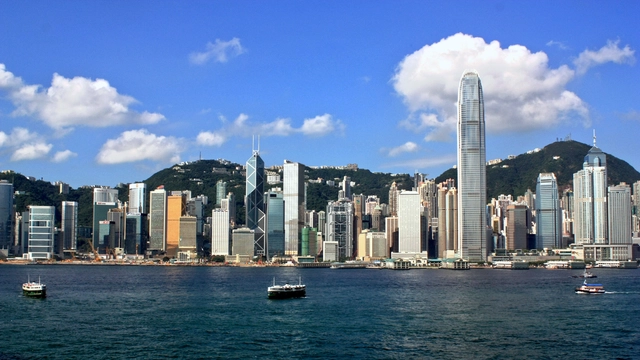
Hong Kong is a unique city. With its unlikely history as a British Colony, its position as a global hub city, and its spectacular geography, the dense, lively streets of Hong Kong feature a variety of urban phenomena that can't be found anywhere else in the world. In this series of video essays, New Office Works probes the urban character of Hong Kong with stunning depth, uncovering histories and explanations that bring new intrigue to an urban fabric that is, both literally and figuratively, already heavily layered.
The title of the series, Middle Man, references Hong Kong's status as a city that mediates between east and west, calling back to the "compradors" that helped the city to grow in the 19th century by translating for traders—middlemen in the most literal sense. Rooted in this history, the urban environment is not one built on grand schemes or overarching ideals, says New Office Works: "The combination of a growing population and limited land has cultivated an instant-fix mentality. There is neither time nor space for architectural ideologies, only pure pragmatism."
Since the concept of driverless cars first became a serious prospect, a lot of attention has been given to the possibility of their malfunction—if an autonomous vehicle damages property or even harms a human, who is at fault? And, given a worst-case scenario, how should a vehicle's software choose between whose lives it prioritizes, the passenger or the pedestrian? This last question even became the basis for the Moral Machine, an online platform created by the MIT Media Lab that essentially crowdsources public opinion on different variations of the classic trolley problem thought experiment.
However, all of these questions had been considered largely theoretical until last night when, as The New York Times reports, a woman was struck and killed by an autonomous vehicle in Tempe, Arizona. As a major component of many predictions of futuristic "smart cities," the development and testing of autonomous vehicles hold huge implications for urbanism (ArchDaily has previously covered predictions of major change by car manufacturers and researchers) meaning that this fatal event could have a ripple effect on the development of cities.
At a press conference earlier today, curators of the 2018 Venice Biennale Yvonne Farrell and Shelley McNamara of Grafton Architects revealed more information about this year's upcoming event, to be hosted from May 26th to November 25th. Building on the thematic concept the duo presented last June—“Freespace”—the event will feature a main exhibition in the Central Pavilion of the Giardini and the Arsenale featuring work by 71 participants, while two Special Sections will feature a total of 29 further participants. Elsewhere, 65 national pavilions will present contributions from around the world, including 7 first-time participants: Antigua & Barbuda, Saudi Arabia, Guatemala, Lebanon, Mongolia, Pakistan and the Holy See.
Last September, Nigerian Afrobeat musician Wizkid played to a sold-out house at the Royal Albert Hall in London, joining a growing list of illustrious African musicians, such as Selif Kaita, Youssou Ndour, Miriam Makeba and others, that have performed at that prestigious venue. This event affirmed the unfolding cultural renaissance across the continent, but it also signified the rising global influence of African music, movies, fashion, cuisine and the arts.
Sadly, traditional African architecture, especially in Sub-Saharan Africa, has not profited from this renaissance and has instead steadily lost its appeal across the continent. In spite of its towering influence in the pre-colonial era, it has largely failed to develop beyond the crude earthen walls and thatch roof architecture; for this reason it has remained unattractive to homeowners who often associate it with poverty. Consequently, the neglect of indigenous architecture has resulted in the dearth of skilled craftsmen knowledgeable in the art of traditional building, a reality that has further dimmed hopes for a revival of this architectural style.
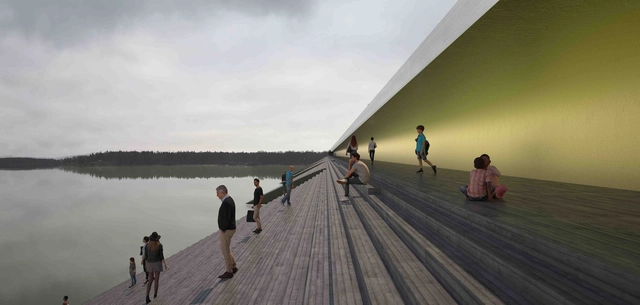
Kalix, a small town in Northern Sweden, has plans to replace its current bridge over the river in 2019. As part of the process, The Swedish Traffic Administration commissioned Erik Andersson Architects to design an initial study for a bridge that would not only replace the existing bridge's functions, but also add new elements to turn the new bridge into a gathering space and public amenity for the town.
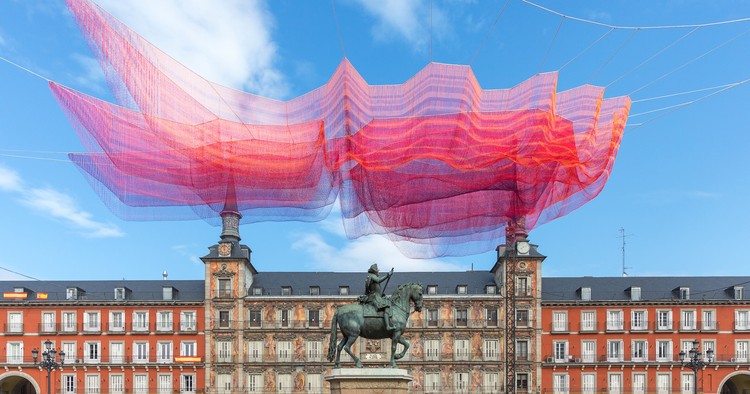
American artist Janet Echelman's latest sculpture is currently on display at Madrid's Plaza Mayor. Titled "1.78 Madrid," the piece is the latest of Echelman's suspended thread sculptures, and the newest piece in her Earth Time Series begun in 2010. On display until February 19th, the piece was unveiled on Friday to mark Madrid's 400th anniversary.
Snøhetta has unveiled its design for "Svart," a hotel for sustainable tourism company Arctic Adventure of Norway. Located within the Arctic Circle, on the edge of Norway's Holandsfjorden fjord at the base of the Svartisen glacier, the building is designed to the "Powerhouse" building standard, a system developed by Snøhetta and a group of collaborators for creating energy-positive sustainable buildings.
UNStudio has won a competition to design a new, 3-kilometer long cable car in the Swedish city of Gothenburg. The cable car's route, which will connect the old city on the south of the river with three locations to the north, will feature a total of six towers which have been designed around an adaptable, asymmetrical structural system intended to mimic the cranes in the city's shipyards. The expected opening date for the cable car is in 2021, with the new transportation system being inaugurated as part of the celebrations of Gothenburg's 400th anniversary.
Around 1 in 7 women in UK architecture practices has experienced sexual harassment in the workplace in the past year alone, according to the results of the annual Women in Architecture survey conducted by The Architects' Journal. The poll of nearly 1,500 architects also found that more than half of women have experienced some form of discrimination ranging from bullying to workplace rules that leave them disadvantaged in the same period. The AJ's survey, which in previous years has largely focused on issues such as pay disparity between men and women, focuses this year more broadly on gender discrimination and sexual harassment—a response to the global shift in awareness organized around movements such as #MeToo and #TimesUp.
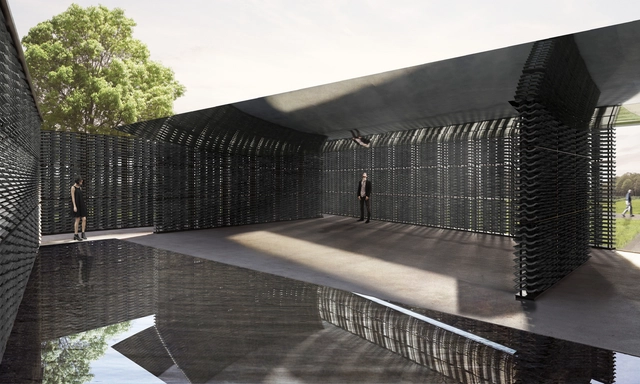
London's Serpentine Gallery has announced Mexican architect Frida Escobedo as the designer for the 2018 Serpentine Gallery Pavilion in Hyde Park. Escobedo, known for her work in activating public spaces, will be the youngest architect to have participated in the Serpentine Pavilion program since it began in 2000. Her design features an enclosed courtyard created by two rectangular volumes positioned at an angle. With its interplay of light and water, the design is intended to evoke the sensation of Mexican domestic architecture, while using British materials and containing references to its London context.
Fans of absurd architecture, over-the-top action, and wrestling-stars-turned-beloved-actors are in for a treat this summer thanks to the recently-announced film Skyscraper. The movie’s central character is “The Pearl,” an imagined 1,067-meter-tall skyscraper in Hong Kong—although apparently some guy named “Dwayne ‘The Rock’ Johnson” also plays a pretty big role with his character Will Sawyer, a former FBI Hostage Rescue operative who lost a leg in the line of duty and now reviews building security for a living.
The plot, as revealed in the trailer and a single-paragraph synopsis on the official website, sees Will Sawyer criticizing the security of the “vertical city” billed as the tallest, most advanced, and safest building in the world. His concerns are immediately shown to be well-founded, as a group of (what are presumably) terrorists set fire to the 96th floor of the building, trapping Sawyer’s family and somehow framing Sawyer for the whole thing. As a result, Sawyer must save his family while running from the law, with the trailer showing a climactic leap from an adjacent crane (we can only assume that Dwayne Johnson doesn’t fit into a ventilation duct). The film has come in for some good-natured ribbing already, with internet jokesters questioning how a 260-pound amputee makes a 15-meter jump off the end of a crane. But of course, closer inspection reveals that these concerns are just the start of the entertaining wackiness of this movie.
For a lot of architects, models hold a special place in our hearts. Whereas a building can take years to construct and usually can't be drastically altered as it nears completion, a model provides architects with the immediacy and flexibility we crave as designers while also allowing us to feel like we're really making something—a feeling that digital modeling software can rarely provide.
Models have even played decisive roles in the careers of many world-famous architects. Peter Zumthor, for example, is known to prefer the tactility of models over other forms of representation, while early in his career Steven Hollgained recognition for his visionary "Bridge of Houses" proposal for the Highline in New York, presented through a series of provocative models. And, physical models have even been key in some of the great advancements of the profession: In the 1990s, Frank Gehry's pioneering work in digital design involved tracing the forms of his digital models into CATIA software, whereas Frei Otto's models using soap films from the 1960s were key in his research into tensile structures.