Contemporary Japanese architecture combines a rich mix of traditional design practices and western modern aesthetics. The dialogue between these two is present in the integration of time-honored Japanese architectural elements such as sliding doors (fusama) and modular tatami floor mats with cutting edge design and technology. Japan architecture is at the forefront of investigating questions of micro-housing in its dense cities like Tokyo where the population outnumbers the available space. This page features the work of Japanese architectural offices such as Tadao Ando and Associates and SANAA along with interviews and articles about the ever-changing architectural discourse in Japan.
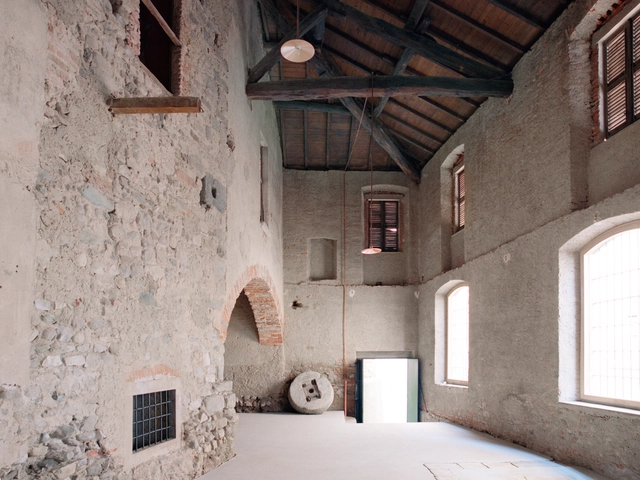
While adaptive reuse has been increasingly acknowledged as a vital architectural strategy worldwide, its discourse and implementation in Asia are still expanding—driven by growing ecological awareness and a shifting understanding of architectural knowledge. Rather than accelerating a developmentalist model centered on demolition and new construction, architects today are confronted with a different approach to the built environment: treating the existing structure as a resource—an archive of materials, spatial organizations, and informal histories.
Living by the beach has long been a defining aspiration—drawn by the promise of tempered nature, privacy, and immediate access to the water. Historically, beach houses tended to be rustic and pared back: partly because servicing remote sites and delivering materials was difficult, and partly because their charm lay in being closer to the elements—simpler, rougher, more direct.
Adaptive reuse is shifting from simple preservation to active revitalization, a process of structurally rescuing and reprogramming architectural typologies whose original functions are no longer relevant. The obsolescence of architectural spaces occurs for varied reasons: sociological shifts, leaving spaces uninhabited; technological advances, phasing out specific machinery; and economic changes, making centralized functions necessary. The strategy of repurposingfocuses on achieving spatial and functional longevity through minimal interventions, allowing the original structure to serve as the memory anchor of the project.
About a month after the closing of Expo 2025 Osaka, the designs and constructions presented at the world's fair remain as a legacy. While the Bahrain Pavilion, designed by Lina Ghotmeh Architecture, drew particular attention this year for receiving double recognition, it was one among many awarded projects. During the awards ceremony held on the penultimate night of the event, a total of 45 awards were presented among 165 participating countries. The Official Participant Awards are granted according to pavilion size and type, recognizing excellence in Architecture and Landscape (for self-built pavilions only), External Design (for module pavilions only), Exhibition Design, Theme Development, and Sustainability. The recipients were selected by an international jury of nine experts who visited all national and thematic pavilions during two evaluation sessions in May and October 2025. The following overview presents all 45 pavilions distinguished in the five categories of the Official Participant Awards.
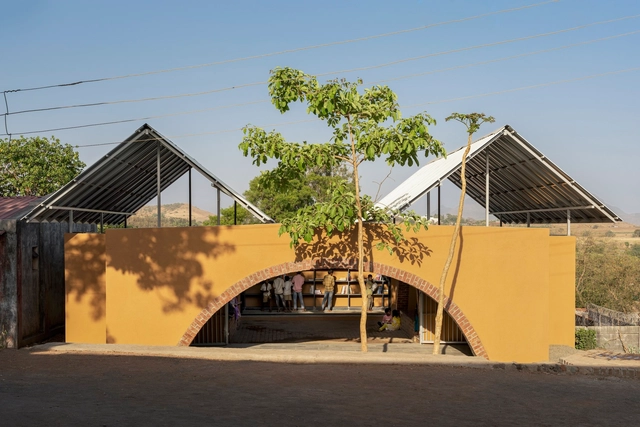
In many parts of the world, remoteness is not only defined by distance. It may describe a mountain settlement far from infrastructure or an urban and suburban neighborhood on the margins of visibility and opportunity. Across these diverse contexts, the library has been one of the most vital typologies—a space where architecture embodies the modes of accessibility, inclusivity, and community care.
Taschen's new book, published in October 2025, Tadao Ando. Sketches, Drawings, and Architecturepresents an in-depth exploration of the Japanese architect Tadao Ando's creative process, bringing together over 750 sketches, drawings, models, and technical plans developed over nearly five decades. Created in close collaboration with Ando himself, the book provides a rare view into how his ideas take shape, from the immediacy of the first pencil lines to the precision of architectural drawings that define his built works. Through these materials, the publication highlights Ando's enduring focus on the relationship between hand, thought, and space.