Current Brazilian politics is an anti-politics aimed at the annihilation of institutions, such as the notions of the public and the state. Guilherme Wisnik talks with Fernando Haddad about prospects for imagining ways out of this abyss.
Romullo Baratto
Romullo Baratto is an architect with a PhD from FAUUSP and Managing Editor of ArchDaily. He previously coordinated the editorial team of the 11th São Paulo Architecture Biennial and served as Managing Editor of ArchDaily Brasil, where he led the platform to win the FNA Award—the first time the honor was granted to a media outlet. He collaborated on the editing of the book "Concrete Jungle", published by gestalten, and has curated architecture exhibitions in Brazil, Chile, Denmark, and Italy, as well as delivered lectures and moderated debates in Spain, the United States, and Portugal. His doctoral thesis investigates the urban landscapes of São Paulo through cinema. His work spans academic research and editorial practice, communicating architecture through texts, interviews, lectures, curatorship, and photography. Follow him on Instagram @romullobf.
BROWSE ALL FROM THIS AUTHOR HERE
↓
Guilherme Wisnik and Fernando Haddad discuss anti-politics and resistance
https://www.archdaily.com/1123597/guilherme-wisnik-and-fernando-haddad-discuss-anti-politics-and-resistanceRomullo Baratto
Climate, landscape, and economy: contemporary Amazonian architecture
.jpg?1588366232&format=webp&width=640&height=580)
It is impossible to discuss Amazonian architecture without mentioning Severiano Porto. The Minas Gerais-born architect was key in shedding light on the potential of that climate and context when integrated into design practice. Yet Amazonian architecture is not defined by Porto alone; indeed, many contemporary examples deserve attention for their careful selection of materials, ingenious application of vernacular techniques, or the sophistication achieved with limited resources.
https://www.archdaily.com/1123943/climate-landscape-and-economy-contemporary-amazonian-architectureRomullo Baratto
"We think of the project as a system, not as a drawing": interview with Carlos Alberto Maciel

Architect Carlos Alberto Maciel is the fifth guest on Studio Casa, an interview series produced by Casa da Arquitectura - Portuguese Center for Architecture. With a master's degree and a PhD in Design Theory and Practice from the School of Architecture at the Federal University of Minas Gerais, where he teaches design, Maciel is a founding partner of Arquitetos Associados, a collaborative studio based in Belo Horizonte.
https://www.archdaily.com/1123905/we-think-of-the-project-as-a-system-not-as-a-drawing-interview-with-carlos-alberto-macielRomullo Baratto
Social organization in vulnerable territories in times of coronavirus
Guilherme Wisnik talks with Ester Carro, a community leader from Jardim Colombo in Paraisópolis, about forms of organization in vulnerable territories in times of epidemic, as well as the importance of community-led social initiatives.
https://www.archdaily.com/1124278/social-organization-in-vulnerable-territories-in-times-of-coronavirusRomullo Baratto
Online platform brings together 280 photography publications and books
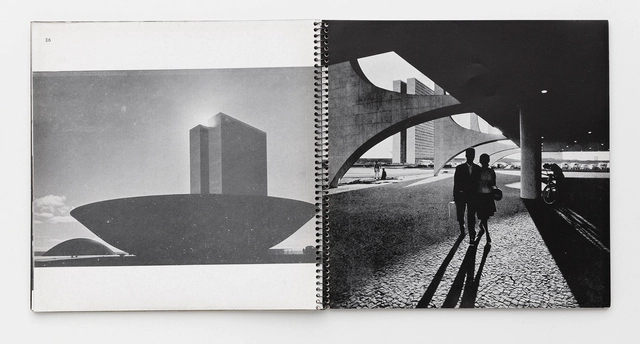
Photography researchers and enthusiasts now have another major tool at their disposal. The Photography Book Database (BDLF) has just been launched: a bibliographic reference platform exclusively dedicated to photography books. Conceived by photographer and researcher Leonardo Wen, the project began development in 2018 with funding from the Federal District's Cultural Support Fund.
https://www.archdaily.com/1124182/online-platform-brings-together-280-photography-publications-and-booksRomullo Baratto
Atelier Marko Brajovic designs floating library in the Amazon Rainforest
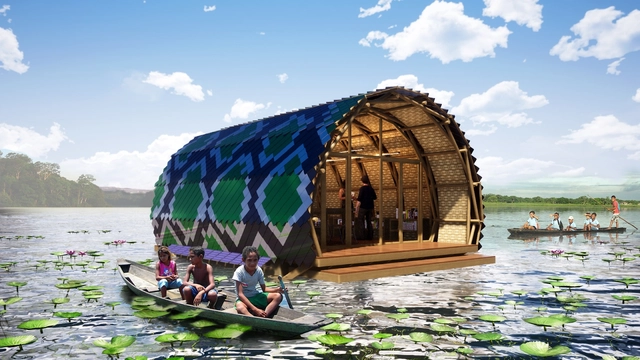
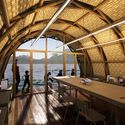
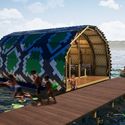
Atelier Marko Brajovic recently shared the design for a Floating Community Library on Lake Mamori, in the Amazon Rainforest. Developed in close collaboration with the local community, the project aims to become a benchmark for sustainable construction and environmental education.

https://www.archdaily.com/1124040/atelier-marko-brajovic-designs-floating-library-in-the-amazon-rainforestRomullo Baratto
Casa da Arquitectura interviews Celso Sim at a parallel event for "Infinite Span - 90 Years of Brazilian Architecture"
Celso Sim, artistic collaborator of Teatro Oficina, is the seventh guest on Studio Casa, an interview series produced by Casa da Arquitectura - Portuguese Center for Architecture. As a filmmaker, he directed, wrote, and edited the 2018 feature film Penetrável Genet, which derives from the work created for the 10th São Paulo Architecture and Urbanism Biennial titled Penetrável Genet/Experiência Araçá, which occupied a cemetery in the city of São Paulo for 40 days.
https://www.archdaily.com/1123729/casa-da-arquitectura-interviews-celso-sim-at-a-parallel-event-for-infinite-span-90-years-of-brazilian-architectureRomullo Baratto
Brazil, Inside the Chamber of Lies: Guilherme Wisnik in Conversation with Nuno Ramos
In this week's debate hosted by Escola da Cidade, Guilherme Wisnik talks with Nuno Ramos, a painter, draftsman, sculptor, writer, filmmaker, set designer, and composer who holds a degree in philosophy from the University of São Paulo.
https://www.archdaily.com/1124326/brazil-inside-the-chamber-of-lies-guilherme-wisnik-in-conversation-with-nuno-ramosRomullo Baratto
Casa da Arquitectura interviews Elisabete França
Elisabete França, a public administrator dedicated to implementing urban development, housing, and urban mobility programs, is the eighth guest on Studio Casa, an interview series produced by Casa da Arquitectura - Portuguese Center for Architecture.
Elisabete França has distinguished herself over the last few decades through her work promoting and disseminating architecture, curating several national and international exhibitions, and coordinating conferences and specialized publications. She holds a PhD from FAU Mackenzie and is a professor in the Architecture program at the Armando Alvares Penteado Foundation (FAAP).
https://www.archdaily.com/1123558/casa-da-arquitectura-interviews-elisabete-francaRomullo Baratto
UN launches online publication on urban parks with a gender perspective
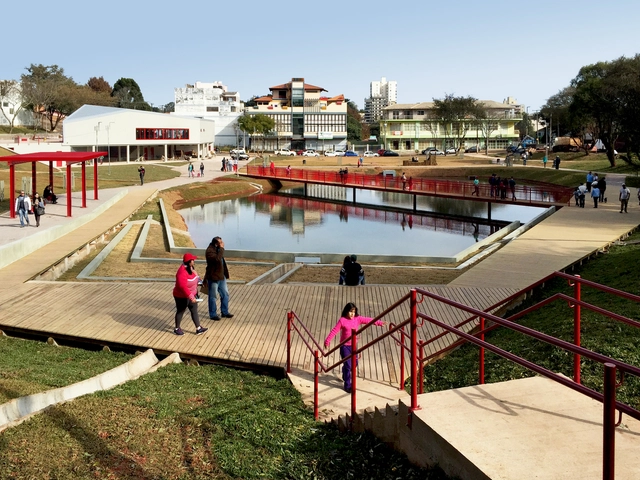
Developed by the Semeia Institute and the United Nations Office for Project Services (UNOPS), Parques para Todas e Todos is a tool to inspire the creation of more diverse spaces by incorporating a gender perspective into the planning and management of urban parks. It offers guidelines, suggestions, and ideas to begin designing parks that address everyone's needs.
https://www.archdaily.com/1123346/un-launches-online-publication-on-urban-parks-with-a-gender-perspectiveRomullo Baratto
Martin Corullon talks about prefabrication and his projects with Paulo Mendes da Rocha
Partner and founder of the firm Metro Arquitetos Associados, Martin Corullon is the ninth guest of Studio Casa, an interview series produced by Casa da Arquitectura - Portuguese Center for Architecture. Since 1994, Corullon has frequently collaborated with architect Paulo Mendes da Rocha, with whom he has completed several projects on a wide range of scales.
Between 2008 and 2009, he worked at Foster+Partners in London. He has been a professor at Escola da Cidade since 2014 and was elected a member of CAU/SP for the 2018–2020 term. The interview is conducted by architect and curator Francesco Perrotta-Bosch.
https://www.archdaily.com/1123742/martin-corullon-talks-about-prefabrication-and-his-projects-with-paulo-mendes-da-rochaRomullo Baratto
Guilherme Wisnik and Bruno Dunley discuss art in the periphery of São Paulo
Guilherme Wisnik talks with Bruno Dunley, a visual artist, teacher, and co-creator and member of the project ali: arte livre itinerante, a nomadic art school that bridges centers and peripheries, operating in the district of Cidade Tiradentes on the far east side of São Paulo.
https://www.archdaily.com/1123449/guilherme-wisnik-and-bruno-dunley-discuss-art-in-the-periphery-of-sao-pauloRomullo Baratto
Wikipedia launches contest to improve articles related to Brasília
.jpg?1591199099&format=webp&width=640&height=580)
The National Archives Wiki-Contest is an editing competition on the Portuguese Wikipedia that aims to improve articles related to Brasília. It is part of a series of activities throughout 2020 conducted in collaboration by the Wiki Movimento Brasil User Group and the National Archives. The Wiki-Contest aims to encourage the Wikipedia editing community to improve entries related to the National Archives' Inter-wiki WikiProject initiative, which has been active since 2017.
https://www.archdaily.com/1123451/wikipedia-launches-contest-to-improve-articles-related-to-brasiliaRomullo Baratto
Gustavo Penna wins competition to design Brumadinho Memorial in honor of the victims
.jpg?1591820635&format=webp&width=640&height=580)
Nearly two years after the collapse of the Córrego do Feijão mine dam in Brumadinho, Minas Gerais, the city's residents will receive a monument to honor the victims. The Brumadinho Memorial was designed by the firm GPA&A, founded by architect Gustavo Penna, and will serve to remind all Brazilians of one of the worst environmental tragedies in the country's history.
.jpg?1591820618 "Crevice Corridor. Courtesy of Gustavo Penna Arquiteto & Associados")
Estagio_03.jpg?1591820696 "Memory Space. Courtesy of Gustavo Penna Arquiteto & Associados")
.jpg?1591820499 "Foyer. Courtesy of Gustavo Penna Arquiteto & Associados")
.jpg?1591820517 "Aerial view. Courtesy of Gustavo Penna Arquiteto & Associados")
.jpg?1591820635)
https://www.archdaily.com/1123697/gustavo-penna-wins-competition-to-design-brumadinho-memorial-in-honor-of-the-victimsRomullo Baratto
Angelo Bucci talks about the Paulista School and the mythology of FAUUSP
Angelo Bucci, founder and principal of SPBR Arquitetos, is the tenth and final guest of Studio Casa, an interview series produced by Casa da Arquitectura - Portuguese Center for Architecture. For over 25 years, Bucci has divided his time between professional practice and academia. This parallel career has ultimately shaped his approach to design, where professional demands are treated as opportunities to explore new possibilities.
https://www.archdaily.com/1123360/angelo-bucci-talks-about-the-paulista-school-and-the-mythology-of-fauuspRomullo Baratto
Brazilian architect proposes urban equipment for sanitization and coronavirus information

Amid the novel coronavirus pandemic, the international “Coronavirus Design Competition,” organized by the platform Go Architect, encourages students and professionals from various fields to think about how to develop products, objects, and equipment that help the population remain physically and mentally healthy in a scenario of so much uncertainty. Brazilian architect Leonardo Dias is competing, alongside more than 100 candidates from around the world, with a proposal for an urban totem that promotes hand sanitization, citizen information, and the humanization of data.
https://www.archdaily.com/1123936/brazilian-architect-proposes-urban-equipment-for-sanitization-and-coronavirus-informationRomullo Baratto
Church of the Bahia Administrative Center, designed by Lelé, through the lens of Guilherme Pucci
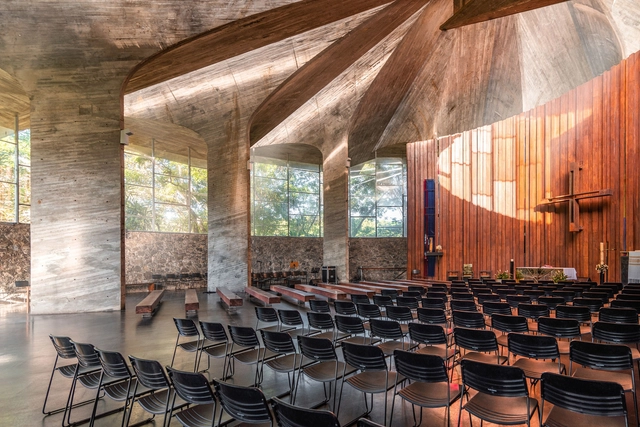
Architectural photographer Guilherme Pucci shared with us a series of images of the Ascension of the Lord Church at the Bahia Administrative Center, designed by João Filgueiras Lima, known as Lelé. Completed in 1975, this classic of Brazilian architecture reveals Lelé's design sensitivity, visible in how the building integrates with the site's topography, the quality of the materials used—concrete, glass, wood, and stone—and the tension created by light and shadow within the church.


https://www.archdaily.com/1124311/church-of-the-bahia-administrative-center-designed-by-lele-through-the-lens-of-guilherme-pucciRomullo Baratto
Bird House Project: An architecture and digital fabrication activity for children
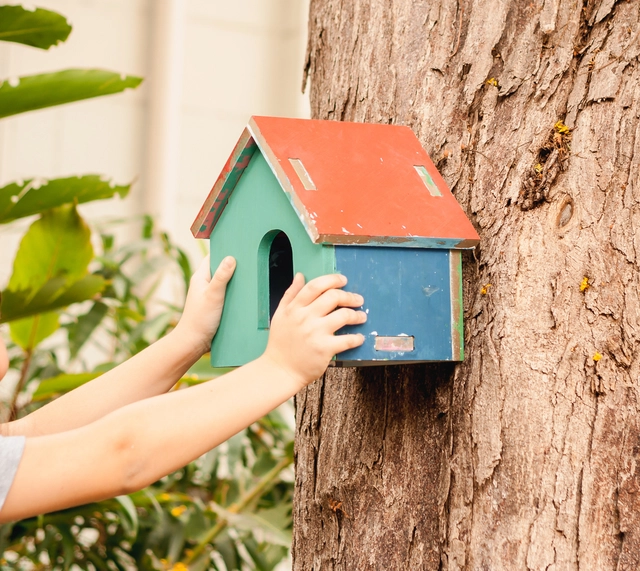
Architecture is a discipline deeply connected to the perception and construction of space, and could be introduced in early childhood education. With this in mind, the architects at Studio dLux proposed the Bird House project, a workshop for elementary school children designed to introduce the design and construction processes of a birdhouse.


https://www.archdaily.com/1124073/bird-house-project-an-architecture-and-digital-fabrication-activity-for-childrenRomullo Baratto