Romullo Baratto is an architect with a PhD from FAUUSP and Managing Editor of ArchDaily. He previously coordinated the editorial team of the 11th São Paulo Architecture Biennial and served as Managing Editor of ArchDaily Brasil, where he led the platform to win the FNA Award—the first time the honor was granted to a media outlet. He collaborated on the editing of the book "Concrete Jungle", published by gestalten, and has curated architecture exhibitions in Brazil, Chile, Denmark, and Italy, as well as delivered lectures and moderated debates in Spain, the United States, and Portugal. His doctoral thesis investigates the urban landscapes of São Paulo through cinema. His work spans academic research and editorial practice, communicating architecture through texts, interviews, lectures, curatorship, and photography. Follow him on Instagram @romullobf.
WRI Brasil has launched a free online publication detailing the benefits, costs, and barriers of adopting sustainability measures in social housing developments. Jointly produced by Lara Caccia, Henrique Evers, Luana Betti, and Camila Schlatter, the study examines simple, low-cost actions and technologies aimed at reducing water and electricity consumption in buildings.
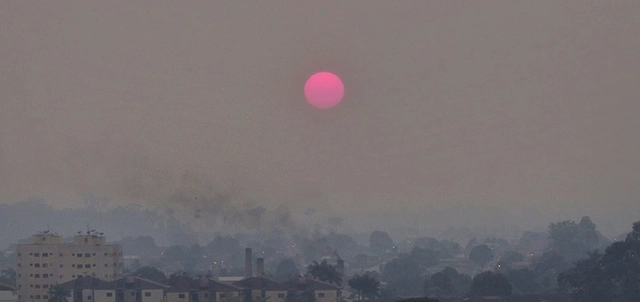
Smoke in Porto Velho, Rondônia, at dawn. Photo: Renata Silva/Personal Archive
Since the beginning of the month, thousands of fire outbreaks have been recorded in Brazil's northern states, spreading through Acre, Rondônia, Mato Grosso, and Mato Grosso do Sul, and reaching the triple border of Brazil, Bolivia, and Paraguay. According to the National Institute for Space Research (INPE), the country is experiencing its worst wave of wildfires in five years.
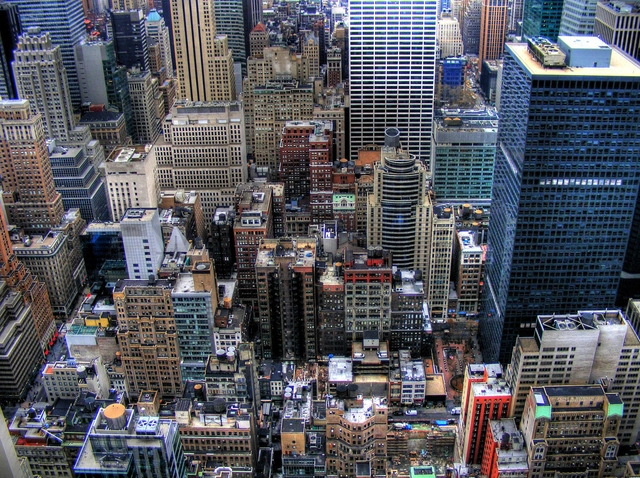
New York. Photo: CJ Isherwood, via Flickr, license CC BY-SA 2.0
The Swiss Federal Institute of Technology in Zurich (ETH Zurich) is offering free online courses on smart cities and future cities. Available through the edX platform, which is shared by institutions worldwide, the courses last ten weeks and are conducted via video.
Food waste is a concern for the FAO. Image: EBC, via UN/FAO
The United Nations, through its Food and Agriculture Organization (FAO), launched a publication this month focusing on strategies to integrate nutrition policies into urban planning. The document highlights best practices in reducing food waste, promoting healthy diets, and strengthening local production chains.
Courtesy of United Nations Development Programme (UNDP)
Growing concern over the use of natural resources in architecture has drawn increasing attention from professionals and researchers, pointing toward a future where architects must not only design but also facilitate the decommissioning and recycling of buildings. Against this backdrop, raising awareness about water waste on construction sites has become a major priority—an issue addressed in a recently launched guide by the São Paulo State Construction Industry Association (SindusCon-SP), Caixa Econômica Federal, and the United Nations Development Programme (UNDP).
Aerial view of Paulista Avenue. Illustrative image. Photo by Gabriel Ramos via Unsplash
The city of São Paulo is the first in South America to freely release laser-scanned data covering its entire territory. The files are available for download on the GeoSampa Portal. The technology, known as LiDAR (Light Detection and Ranging), goes beyond standard satellite imagery or aerial photography to provide a high-resolution geometric representation of a city. Consequently, it offers a much more accurate and detailed model of the mapped area.
Videos
Goetheanum im Winter von Osten. Image Cortesia de Trienal de Arquitectura de Lisboa
Within the scope of The Poetics of Reason, this year's Lisbon Architecture Triennale explores the nexus between Agriculture and Architecture, two complementary fields that emerged around 10,000 years ago during the Neolithic Revolution and, later, in the Anthropocene. Given the current environmental crisis, the core hypothesis of the exhibition Taking the Country's Side: Agriculture and Architecture, curated by Sébastien Marot, is that no consistent thinking can develop in the future of either discipline unless they are once again allied and fundamentally reconsidered together.
The CAU/BR is studying new rules for issuing Technical Responsibility Records (RRT) and Technical Collection Certificates (CAT) by architects and urban planners. The Professional Practice Commission, which is presenting the proposal to the public, aims to improve the registration system to protect both architects and their clients regarding the technical responsibility of architecture and urbanism services.
Applications are now open for the 6th Instituto Tomie Ohtake AkzoNobel Architecture Prize. The initiative continues to map contemporary architectural production by highlighting, for the sixth consecutive year, significant projects built in the current Brazilian landscape that demonstrate a commitment to their site and sustainability, as well as design and constructive inventiveness.
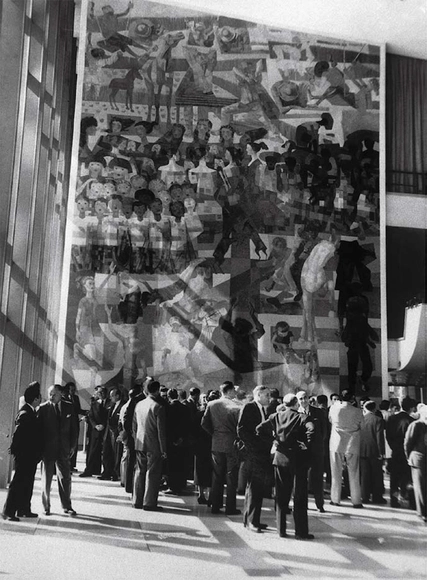
Painel "Guerra e Paz" de Candido Portinari na ONU, Nova Iorque. Image Cortesia de Oficina de Mosaicos
Led by the Portuguese duo Isabel Ruas and Gonçalo Ruas, the studio Oficina de Mosaicos will create a mosaic reinterpretation of the work War and Peace, the monumental panel painted by Candido Portinari and donated to the UN in 1956. The piece will be permanently displayed at the USP campus in Butantã. The project has the support of the artist's son, João Portinari, and is currently in its fundraising phase.
Discovering the stories behind architectural projects and urban interventions is the premise of ARQ.DOC, a new series set to premiere in January 2019 on YouTube. Produced in a documentary format, the episodes explore the creative diversity of Brazilian architecture.
On October 19, a workshop on implementing an ecological sanitation system will be held. The event will take place in São Paulo's South Zone and is open to anyone interested. The workshop is organized by the social-environmental project cooperative Sapiência Ambiental in partnership with the UFABC Agroecology Center.
Primeiro lugar. Image Cortesia de Prefeitura de Ribeirão Preto
Organized by the Municipality of Ribeirão Preto last October, the competition for the city's Administrative Center has concluded with the selection of three winning projects and two honorable mentions. Discover the selected projects below:
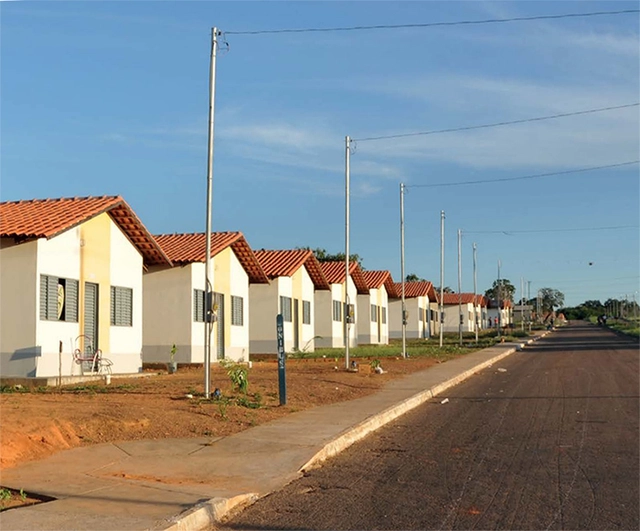
Growth Acceleration Program (PAC). Via: VisualHunt / CC BY-NC-SA
The Government of the State of São Paulo has established the Nossa Casa housing program, which aims to stimulate private investment in social interest housing geared toward low-income populations. The program came into effect through Decree No. 64,388 of August 14 of this year.
Estação Júlio Prestes, 1938. São Paulo, Brasil. Image Cortesia de SouthAmerica.travel
Trains are not the primary mode of transportation in South American countries, whether for cargo or passengers. The rail networks across the continent are poorly connected and, even domestically, are largely outdated or in disrepair. Nevertheless, from an era when transportation relied primarily on rail, beautiful railway stations remain, still serving cargo and passenger trains today.
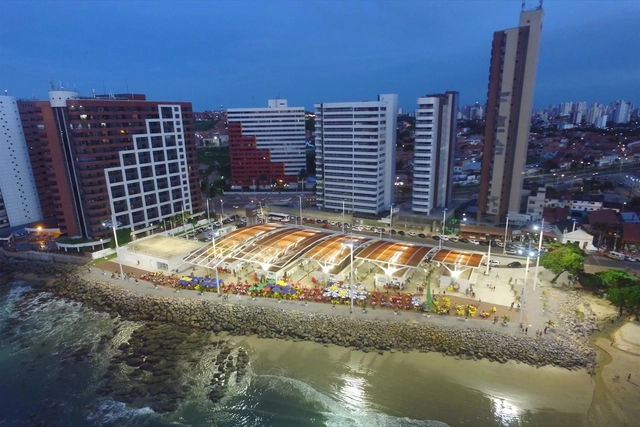
Mercado dos Peixes, Fortaleza (CE), vencedor do 10º Prêmio AsBEA de Arquitetura, na categoria Edifícios Comerciais. Projeto dos escritórios Arcosanti Arquitetura, Esdras Santos Arquitetura e Fausto Nilo Arquitetura.. Image Cortesia de CAU/BR
Architects and urban planners evaluated the services offered by CAU/BR and the state-level CAU/UFs. Out of nine services analyzed by the professionals, seven received an average score above 7 on a scale of zero to 10. These and other findings are part of the CAU Evaluation Survey conducted by the Datafolha Institute in May. The study interviewed 1,500 architects and urban planners and 500 architecture and urban planning firms by telephone to assess the effectiveness of the Council's communication channels with professionals and society, as well as to gather information to support initiatives ensuring access to the entity's information.
The streets of Los Angeles will serve as a testing ground for a new asphalt compound made from recycled plastic. Developed by TechniSoil Industrial, the material incorporates plastic waste that would typically be discarded, mixing it with recycled asphalt reclaimed directly from the streets.
The Association of Sabesp Engineers (AESabesp) has launched a competition to select the best architectural designs for the future São Paulo Water Museum. The goal is to find the best architectural concepts and alternatives for the restoration and expansion of the former water and sewage department building—currently known as the França Pinto Reservation Center—and the implementation of the cultural venue.

.jpg?1569333854&format=webp&width=640&height=580)

.jpg?1554907489&format=webp&width=640&height=580)