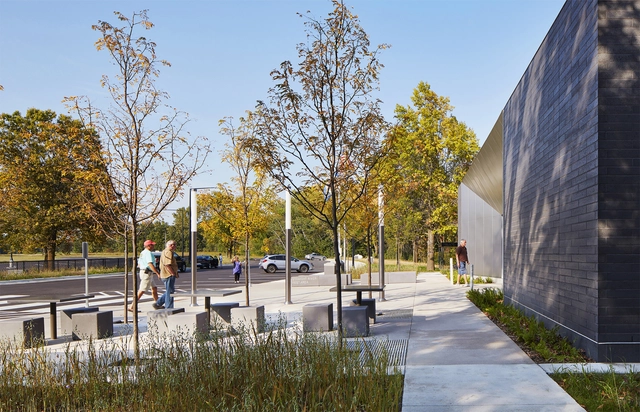
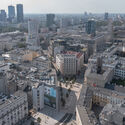
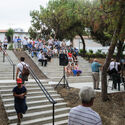
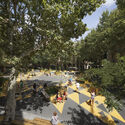
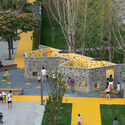
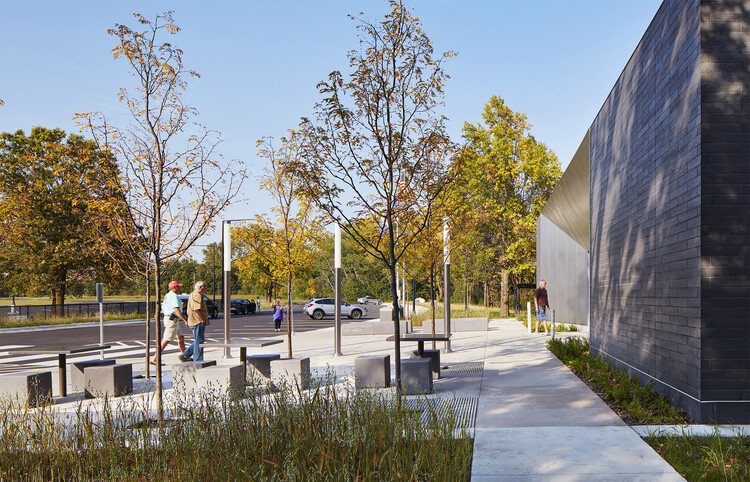
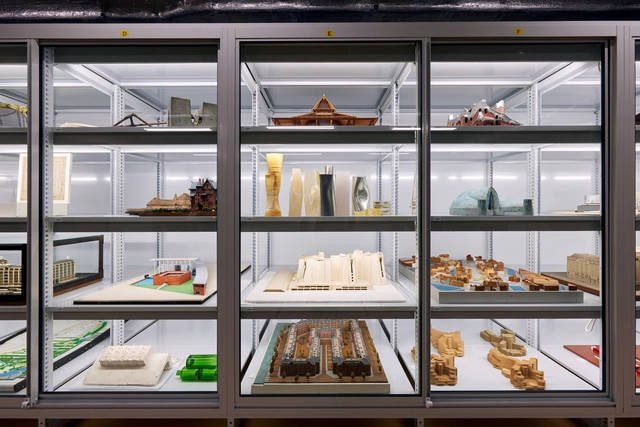
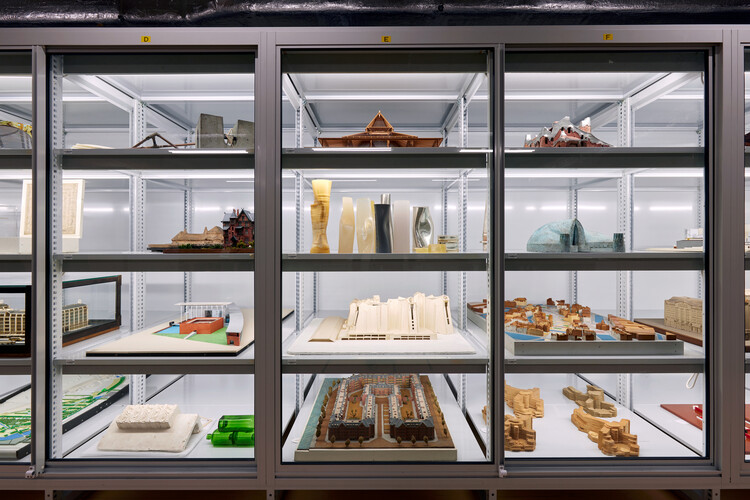
"The public square and civic infrastructure are the front lines against this kind of attack", proclaimed then-President of the American Institute of Architects, Thomas Vonier. The decades since 9/11 and mass violence have pressured cities, in the United States and globally, to reconsider what "safety" means. Is it about barriers, bollards, surveillance? Or is it about trust, visibility, evidence, resilience? Several projects confront these questions at various scales to demonstrate how architecture and forensic thinking can collectively protect communities and civic life.
With “The Rock”, fittings manufacturer Dornbracht presents its first Atelier Edition. The clear lines of the classic MEM meet expressive rock–shaped handles made of solid metal, and finished in Brushed Dark Platinum. Image Courtesy of Dornbracht
In an era of digital precision, AI automation, and mass reproducibility, the value of the human craftmanship is being reimagined rather than lost. It's in this intersection between machine logic and material intuition that Dornbracht, the German manufacturer renowned for sculptural fittings, launches The Rock, the debut piece of its new Atelier Editions.
Inspired by the primal force of natural stone, The Rock is a faucet handle that is a tactile, expressive object that restores individuality and sensuality to the contemporary bathroom and kitchen landscape. Revisiting the iconic MEM series, the design introduces a bold, organically shaped handle, milled from solid metal with artisanal hand-finishing. Each piece becomes a singular creation, where industrial precision meets the intimacy of craft.
Sound, when emitted by a source — whether a person or a piece of equipment — propagates in all directions through space, being reflected, absorbed, transmitted, or diffracted as it encounters surfaces and objects. As a result, every environment has its own acoustic quality, often difficult to perceive without a trained ear or eyes. But sound shapes architecture in subtle yet profound ways, directly influencing how we concentrate in an office, how students engage in a classroom, how patients recover in a hospital, or how an audience connects in a performance hall. Despite its decisive role, acoustics often remain in the background of design discussions, overshadowed by visual and structural considerations.
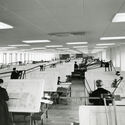
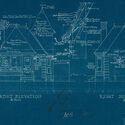
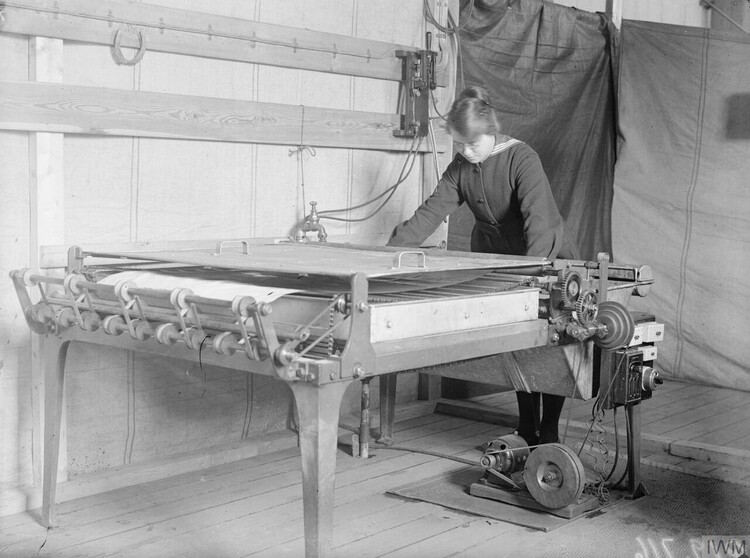
Architecture's design process has always been shaped by the tools at hand. We once drew with pen and ink on fragile sheets, copied by blueprint and guarded against smudges and tears; then Mylar arrived, making revisions and preservation easier and nudging drawings toward a leaner, more deliberate economy of lines. Computer-aided drafting followed, speeding coordination and changing how we think about scale and precision. Today, AI adds another layer—gathering information in seconds and spinning images on command—promising new efficiencies while raising fresh questions about authorship and craft. What we make, and how we make it, has evolved with each tool; the history of our methods is the history of our ideas.
Beginning in the post-war era, Mylar (developed in the 1950s) eased drawing reproduction and hastened the shift from blueprint to whiteprint processes. Before Mylar, simply preserving drawings—keeping an idea intact, legible, and undamaged—was a significant task. Post-war design priorities often leaned toward efficiency, simplicity, and an industrial minimalism aligned with reconstruction needs. The tools reinforced this: architectural work remained predominantly hand-drawn, where every line took time to lay down and even more time to erase. That labour sharpened the economy of drawing; each stroke had to earn its place.
Quarries can be seen as indelible abandoned scars of human resource extraction. Man-made spaces, perceived as voids, and material gain, have fundamentally shaped our accelerating built environment. All the while, the earth stands still as a silent witness. For decades, these open-pit mines have been viewed as a necessary consequence of consumerism and urban growth, their raw, imposing forms a testament to the large-scale extraction of materials essential for building our cities. However, a global architectural movement is now emerging to engage with these existing forms, transforming these subtractive spaces into sites of innovation, collaboration, and renewed purpose.
Architectural professionals recognize how exterior design choices influence both perception and performance. A canopy is more than a functional overhang — it is a visual statement, a layer of environmental control, and a reflection of the project's overall design vision.
Among available materials, custom aluminum canopies have become a preferred choice in modern architecture for their resilience, adaptability, and sleek aesthetics. The following outlines their primary advantages.
As cities and landscapes evolve, architecture is increasingly asked to support well-being,performance, and collective experience. From stadiums that honor deep cultural memory to intimate wellness spaces that foster restoration and connection, sports and wellness typologies are expanding beyond mere functionality. They create environments where movement and health intersect with design quality, sustainability, and social meaning. Today, these spaces range from elite training grounds and recreational clubs to contemplative retreats and inclusive public amenities, shaping how communities gather, heal, and celebrate shared identity.
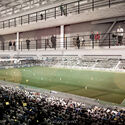
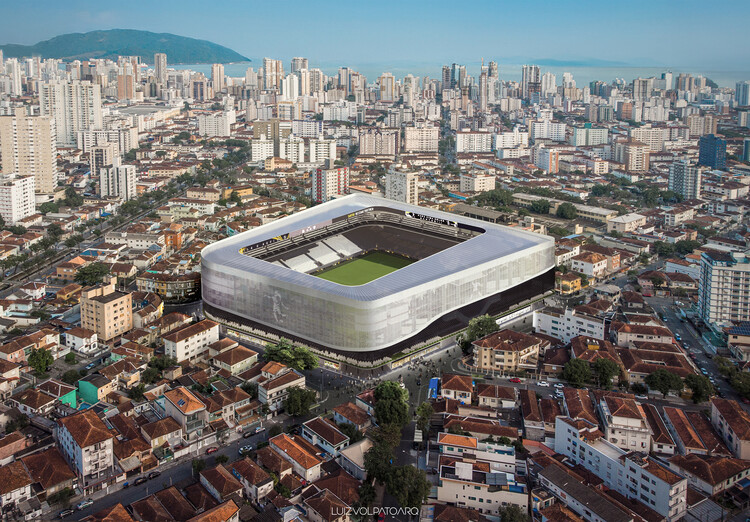
This selection of unbuilt proposals submitted by the ArchDaily community illustrates that diversity. In São Paulo, Luiz Volpato Arquitetura reinvents the historic Santos Futebol Clube stadium with a geometry that preserves fans' memory while introducing new commercial and social uses. In Hanoi, Van Aelst I Nguyen and Partners bring filtered light and fresh air to a dense urban sports complex. In Dubai, RSP proposes Haven, a residential development anchored in holistic wellness and nature-driven experiences, while India's Tropic Responses imagines Aira Club as a climate-conscious leisure hub. High in the Himalayas, Gadasu + Partners carve a meditative spa into mountain stone, and in Isfahan, Arsh4d Studio rethinks segregated women's parks to create inclusive, future-oriented civic space.
Barbie™ has stepped out of the Dreamhouse and into the bathroom for this first-of-its-kind collaboration. Mattel and German architectural fittings specialist HEWI have unveiled the Barbie x HEWI collection – a design-driven range of bathroom products that merges pop culture with universal design principles. Launched in 2025, the collection reimagines HEWI's iconic 477/801 series through Barbie's unmistakable aesthetic, pairing inclusive accessibility with playful yet functional design. With around 40 products, from grab rails and shower seats to LED mirrors and towel holders, the range is set to make a splash in spaces from boutique hotels to maternity wards, children's bathrooms, and private residences.
https://www.archdaily.com/1034436/pop-culture-meets-universal-design-in-the-barbie-x-hewi-collectionEirini Ilia
Architecture is shaped not only by buildings, but by the ideas that make them possible. Before the constraints of capital, regulation, and procurement, there is a moment when architecture is allowed to think aloud. The first confrontation with this fertile moment usually takes place in academia, in the thesis. It is not merely a requirement for graduation, but a space of speculative freedom where architecture formulates hypotheses, builds arguments, and tests positions.
For many, it is also the first opportunity to think beyond the structure of academic programs — a first chance to explore something more personal, unresolved, or even unreasonable. While often seen as an endpoint, the thesis is better understood as a beginning: the first engagement with architecture as a form of reasoning, where the project is not yet a response, but a question.
Buildner, in partnership with the Government of Dubai, has announced the results of the 2024/25 House of the Future competition. Following the success of its inaugural edition in 2023, this second edition invited architects and designers worldwide to develop an affordable, expandable, and forward-thinking prototype home tailored to the evolving needs of Emirati families.
Organized in collaboration with the Mohammed bin Rashid Centre for Government Innovation and the Sheikh Zayed Housing Programme, the competition offered a total prize fund of €250,000 (1 million AED). Winning entries are now being reviewed for potential inclusion in the UAE's national catalogue of housing designs, which provides citizens with a selection of pre-approved, innovative home models.
The North Gate of Taipei, also known as Beimen, stands not only as a reminder of the city's complex history but also as a witness to the changing urban landscape around it, and its shifting attitudes towards the urban spaces bordering heritage buildings. Initially a Chinese imperial frontier, spared from demolition during the Japanese colonial dominion, crowded by overpasses and highways in the postwar modernization efforts, it has recently regained its prominent status through the development of the plaza that now frames it. The gate's resilience through shifting urban priorities and architectural policies tells a story of heritage preservation not only through the built form, but also through the open spaces framing it.
Daylight is one of the most effective tools in architecture. It creates atmosphere, improves comfort, and reduces energy demand. However, integrating daylight successfully requires precision at every project stage, from the first sketches to detailed planning. VELUXBIM tools give architects the flexibility and verified data to make that possible.
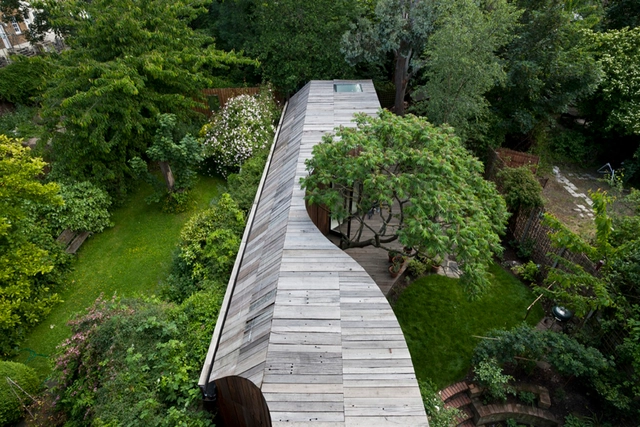
The preservation of the environment and the harmonious integration of the built and natural elements are fundamental principles in contemporary architecture. Various design strategies are employed to achieve this balance, ranging from the revival of vernacular techniques to the use of advanced technologies. However, this concern goes beyond the choice of specific construction systems or innovative materials; it also manifests in the design approach that ensures the preservation of the site's natural elements. In this context, we present 15 homes designed to protect local trees, showcasing how architectural decisions can adapt to nature rather than impose on it.
Series 8670 Casement Window. Image Courtesy of Western Window Systems
Windows have long held an ambivalent role in architecture, as they both define and enclose interiors while simultaneously creating a link to the outdoors. This dual function goes beyond simply meeting construction needs or providing daylight, directly influencing how occupants experience and engage with the views. The 20th century saw the introduction of materials such as steel, aluminum, and glass, which enabled different types of windows with thinner frames and expansive panes, enhancing transparency and reinforcing the visual connection with the surrounding setting.
American architects such as Frank Lloyd Wright and Philip Johnson explored these possibilities to harmonize architecture with landscape. In Fallingwater House, windows and terraces seamlessly connect the house to the waterfall and surrounding forest, whereas the Glass House's minimal framing nearly dissolves the boundary between interior and exterior, bringing the natural environment to life inside the house. Through its evolution, windows have become an element that unites space, materials, and perception, opening new pathways for exploring the relationship between architecture and its environment.
https://www.archdaily.com/1034016/framing-interiors-and-landscapes-in-aluminum-and-glass-to-master-the-viewEnrique Tovar
What is architecture? For some, its traditional role is to bring together imagination, technical knowledge, and problem-solving, allowing architects to design and construct while balancing ideas with the means to realize them. From the stone and wood of early buildings to the steel and concrete of the 20th century, each era demanded not only an understanding of form but also of the properties and potential of the materials in use. This grasp of materials has always been a core part of the creative process, though its scope was limited by the know-how and technologies available.
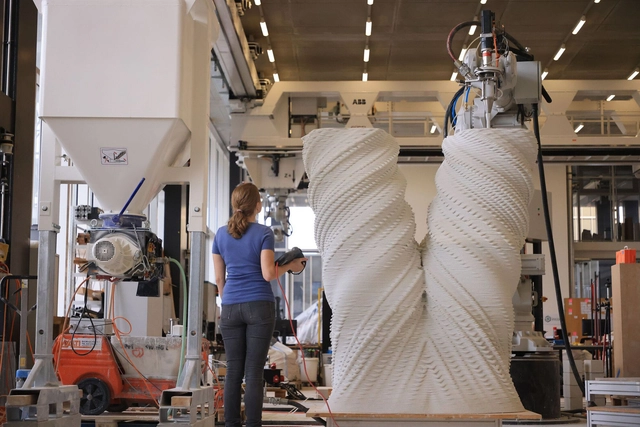
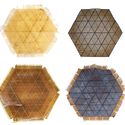
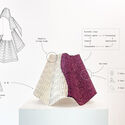
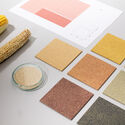
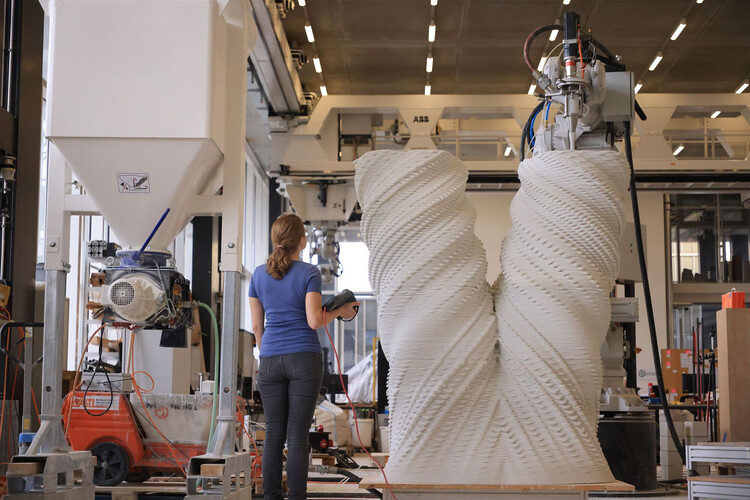
Over time, that balance has begun to shift. Architects have moved from merely using materials to actively designing them, applying scientific principles and experimenting with biological, chemical, and computational processes. This evolution has expanded the possibilities of architecture, intersecting nature, technology, and art, while pushing the role of the architect into a more experimental, science-driven dimension, where the manipulation and creation of materials becomes central to the creative act rather than merely a means to achieve forms or structures.
One challenge connects every office: noise. HushGuide is a new resource from Hushoffice that takes on this ubiquitous design problem headfirst with clarity and detail. It offers a roadmap for fine-tuning any workplace into a quieter, healthier, more productive space using acoustic pods and complementary furnishings, thoughtfully planned. From step-by-step advice to technical guidelines and visual layout strategies, the guide bridges vision with implementation, promising to help architects, designers, and facility managers bring acoustic balance to their own office ecosystems.
Jafar Centre at Dubai College. Image Courtesy of Godwin Austen Johnson
Established in the UAE in 1989 by Chairman Brian Johnson and now led by Managing Director Jason Burnside, Godwin Austen Johnson draws on a British design lineage dating back to 1847 and has contributed to the development of the Middle East's built environment for over three decades. Its 110 multinational professionals, based in Dubai, Abu Dhabi, Sharjah, and the United Kingdom, work across disciplines, combining technical rigor, contextual analysis, and digital methodologies within a collaborative design process.
Barbie™ and HEWI have joined forces to launch a bold sanitary collection that marries timeless Bauhaus design with Barbie's unmistakable pink-hued world. Presented in 2025, the Barbie x HEWI line spans nearly 40 bathroom products, from towel holders to folding support rails, and is designed to be both functional and inclusive. With a focus on individuality and accessibility, the collaboration reimagines the bathroom as a space where design meets diversity, whether installed in boutique hotels, private homes, or healthcare facilities. Rooted in HEWI's German design legacy and Barbie's global cultural influence, the series invites users to experience 'Design with Unlimited Possibilities.'
https://www.archdaily.com/1034331/form-function-and-a-splash-of-pink-inside-the-barbie-x-hewi-collectionEirini Ilia
Urban policymakers and developers increasingly brand projects as temporary, piloting pop-up parks, art installations, and interim structures across global cities. Initiatives are often framed as experimental interventions that activate vacant sites. In practice, however, they frequently serve as provisional strategies to manage underutilized land until more profitable forms of development materialize. The temporary label functions as urban camouflage, obscuring permanent agendas behind provisional rhetoric.
Innovation is at the core of architecture, expressed through new approaches to design, material experimentation, and, of course, ways of living. As a result, the conception of buildings and indoor spaces is constantly evolving. This evolution is especially evident in regions with a rich cultural heritage, such as Spain, where innovation reinterprets traditional ways of relating to space. This attentiveness to memory and daily life extends into interiors, where each intervention has the potential to actively reshape how people experience a space and open new possibilities for living and interaction.
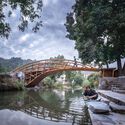
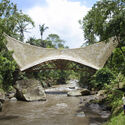
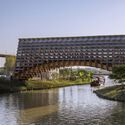
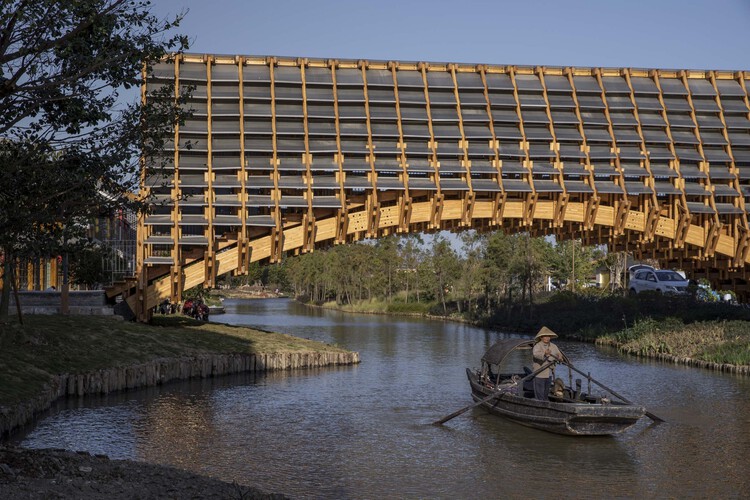
Transcending their role as mere infrastructure, bridges have long served as powerful architectural statements. This expressive potential is now being explored with renewed vigor across South-East Asia, where a growing number of architects are re-evaluating traditional materials. By championing wood and bamboo, these designers are creating distinctive structures that integrate local craftsmanship with contemporary needs, resulting in landmarks that are both functional and deeply rooted in their landscape.
Blending vernacular techniques with contemporary experimentation, Mexico's architectural landscape is shaped by a continuous dialogue between tradition, materiality, and modernity. As the fifth most biodiverse country in the world, Mexican architecture seeks to respond to its vast range of natural environments, climates, and cultural traditions, all within a territory marked by striking contrasts. Reflecting a visible duality, it can embody both exclusivity and act as a catalyst for social transformation.