Produce personalized presentation boards that distill complex concepts into simple visual representations with a few helpful tools and effects.


Produce personalized presentation boards that distill complex concepts into simple visual representations with a few helpful tools and effects.

Having trained at Yale School of Architecture, Spencer Luckey decided to pursue a slightly alternate career designing vertical climbing structures to let children’s imaginations run free. Luckey Climbers are part jungle gym, part work of art that rise up off the ground with undulating platforms sprouting out, creating an abstract space to inspire creativity and intellectual development.
Today, Michel Rojkind is widely known as one of Mexico's most successful, and at times flamboyant, architects of the 21st century. But in spite of his success, his path to architecture was never straightforward; before founding Rojkind Arquitectos, he spent over a decade as a drummer in pop-rock band Aleks Syntek y La Gente Normal, an experience which he actually credits with sparking his interest in architecture. An article released this week by Surface Magazine offers an extensive profile of Rojkind, from his childhood, through his days as a drummer, to the difficulties he experienced on his architectural work--including the disastrous opening of Mexico City's Cineteca Nacional in 2014. Read some excerpts from Surface Magazine's article after the break.
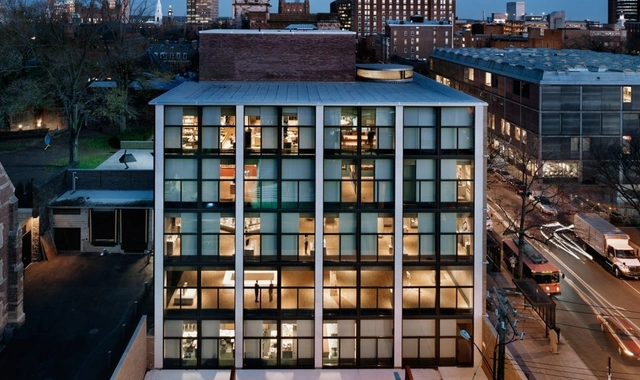
This article was originally published by Common Edge as "How the Restoration of Louis Kahn’s Yale Art Gallery Helped Kickstart Modern Preservation."
I have a distinct memory from my days as an architecture student at the University of California Berkeley in the late ‘80s. During an architectural survey class taught by Spiro Kostof, Louis I Kahn’s Yale University Art Gallery popped up in the slideshow. “Nice building,” I thought, “but what’s with those windows?”
Fifteen years later at Polshek Partnership (now Ennead Architects), I would become the project architect for the construction phase overseeing the rehabilitation of that classic building—the most challenging aspect of which was to replace “those windows.” I came to understand, intimately, how the double-paned window wall had failed almost as soon as construction was complete. Condensation accumulated between the panes, creating the foggy effect that marred my first impression of this groundbreaking building.


The architecture profession is in a perpetual debate concerning the myriad issues that impact how we practice and how that work can and should impact the world around us. As the chair of the AIA’s Young Architects Forum, I am keenly aware of the problems facing the next generation of practice leaders: inefficient practice models that lead to overworked, underpaid, and highly unsatisfied staff. We hear repeatedly that a seismic shift in the way firms operate is necessary to successfully move the profession forward and retain talent.
In October, the AIA held their first ever Practice Innovation Lab, looking to develop new practice models to raise the value of architects and the services that they provide to their clients with the goal of sparking a new debate that could challenge the status quo in firm management.Ten teams of six were formed with the intent of creating 10 new innovative practice models which would be pitched, “Shark Tank” style, after a daylong hackathon. Attendees then voted on the best practice model for the People’s Choice Award. Among the 10 pitches, there were five major themes to come out of the Practice Innovation Lab, which are discussed in more detail below:

A new children’s urban playground has captured the attention and energy of children of all ages in the center of Valparaíso’s Cultural Park (Chile). The metallic structure is 40 meters long and has a colorful undulating path where children can run, jump, hide and slide.
La Serpentina is one of the public space projects designed by ELEMENTAL (Alejandro Aravena). It was built for Somos Choapa in Chile and is currently in Valparaíso as part of the XX Biennial of Architecture and Urbanism of Chile.
La Serpentina follows a similar design to the equipment at the Bicentenary Children’s Park (2012) in Santiago. La Serpentina is one of two interventions entered by Somos Choapa in the Biennial. The second project is a prototype with a series of touch screens installed in the main area of the Cultural Park of Valparaíso, accounting for over 100 concrete initiatives of the project.

While architects are known for promoting sleek, clutter-free spaces, we have to ask: is this the best way to inspire creativity? Personal preference certainly plays a large part in how you respond to a stark table-tops with nary a stray pencil--maybe this is your nirvana. Or perhaps it’s theoretically preferable but once you have to sit down and work, you find yourself uninspired.
Author Tim Harford researched and compiled a number of examples for his book Messy in which “creativity, responsiveness, [and] resilience” were “integral to the disorder, confusion and disarray.” Do you agree? Or perhaps more importantly, what are you surrounded by when you’re in the zone and at your creative peak?

This article was originally published by Common Edge as "Did the AIA Take a Pass on Postmodernism?"
People perceive architecture in different ways. “Style” is often an easy classification, traditional or modern. Popular residential work is often categorized dismissively by architects as “vernacular.” The branding of the product of the profession, an oeuvre of work embodied in buildings and their meaning in our culture as celebrated by the American Institute of Architects, has many levels of recognition, from local AIA Chapter Awards, to national Awards.
No AIA Award has more meaning or lustre inside the profession than the “Twenty-five Year Award” for buildings that have “stood the test of time.” The award has been given continuously for the last 56 years. This year, the Design Jury chosen to select a seminal building has opted not to give an award to anything, any building 25-35 years old.
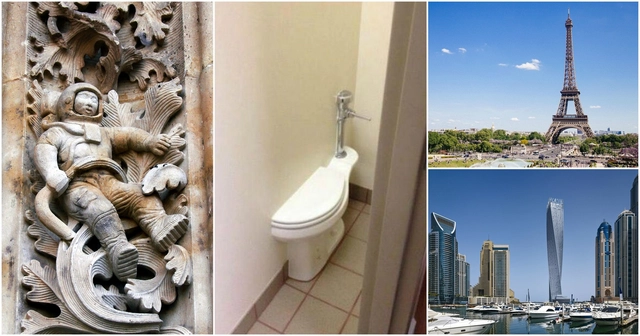
Fact-checking website Snopes (also known as the internet's first fact-checking website) has now been debunking Urban Legends and setting the record straight when it comes to "questionable" and/or fantastic stories for 23 years. In its two decades of operation, it has amassed not only thousands of well-researched explanations to perplexing myths but has also garnered the praise of news outlets like The New York Times, CNN, and Forbes. So what can Snopes tell us about our dear profession? Get your facts right with our list of dubious (and some not-so-dubious) claims about architecture, buildings, and city design.
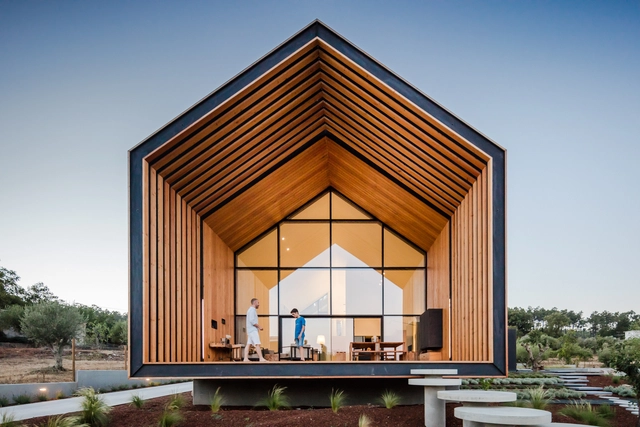
The appearance of people in architectural photography is rare. When they do show up, people are usually added to help the viewer better understand the size and design elements of a building. However, in recent times, several photographers have warmed to the idea of capturing houses with their inhabitants, showing the people who live there and how they inhabit the spaces. After the success of our previous round-up of people photographed with their houses, this week we bring you 10 more houses captured by renowned photographers such as Hiroyuki Oki, Peter Bennetts, and Ricardo Oliveira Alves.
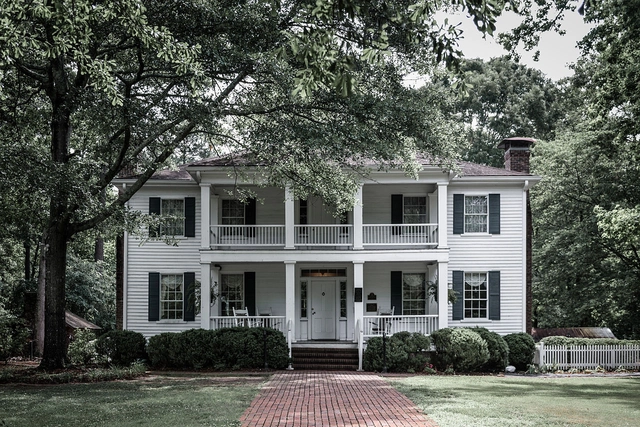
This short excerpt is from Places Journal's article "Prop and Property: The house in American cinema, from the plantation to Chavez Ravine," which in turn was adapted from John David Rhodes' book Spectacle of Property. The article, which investigates the many layers of property inherent in the production and viewing of movies, investigates in particular the films Gone with the Wind and To Kill a Mockingbird, revealing how their themes of race and property are made even more complex by the practicalities of Hollywood filmmaking.
Perhaps the most mysterious and desired feature of housing is the privacy of property, and especially the property of and in the house. Property, however, is fungible and alienable. Whatever is promised by the house is radically susceptible to violation, displacement, and loss. Often the experience of property’s violation or redefinition involves an unwelcome reminder that the house is not a very private place after all. Partly we know this: we have all spent time in living rooms, on porches, or in other spaces of the house in which it is nearly impossible to say where the public ends and the private begins. But when property’s inherent instability is experienced vividly—whether in “real life” or in representation—we are forced to confront the tenuous relationship between public and private, as well as the tenuousness of all property relations as such.

We were hoping for it to happen in the early 2000s. We saw it coming with the opening of the exhibition “Postmodernism: Style and Subversion, 1970 – 1990” at the V&A in London in 2011. But now, after recent discussions on the umpteenth supposed “postmodern revival,” it is finally sure: the word “postmodernism” is back and it’s here to stay. But as clear as it is that the word “postmodernism” is once again fashionable, it is not really clear what we mean when using it. Indeed, this word has been used to imply every possible meaning: architects have used it to describe fashionable and “cute” designs, some critics have used it to categorize everything that is colorful, while some theorists have been using it to affirm that, because of this concept, architecture has surrendered to technology or form, becoming nothing more than a caricature of its own presupposed moral values.
Whether we agree with such commentaries or not, there is one thing that we still need to discuss: what does “postmodern” mean? And, even more urgently: what could it mean today? After all, if we have to deal once again with one of the most misinterpreted and contradictory words ever introduced in our field, we should at least discuss what it means, before using it.

This article was originally published by Archipreneur as "How Drones Can Be Used in Architecture."
Small unmanned aerial vehicles (UAVs), commonly called drones, are gaining in popularity not only among the general public and consumers, but also among professionals working in the AEC industry. We’ve seen ambitious predictions for the use of drones on construction sites, as transportation vehicles and marketing tools.
While this new technology, like 3D printing and robotic fabrication in general, promises to revolutionize the architectural profession, it is useful to know to what extent its practical application can affect the way archipreneurs work. It seems that, for now, drones have great potentials when it comes to several aspects of the profession.


According to The Economist, 47% of the work done by humans will have been replaced by robots by 2037, even those traditionally associated with university education. While the World Economic Forum estimates that between 2015 and 2020, 7.1 million jobs will be lost around the world, as "artificial intelligence, robotics, nanotechnology and other socio-economic factors replace the need for human employees."
It's not science fiction: the MIT Technology Review warns that the current debate over raising the minimum wage for fast food employees in the United States would accelerate their own automation. On the other hand, Silicon Valley personalities and millionaires like Elon Musk and Richard Branson warned that the impact of automation will force the creation of a universal basic income to compensate not only the massive unemployment that would generate these new technologies but also the hyper-concentration of the global wealth.
One advocate of this idea is the British economist Guy Standing who wrote at the Davos Forum that it "would be a sensible precaution against the possibility of mass displacement by robotization and artificial intelligence," but will automation affect architects? Will we really be replaced by robots?

Universal Favourite have developed a range of modular chocolates Complementary that are formed in 3D printed moulds to satisfy any architect with a sweet tooth. The architectural forms have been developed to establish a connection between the two pieces to be eaten as one, complementing one and other.

The recent availability of automated design and production techniques is changing the development of building details. With parametric and algorithmic design methods and the use of digital fabrication, new abilities are required from architects for the design of details, at the same time as new players are beginning to take part in their development.
Although not always given the necessary attention, architectural details are of extreme importance for many aspects of a building. They can define its theoretical expression and technical character, and impact its production process, its assembly method and even its ecological footprint. Contemporary architecture shows a new interest in detailing, which should not be confused with a return to the appreciation of artisanal work.[1] This new interest is related to the recent re-involvement of the architect with the physical making of buildings, as a result of the use of digital technologies.[2] The new “digital master builder” [3] counts on file-to-factory processes, in which the morphology of construction details is directly related to the knowledge of the available production processes.

CF Møller’s Storkeengen (Stork Meadow) is a landscape solution, bringing the town of Randers closer to the longest river in Denmark, the Gudenå River to prevent the threat of flooding. The storm protection uses the wetland meadows as an attractive nature park to handle the raised stormwater level, whilst a recreational pathway increases accessibility with the nature areas across the river.

At ArchDaily, we're lucky enough to know a fantastic network of architecture professionals, allowing us to share the world's best architecture with our audience. But our articles wouldn't be the same without the many photographers who dedicate themselves to making incredible, inspiring images. For that reason, here we present the 50 most popular architecture images of 2017.
.jpg?1515170830)
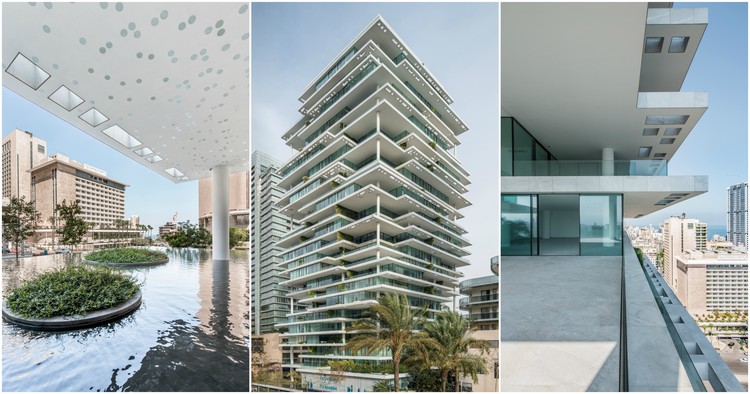
In the rapidly burgeoning city of Beirut, the post-war building boom is far from over. Much like its middle-eastern neighbors, it boasts of a plump share of designer architecture—as critic Oliver Wainwright refers to it, “a diverse shopping list”. It is here that the Beirut Terraces, a residential complex designed by Herzog & De Meuron, rises up to 119 meters, occupying a prominent place in the city’s skyline. In this collection of photographs by Bahaa Ghoussainy, one sees the Beirut Terraces from within, getting a glimpse of both the interior, as well as the multiple, unique views offered from inside the building.

These are interesting times. There is in the English language a curse, purported to have been translated from the Chinese, but most likely of British origin: “May you live in interesting times.” The meaning, of course, is that it is better to live in uninteresting times of peace and stability than to experience the curse of living in “interesting” times of conflict and flux. Such a fate would only be wished on one’s enemies. So, yes, it might indeed seem that we have had the misfortune to live in very interesting times. We are confronted with multiple, intertwined crises of great complexity: climate change, political instability, mass migrations, hunger, and social polarization, just to name a few.
There are no easy solutions to these complex problems, but there are many energetic, talented, and intelligent people trying to address them, from a range of academic backgrounds. Architects, however, have largely been excluded from the conversation, or have, in fact, chosen to exclude themselves. The general public cannot be expected to turn to architects for solutions to today’s complex problems if we, ourselves, do not insert ourselves into the conversation. Following the examples of heroic figures in architecture, both past and present, we often understand the legitimate path of the architect to be a narrow one, limited to the built environment. After all, one might reason, that is what we’ve been trained to do. Isn’t it?
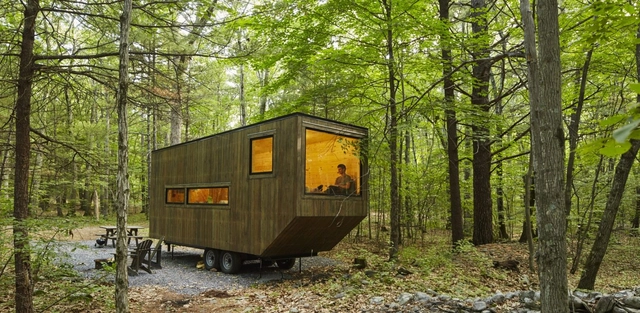
This article originally appeared on Archipreneur as "5 Amazing Tiny Houses and Their Financing Models."
The tiny house movement is taking the housing market by storm, with small homes appearing all over rural and urban areas across the world. They are an affordable and eco-conscious solution to the narrowing housing supply and can offer mobility to an increasing population of young professionals. Tiny houses come in many forms and sizes—from micro-apartments and office spaces, to cabins on wheels and trailers. Similarly, the financing models vary, depending on function, local building codes, size requirements and whether they’re made as commercial products or private housing solutions.
The best option is to design and build the house yourself, using savings instead of worrying about interest rates and debt. Some tiny house manufacturers offer in-house payment solutions to their customers. Other options are RV loans, peer-to-peer lending and crowdfunding. We assembled a list of 5 beautiful tiny houses built for different purposes.

The second edition of the workshop organized by the School of Architecture (EA) of Universidad San Sebastián (Chile) had as main guest the Spanish architect Alberto Veiga, founding partner of Barozzi / Veiga and author of projects such as the Philharmonic Hall in Szczecin and Ribera del Duero Headquarters. In addition to engaging in a series of debates with the participants of the workshop, Veiga had a public conversation with the Chilean architect Pedro Alonso (winner of the Silver Lion at the Venice Biennale 2014) and shared the studio’s work and reflections on architecture in a master lecture.
A total of 10 teams from different schools of architecture in the country came together for the 2017 version of this initiative, reaching a total of 67 participants among students and instructors. Seeking to favor the production of projects capable of promoting debate, each day of the workshop dealt with a different topic featuring guest scholars: Ernesto Silva, director of the School of Architecture (strategies), Pedro Alonso, renowned professor and researcher (arguments) and Albert Tidy, dean of the Faculty of Architecture (materialization of the project). For the closing day, on Friday, October 13, there was a joint display with the final projects produced by the different teams (which remained open to the public for the next couple of weeks), and a camaraderie activity to celebrate both the gathering of the schools and the quality of the experience and its results.

Even with tech like virtual reality, augmented reality, 3D printing, computational design and robotics already reshaping architecture practice, the design community is just scratching the surface of the potential of new technologies. Designers who recognize this and invest in building skills and expertise to maximize the use of these tools in the future will inherently become better architects, and position themselves for entirely new career paths as our profession evolves. It is a uniquely exciting moment for architecture to advance through innovative use of technology. Even just a decade ago, designers with interests in both architecture and technology were essentially required to pursue one or the other. Now, with architecture beginning to harness the power of cutting-edge technologies, these fields are no longer mutually exclusive. Rather than choose a preferred path, today’s architects are encouraged to embrace technology to become sought-out talent.
With much written about how technology is changing the way architects work and the products we can deliver to clients during a project’s lifecycle, there has been less focus on how technology is changing career opportunities in the profession. Architecture companies are now hiring roles that didn’t exist even three years ago. Here’s a look at five emerging career paths design technology will make possible in 2018 and the immediate future.

For those who want to become a citizen of the UK, they must fulfill all the citizenship process requirements which include passing the seemingly difficult Life in the UK Test. Many of the British population themselves would struggle with some of the questions posed despite living in the UK from birth as they demand historical, geographical and literary knowledge.
The test contains 24 multiple choice questions that can cover anything from the British political system all the way to Glastonbury and a roast beef dinner. As architecture and art take up a large part of British culture, knowledge of such topics is considered necessary for anyone who wants to become a UK citizen. Have a go yourself, and see how well you know British architecture:
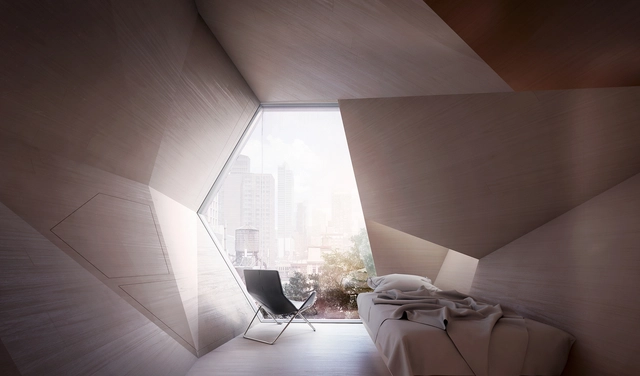
Across the world, homelessness in fast-paced metropolises such as New York City is at a record high since the Great Depression of the 1930s, more than 60,000 people are in shelters every night while many others must find a place to sleep on the streets, the subway or other public spaces. The real estate industry has caused the increasing rents and a high demand for any remaining plots; many of the new builds are luxury apartments, rather than the low-cost housing that is so desperately needed. As a result, thousands of people are forced onto the streets and charities struggle to provide adequate help for everyone.










.jpg?1515171598 "© Bahaa Ghoussainy")
.jpg?1515171343 "© Bahaa Ghoussainy")
.jpg?1515170657 "© Bahaa Ghoussainy")
.jpg?1515171187 "© Bahaa Ghoussainy")