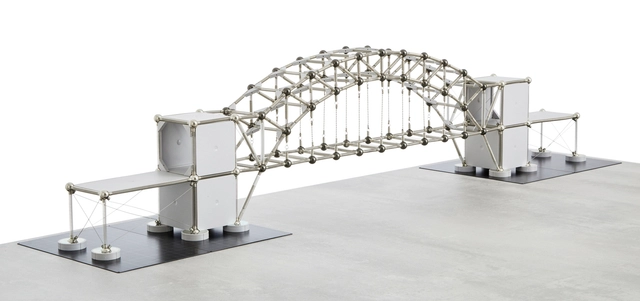
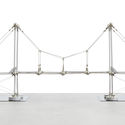
Sydney Harbour Bridge made using Mola kit. Image Courtesy of Mola
It is often difficult to detect structures' potential deformations and behaviors with the naked eye, which is why interactive education and model-making have proved to be some of the most beneficial methods of learning about structural design.
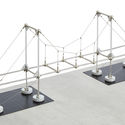
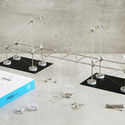
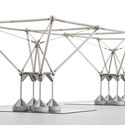
To help with the learning of structures in a more playful and intuitive way, Brazilian brand Mola, have developed Mola Structural Kits, a selection of interactive physical models that simulate the behavior of architectural structures and create countless design combinations.
Following the success of the Structural Kits 1 and 2, Mola will be launching the Mola Structural Kit 3 in a Kickstarter campaign in a couple of weeks, and to celebrate, the innovative company has once again teamed up with ArchDaily for another exclusive giveaway, offering 10 of our readers the chance to win a complete structural kit, along with additional accessories.
It is expected that within the next couple of decades, Earth will have absolutely nothing left to offer whoever/whatever is capable of surviving on it. Although the human race is solely responsible for the damages done to the planet, a thin silver lining can still be seen if radical changes were to be done to the way we live on Earth and how we sustain it.
Since architects and designers carry a responsibility of building a substantial future, we have put together an A-Z list of every sustainability term that you might come across. Every week, a new set of letters will be published, helping you stay well-rounded on everything related to sustainable architecture and design. Here are the terms that start with letters A, B, and C.
Brutalism is merely a basic equation of reinforced concrete + geometry, but while the result of this equation is rather minimal, the architecture movement remains as one of the most debatable styles, ranging between “fascinating structures” and “is it even worth preserving”.
While many perceive Brutalism as “ugly” or “incomplete”, 17 year-old Arhan Vohra found glory in these modernist structures and launched Brutal Delhi, a photography website of New Delhi’s Brutalist buildings, shot through his camera lens.
The Midnight Charetteis an explicit podcast about design, architecture, and the everyday. Hosted by architectural designers David Lee and Marina Bourderonnet, it features a variety of creative professionals in unscripted and long-format conversations that allow for thoughtful takes and more personal discussions. Honesty and humor are used to cover a wide array of subjects: some episodes provide useful tips for designers, while others are project reviews, interviews, or simply explorations of everyday life and design. The Midnight Charetteis available for free on iTunes, YouTube, Spotify, and all other podcast directories.
On this episode of The Midnight Charette Podcast, Sharon Zukin discusses the economic and social impact the technology industry has had on cities around the world, the relationship between gentrification and the commodification of modern life, building improvement districts and the increasing securitization of public spaces, and the desire to live in authentic neighborhoods.
https://www.archdaily.com/915882/sharon-zukin-on-privately-managed-public-spaces-gentrification-and-urban-authenticityThe Second Studio Podcast
Although ancient buildings carry compelling architectural presence, demolition or radical change is often their fate. While some architects prefer to introduce thoroughly new structures, others choose to honor the works of historic architects, who built the basis and foundations of structures that helped shape up cities today.
For the refurbishment of Paris’ Hotel Fouquet Barrière, located one block facing Avenue des Champs Elysées, Edouard François was selected to renovate the entire property, including offices, spa services, façade, and courtyards. François’ design strategy was rather unambiguous, using only two keywords as reference: “COPY-EDIT”; a reinterpretation of the “old” through contemporary technologies and modified material.
Louisiana Channel has released a video interview conducted with world-renowned architect Daniel Libeskind, where he advises young architects to follow their dreams, take risks, and expose themselves to the possibilities of short term sacrifice for long term gain. Reflecting on the pace of change, Libeskind says “the world is always changing, but not very slowly. It changes just suddenly. It doesn’t change by evolution, it changes suddenly. If a young architect realizes this, it is a big help. It took me a while to realize that.”
https://www.archdaily.com/915734/watch-daniel-libeskinds-advice-for-young-architectsNiall Patrick Walsh
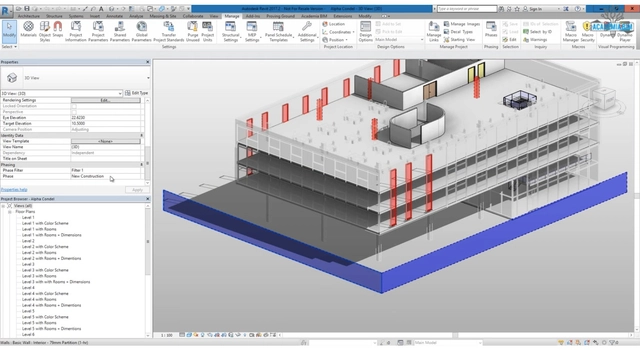
When you start to consider implementing the BIM (Building Information Modeling) methodology, whether as an independent professional or as a construction firm, it's necessary to take into account three key aspects: the technology, the process, and the people who bring it all together. In this article, we will address the key points in every one of these three aspects in order to give you insight into how to best start using BIM.
Courtesy of Workshop Architects, Cooper Carry, OLIN, and Gilbane
Today in the United States, buildings account for nearly 40% of carbon emissions (EESI) and 78% of electricity usage. The most sustainability-focused firms run energy simulations for less than 50% of their projects (10% for a typical firm) and only doing so late in the process when design changes are limited and insufficient to combat red flags found in the performance report (AIA 2030 report). We can make building performance widespread once we help the entire community discuss the subject in terms of investment and return. Especially during a project pursuit, since having the buy in from the whole team helps ensure the key project metrics are met. Owners are seeking out teams who are using actual metrics and data driven processes that affect their bottom line. This new approach to practice is what makes the younger teams’ standout and will benefit both the climate and the bottom-line. Here are 5 ways to talk about building performance in your project pursuits:
ArchDaily is working with the "Eyes of the City" curatorial team, to publish a series of articles by international architects, designers, writers and thinkers who will discuss the ways in which new technologies - and Artificial Intelligence in particular - might impact architecture and urban life. After the publication of the curatorial statement by Carlo Ratti, Politecnico di Torino and SCUT, we are hosting a text by Chinese architect Yung Ho Chang, curator of the first edition of Shenzhen Biennale in 2005. The open call for proposals for the “Eyes of the City” will run from April 1st to May 31st: www.eyesofthecity.net
https://www.archdaily.com/915461/we-are-looking-back-yung-ho-changs-response-to-curatorial-statement-at-shenzhen-biennial-2019Yung Ho Chang
The Bachelor of Architecture (B. ARCH) at the American University in Dubai was inaugurated in the fall of 2009 and much like Dubai, is young, dynamic, and has achieved considerable milestones over a short period of which NAAB accreditation is at the top. The architecture department along with the Interior Design and the Visual communication departments make up the School of Architecture, Art, and Design (SAAD), which is the only school outside of the USA to have obtained the three primary accreditations (NAAB, CIDA, and NASAD). These accreditations reflect high education standards and quality assurance of SAAD’s programs.
https://www.archdaily.com/914527/the-american-university-in-dubai-celebrates-the-work-of-students-at-the-yearly-architecture-senior-showcaseSponsored Post
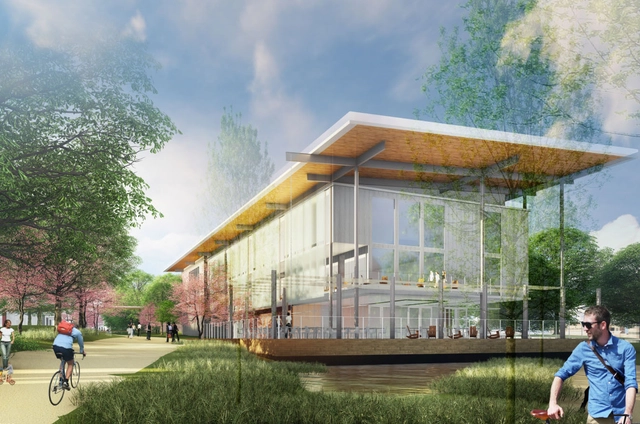
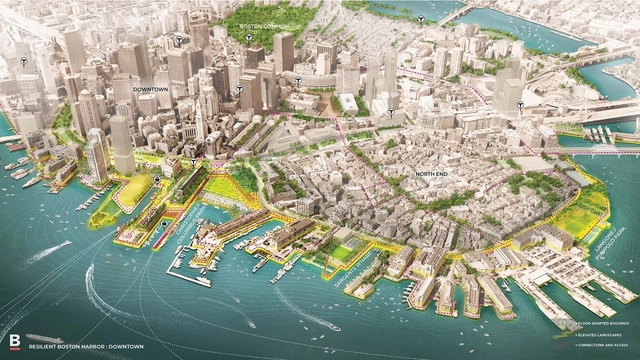
As the world recognizes Earth Day 2019, the public discourse is increasingly dominated by citizen action across the world manifesting a widespread fear and frustration at a perceived lack of action by governments and officials to confront the issue forthrightly. From the Extinction Rebellion protests that have gripped London, to school student strikes across 125 countries, global cities are increasingly finding themselves on the front line of a battle to limit the effects of global warming.
https://www.archdaily.com/915510/how-three-major-us-cities-are-preparing-for-climate-changeNiall Patrick Walsh
Last year I was invited to teach design studio for the first time by Tsinghua University in Beijing, home to the top architecture school in China and one of the strongest in the world, according to the latest international ratings. There, I met husband-and-wife teaching practitioners Qing Fei and Frank Fu. As soon as I witnessed their unorthodox way of teaching by challenging students with rigorous questioning, I wanted to interview them. Their innovative approach did not fit my impression of how architecture is tackled in China. Fei and Fu are Tsinghua graduates; they moved to America in the late 1980s where they studied, worked, and researched both art and architecture for almost two decades.
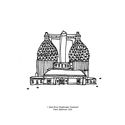
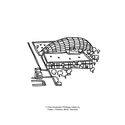
Now that it's time for the Easter Holidays, kids (and young-at-heart adults) will be busy searching for colorful eggs hidden here and there. As for you architecture lovers, illustrator Chanel Dehond took egg hunts to the next level and found a way to make the activity a bit more relatable.
Take a look at Dehond's eggceptional collection of illustrations, inspired by some of your favorite structures from all over the world.
If you come to think of it, the urban development of the world's largest cities is like playing a game of Tetris; No matter how condensed or crowded, for architects, there is always room for more. However, this act of 'structural stacking' often creates unique architectural compositions.
As a follow-up to his first photo-series, Singaporean photographer and visual artist Kevin Siyuan put together 'Corridors of Diversity', a short montage of communal corridors and HDB (Housing and Development Board) block facades, featuring the dynamic designs and forms of Singapore's densely built environment.
On the weekend of the 5th-7th of April, the city of Weimar celebrated the opening of the recently-completed Bauhaus Museum, along with its permanent exhibition of the 100-year history of Bauhaus.
Located near the Neue Museum, the concrete structure was designed by German architect Prof. Heike Hanada. The architect followed the school’s minimalist approach, and developed a 5-storey cubic building, with a clearly defined geometric form and horizontal grooves all around the facade. The museum’s permanent exhibition, which was designed and curated by Barbara Holzer of Holzer Kobler Architekturen, houses the world’s oldest Bauhaus collection, bringing forth debates on contemporary design and showcasing the school’s most notable inventions.
In an exclusive interview with ArchDaily, Holzer explains the creative process of designing the exhibition space, and some of the challenges she faced while exhibiting Bauhaus' distinguished works.
#donotsettle is a project about Architecture and Experience. Watch 100+ more videos related to Architecture on their YouTube Channel, or see what we are up to on Instagram and Facebook.
10 Years in the Making
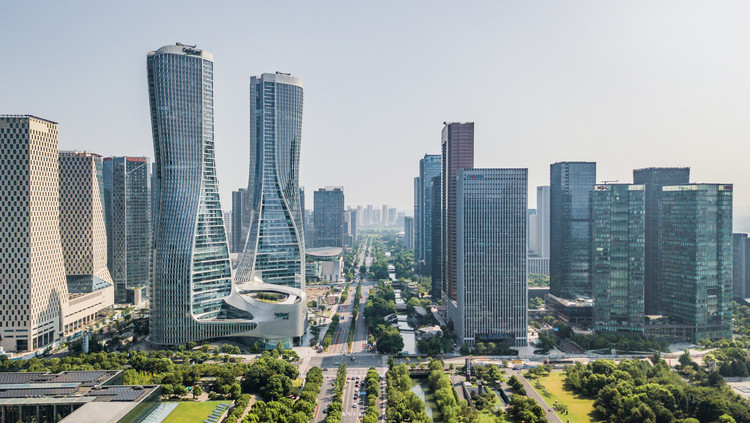
When Raffles City was completed in the second half of 2017, it undoubtedly marked an important moment for UNStudio. This large-scale project (almost 400 000 sqm) formed the first presence of UNStudio in the ‘Middle Kingdom’. And they entered the large market with a bang. The 2 towers rise to 250 meters in height, gently weave, twist and turn to form a dynamic ensemble while incorporating a large-scale mall at its base. The project is located in Hangzhou, a city about 150 km from China’s financial center Shanghai. While Hangzhou isn’t that well known outside China, the city is one of the most prosperous on the mainland. Nowadays perhaps more famous by being the home of technology juggernaut Alibaba than the more idyllic west lake, Hangzhou is rapidly developing with new areas, districts and financial centers. Raffles City is a key point in one of those new districts. Located along the river, Qianjiang New Area is aiming high. Skyscraper after skyscraper rising out of the ground, the one bolder than the other. But no doubt that UNStudio’s dynamic lines shape the new face of Hangzhou.
















_5738.jpg?1556027783&format=webp&width=640&height=580)
_5498.jpg?1556027648 "© Laurian Ghinitoiu")
_5957.jpg?1556027812 "© Laurian Ghinitoiu")
_5926.jpg?1556027680 "© Laurian Ghinitoiu")
_7973.jpg?1556027669 "© Laurian Ghinitoiu")
_5738.jpg?1556027783)

.jpg?1555740229&format=webp&width=640&height=580)


.jpg?1555740229)