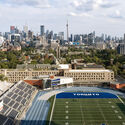
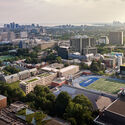
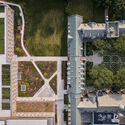
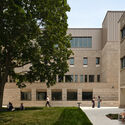
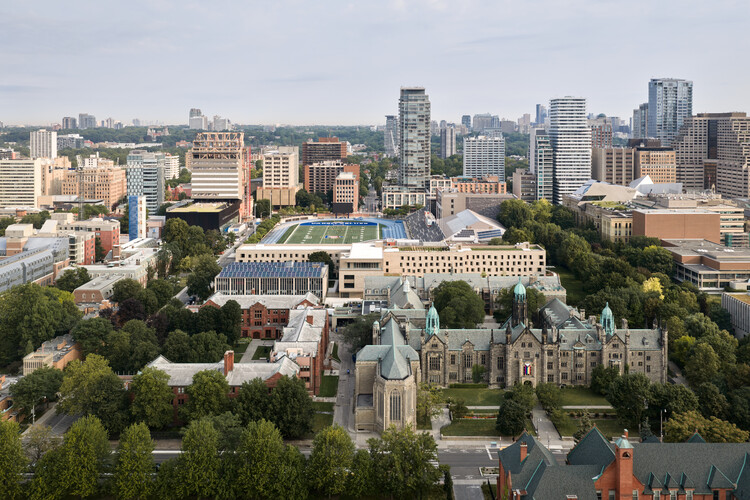
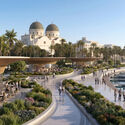
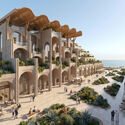
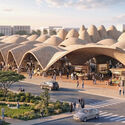
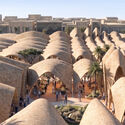
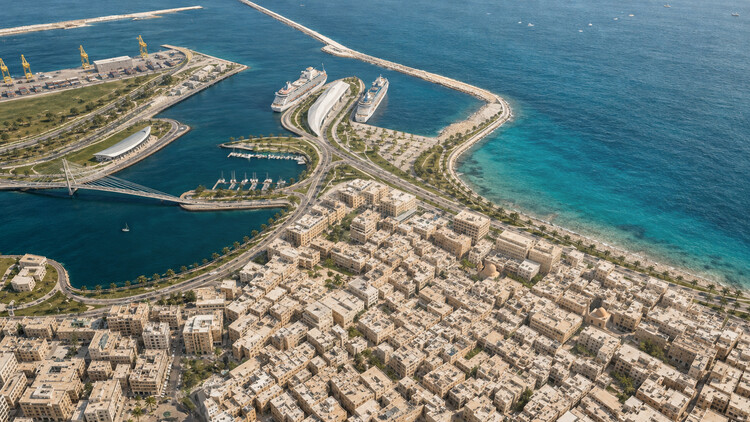
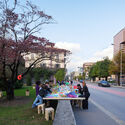
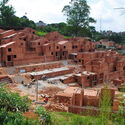
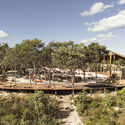
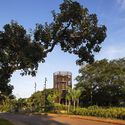
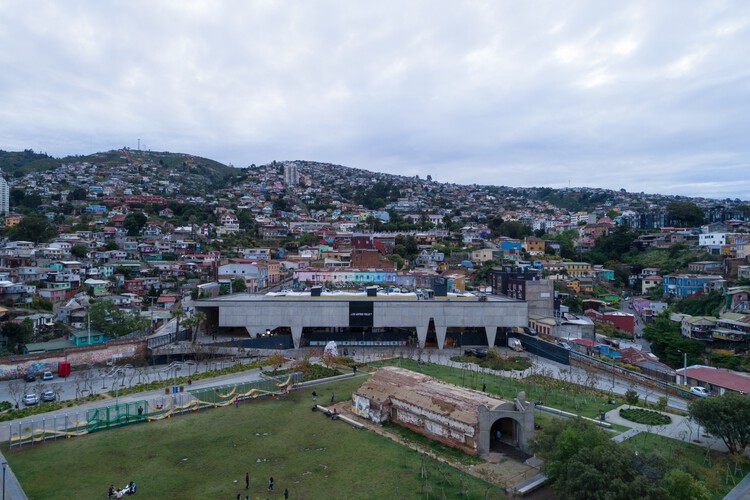
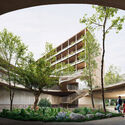
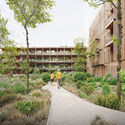
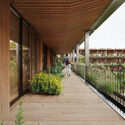
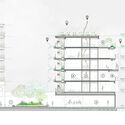
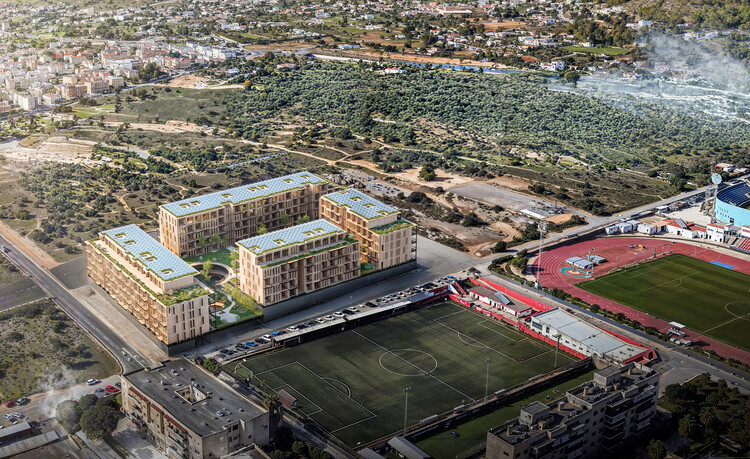
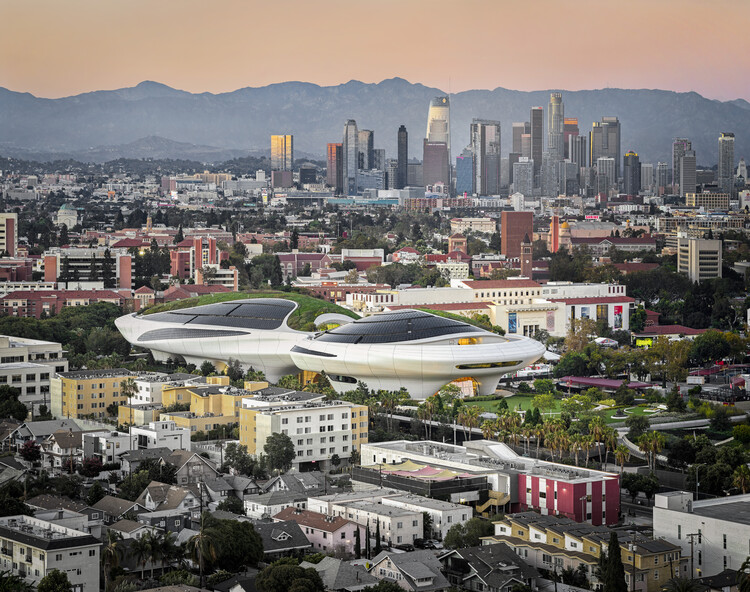
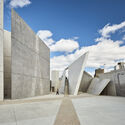
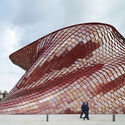
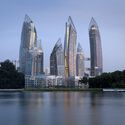
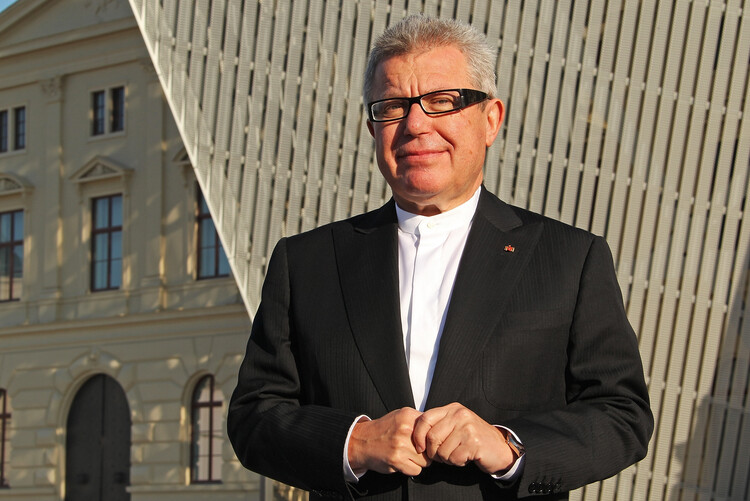
Hunnu City Ecological Corridor. Image Courtesy of Bechu & Associés
Bechu & Associés has been selected as the winner of the international open competition for the masterplan of Hunnu City, a new satellite city planned south of Ulaanbaatar, Mongolia. Announced in 2025, the winning proposal establishes a long-term urban framework for a 31,503-hectare site located near Chinggis Khaan International Airport, with phased development planned between 2025 and 2045. The project forms part of Mongolia's broader territorial strategy under the Ulaanbaatar 2040 Master Plan and the national Vision 2050 framework, positioning Hunnu City as a new emerging major city intended to support population decentralization, economic diversification, and long-term urban resilience.
The future Las Vegas Museum of Art (LVMA) will be the city's first stand-alone museum, designed by Pritzker Prize-winning architect Francis Kéré. In fall 2024, the City of Las Vegas granted LVMA two acres of land in Symphony Park, neighboring the city's downtown arts district, as part of a public-private partnership. The project is intended to serve the city's more than 2.4 million year-round residents, including nearly 300,000 students living within a 10-mile radius of the park, as well as tens of millions of visitors from around the globe. The 60,000-square-foot building was designed by Kéré Architecture, which teamed up with Skidmore, Owings & Merrill (SOM) to provide Las Vegas with "a gathering place for community and a beacon for the cultural world," and is scheduled to open in 2029.
This week's architectural news reflects a broad engagement with how institutions, practitioners, and cultural platforms are positioning themselves in relation to both legacy and long-term change. Across museums, galleries, and major cultural events, architecture is being framed as an evolving public infrastructure, one that must respond to expanding collections, shifting curatorial models, and growing expectations around accessibility, sustainability, and civic presence. Alongside these institutional developments, professional recognitions and appointments have foregrounded practices rooted in site specificity, conservation, and critical research, highlighting architecture's role in mediating between historical contexts and contemporary needs.
December 18 marks the United Nations' International Migrants Day, which aims to highlight the need for safer, fairer, and more inclusive migration systems. Proclaimed on December 4, 2000, the day seeks to recognize the multiple dimensions of migration beyond its economic and humanitarian aspects. According to the UN, mounting evidence indicates that international migration is beneficial for both countries of origin and destination. In this sense, International Migrants Day offers an opportunity to spotlight the value of the possibility to migrate and the contributions of millions of migrants worldwide to the cities and cultures in which they are integrated.
Aligned with this perspective, the UN's 2025 theme, "My Great Story: Cultures and Development," emphasizes how human mobility drives growth, enriches societies, and helps communities connect, adapt, and support one another. At the same time, International Migrants Day also acknowledges the increasingly complex environment in which migration occurs. Conflicts, climate-related disasters, and economic pressures continue to force millions of people from their homes in search of safety or opportunity. From both perspectives, it is essential to recognize the role of architecture in building integrated, multicultural communities and in responding to the conditions that lead people to migrate from their territories in the first place.
Kistefos Museum has announced Swiss architectural practice Christ & Gantenbein as the winner of its international design competition for a new museum building at the Kistefos site in Jevnaker, approximately one hour north of Oslo. Conceived as a significant new addition to one of Europe's leading sculpture parks and cultural destinations, the project is scheduled to open in 2031 and will house the art collection of Kistefos founder and collector Christen Sveaas through the Christen Sveaas Art Foundation. Following the announcement, Christ & Gantenbein will now work with Kistefos Museum to further develop the concept design toward realization.
The 8th edition of the Lisbon Architecture Triennale is scheduled to take place in the autumn of 2028. As in previous editions, the curatorial process begins three years in advance, allowing time to fully develop the project and build on the work of earlier Triennales. The 7th edition, curated by Ann-Sofi Rönnskog and John Palmesino, founders of Territorial Agency, ran from October 2 to December 8, 2025. It was structured around the question How heavy is a city?, proposing an understanding of cities not as fixed objects but as dynamic systems extending beyond urban boundaries into the atmosphere, oceans, and deep time. This approach was explored through three main exhibitions, Fluxes, Spectres, and Lighter, alongside a wider set of initiatives. With the 7th edition concluded, the Triennale has announced Portuguese architect and academic Joaquim Moreno as Chief Curator of the upcoming edition, responsible for developing a new curatorial project for the event.
Studioninedots is leading the transformation of a 200-year-old tobacco factory site into Niemeyer, a mixed-use urban complex accommodating digital innovation, cultural venues, hospitality, education, and manufacturing within the existing industrial buildings. Located on Paterswoldseweg in Groningen, the Netherlands, the 38,000 m² project is commissioned by MWPO, with MWPO and Campus Groningen jointly acting as clients for the Shared Facilities. Currently in the design phase (2023–2025), the project's provisional timelines indicate a phased construction start beginning with the factory's southern section in 2026, followed by the northern section in 2027. The Amsterdam-based office's proposal opens the formerly closed industrial ensemble to the public, introducing cafés, galleries, workshops, and shared workspaces distributed across interior streets and adjacent park areas.
Zaha Hadid Architects, in collaboration with RINA as team leader, Studio Plicchi, WSP, STI Engineering, and BC Building Consulting, has won the international competition to design Malpensa Hospital (Grande Ospedale della Malpensa) in Italy. Commissioned by the Lombardy Regional Health Authority, the project will consolidate the existing Gallarate and Busto Arsiziohospitals into a single medical campus serving the area between Milan and Varese, with a catchment of nearly one million residents.
The Plum Village BuddhistMonastery in southern Dordogne, France, has received construction approval for the first phase of its ongoing collaboration with Dutch architecture studio MVRDV. The approvals cover the Upper Hamlet masterplan phase, including the construction of new guest houses and the renovation and expansion of the monastery's bookshop, as well as a new nunnery building at the Lower Hamlet. Developed in collaboration with co-architect MoonWalkLocal and consultants OTEIS, VPEAS, and Emacoustic, the wider project includes two masterplans for the Monastery's Upper and Lower Hamlets, four communal guest houses, a new nunnery, and the transformation of an existing bookshop. Working on a non-profit basis, the design team prioritises renovation alongside the use of circular and bio-based materials, aligning the architectural approach with the monastery's philosophical principles. The proposed additions aim to better accommodate the annual visitors who travel to Plum Village to engage with the teachings of Engaged Buddhism.
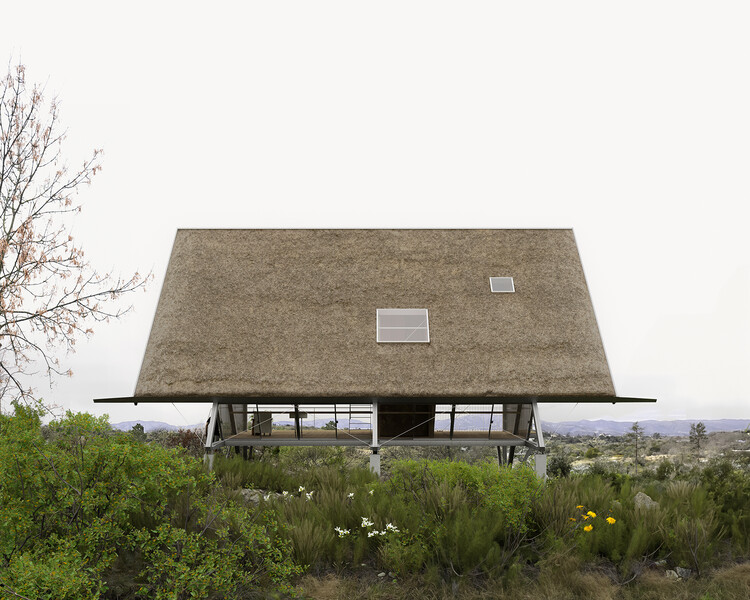
Caochan na Creige, designed by Izat Arundell, has been announced as the winner of the RIBA House of the Year 2025 award. The timber-framed, stone-clad self-build is located in Scotland's Outer Hebrides, occupying a compact rural plot defined by exposed weather conditions and a distinct geological setting. Built by and for its architect owners, the house was selected for its clear response to site constraints, its material strategy, and the consistency between design intent and construction.
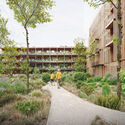
Timpaan, Blauwhoed and White Arkitekter, together with SeARCH, Space&Matter, Atlas Architects and DS Land Landschapsarchitecten, have been selected for the proposed development of The Erven, a timber-based neighbourhood planned for Hoofddorp in the Amsterdam metropolitan region. The winning proposal forms part of a major phase of the Lincolnpark area and outlines approximately 519 homes designed around four courtyards, or erven, inspired by the traditional Dutch farmstead.
LUMA Arles / Gehry Partners. Photography by Iwan Baan. Image Courtesy of Gehry Partners
This week's news reflects architecture's simultaneous engagement with cultural reflection, professional legacy, and the material realities of building cities. The passing of Frank Gehry prompted a broader reassessment of late 20th- and early 21st-century architectural practice, while Shigeru Ban's selection as the recipient of the 2026 AIA Gold Medal brought renewed attention to socially driven design and the profession's public responsibilities. These milestones unfolded alongside wider conversations sparked by Human Rights Day, examining architecture's role in equity, housing access, and safety worldwide, and forward-looking discussions setting the architectural agenda for 2026 through major international events and cultural programs. At the scale of the built environment, these themes are echoed in three projects shaping future urban conditions: Powerhouse Company's transformation of a former limestone quarry into a mixed-use neighbourhood in Bærum, near Oslo; the groundbreaking of Riverside Wharf, a hospitality-led development contributing to the regeneration of Miami's River District; and Foster + Partners' approved retrofit of 1 St James's Square in London, focused on structural retention and long-term urban resilience.
As preparations advance for the Milano Cortina 2026Olympic Winter Games, set to take place from February 6 to 22, 2026, this edition introduces one of the most geographically wide-ranging configurations ever implemented for the Winter Olympics. Extending across two cities, two regions, and two autonomous provinces, the competitions will be staged over more than 22,000 square kilometres of Northern Italy. Metropolitan venues in Milan are paired with longstanding Alpine centres in Cortina d'Ampezzo, Livigno, Bormio, Anterselva, and Val di Fiemme, creating a framework that bridges urban and mountain contexts. More than 90 per cent of the venues are existing or temporary facilities, reflecting a strategy centred on adaptive reuse, selective upgrades, and long-term integration into regional sport and cultural infrastructures. Nearly 2,900 athletes will compete in 116 events, including the debut of ski mountaineering and several new mixed-gender formats that signal evolving approaches to winter sports programming.
Human Rights Day is observed annually on 10 December worldwide. It commemorates the anniversary of the Universal Declaration of Human Rights in 1948. Drafted by representatives with diverse legal and cultural backgrounds from all regions, the Declaration was proclaimed as a common standard of achievement for all peoples and all nations. For the first time, the document set out fundamental human rights to be universally protected and inalienable, entitling every human being to them regardless of race, colour, religion, sex, language, political or other opinion, national or social origin, property, birth, or any other status. Today, the Declaration serves as a global blueprint for international, national, and local laws and policies. Available in 577 languages, it is the most translated document in the world. The United Nations has set the theme for this year's observance as "Human Rights, Our Everyday Essentials," aiming to "reaffirm the values of human rights and show that they remain a winning proposition for humanity."
Narikala Fortress (Earliest parts dates back from 4th century), Tbilisi, Georgia. Image Courtesy of National Archives of Georgia
Ubani — Tbilisi Cityscape Research Center has released "Kala," the first publication in its new Guide to Tbilisi Districts series, offering an in-depth look at one of the Georgian capital's oldest urban areas. As a non-profit organization dedicated to researching and promoting Tbilisi's architectural heritage and landscape, Ubani develops public programs, exhibitions, workshops, and events aimed at making the city's built environment more widely understood. This inaugural guidebook continues that broader mission, situating Kala within the long-term evolution of Tbilisi's urban fabric.
The European Capital of Culture (ECoC) initiative was launched in 1985 and has, to date, been awarded to more than 60 cities across Europe. It is designed to celebrate and promote cultural diversity on the continent, strengthen European citizens' sense of belonging to a shared cultural space, and foster culture's contribution to urban development. In practice, the designation has proven to be a catalyst for urban regeneration, tourism growth, the strengthening of cities' international profiles, and the improvement of how they are perceived by their own residents. European Capitals of Culture are formally designated four years before the title year, allowing time to plan, prepare, and embed the program within a long-term cultural strategy, establish European partnerships, and ensure that appropriate infrastructure is in place. In 2025, the European Capitals of Culture are the German city of Chemnitz and the Slovenian city of Nova Gorica. For 2026, the designated cities are Oulu in Finland and Trenčín in Slovakia.