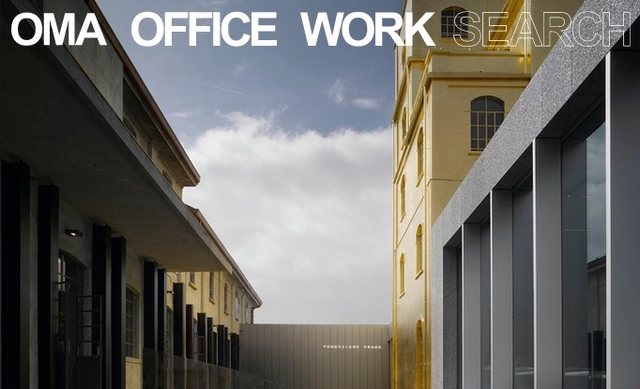
The Office for Metropolitan Architecture (OMA) has launched a new website in an effort to make their work more accessible. A collaboration with Oslo-based Bengler and NODE, oma.eu"functions as an omnivorous sensor," says OMA, that "redefines the office’s digital presence and offers a tool for many different users." Check it out for yourself, here.
In May, OMA celebrated the opening of Fondazione Prada. Set out to “expand the repertoire of spatial typologies in which art can be exhibited and shared with the public,” the project resulted in an “unusually diverse environment” staged within a historic 20th-century distillery south of Milan’s city center that goes beyond the traditional white museum box.
There is perhaps no better display of modern architecture’s historical victory than Jacque Tati’s film Playtime. In it, a futuristic Paris has left-for-dead the grand boulevards of Haussmann, in favor of endless grids of International Style offices. The old city is reduced to longing reflections of Sacré-Cœur and the Eiffel Tower in the glass of these shiny new monoliths. But the irony central to the film is that this construction is created through mere surface treatments, and as the narrative unfolds, cheap mass-production withers in a world where the veneer has triumphed over craftsmanship and polish. In short, Modernism hasn’t always been all it's cracked up to be.
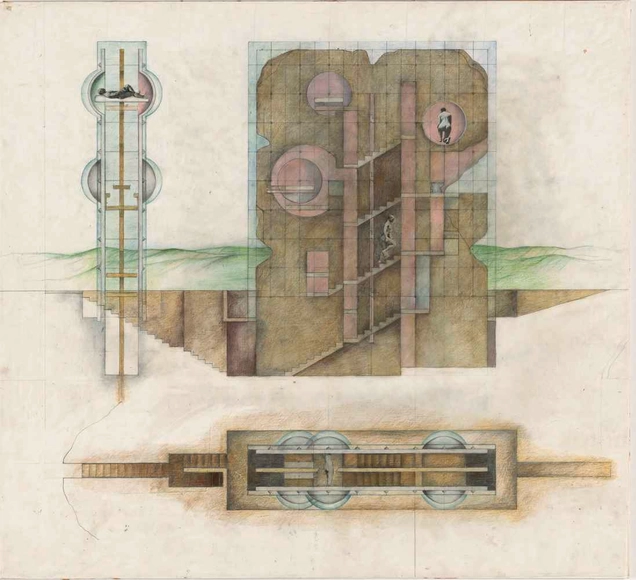
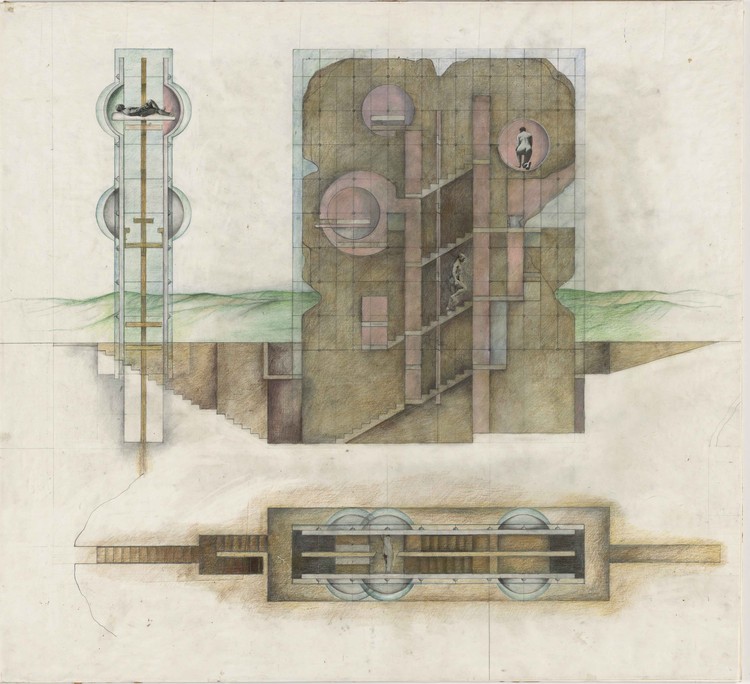
In the Museum of Modern Art’s new exhibition, "Endless House: Intersections of Art and Architecture," the simplicities of mass-market modern homes are abolished by artists and architects who, in examples from the 1940s to the present, have chosen to use the dwelling as a platform for universal messages and as an arena for architectural experimentation. In the same way that photography freed painting from the terrestrial concerns of realism, the simplicity of modernism liberated artists and architects to subvert extant conventions of buildings.
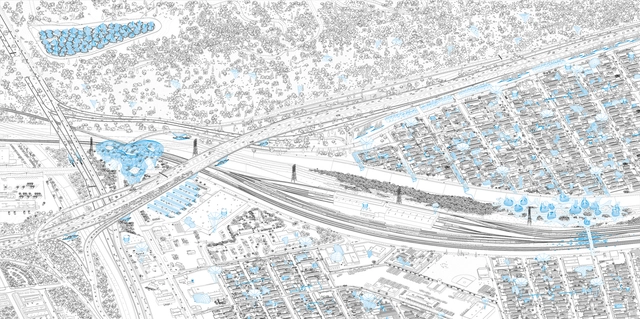
Lorcan O’Herlihy Architects (LOHA) has designed a speculative system of interventions for the Los Angeles River that “examines the relationship between urbanization and water use to develop new models of densification that recognize and tap into existing ecological and infrastructural patterns.” Called WATERshed, the design is part of the A+D Museum’s ongoing “Shelter: Rethinking How We Live in Los Angeles” exhibition that explores new typologies of housing in Los Angeles.
With their model for urban regeneration, LOHA hopes to address issues like the ongoing California drought, as well as the United Nation’s prediction that by 2030, nearly half of the world’s population will be living in areas of high water stress. Thus, the plan utilizes the Los Angeles River as a resource for water use and management in order to provide a path for sustainable growth in Los Angeles, and an example for other cities.
It has been a week since the conclusion of this year's Burning Man festival in Black Rock City, Nevada, and images of its most imaginative structures are still surfacing. Even Bjarke Ingels has published a few of his favorite findings from the week-long event. Read on to see of the best structures and installations found at Burning Man 2015.
Mecanoo has unveiled plans for a new £350 million engineering campus for the University of Manchester. Known as the "Manchester Engineering Campus Development (MECD)," the project will be the UK's largest, single construction endeavors ever conducted by a higher education institution.
"The campus will help demonstrate how UK engineering is one of the most creative industries in the world – a key feature on the ground floor of the main hall will be a dedicated ‘maker space’ which will provide dynamic workshops for students and academics to share ideas and innovate," says Mecanoo.
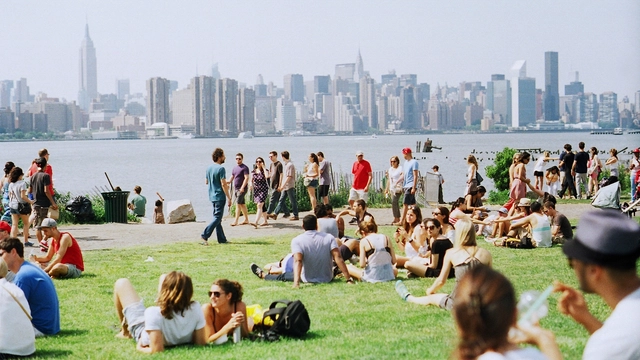
For the latest episode of The Urbanist, Monocle 24's weekly "guide to making better cities," the team explore the role of bilateral inspiration between metropolises across the world. Examples of cities relying on one another to draw lessons from and progress can be seen across the world: from the ways in which London and New York City tackle similar urban problems, to how a bike-sharing scheme in Paris has proven to be contagious. The show also visits Vienna, where its Imperial heritage is being imitated the world over, and the show ponders whether the fact that every continent "claiming to have its own Venice" is actually a good thing?
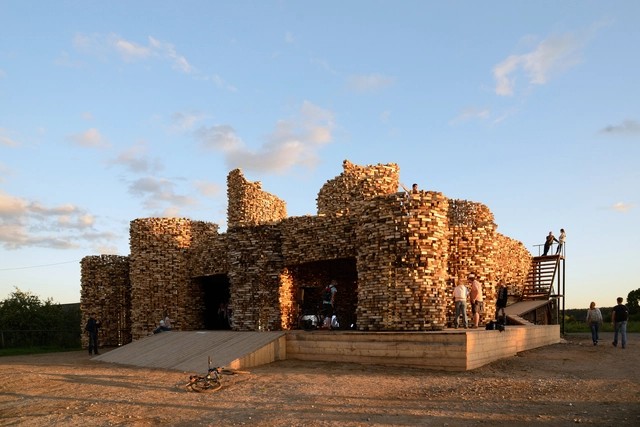
Russian artist Nikolay Polissky has completed yet another of his impressive, handcrafted installations. Located in Zvizzhi Village, in the Ugra National Park in Russia, Polissky’s newest creation—called SELPO, which stands for The Rural Consumer Association, in Russian—wraps around an abandoned soviet building, which used to house the village shop.
The project utilizes off-cut materials from Polissky’s previous work, which has ranged “from temporary pieces of landscape proportions, collectively created […] to public art works in city parks or sculpture parks […] in Europe and in Russia, as well as museum installations.”
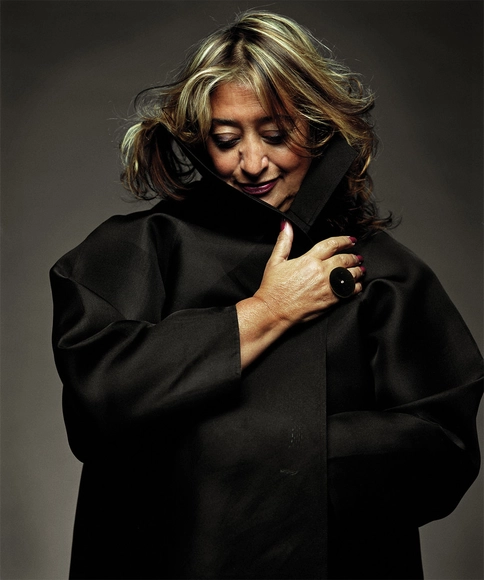
The first woman to receive the Pritzker Prize in 2004, Iraqi architect Zaha Hadid tells newspaper El País that she was fortunate as a child to have traveled with her parents and seen some of the world’s most impressive works of architecture and engineering feats.
Awed by the Mosque of Cordoba, Hadid says that the contrast between the darkness and the marble of the central church left a lasting impression, making this one of her favorite works to this day.
While the term “ecosystem services” may sound like a corporate antithesis to the course of natural order, it is actually an umbrella term for the ways in which the human experience is favorably altered and enhanced by the environment. Ecosystem services are therefore an important factor in creating cities which provide the maximum benefit to their residents with the minimal harm to their environment.
Aiming to find out how city planning can affect the provision of these ecosystem services, a new study published in Frontiers in Ecology and Environment by researchers at the University of Exeter's Environment and Sustainability Institute and Hokkaido University's Division of Environmental Resources evaluates the repercussions of rapid and fragmented urbanization and the possible detriment to ecosystem services and human well-being. In particular, the study is concerned with approaches to land-use and the outcomes they yield on the environment. Studied are two opposing tactics: a “land-sharing,” sprawl model (think Atlanta or Houston), or “land-sparing,” tight-knit urbanism (think New York or Tokyo).
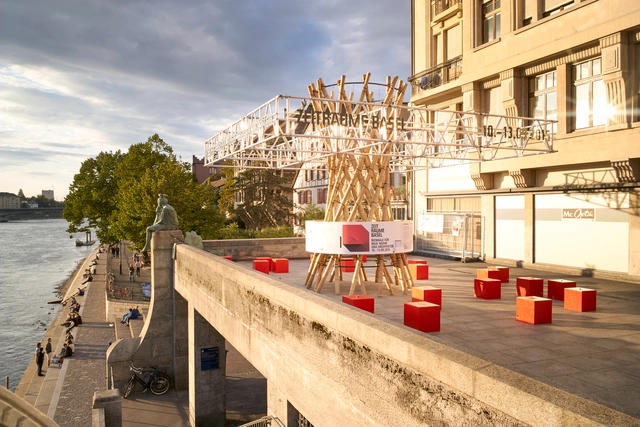
HHF architects has created a temporary pavilion for the first biennial for contemporary music and architecture ZeitRäume in Basel, Switzerland.
At nearly six meters tall, the installation is constructed of simple parts: “a large drum made of bamboo poles, with a roof of scaffolding brackets.” While seemingly basic in construction, the pavilion additionally features movement in the roof portion, when blown by the wind.
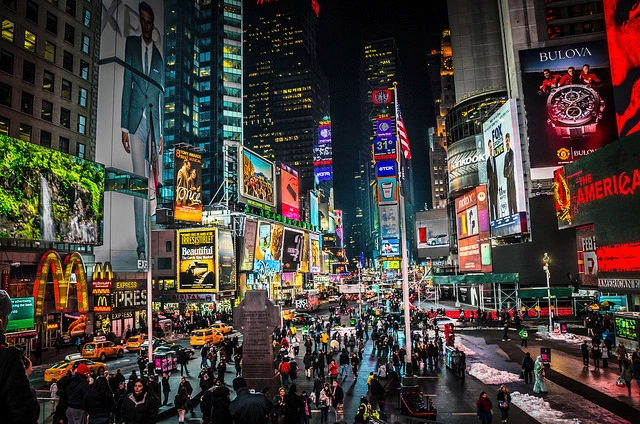
Danish architect and urban planning expert Jan Gehl has weighed in on New York Mayor Bill de Blasio's threat to remove Times Square as a"kneejerk reaction" to aggressive panhandling. Recounting beloved square's evolution, Gehl argues that public spaces need more than just to exist: "Civic culture needs cultivating and curating... Public spaces like Times Square are the great equalizer in cities: Improvements in the public realm benefit everyone. The city should view the challenge of Times Square’s pedestrian plaza not as a reason for retreat, but as a call to create a diverse, dense, intense experience of public life that we can all enjoy." Read Gehl's remarks, here.
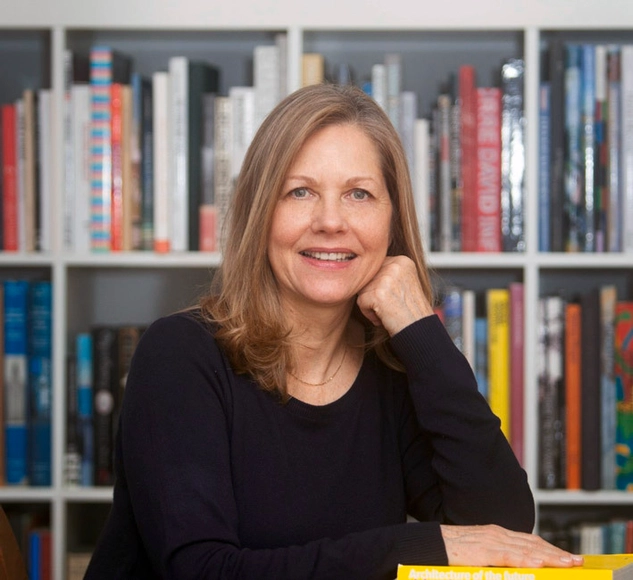
Martha Thorne has been appointed as dean of the IE School of Architecture and Design in Madrid. Thorne, who is currently IE's vice dean, has had a major impact on the profession by serving as the executive director of the Pritzker Prize for nearly a decade. As BDOnline reports, Thorne will retain her Pritzker role as she furthers "the school's aim to bring the best of innovation and management to architectural disciplines.”
US President Barack Obama has awarded San Antonio architect and landscape architectEverett Flywith the 2014 National Humanities Medal. Harvard GSD's first African-American graduate, Fly is being recognized for his work in "preserving the integrity of African-American places and landmarks."
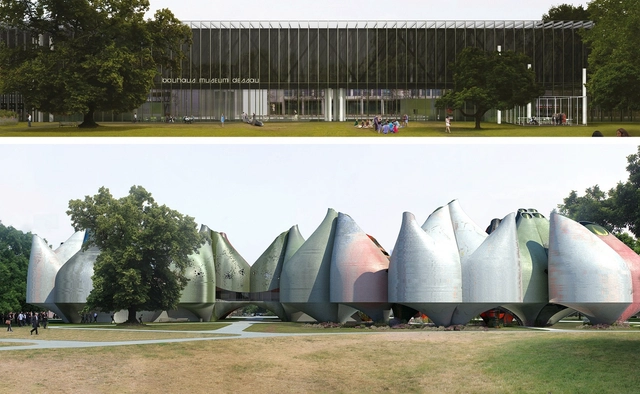
The Foundation Bauhaus Dessau has announced two winners in its competition to design the new Bauhaus museum. The winning teams of Gonzalez Hinz Zabala and Young & Ayata, from Barcelona and New York respectively, were selected from a total of 815 designs submitted after the competition was launched earlier this year. In its press release, the Foundation stated that both designs "continue the Bauhaus tradition, albeit from very differing approaches." With the new museum planned for completion in time for the Bauhaus' 100th anniversary in 2019, the Foundation has stated that they "will commence parallel negotiations with the two first award winners" in order to award the commission for the final design, with the intention of resolving the stalemate within the next three months.
The foundation also announced designs winning third and fourth place in the contest, as well as three designs awarded commendations. Read on to find out more about all seven designs.
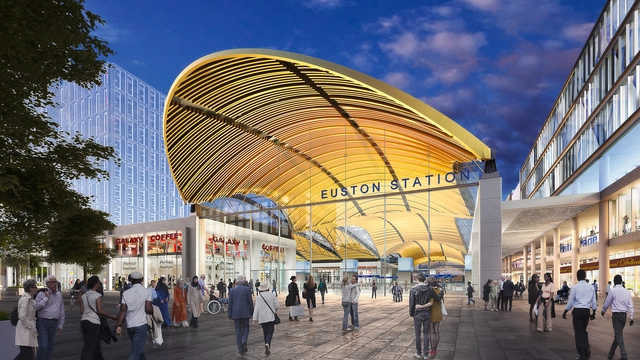
Grimshaw Architects, in collaboration with Arup, have revealed renderings for their proposed 25,000 square metre High Speed Two (HS2) railway terminal at Euston Station, in north London. They have developed an "incremental staged design" that will allow for the construction of the new high speed station while maintaining all existing services. Fronted by a 38 metre glazed façade, the new entrances will transform the internal circulation spaces into a "light and airy destination with shops, restaurants, and cafés."
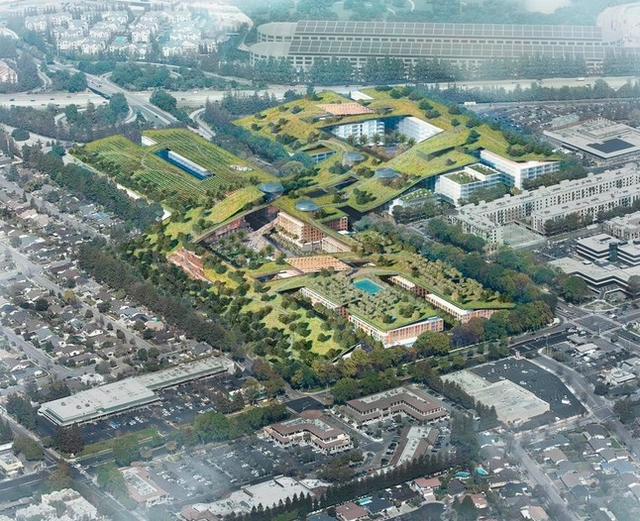
Rafael Viñoly and OLIN have unveiled plans to transform Cupertino's Vallco Shopping Mall into a new mixed-use neighborhood that boasts the "world's largest green roof." The current plans call for a 15-block sustainable town center with 625,000-square-feet of retail, two-million-square-feet of office space and 800 residential units. All this, if approved, would be topped by a 30 acre public green space with a 3.8 mile trail network that runs through orchards, vineyards, an amphitheater and play areas.
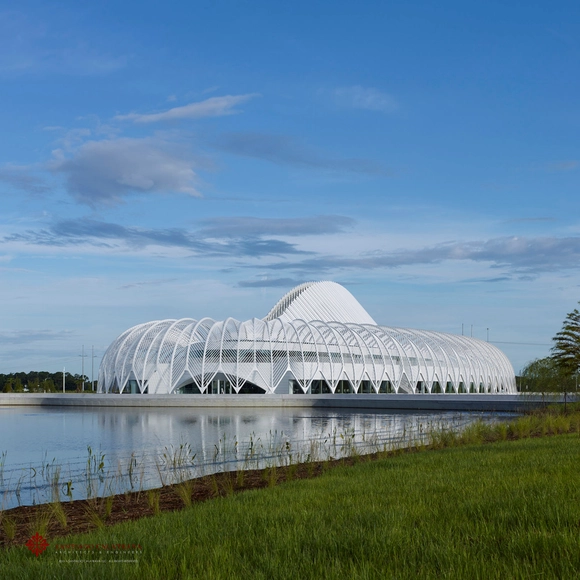
“Educating, particularly young people, is one of the most noble tasks that exist,” saidCalatrava in response to the award. “The Innovation, Science and Technology Building aims to be itself a tool to achieve the highest level of education for young people.
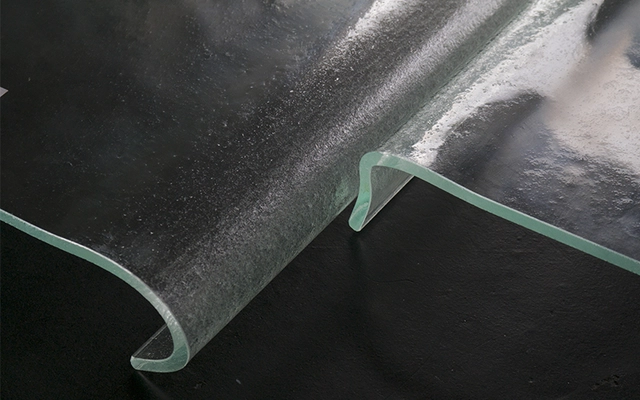
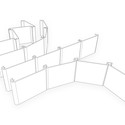
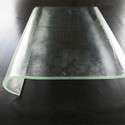
A lot of architects love glass. A lot of architects love curves too. The two can be combined, but in most cases this is a highly bespoke and expensive process, with individual sheets of glass being heated in a kiln over a mold created especially to fit the desired curve. Cheaper options are available though, and one common approach is to use smaller sections of flat glass - often a U-shaped channel section - angled to approximate a curve.
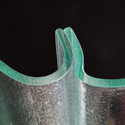
But this strategy also leads to a problem: as the desired curve gets tighter, the gaps between the glass segments get more and more apparent and less efficient as enclosure. To address this problem, German designer Holger Jahns has created "c--c," an update to standard U-shaped channel glass which can be fixed together at any angle and create any curve without gaps appearing between the panels.
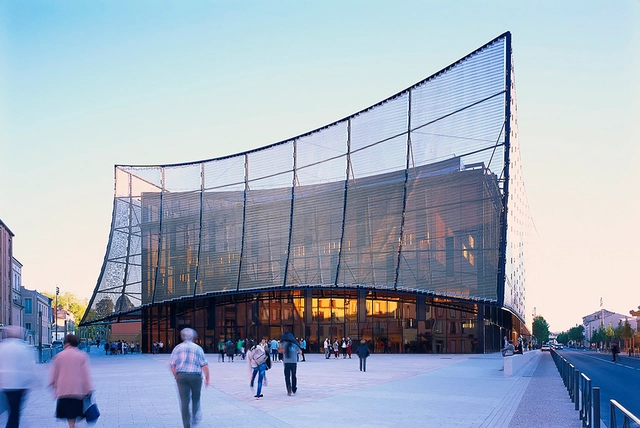
“Architecture should not be closed on itself, with its back to the context," says Perrault. "It should always be in resonance with the environment, whether natural or urban. We architects should always think about our buildings’ place in the urban design, and about the city itself as a whole.”
The Australian Institute of Architects’ International Chapter has announced the winners of its 2015 International Architecture Awards, which honors projects by Australian architects abroad.
Out of 26 entries, the jury, chaired by Grant Marani, awarded five projects, and commended four more in the interior, public, residential, and small project architecture categories.
Awarded projects are now also in the running for the 2015 Jørn Utzon Award for International Architecture, to be announced at the National Architecture Awards in November.
Read on for the full list of awards and commendations, after the break.
The Jewish Museum in Berlin opened its doors 14 years ago today. Inspired by a lecture given by Daniel Libeskind, Berlin-based photographer Laurian Ghinitoiu captured the building and its dramatic plays of light and texture in a series of 20 photographs.
https://www.archdaily.com/773361/daniel-libeskinds-jewish-museum-berlin-photographed-by-laurian-ghinitoiuAD Editorial Team
Introducing: The Apple PencilRead More: http://bzfd.it/1Fy4S1O
Posted by BuzzFeed Tech on Wednesday, September 9, 2015
Announced at their fall event today, Apple has unveiled “the biggest news for the iPad since the iPad”: the iPad Pro, the company’s largest ever tablet device with a 12.9” screen. As ever, technology websites were alight with live updates about the new iPad, sharing everything from the device specifications and capabilities to the price.
But what does the iPad Pro mean for architects? Here’s 4 ways the new device could change the way you work.


.jpg?1441049385&format=webp&width=640&height=580)
.jpg?1441049458 "Fondazione Prada / OMA. Image © Laurian Ghinitoiu")
.jpg?1441049469 "Fondazione Prada / OMA. Image © Laurian Ghinitoiu")
.jpg?1441049908 "Fondazione Prada / OMA. Image © Laurian Ghinitoiu")
.jpg?1441050301 "Fondazione Prada / OMA. Image © Laurian Ghinitoiu")
.jpg?1441049385)


.jpg?1442246563&format=webp&width=640&height=580)








.jpg?1441305574&format=webp&width=640&height=580)
.jpg?1441827111&format=webp&width=640&height=580)


