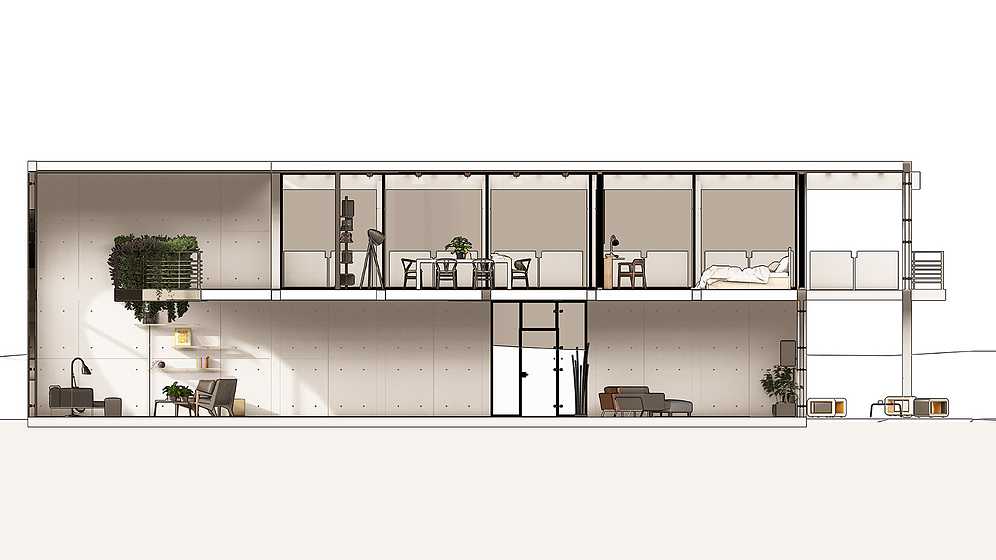
Produce personalized presentation boards that distill complex concepts into simple visual representations with a few helpful tools and effects.


Produce personalized presentation boards that distill complex concepts into simple visual representations with a few helpful tools and effects.
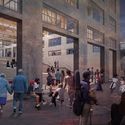
At this morning’s press event, The Museum of Modern Art in New York (MoMA) unveiled the completed renovations to the east end of its museum campus, while also revealing for the first time the full design of their multi-year expansion project designed by Diller Scofidio + Renfro in collaboration with Gensler.
With the completion of the east wing renovation, which began in February 2016, the museum has created two spacious third-floor galleries by reconfiguring 15,000 square feet of space, allowing for better flexibility in installing the collection and temporary exhibitions.
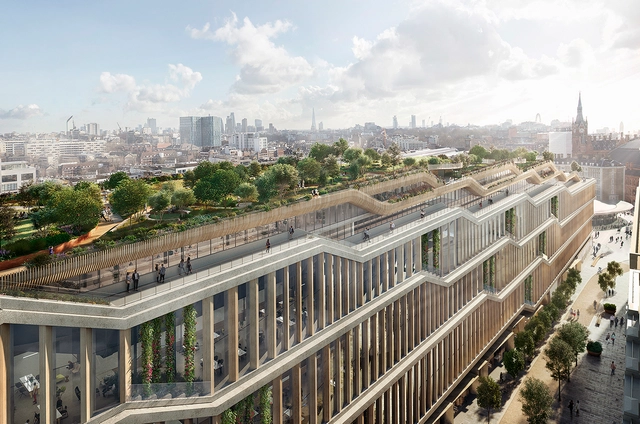
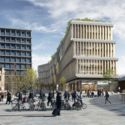
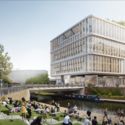
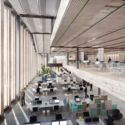
Google has submitted the design for its new London office to Camden Council for planning approval. Designed by BIG and Heatherwick Studio, the 11-story "groundscraper" design will be located in King's Cross, and will combine with their existing office at 6 Pancras Square and a third, forthcoming building to create a campus for up to 7,000 Google employees.
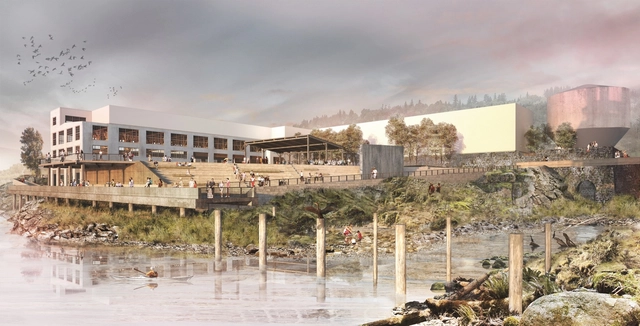
Snøhetta has unveiled plans for a new riverwalk masterplan located alongside Oregon’s Willamette Falls – the second largest waterfall by volume in North America – that will open up the attraction to public access for the first time in over 150 years. Selected to lead the project in 2015 alongside Mayer/Reed and DIALOG, Snøhetta’s scheme is the result of a 2-year design process developed as a collaboration with the city and thousands of individual community members.
The resulting plan calls for the reutilization and augmentation of existing industrial structures on the 22-acre site, giving visitors the opportunity to experience the falls and its rugged basalt shoreline and reconnecting Oregon City to its historic waterfront.

Looking for some quick references or ways to spice up your drawings? Fire up Google Translate or brush the dust off your Italian to take advantage of this comprehensive vector/dwg/architecture drawing resource site! archweb provides a number of free CAD blocks, downloadable CAD plans and DWG files, for you to study or use in precedent research. From furniture to north arrows, road detailing to room layouts, the website boasts a vast collection of plans, sections and elevations for you to pick and choose from, across a variety of categories. And what’s more, many drawings come complete with closed polylines and shapes for you to fill and hatch to your heart’s content.
Check out these 20 blocks to add quick and easy details to your drawings:
.jpg?1496248422&format=webp&width=640&height=580)
UPDATE: You still have time to perfect and submit your award-winning entries! The final entry deadline for the World Architecture Festival Awards is this Friday 2 June at Midnight (BST).
The World Architecture Festival (WAF) has announced the theme for the tenth edition of the conference: ‘Performance.’
Held November 15-17 at the Arena Berlin in Germany, the festival will focus on the topic of performance in architecture. This will include several new additions to the tour program, including a visit to Hans Scharoun’s revolutionary Berlin Philharmonie; Gerhard Spangenberg’s Radialsystem V, a former pump station transformed into a venue for contemporary dance and music; and Frank Gehry’s recently-completed Pierre Boulez Concert Hall.
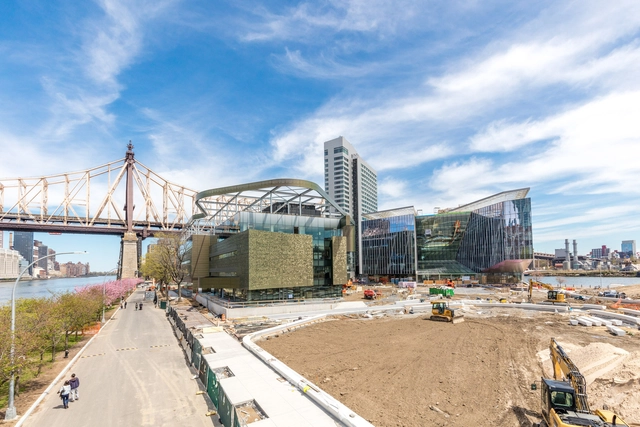
With construction nearing completion ahead of its September opening date, the first building at the new Cornell Tech campus on New York City’s Roosevelt Island has been dubbed “one of the most environmentally-friendly buildings in the world” by the university, as they revealed their aspirations for the building to reach Net Zero and LEED Platinum status.
Designed by Morphosis, The Bloomberg Center (named for Emma and Georgina Bloomberg, daughters of former New York mayor Michael Bloomberg) will employ a range of strategies including solar power; geothermal ground source heat pumps; a dynamic energy-efficient facade which balances transparency and opaqueness to maximize building insulation; and an array of smart building technologies that monitor lighting and plug load use, among other metrics.


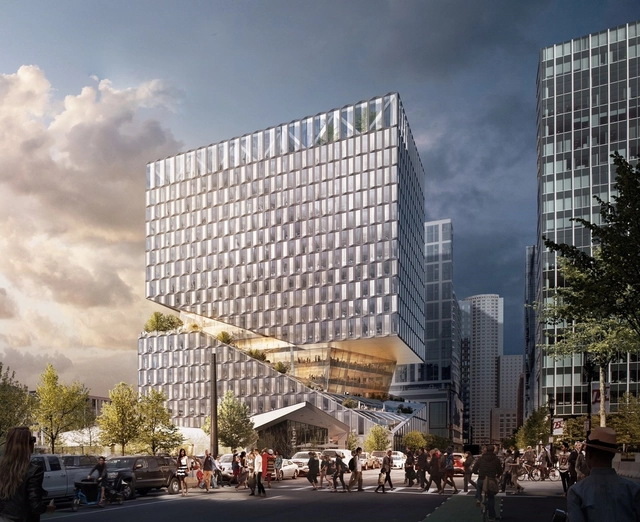
OMA New York has revealed renderings for it latest project, a 490,000-square-foot mixed-used retail and office development located at 88 Seaport Boulevard in the emerging Boston Seaport neighborhood. Being developed by Massachusetts-based property developer WS Development, the structure adds to a growing collection of quality architecture commissioned for the district, including projects by James Corner Field Operations, Sasaki, and NADAAA.

The latest Google Doodle, on display today on Google's homepage in many countries around the world, honors the late Zaha Hadid on the 13th anniversary of her acceptance of the Pritzker Prize. The highest honor in the architectural profession, Hadid became the first woman to be selected as a winner in 2004.
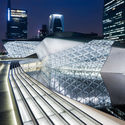
The doodle portrays the architect in front of one of her most acclaimed buildings, the Heydar Aliyev Center in Baku, Azerbaijan. Earlier concepts for the doodle are shown to have featured Hadid's designs for the Glasgow Riverside Museum and Galaxy Soho in Beijing.
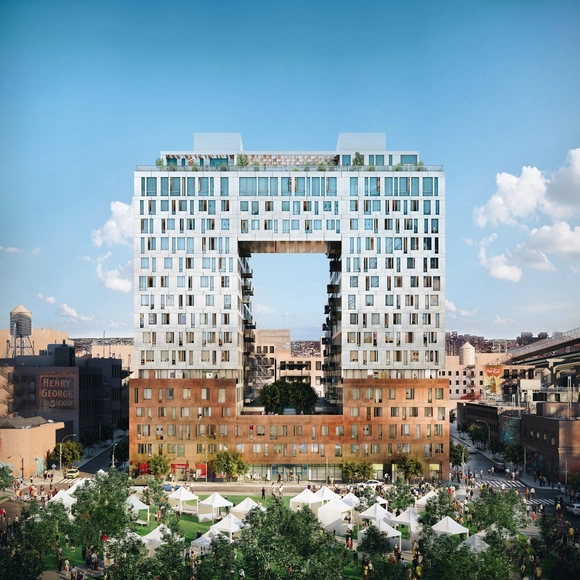
Development on the site of the former Domino Sugar factory in Williamsburg, Brooklyn is moving straight along, with today marking the launch of leasing at 325 Kent, the first building to open as part of the mega-development. Designed by SHoP Architects, the doughnut-shaped building will offer up 16-stories of modern apartment units arranged around an elevated courtyard featuring uninterrupted views of the East River and the Manhattan skyline.
Looking to mount something or make alternations to a wall, but worried about hitting something inside? A new device, the Walabot DIY, will end those fears forever by giving you the real-life equivalent of Superman’s X-ray vision.
Unlike a traditional stud finder, the Walabot is able to detect a variety of different materials and objects, including but not limited to pipes, wires, conduit, studs and even living creatures like mice. Additionally, the device can even find objects that aren’t directly touching the outer sheetrock or concrete surface, up to 4 inches deep.

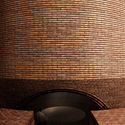
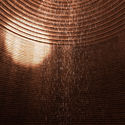
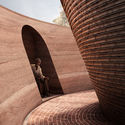
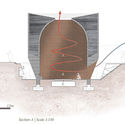
Taking third place in the recently-concluded Kaira Looro competition to design a multi-faith place of worship for the community of Tanaf in Senegal, this design by Sean Cassidy and Joe Wilson proposes a circular chapel with a sunken exterior moat in which locals can privately reflect and pray. Meanwhile, the central sanctum is designed to be constructed by locals with handmade clay bricks, forming a design which, as Cassidy and Wilson explain, "literally comes from the 'God given land'" that the community equally "can take pride in and call their own upon completion."

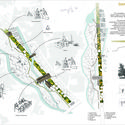
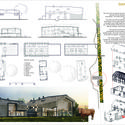
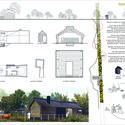
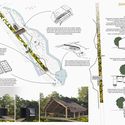
Bee Breeders have selected winners of the Stone Barn Meditation Camp competition, seeking to create a place of refuge for individuals amidst the pristine natural beauty of one of Latvia’s most remote regions. In announcing the competition results, the jury applauded the respect and regard shown to the environment by submitted schemes, commenting that the most successful projects stood out for their simplicity, elegance, and balance with nature.
The competition winners, including noted ‘Green’ and ‘Student’ schemes, are set out below.

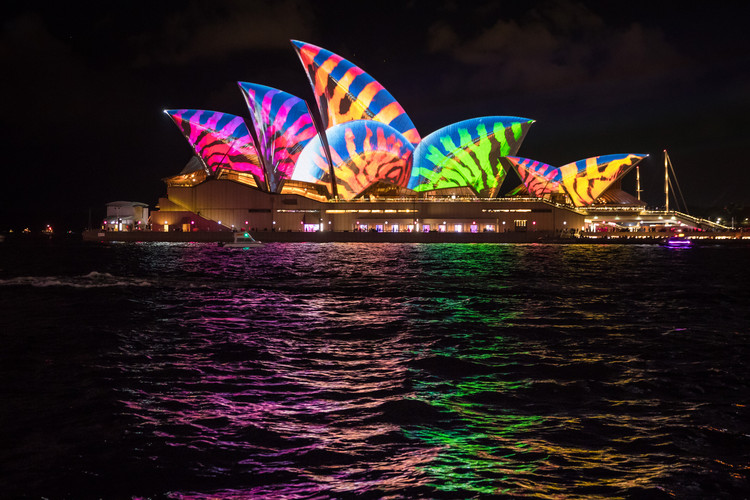
Vivid LIVE, part of the annual festival of lights and music known as Vivid Sydney, is taking place this weekend. As in previous years, the event was launched with a mesmerizing video projection mapped onto the sails of Sydney's iconic Opera House. Titled "Audio Creatures," this year's projection was created by Ash Bolland sees the Opera House writhe and squirm to a soundtrack by Amon Tobin; at times the shells of the building crack open to reveal new life inside, at other moments, infestations crawl their way across from the building's edges.
Read on to see more photographs from the show and the full video of the event.

With a combination of resilience, sustainability, and pleasing aesthetics, the use of copper in architectural design is often indicative of a building’s craft and attention to detail, as demonstrated by fifteen projects selected as recipients for the 2017 North American Copper in Architecture Awards (NACIA). The 10th edition of the annual awards celebrates a variety of projects throughout North America for their “outstanding use of architectural copper and copper alloys.” Projects were selected across three categories: New Construction, Renovation/Restoration, and Ornamental Applications.
Here are this year’s fifteen NACIA winners:
Federico Babina, the illustrator behind the series of popular architectural interpretations including ARCHITALE and ARCHIPLAY, has just released his latest project: PORTRART, 35 illustrations that tell 35 short stories describing and relating to the individual personalities of 35 artists.
"The shapes, the sculpted and painted geometries of the artists are transformed to draw their faces," explains Babina. Each composition portrays a realistic fantasy in a series of geometric shapes around a central matrix, the portrait.
Babina continues, "The project attempts to visualize the likeness, personality, and capture the essential features of the protagonist through simple lines, geometries, color, and ink. The idea is to achieve an almost abstract representation without losing the essence of figurative representation."
See all the portraits after the break.
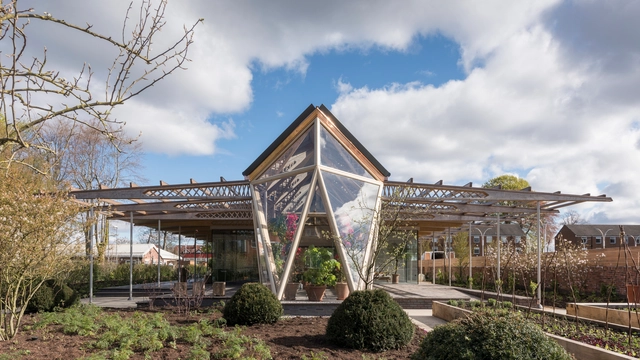
The Royal Institute of British Architects (RIBA) has announced 7 projects as winners of the 2017 RIBA North West Regional Awards, with top prize of North West Building of the Year going to Foster + Partners’ Maggie’s at the Robert Parfett Building. These seven buildings will now continue on to compete in the RIBA National Awards, whose winners will make up the shortlist for the prestigious Stirling Prize.
“This year’s awards represent two parallel but linked trends. One is characterised by a dominant interest in the value of re-used existing buildings that benefit from regeneration. The other is the regenerative effect of new buildings themselves,” commented Graham Morrison, North West Regional Jury Chair.
“Though ‘ordinary’ buildings such as housing or offices are coming close to an award-winning level, they are, in their nature, ‘pathfinders’ and there is an understandable caution in their level of investment. This risk pattern favours the existing buildings that more obviously benefit from previous investment but when this caution is eclipsed by confidence, the truly exceptional emerges and this is evidenced by this year’s overall winner.”
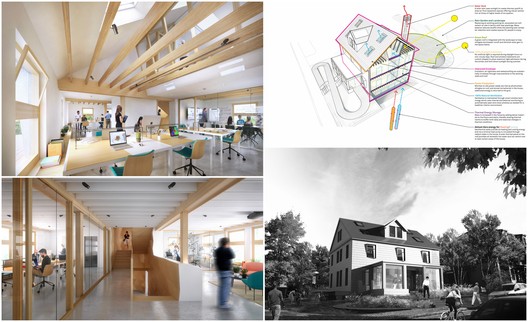
As part of a global, interdisciplinary effort to tackle climate change, architects are devoting resources towards optimizing the energy efficiency of buildings old and new. This effort is more than justified, given that buildings account for almost 40% of UK and US emissions. Although sustainability is now a hallmark of many new architectural schemes, the energy inefficiency of structures from the 18th and 19th centuries still contribute to global carbon emissions on a vast scale.
In order to address the challenge of intelligently retrofitting existing buildings, the Harvard Center for Green Buildings (CGBC) at the Harvard University Graduate School of Design, in collaboration with Snøhetta and Skanska Technology, are retrofitting the CGBC’s headquarters in a pre-1940s timber-framed building, aiming to create one of the world’s most ambitious sustainable buildings. HouseZero is driven by uncompromising performance targets, such as 100% natural ventilation, 100% daylight autonomy, and almost zero energy required for heating and cooling. The result will be a prototype for ultra-efficiency, reducing reliance on energy-intensive technology whilst creating a comfortable indoor environment.
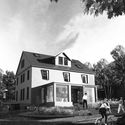
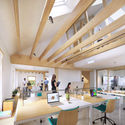
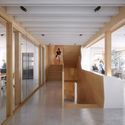
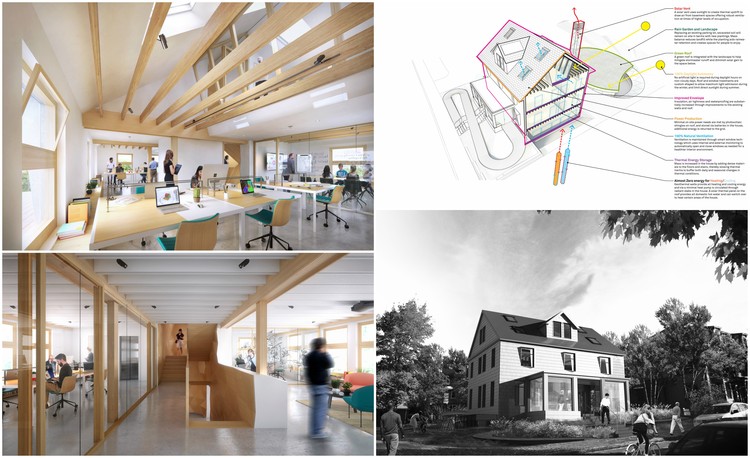
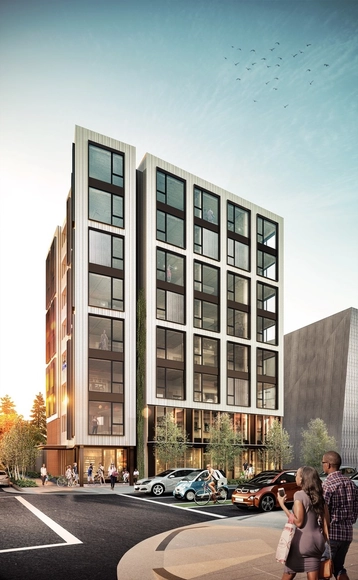
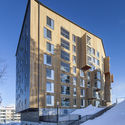
Continuing the ever-increasing growth of timber construction architecture in North America and around the world, Carbon12’s recent topping out has resulted in its newly achieved status as the tallest mass timber building in the United States. Situated in Portland and designed by PATH Architecture, the 8-storey condominium is an example of the cost-effectiveness and labor sensitivity of engineered wood products while helping regenerate Oregon’s local timber industry.
With a growing population and rapid development, much of recent focus has been on Portland’s city center, in an effort to preserve the existing natural landscape that surrounds the urban areas. Built of prefabricated cross-laminated timber panels and glu-lam beams around a steel core, Carbon12’s hybrid construction aids the city’s densification, given its off-site construction and quick assembly that help both reduce costs and respond to residential needs.
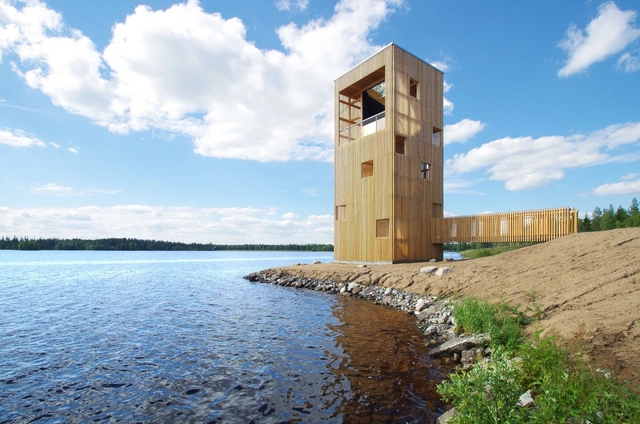
Finnish practice OOPEAA has been awarded the 2017 Spotlight Prize for emerging architects. First given in 2009, the award was established by the Rice Design Alliance to celebrate the work of architects from around the world within their first 15 years of professional practice.
Past winners of the award have included Cadaver & Sola-Morales, OUALALOU+CHOI, 5468796, Interboro Partners, Pezo von Ellrichshausen, LA DALLMAN, Sou Fujimoto, and Anton García-Abril.
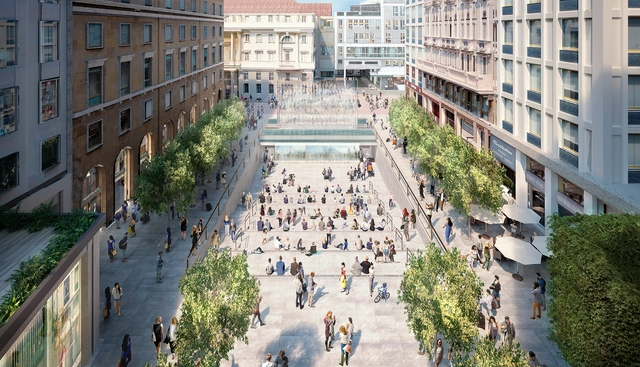
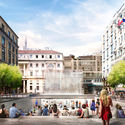
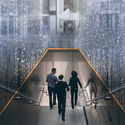
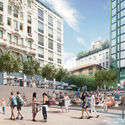
Renderings have been revealed for the upcoming apple store in Milan’s Piazza Liberty, designed by Foster + Partners in their latest collaboration with the technology giant. Following an extremely site-specific approach, the new flagship store will be located under the existing piazza, introducing a new public amphitheater and waterfall feature that will double as the store’s entrance.

In his seminal work, Four Books on Architecture (1570), Andrea Palladio outlined the architectural elements that would make up his signature style, borrowing from the architecture of the ancient Romans and the principles directed by Vitruvius and Leon Battista Alberti. In designing his buildings, Palladio employed a full palette of motifs, from pediments to loggias to porticos, resulting in structures that followed a certain formula, while remaining individually distinct.
Recognizing the architectural patterns in his work, programmer “23” (Paul O’Leary McCann) set out to create a code project that could randomly generate Palladian-inspired facades. Adjusting the to size of your screen, the program can create facades ranging in scale from one-story temples to elaborate mega-structures that bear similarity to the magnificent toy block towers created by future-architect children.
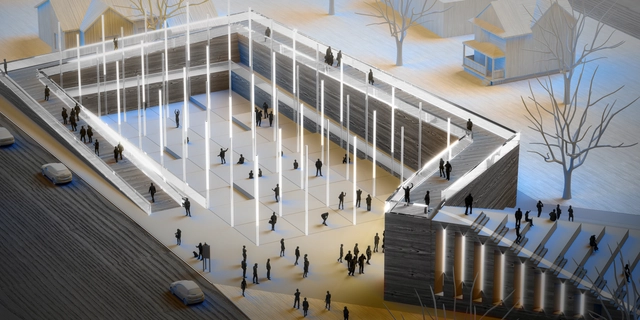
Cairo-based architect Mohamed Elgendy has won an international competition for the design of a new community pavilion in Roseville, Michigan. The Pavilion at Utica Junction competition, organized by the Roseville DDA, sought to attract proposals for a public pavilion on the site of an old tavern, creating a gathering space for residents and visitors to stage events, socialize, and play. The vision behind Elgendy’s winning scheme was for a dialogue between three elements – a plaza, a ramp, and an indoor pavilion.
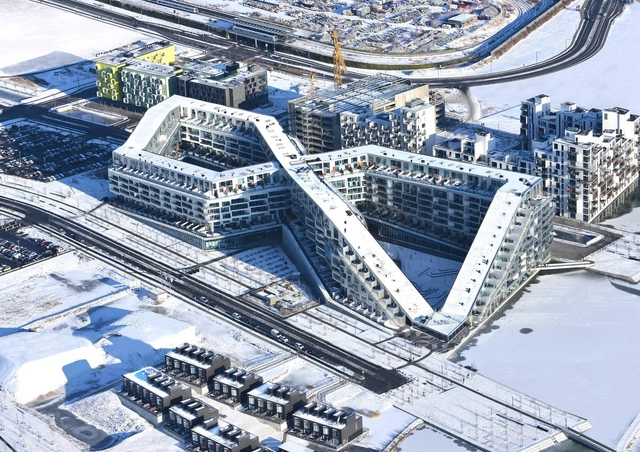
The Royal Architectural Institute of Canada (RAIC) has announced the four projects shortlisted for the 2017 Moriyama RAIC International Prize. The prize was established in 2014 by Canadian architect Raymond Moriyama along with RAIC and the RAIC Foundation to recognise buildings that are judged to be " transformative within its societal context and reflect Moriyama's conviction that great architecture transforms society by promoting social justice and humanistic values of respect and inclusiveness."
"These projects celebrate human life and shape activity," commented RAIC President Ewa Bieniecka, FIRAC. "They embody innovation, contribute to how we experience space, and explore how spaces allow opportunities for freedom. The four shortlisted projects demonstrate how architecture is generous and gives back to the community. These works have a strong sense of place and connect to their surrounding landscape."
Awarded every two years, the winning project will receive a CAD $100,000 prize and a handcrafted sculpture by Canadian designer Wei Yew. The prize is open to all architects, irrespective of nationality and location. The inaugural prize was won by Chinese architect Li Xiaodong for his design of the Liyuan Library in Jiaojiehe, China.
See the shortlisted projects, after the break.

In this photoset, British photographers Hufton + Crow turn their lens toward Büro Ole Scheeren’s ‘dissolving’ MahaNakhon tower in Bangkok. Now the tallest building in the Thai capital at 1030 feet (314 meters), the pixelated skyscraper opened last summer with a fantastical light show display.
The project began as a design by Ole Scheeren for local firm Pace Development, and was completed by his own firm following his departure from OMA in 2010. The architects describe the project:
The design of MahaNakhon dismantles the typical tower and podium typology, creating a skyscraper that melds with the city by gradually ‘dissolving’ as it flows downward to meet the ground. A series of cascading indoor/outdoor terraces at the base of the tower accommodates retail and entertainment facilities, evoking the shifting protrusions of a mountain landscape.
See the full gallery of photos, after the break.







.jpg?1496248422)






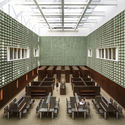
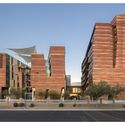

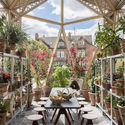
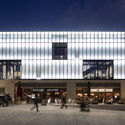
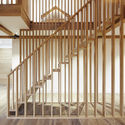
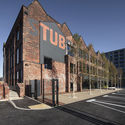

.jpg?1495807208 "Kärsämäki Church / OOPEAA. Image © Jussi Tiainen")
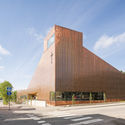
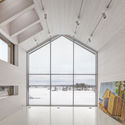




.jpg?1495744233 "Melbourne School of Design, University of Melbourne, Melbourne, Australia / John Wardle Architects and NADAAA. Image © Peter Bennetts")