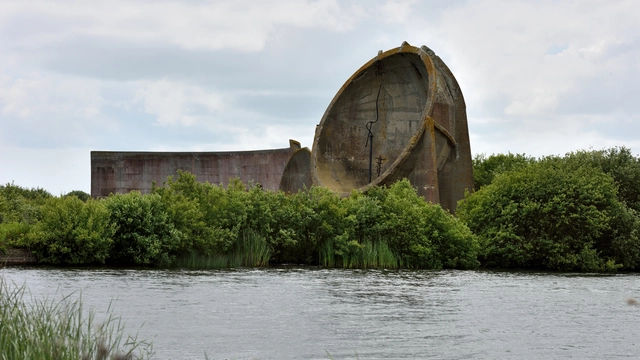
Denge (Greatstone-on-Sea, Kent, Great Britain). Image Courtesy of Tom Lee (licensed under CC BY-SA 2.0)
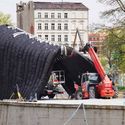
These vast concrete dishes, which can be found along the northern and easterly British coastline, are sound mirrors. Originally designed to capture the sounds of incoming enemy aircraft as they approached the United Kingdom from across the English Channel and the North Sea (although one was also built at Baħar iċ-Ċagħaq in Malta), these military listening devices acted as a rudimentary early warning system in the decades before Radar was developed and deployed.
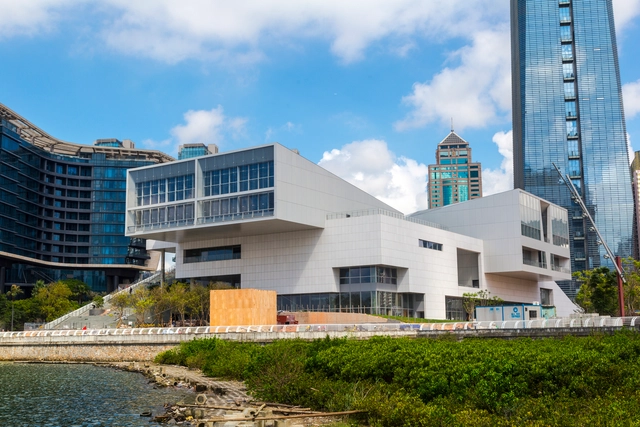
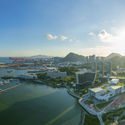
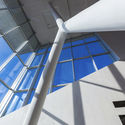
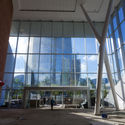
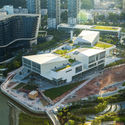
A series of new photographs of China’s “first major design museum” has been unveiled by Design Society, showing Pritzker Prize winner Fumihiko Maki’s design nearing completion in the Shekou district of Shenzhen. Commissioned by the duo of China Merchants Group (CMG) and the V&A Museum in London back in 2014, the project was envisioned as a catalyst for development in the city, given Shenzhen’s bustling creative sector of over 6,000 companies.
As the photos display, the building is formed through three separate cantilevering volumes, which sit atop a plinth overlooking the waterfront. An exterior corner staircase leads to a number of publicly accessible rooftop terraces, inviting the public to engage with the building at various levels. Finishing touches are being added to the construction with the envelope already complete, while interior spaces and the site landscaping are still undergoing further polish and are yet to be fully resolved. Check out all the photographs of the building below, which will be occupied by Design Society upon completion.
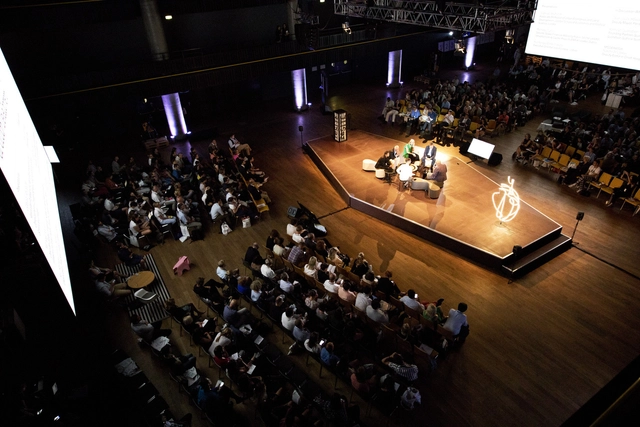
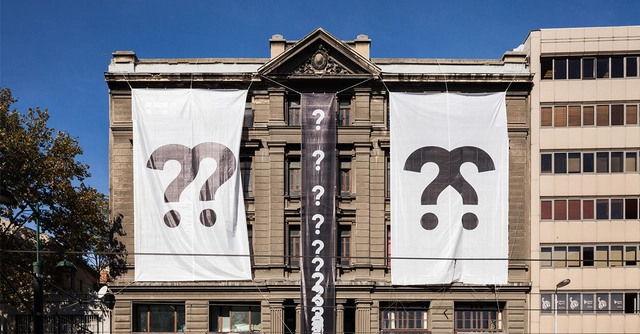
Now in its sixth year in its home city of Prague, reSITE is a conference that has consistently taken a broad view of urban issues, bringing together the largest concentration of the world’s top architects, urbanists, urban planners, landscape architects, and economists under umbrella topics such as Cities in Migration (2016), The Sharing City (2015), and Cities and Landscapes of the New Economy (2014). However, when it comes to events like this, such broad-ranging ambition can be a double-edged sword, flattening and obscuring the nitty gritty details of complex issues. Perhaps reflecting a concern that cities and the challenges they face be seen in full, reSITE 2017’s chosen theme was In/Visible City.
That particular lens reflects a shift in recent years for events such as this to bring into focus that which has typically remained firmly out of view: infrastructure. An allusion to the technical was manifest in the conference’s visual identity: a human heart, with pipe-like arteries and vegetation growing in between the cracks. The heart is to the body like infrastructure is to the city – but just as the body is much more than its circulatory system, the infrastructure cities depend upon is not limited to the obvious, billion-dollar construction projects that make headlines. Urban infrastructure spans all scales and numerous disciplines, ranging from design details to the small print in city policy. In/visible City brought forth the invisible features that give shape to the visible city demonstrating that cultural vitality, social fabric and citizen participation are infrastructural as well.
https://www.archdaily.com/875851/resite-2017-s-the-in-visible-city-conference-unveils-the-infrastructural-heart-of-urbanismAndres Ramírez & Fiona Shipwright for PLANE–SITE
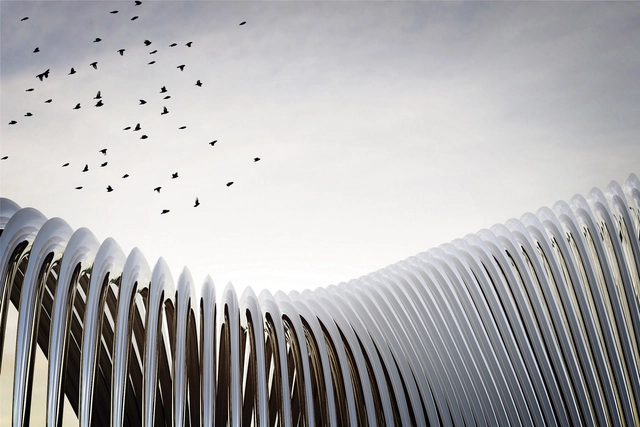
Polish architect, designer, and sculptor Oskar Zieta has unveiled his latest project: the arched NAWA pavilion on an island in Wroclaw, Poland. The pavilion forms part of the European Capital of Culture celebrations following the theme of “Metamorphoses of Culture” and was unveiled in June. The lightweight steel elements that make up the parametrically designed sculpture are made in a unique method called FiDU, a metal-inflating process created by Zieta during his PhD studies in ETH Zurich. Though Zieta has used FiDU successfully for various products (many exhibited in the Salone del Mobile in Milan), the NAWA Pavillion is the first project of this size to use the technology entirely, and is thus coined as “a manifesto of FiDU."
Videos
Ali Alamedy's miniature worlds. Image via The New York Times
Although trained as a Control and Computer Engineer,Ali Alamedy has since turned his hand to manufacturing scaled, miniature dioramas. After being forced to leave his home in Iraq, he and his family are now based in Turkey – and it is here that he has honed a skill in constructing these tiny, intricate worlds from a broad range of ordinary materials. All scaled at 1:12, these complex and often hyper-realistic models are inspired by the environments around him, complemented by his experiences and, of course, his imagination. In this study of Alamedy's work, ArchDaily asks: how do you do it?
Not many people would consider augmented reality particularly useful; it makes for fun dog selfies and other filtered images. But our tunes will probably change with the release of AR Measure™, an app that turns your phone into an accurate ruler. Using augmented reality, the app can calculate distances in 3D spaces captured with your phone's camera.
Created by Laan Labs, the same company who brought us FaceSwap, the app is developed on top of Apple's ARKit framework. How does it work, you ask?
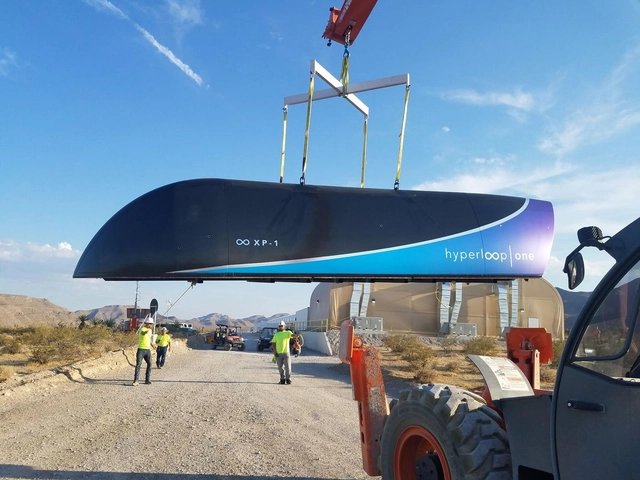
Hyperloop One is taking strides towards reality, as the company has unveiled a full-scale prototype of the passenger pods that would be propelled through the vacuum-tube system. The company also announced a successful real-world test of the technology, which transported a test sled along the test track for the first time in vacuum conditions.
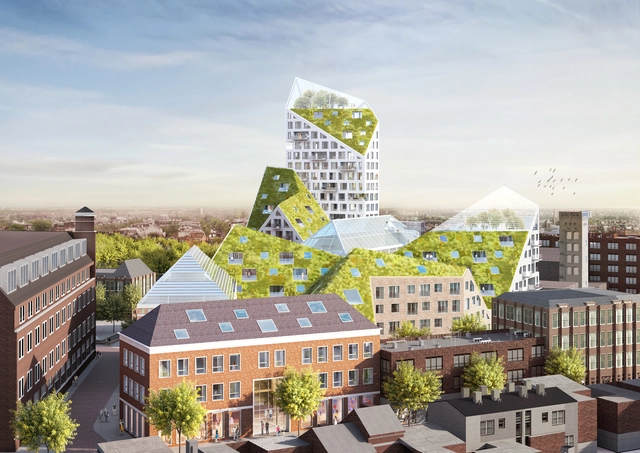
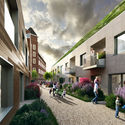
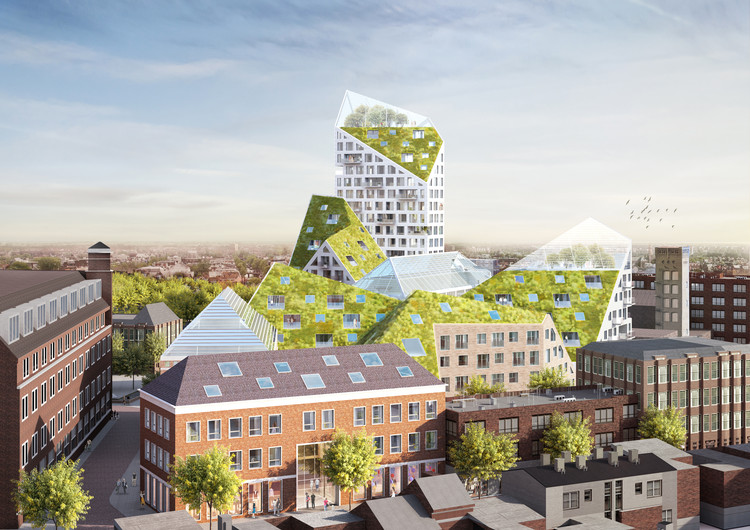
MVDRV and SDK Vastgoed (VolkerWessels) have been selected as winners in a competition to design a “progressive residential development” in inner-city Eindhoven, The Netherlands. Known as “Nieuw Bergen”, the complex will offer high-quality, sustainable residences along Deken van Someren Street, helping to establish a “visible sustainability ethos” in the neighborhood of Bergen.
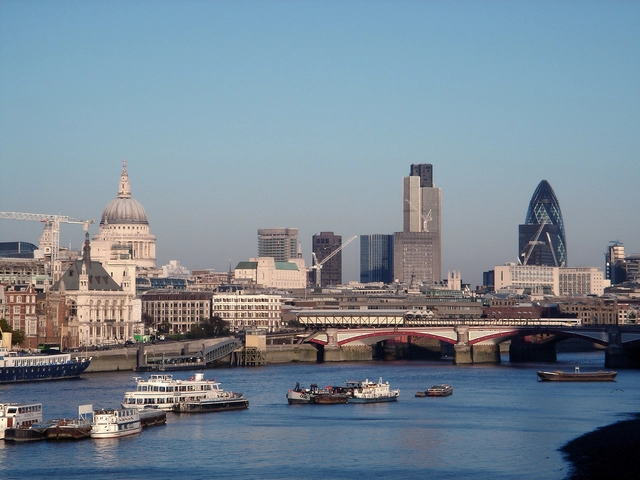
London Skyline in 2005. (Licensed by CC BY-SA 3.0). Image Courtesy of Wikimedia Commons User: Mewiki
The Mayor of London, Sadiq Khan, has appointed fifty "Design Advocates" to support his efforts in ensuring that development across the British capital is "high-quality, inclusive, and sustainable." Well-known names—such as Sir David Adjaye, Peter Murray and Alison Brooks—have been nominated alongside a broad range of architects, activists and thinkers, including Russell Curtis, Daisy Froud, Dan Hill, Richard Lavington, Tom Holbrook, Rory Hyde, Adam Khan, and Maria Smith.
https://www.archdaily.com/875740/david-adjaye-peter-murray-and-alison-brooks-among-mayor-of-londons-new-team-of-design-advocatesAD Editorial Team
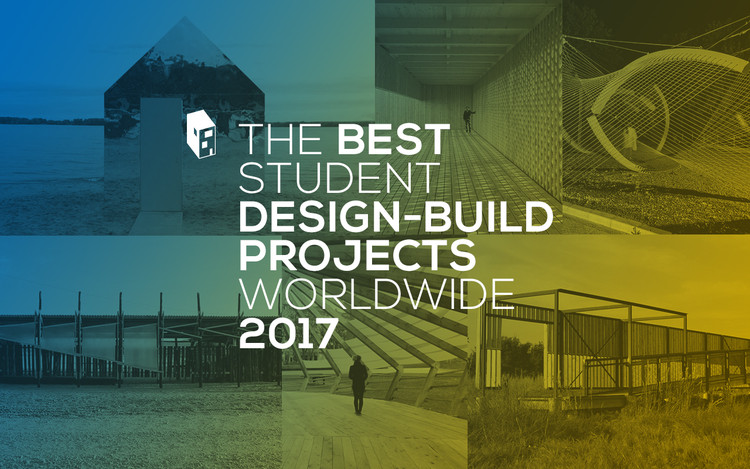
For the third year in a row, in June we asked our student readers to submit the design-build projects which they have recently worked on. And, for the third year in a row, the response we received was excellent. With hundreds of submissions to ArchDaily, ArchDaily Brasil and allfourArchDailyen Español sites, in 2017 our readers gave us more projects to choose from than ever before; we’ve narrowed this selection down to bring you the 34 best student design-build projects around the world from the past year.
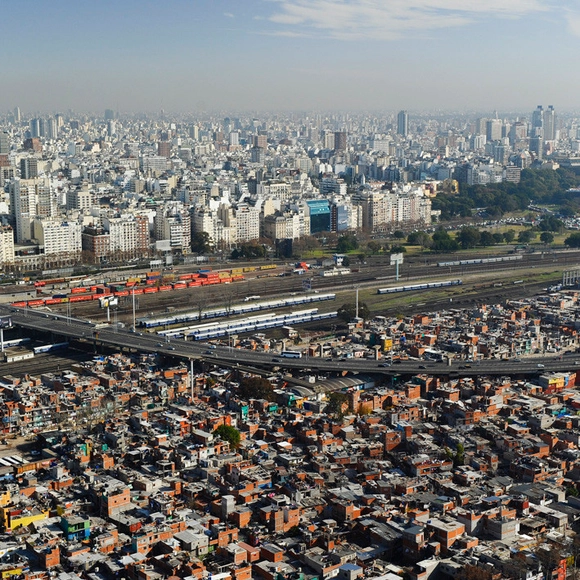
Via macacovelho.com.br. ImageVilla 31, Buenos Aires - Argentina
It is said that the world is increasingly developed when in fact it is, undeniably, more technological and globalized. However, it seems risky to talk about development when the advances do not appear everywhere or for all inhabitants.
In such an uneven picture, a select few of the global population enjoy these advances, while a huge number live below the poverty line.
Such contrasts often go unnoticed in the city's daily life, however, are set forth on a diptych relationship with the urban layout, being, at the same time the cause and consequence of deep marks in city design. In Brazil, for example, we have the slums and poor communities that contrast with the buildings and upper-middle-class homes architecture, designed and built with all the necessary resources.
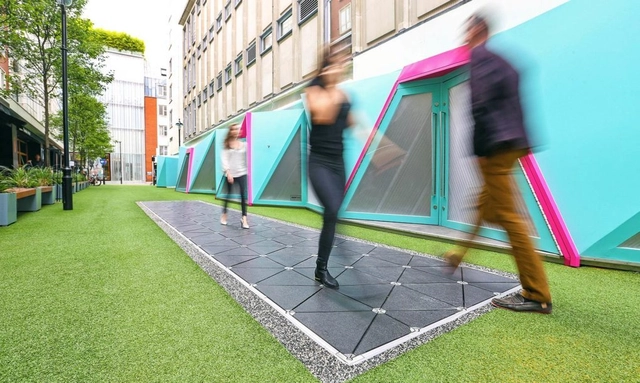
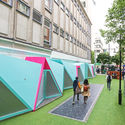
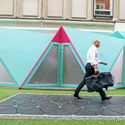
Technology company Pavegen has unveiled the world’s first “Smart Street” in London’s West End that utilizes the company’s unique kinetic paving slabs to generate energy from pedestrians’ footsteps. But unlike earlier Pavegen installations deployed in cities like Washington DC and Rio de Janeiro (which uses the panels as the foundation for a soccer field), the London Smart Street comes with its very own app – giving visitors precise information about the power they are generating, and encouraging use by offering up store vouchers in return for steps.
New renderings and details have been revealed of Studio Libeskind’s competition-winning mixed-use tower development located in the downtown business district of Vilnius, Lithuania as the project has secured funding. Located at the intersection of the White Bridge, the Neris River and Old Town, the 20,000 square meter (215,000 square foot) complex will be home to a class-A business center and the region’s first Radisson RED-branded luxury hotel, along will an array of restaurants, shops and public amenities.
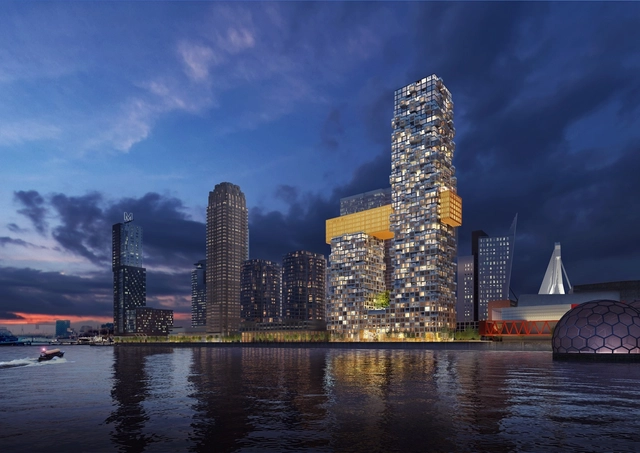
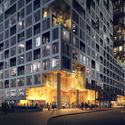
MVRDV has been selected as the winner of a competition for The Sax, a 51-story mixed-use tower in Rotterdam’s Wilhelminapier port development. The building will add a total of 82,000 square meters (882,000 square feet) of residences, retail spaces and commercial facilities across two towers, the Philadelphia & the Havana, connected halfway up by a bridge containing a 150-room hotel.
Located on the south side of Wilhelminapier, the Sax will become one of the last residential buildings to rise within a new development on the historic harbor, one of the city’s most popular areas. The building’s recognizable pixelated silhouette and waterfront siting will give the building an immediate presence on the Rotterdam skyline, recently coined the “Manhattan On the Maas.”
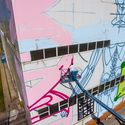
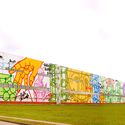
Street Artist Misha Most have finished a gargantuan project – a 10,800 square meter mural set to be the world's largest in Vyska, Russia. The giant mural, titled “Evolution-2” covers the facade of the "Stan-5000" industrial complex from the oldest Russian manufacturer, Vyksa Steel Works. The mural project was chosen in the course of the "Vyksa 10000" open competition and is part of the ArtOvrag urban art festival curated by Sabina Changina and Russian creative studio Artmossphere. Artmossphere is known for curating various art projects, exhibitions, and festivals connected with street art with both established and upcoming street artists.
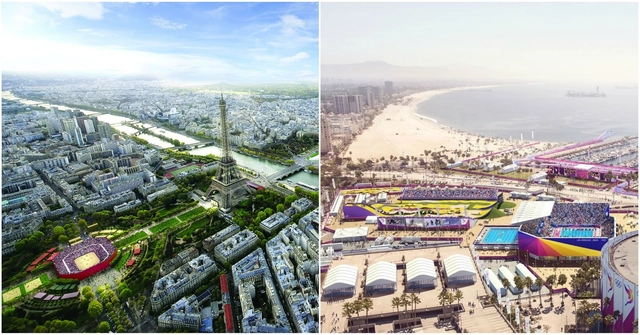
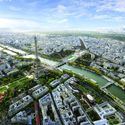
Paris and Los Angeles will become the next Olympic host cities, after the International Olympic Committee (IOC) voted unanimously to approve a plan simultaneously awarding the 2024 and 2028 Olympic Games to the competing cities.
Which city will host each year, however, is still on the table – the two bid cities and the IOC will have until a September 13 conference in Lima to reach an agreement. If they cannot agree, solely the 2024 Olympics will be awarded, though this outcome seems unlikely after recent collaborations by Los Angeles Mayor Eric Garcetti and Paris Mayor Anne Hidalgo.
Argentine artist Marta Minujín has created a full-scale replica of one of the world’s most famous structures, the Parthenon in Athens, constructed out of censored books as a symbol of resistance to political repression. Currently on display at the Documenta 14 art festival in Kassel, Germany, the 100,000 books that make up the monument have been sourced entirely from donations, allowing people from all over the world to contribute titles they feel a personal connection to.
Collaborating with students from Kassel University, Minujín selected more than 170 titles banned in various countries across the world. These books were then strapped to the steel structure with plastic sheeting, protecting them from the elements and allowing sunlight to filter through the building.
https://www.archdaily.com/875525/parthenon-of-books-constructed-from-100000-banned-books-rises-at-nazi-book-burning-site-in-germanyAD Editorial Team
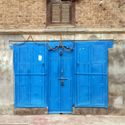
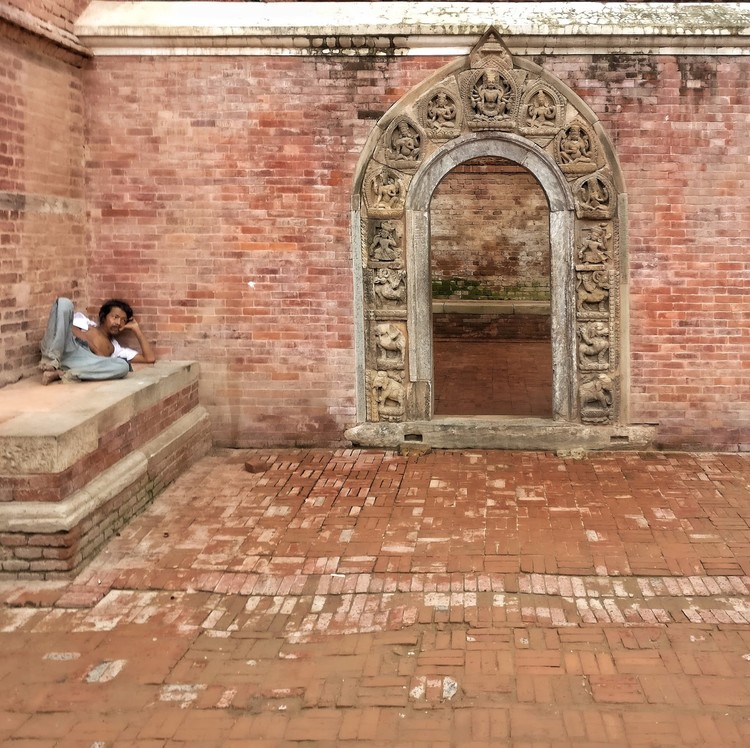
In this series, architect and photographer Nipun Prabhakar captures the uniquely expressive doors of the city of Kathmandu, Nepal. More than just passageways between spaces, doorways in Kathmandu are used as social spaces where people regularly meet and as a physical representation of the building owner’s interests.
Prabhakar explains:
“The most versatile piece in a building, [the door] has been a mode of expression [for] ages. The door in apartments and modern societies is just a mode of a transition from outside to inside. In traditional cities and neighborhoods, like that of Kathmandu, it’s much more than that. It’s the place where people spend most of their time. Sitting at the Chaukhat, socializing and chatting. The door is not just a tangible unit, it’s the respect you give to your building.”
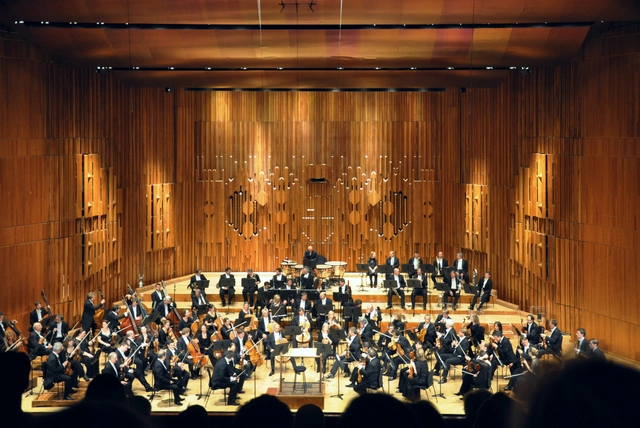
Six internationally-acclaimed teams have been selected as finalists in a competition to design a new home for London Symphony Orchestra and Guildhall School of Music & Drama to be known as the Centre for Music London.
Planned to contain a world-class concert hall, education, training and digital spaces, top-grade facilities for audiences and performers, and a number of supporting commercial areas, the Centre for Music building will become a new landmark within the heart of London, aimed at becoming “a place of welcome, participation, discovery and learning fit for the digital age.”
Courtesy of OFFICE Kersten Geers David Van Severen
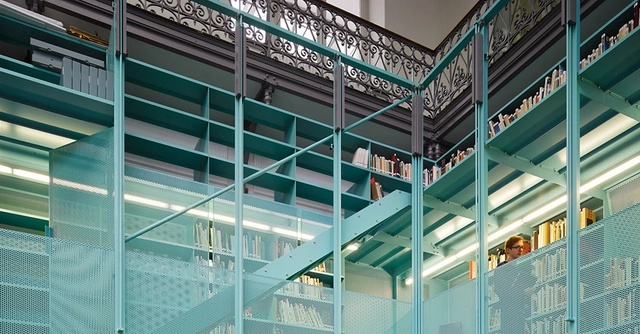
In this episode of GSAPP Conversations, Kersten Geers—co-founder of OFFICE KGDVS—and Amale Andraos discuss their shared obsession with books, and the integral role that book-making plays in their professional offices and teaching. In this podcast, Geers echoes Aldo Rossi’s call to evaluate architecture within a cultural context, positioning books as the best tool to create a place in which architectural work acquires value and meaning; a device to establish a context of ideas.
https://www.archdaily.com/875464/kersten-geers-office-kgdvs-on-the-role-of-book-making-in-architectural-practice-amale-andraos-gsapp-conversationsAD Editorial Team
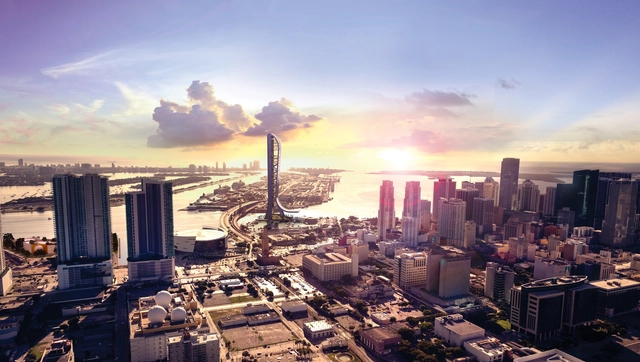
Currently under construction, new renderings of SkyRise Miami have been released, showcasing the 1,000-foot tower’s numerous mixed-use entertainment facilities from its prime location at the heart of Miami’s downtown core. Designed by local heavyweight Arquitectonica, the city’s tallest tower is being developed by Berkowitz Development Group, since the project’s inception in 2013.
As a firm believer in the importance of making good design accessible to the public, Michael Graves (July 9, 1934 – March 12, 2015) produced an enormous body of work that included product design alongside his architecture. Graves brought Postmodernism to the public eye through his emphasis on ornament and aesthetics, and stood firmly behind his design philosophy even as it went out of vogue.














.gif?1499957974)





_(1).jpg?1499875619&format=webp&width=640&height=580)
_(4).jpg?1499875655 "© Studio Libeskind")
_(3).jpg?1499875666 "© Studio Libeskind")
_(5).jpg?1499875644 "© Studio Libeskind")
_(6).jpg?1499875634 "© Studio Libeskind")
_(1).jpg?1499875619)




.jpg?1499375393 "© Kirill Makarov")


.jpg?1499789165 "Main Stadium - Future home of the NFL's LA Rams. Image Courtesy of LA 2024")


.jpg?1499781753 "Asmara. Image© <a href='https://commons.wikimedia.org/wiki/File:Asmara_(8351468351).jpg'>Wikimedia user David Stanley</a> licensed under <a href='https://creativecommons.org/licenses/by/2.0/deed.en'>CC BY 2.0</a>")


.jpg?1499719299&format=webp&width=640&height=580)