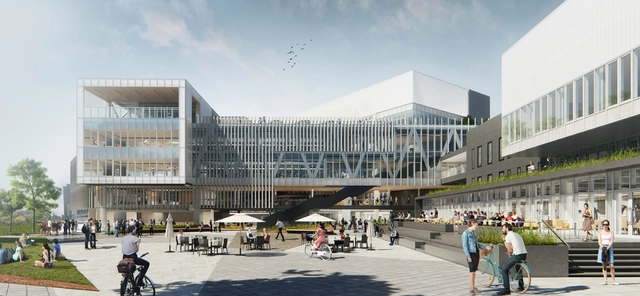
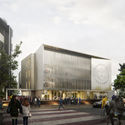
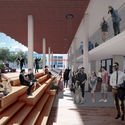
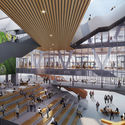
The Universidad de Lima, the most influential institution in Peru, is expanding its campus, in the heart of the capital, to offer a new learning experience, a never seen before novelty amongst the schools in Latin America.
The project’s main purpose is to create the whole college town, usually found abroad, in its central location in Lima. This innovative approach comes from the understanding of the importance of the concept of “university-cities” as a key economic driver. In fact, the master plan suggests making the campus as inclusive as possible, by putting in place all the facilities needed for students to actually linger.
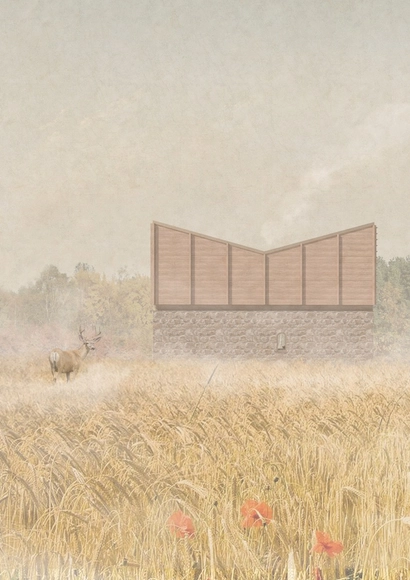
Bee Breeders has announced the winners of the Teamakers Guest House competition, calling for design proposals for an eco-friendly, cost-effective accommodation to house visitors to the Ozolini teamakers retreat, situated in a forest 100 kilometers southeast of the Latvian capital of Riga.
https://www.archdaily.com/922000/teamakers-guest-house-competition-results-announcedNiall Patrick Walsh
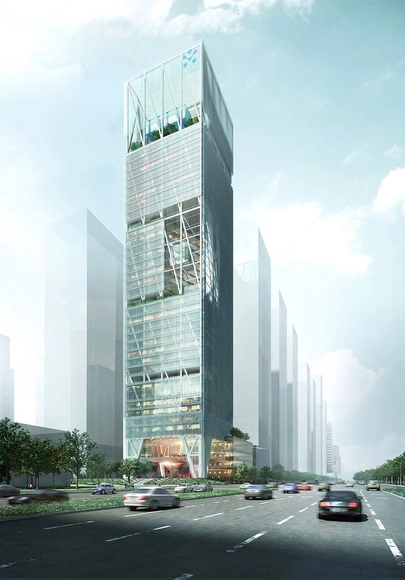
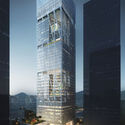
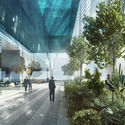
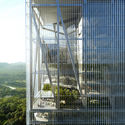
bKL Architecture has released its design for the UBTECH Headquarters in Shenzhen, China. Seeking to harmonize technology and nature, the 212-meter-high scheme features an expressive structure and mass, and vast, expansive sky gardens. The expressive gardens allow for all floors of the mixed-use office building to host an interactive experience with nature.
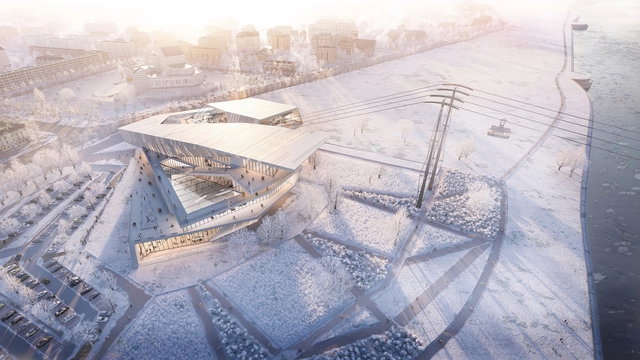
Blagoveshchensk Cable Car. Image Courtesy of PYXID
UNStudio has won the competition to design the world's first cross-border cable car to carry passengers across the Amur River connecting Russia and China. The Cable Car Terminal is designed as an expression of the historic connection between the two cities of Blagoveshchensk and Heihe. The new cable car line aims to become an engine for creating social connections between the two cultures and will connect the cities in less than 10 minutes.
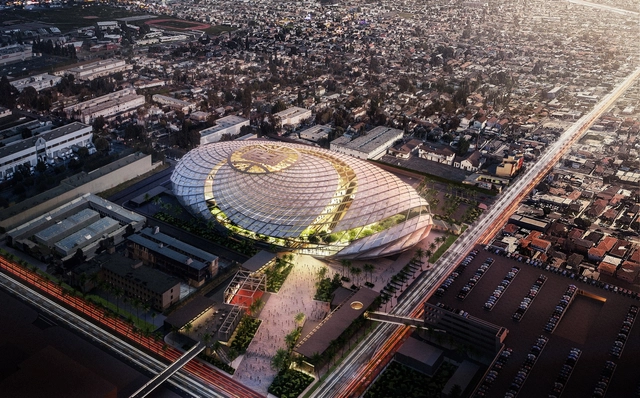
LA Clippers Arena. Image Courtesy of Los Angeles Clippers, AECOM
AECOM has unveiled a new design for a "basketball net-inspired" 900,000-square-foot arena for the LA Clippers in Inglewood. Working with Anderson Barker Architects, the City Design Studio of Los Angeles, and Hood Studios, the team's proposal includes a solar panel tile cladding system around the building and sunken basketball court. The project's facade was designed to symbolize the diamond shapes in a basketball net.
Herzog & De Meuron presented this week to the public their new vision for the cityscape and the urban life of Munich. The plan revolves around a former postal railway hub, the Paketposthalle, an impressive concrete structure built in the 60’s, used lately as a sorting office for general mail. The 87,000 square meters site was recently acquired by Büschl, a private group of developers, who commissioned Herzog & de Meuron to create a new urban study for the area.
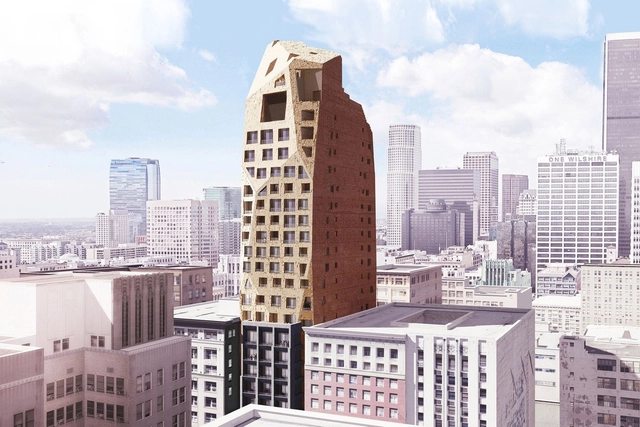
Spring Street Hotel. Image Courtesy of Adam Sokol Architecture Practice (ASAP)
Adam Sokol Architecture Practice (ASAP) have revealed the design for a hotel tower made to be a piece of urban geology in downtown Los Angeles. Called the Spring Street Hotel, the project is designed to capitalize on the accelerating growth and development of the downtown LA area. Situated in the core historic district of downtown, the tower aims to build on its distinctive location and cultural context to create a landmark destination for the city.
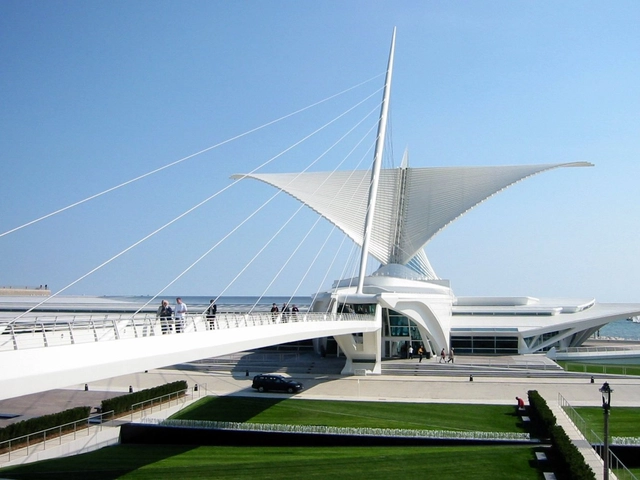
Known for his daring neo-futurist sculptural buildings and over 50 bridges worldwide, Santiago Calatrava (born July 28, 1951) is one of the most celebrated and controversial architects working today. Trained as both an architect and structural engineer, Calatrava has been lauded throughout his career for his work that seems to defy physical laws and imbues a sense of motion into still objects.
In 1919, the creation of the Bauhaus school in Germany marked an important moment in the history of architecture, one that would ignite innumerable debates about architecture and design for years to come. This school, which later became more of a movement than an institution, faced an array of political resistance throughout its existence, eventually closing its doors in 1933 during the Nazi regime. However, the knowledge instilled by the Bauhaus transcended time and space to travel across the globe and make its mark on cities worldwide.
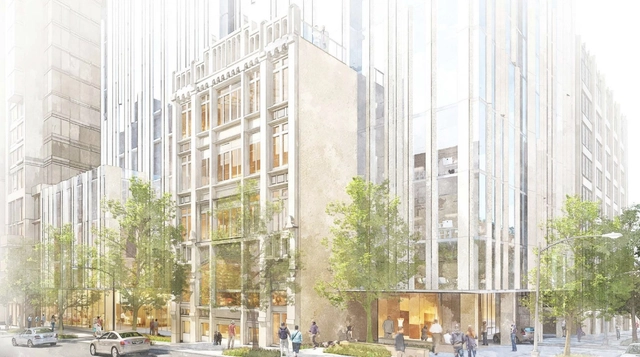
Kengo Kuma & Associates have proposed a new 40-story mixed-use skyscraper incorporating a historic Gothic Revival facade in Seattle. Located in the Belltown neighborhood, the project would reuse the ornate five-story Bebb & Gould’s Terminal Sales Annex facade. Made in collaboration with Ankrom Moisan Architects and the landscape architecture firm Berger Partnership, the project aims to reinforce the Gothic and Art Deco heritage of Seattle’s downtown.
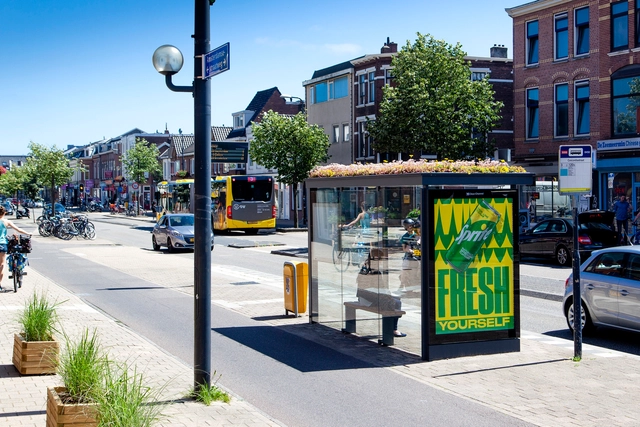
The City of Utrecht Council, in collaboration with advertising agency Clear Channel, has transformed 316 bus stops across the city into “bee stops.” The adaption involved installing green roofs onto the bus stops, creating bee-friendly spaces for the endangered species.
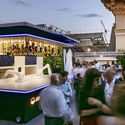
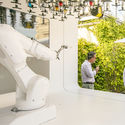
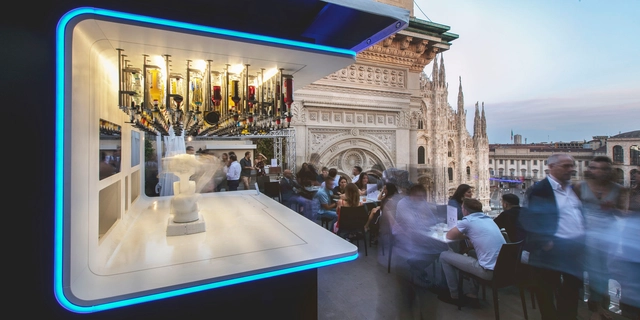
Bar producer Makr Shakr has unveiled new rooftop robotic bars in Milan and London. Founded by MIT professor Carlo Ratti, the company's new projects are made to engage with the city and explore the potential of technology. In Milan, the project is the city's first robotic bar, while the London bar is on display at the Barbican as part of its AI: More than Human exhibition. Makr Shakr's bars aim to combine barman roots with food tech around the future of human-machine collaboration.
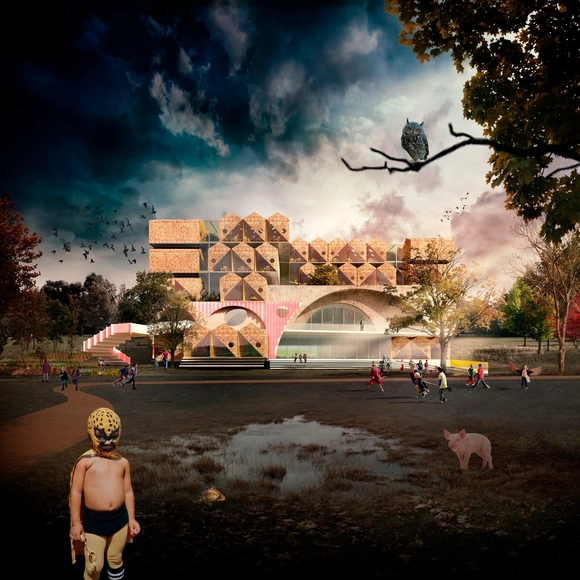
Andres Jacque / Office for Political Innovation has released their design for the Reggio School in Encinar de los Reyes, Madrid. Promoted by the Reggio Center for Pedagogical Research and Innovation, the project is based on the idea that architectural environments can evoke in children the desire for exploration and inquiry.
https://www.archdaily.com/921802/andres-jaque-office-for-political-innovation-unveil-experimental-madrid-schoolNiall Patrick Walsh
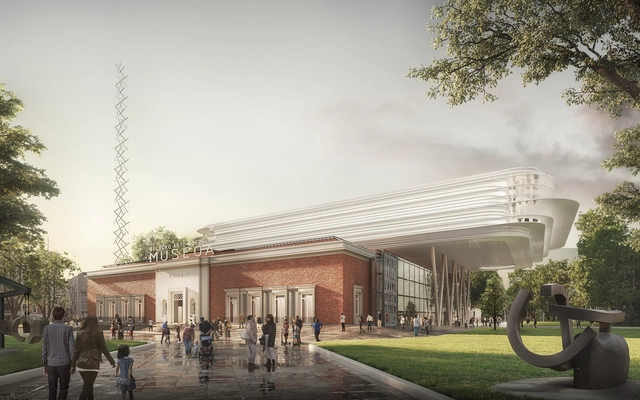
Foster + Partners have won the international competition to design the new Bilbao Fine Arts Museum in Spain. The winning proposal was revealed by the president of the Provincial Council of Bizkaia and the Bilbao Fine Arts Museum Foundation Board. The revitalization will turn Plaza Arriaga into the new heart along the museum’s spine. The proposal seeks to reorient the museum towards the city by restoring the façade of the existing building and making it more permeable, while enhancing the institution’s unique identity.
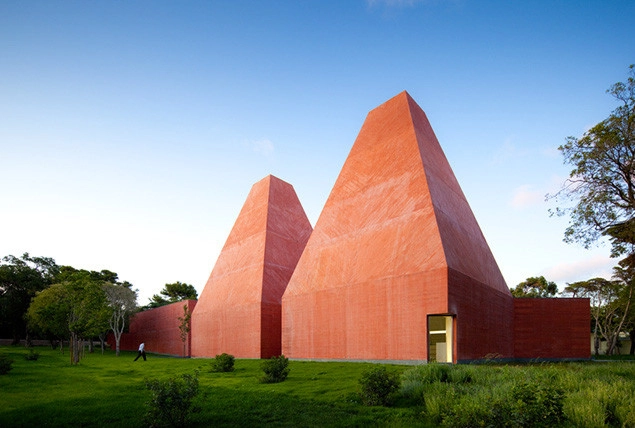
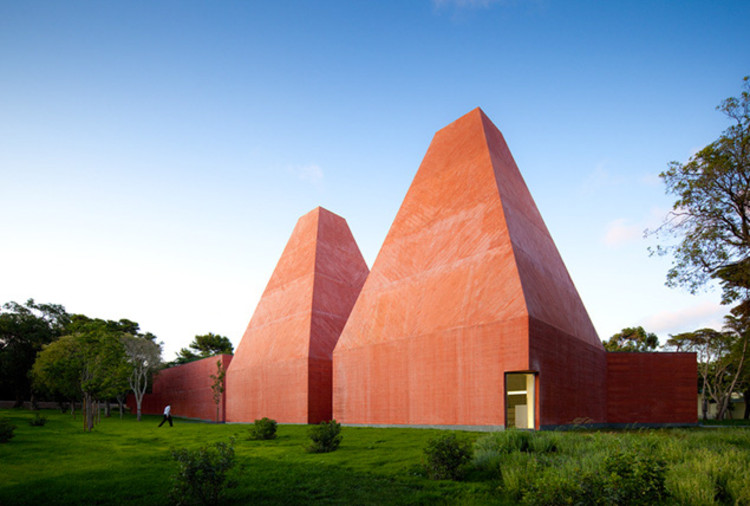
Eduardo Souto de Moura (born 25 July 1952), the Portuguese architect that won the 2011 Pritzker Prize, is known for designs that are formally simple yet serious and at times, dramatic, created through his thoughtful use of colors and materials. His architecture is both versatile and consistent, contextual yet universal, and rarely affected by current trends or styles.
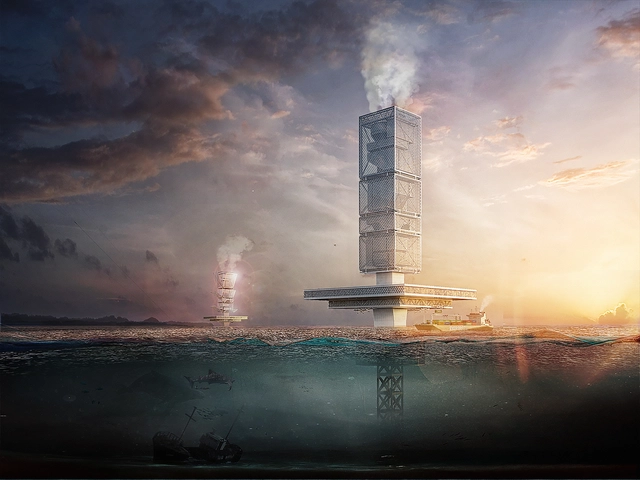
Designer Honglin Li has created a proposal for a waste-to-energy skyscraper in the Great Pacific Garbage Patch. Called FILTRATION, the project was awarded Honorable Mention in the 2019 eVolo Skyscraper Competition. The modular, prefabricated megastructure contains several Material Recovery Facilities and Water Treatment Plants to recycle the floating garbage and clean seawater while taking on the world energy crisis.
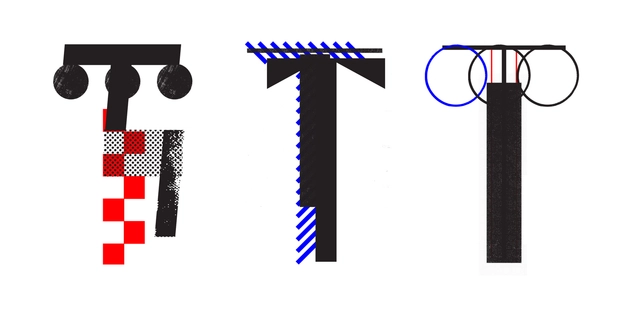
ArchDaily, Strelka Institute, and Strelka KB have selected a long list of 50 architectural projects nominated for the joint ArchDaily & Strelka Award, which celebrates emerging architects and new ideas that transform the contemporary city. Now the readers of ArchDaily and Strelka Mag can vote for their favorite project to decide the finalists.
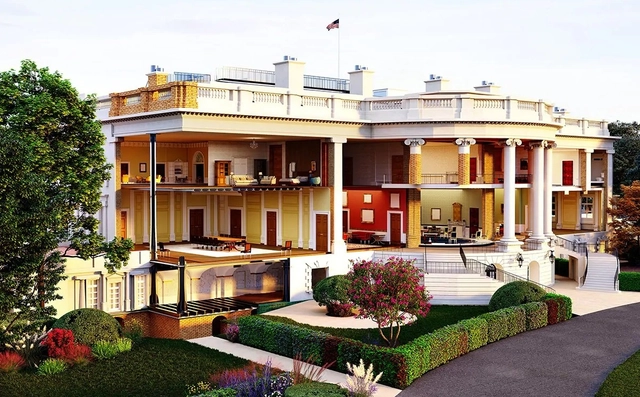
American home services website Angie's List has released a series of commissioned images showcasing eight United States landmarks in cross-section. Dubbed Cutaway America, the project takes a new perspective on projects that people are used to seeing from the outside. From idealistic designs that attempt to become one with nature to complex infrastructure, these cutaways hint at a longer story of America and its history.
Since 2007, Lisbon Architecture Triennale has been developing its mission as a non-profit organization fostering debate, thinking and practice in Architecture. The large number of activities initiated throughout its 10 years of existence is the best witness to this commitment.
https://www.archdaily.com/921450/details-about-lisbon-triennale-2019Pedro Vada
Despite his late entry into architecture, Geoffrey Manning Bawa FRIBA, (July 23, 1919 – May 27, 2003), explored modernism and its cultural implications and created a unique, recognizable style of design which had a lasting impact on architects across the world. Well versed in Modernist theory, Bawa was one of the original proponents of Tropical Modernism, a design movement in which sensitivity for local context combines with the form-making principles of modernism. Bawa’s architecture led to the formation of a new architectural identity and aesthetic for many tropical environments, and won him recognition and awards, including the Chairman’s Award of the Aga Kahn Special Chairman’s Award for Architecture (2001) and the title Deshamanya, in recognition of his contributions to his country by the government of Sri Lanka.
OMA has won the competition to design a new international financial center in Shenzhen, China. Called the IFEC, the project combines large scale conference facilities with a 400-room hotel and public programs. Located at the waterfront of Qianhai, the New District in the Pearl River Delta, the IFEC was designed to be a beacon for ships sailing along the 21st-century maritime silk road.
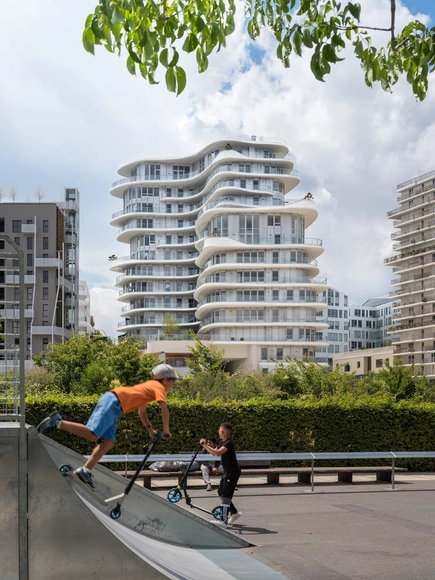
MAD Architects’ first built project in Europe is nearing completion in the French capital of Paris. Led by Ma Yansong, MAD was awarded the project in 2012 following an international design competition, working in collaboration with French firm Biecher Architectes. The building, named “UNIC,” emerges as part of a mixed-use masterplan envisioned adjacent to the Martin Luther King Park: a 10-hectare green space.
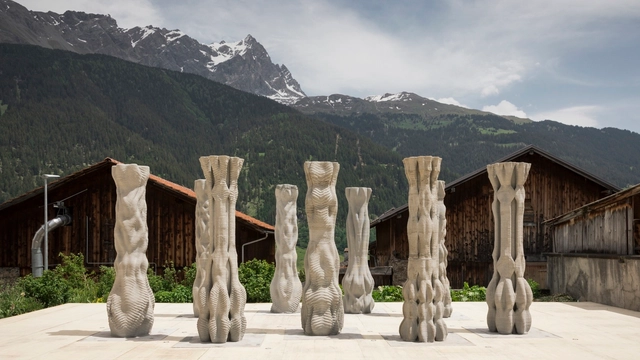
ETH Zurich has unveiled details of “Concrete Choreography,” an installation recently inaugurated in Riom, Switzerland. The installation presents the first robotically 3D printed concrete stage, consisting of columns fabricated without formwork, and printed to their full height in 2.5 hours. The process is expected to greatly improve the efficiency of concrete construction while achieving the fabrication of complex components.
https://www.archdaily.com/921635/eth-zurich-develops-3d-printed-concrete-columnsNiall Patrick Walsh














.jpg?1564082996 "The View. Image © Krishanti")
.jpg?1564082938 "The View. Image Courtesy of TownHouse Duomo, © Marco Beck Peccoz")