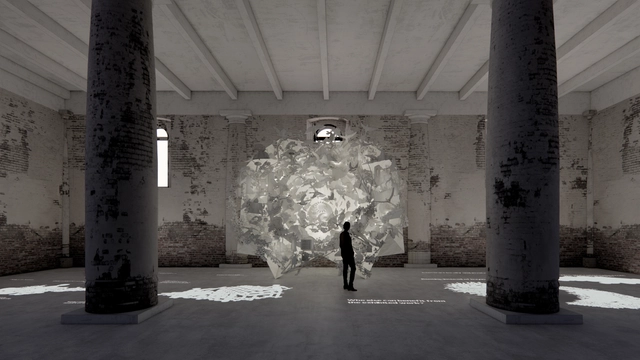
The Biennale promises to be a dynamic platform uniting over 750 participants from diverse backgrounds, including architects, engineers, mathematicians, climate scientists, and artists. Such a broad coalition of over 280 projects underlines the Exhibition's focus on inclusivity and interdisciplinary collaboration, an essential aspect for adaptation. The selection process proposed a bottom-up, open call approach through the Space for Ideas initiative, which ran between May and June 2024. It encouraged participation from global teams, from Pritzker Prize winners and Nobel laureates to emerging architects and scientists.
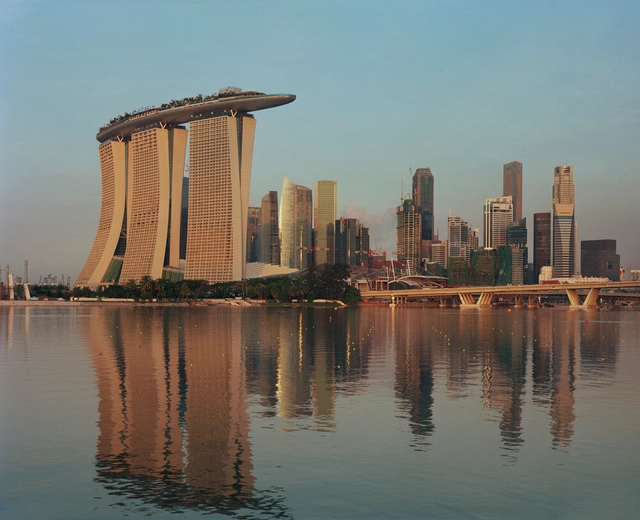
Courtesy of Safdie Architects | Marina Bay Islands
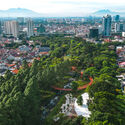
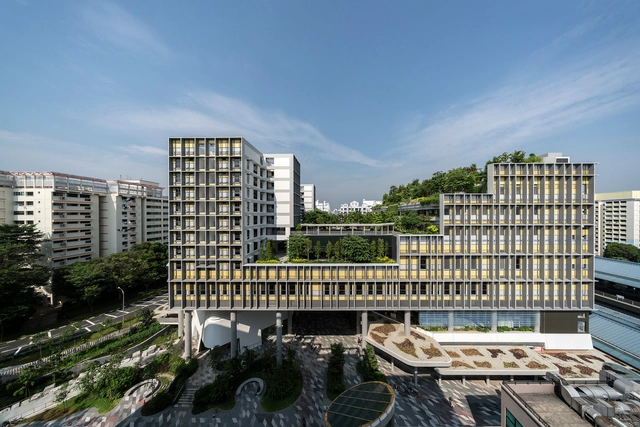
Nestled in the heart of Southeast Asia, Singapore stands as a beacon of sustainable urbanization. According to the 2016 Green City Index, the city-state of Singapore was the greenest city in Asia at one point. Renowned as the "City in a Garden," Singapore has intertwined lush greenery, verdant parks, and new environmental policies into its urban fabric/ After gaining independence in 1965, the city-state stands as a testament to how urban life can integrate with nature.
The Aga Khan Award for Architecture has announced the Master Jury for the 16th award cycle. The independent panel includes Pritzker Prize laureate Yvonne Farrell, ArchDaily founder David Basulto, and Lucia Allais, director of the Buell Center. Established in 1977 by Aga Khan IV, this competition set out to highlight architectural projects that have a significant positive impact on Islamic communities worldwide. The Award is presented in three-year cycles and has a monetary prize totaling US$1 million.
For the 18th year, the International Architecture Awards has returned to celebrate outstanding architectural achievements globally. Based in Chicago, these awards feature exceptional new buildings, urban planning projects, and landscape architecture of 2023. Additionally, this month, the Chicago Architecture Biennial (CAB 5) is currently taking place in the city. Both the awards and the Biennial attempt to shed light on each country’s architectural, design, cultural, and social trends.
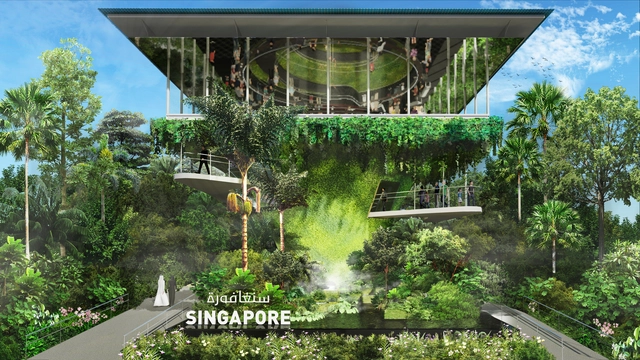
Last week, the President*s Design (P*DA) Award chose 8 winning recipients for its 2023 edition. The award that honors designers making a transformative and positive impact on the lives of Singapore’s society and the broader global community recognized Henning Larsen, BIG, and the Singapore Pavilion for Expo 2020 Dubai.
The P*DA presented two categories: Designer of the Year and Design of the Year. Organized jointly by the DesignSingapore Council and the Urban Redevelopment Authority (URA), the biennial award was given to two “Designer of the Year” and six “Design of the Year” recipients. Beyond the excellence of their design execution, the honorees demonstrated a genuine sense of purpose and mission that is consistent with P*DA's core values. The outstanding designs of this year tackle fundamental and systemic issues like consumerism and circularity, dementia and caregiving, climate change and sustainability, and show how Singapore is developing its best design practices that are applicable to enhancing lives worldwide.

Walking through the streets of Mumbai, India, is an experience unmatched anywhere else. The energy of India’s largest and most populous city is palpable through the people, their activities, and most importantly, the built environment. The city’s dynamic culture is evidently expressed through the structures that dot its landscape.
Mumbai is an eclectic mix of buildings large and small, old and new, and traditional and modern. The city of contrasts boasts an architectural legacy that goes back over 2000 years. Located in the state of Maharashtra along the west coast of India, Mumbai hosts a variety of architectural styles such as Victorian, Gothic, Art Deco, Indo-Saracenic, Modern and Post-modern. The city is characterized by its old charm and liveliness, a diverse stage for people to pursue their dreams.
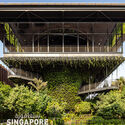
The SingaporePavilion for Expo 2020 Dubai illustrates the city's aspiration towards a sustainable future that merges architecture, nature, technology and culture. Under the title "Nature.Nurture.Future", the pavilion designed by WOHA Architects and landscape design practice Salad Dressing showcases a sample of Singapore's urban environment that epitomizes its City in Nature vision. The multi-layered green space creates a self-sufficient ecosystem highlighting ideas of sustainability and resilience through the marriage of technology and nature.
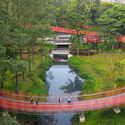
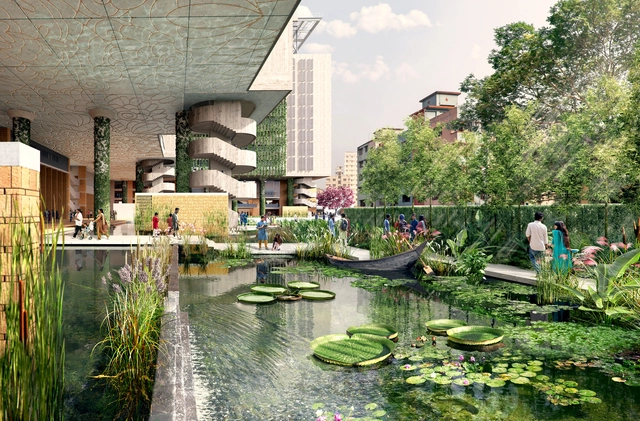
WOHA and BRAC University have unveiled the latest images from the 5.3-acre university campus, scheduled for completion in 2021. Located in Dhaka, Bangladesh, the intervention will transform a polluted and flooded wasteland into a sustainable inner-city campus and public park.
View along New Punggol Road - Singapore Institute of Technology. Image Courtesy of WOHA
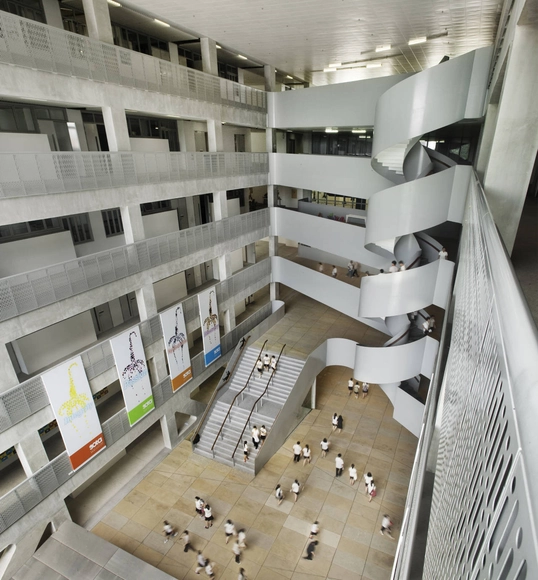
Expected to be completed in 2023, construction works have started on the campus of the Singapore Institute of Technology designed by WOHA. The 91,000 square meter project located in an existing forest, will create a “Campus in a Park” experience, where learning spaces and green spaces will be combined.
WOHA was chosen to design the Singapore Pavilion for the Dubai 2020 World Expo. Under the theme of “Nature, Nurture, Future”, the pavilion will aim to demonstrate “Singapore’s story of overcoming its physical limitations as a small island city-state and adapting itself to become a highly livable and sustainable city”.
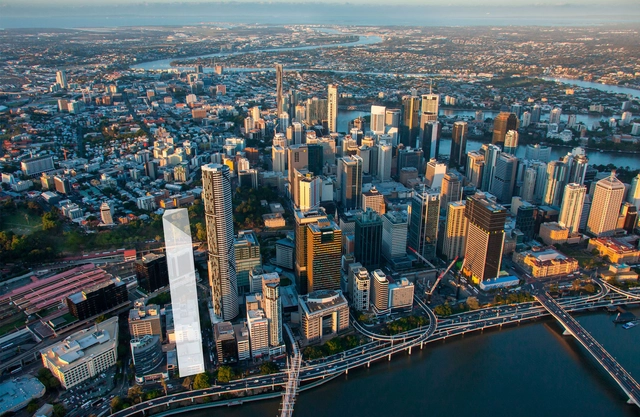
Developers Cbus and Nielson Properties have released a shortlist for the design of a $600 million office tower in Brisbane’s North Quay. Four local and international architectural teams have been selected to create proposals for the commercial tower that will accommodate 50,000 square meters of office space. The developers aim to establish an innovative workplace of the future that will represent the new world of work.
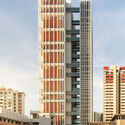
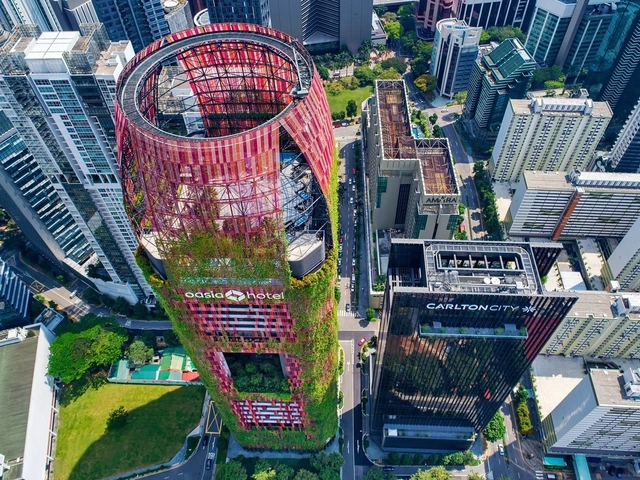
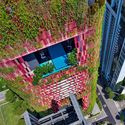
New photographs released by ceramics manufacturer AGROB-BUCHTAL show nature beginning to claim the Oasia Hotel Downtown in Singapore. WOHA Architects’ 30-story scheme was designed to be a “verdant tower of green” in the heart of the city’s financial district.
The tower’s red aluminum mesh cladding has begun to sprout a lush landscaping, consisting of 21 different species of creepers. The colorful flowers and green leaves provide food for birds and insects, while the reaction of the creepers to different light, wind, and shade conditions come together to form a natural mosaic.
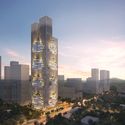
WOHA has released an update of their first office skyscraper for China, as their Vanke Yun City scheme tops out in Shenzhen. Manifesting as three tower blocks attached to a central T-shaped core, the scheme seeks to present “an alternative office tower typology that responds to the sub-tropical climate in Shenzhen.”
Set against the backdrop of ubiquitous post-modernist skyscrapers, the 1.6 million-square-foot (150,000 square-meter) scheme aims to “radically transform the soulless skyscraper into a highly liveable, humane, and sustainable micro-vertical city.”
As part of the MEXTRÓPOLI festival in Mexico City early last month, Singapore-based firm WOHA debuted their first exhibition in the Latin America, GARDEN CITY MEGA CITY. WOHA's architecture introduces biodiversity into public spaces, turning high-rise courtyards and hallways into teeming community assets. In this exhibition, the architects show how their work has addressed both climate change and the social challenges that occur as a result of rapid (upward) urban development.
In honor of World Photo Day (August 19th) ArchDaily wanted to thank the photographers who bring to life the projects that we publish every day. So we asked architects to weigh in on the work of some of our most-appreciated architecture photographers. Here, Richard Hassell of WOHAwrites on behalf of Patrick Bingham-Hall.
https://www.archdaily.com/539089/world-photo-day-patrick-bingham-hall-by-richard-hassellAD Editorial Team
During the 2012 World Architecture Festival held in Singapore, we had the opportunity to interview Richard Hassell, one of the founders of the highly acclaimed practice WOHA.