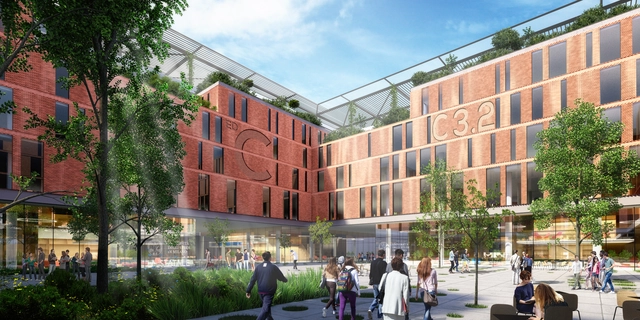
Carlo Ratti Associati has released details of their schematic design for the University of Milan’s new science campus, featuring robotically-assembled brick facades, porous communal areas, and natural oases. Working in collaboration with Australian real estate group Lendlease, the “Science for Citizens” proposal will sit within a new Milan Innovation District, located on the site of Milan’s 2015 World Expo.
Located within this new district, and home to over 18,000 students and 2,000 researchers, the “Science for Citizens” proposal seeks to “put forward a vision for an open campus that becomes a testing ground for innovative education while fostering exchanges between the university and the surrounding innovation neighborhood.”
https://www.archdaily.com/899777/carlo-ratti-associatis-proposed-milan-science-campus-features-robotically-assembled-brick-facadesNiall Patrick Walsh
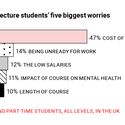
The Architects' Journal’s 2018 student survey has revealed troublesome, though perhaps not surprising, trends within the profession. The results of the survey, drawn from nearly 500 students in the UK, suggest that the economically fortunate are more likely to succeed within a culture that promotes unsociable and unhealthy working hours.
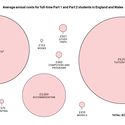
The numbers paint a bleak picture of the architecture student lifestyle in the UK, where, including tuition fees, students are now forking out an average of £24,000 per year. 44% of respondents identified this as the largest problem for them and their peers.
So as the traditional route into the profession becomes “increasingly out of reach for many,” is it time for schools and offices to reevaluate their methods in order to maintain a diverse, accessible architecture?
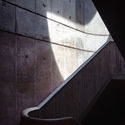
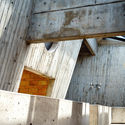
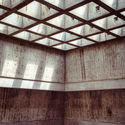
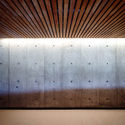
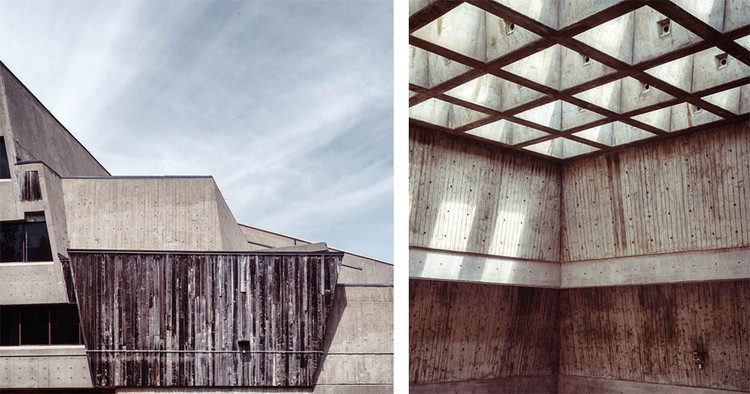
Toronto-based photographer Ruta Krau has captured stunning photographs of the Andrews Building, one of Canada’s most noted brutalist buildings, and a celebrated part of Toronto's concrete architecture. Designed by John Andrews, architect of Toronto’s iconic CN Tower, the Andrews Building embodies the Modernist ethos of connecting with the surrounding environment, balanced above a ravine and emerging as a stepped pyramid from a natural ridge.
Krau’s photographs capture the rough, natural aesthetic of the Modernist building, with béton brut concrete stamped with the patterns of the timber used to mold the poured-concrete structure. Visible on both the interior and exterior, this texture compliments terra-cotta-colored floor tiles and wood-paneled feature walls.
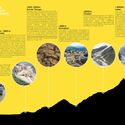
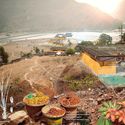
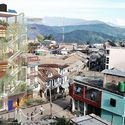
KTK-BELT Studio, a not-for-profit organization based in rural Nepal, is currently working with local communities to create a fascinating "Vertical University," which will teach students about biodiversity and environmental conservation in 6 "living classrooms" positioned along a vertical forest corridor that stretches from 67 meters above sea level to the top of an 8,856-meter peak. These 6 stops encapsulate the 5 climatic zones of Eastern Nepal: tropical, subtropical, temperate, subarctic and arctic.
The project explores the specific impacts of climate change in each climatic zone, creating “classrooms” where students can walk from Koshi Tappu to Mt. Kanchenjunga, the third tallest peak in the world, and learn onsite from indigenous farmers about the biological diversity of each area. By teaching place-based skills in these micro-conservation hubs, the project aims to conserve and activate local knowledge. Each of these “classrooms” responds to the visual and cultural cues of its unique landscape, with one campus focusing on a flood-proof design in a heavy monsoon area, and another mimicking the semi-nomadic lifestyle of local yak-herders.
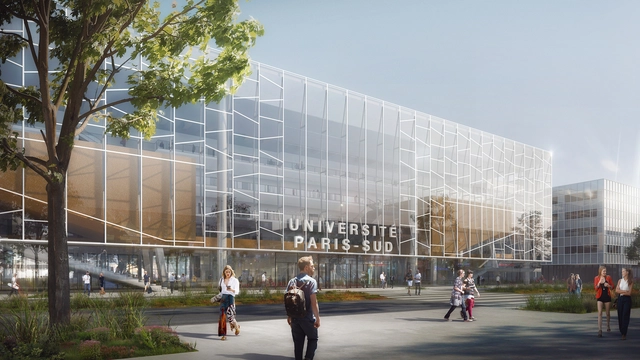
Bernard Tschumi Architects has been awarded one of the largest university commissions in France, with the design and build of a €283 million ($350 million) state-of-the-art educations and research center at the Université Paris-Sud in Saclay, just south of the French capital. The “METRO Center” will form part of the biology, pharmacy and chemistry wing of the university, comprising six buildings connected by flying bridges, featuring teaching facilities, research labs, offices, restaurants, and logistics areas.
The groundbreaking ceremony has taken place for Rubenstein Commons, a $20 million campus building for the Institute of Advanced Study in Princeton, New Jersey. Designed by Steven Holl Architects, the scheme aims to provide space for enhanced collaboration and communication between faculty and scholars at “one of the world’s leading centers for curiosity-driven basic research.” The ceremony took place on March 14th, the birthday of famed physicist Albert Einstein, who spent the last twenty-two years of his life working at the Institute.
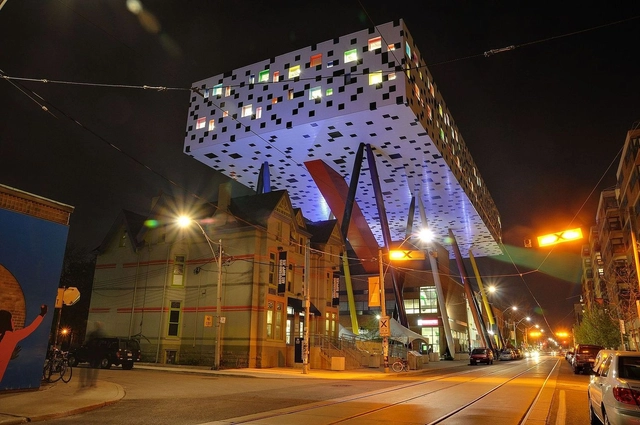
London-based AL_A, spearheaded by Amanda Levete, have revealed their design for two new buildings at the Wadham College site of the historic OxfordUniversity in England. The Dr. Lee Shau Kee Building and William Doo Undergraduate Centre will provide much-needed space for undergraduate services to support the University's access programs as well as new gathering places for the student body. The firm has been developing the expansion since securing the project after an invited design competition in the summer of 2016.
The aim of the “dancing” competition is to develop design proposals for the nightclub typology, intended as a place to experience entertainment in relation to music: listen, perform, dance.
The participants are asked to create innovative and unconventional projects on this theme, questioning the very basis of the notion of a club.
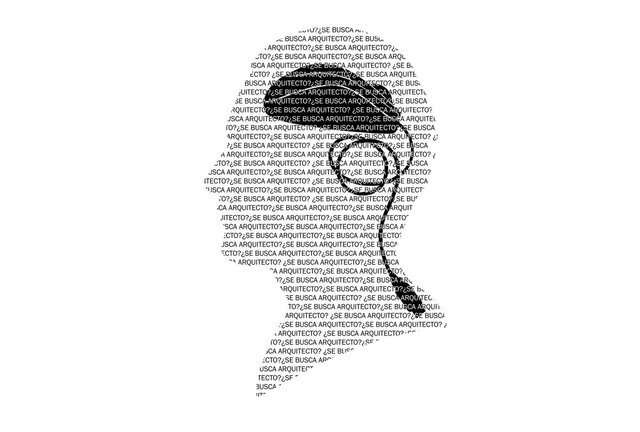
We are seeking someone with a Bachelor of Architecture with two years of experience. Knowledge of Revit, Vray, Adobe and Microsoft. Knowledge of RNE and Municipal documentation. Immediate availability - Typical Architecture Job Listing.
Are newly graduated Architects "employable" people according to the requirements of the current market? And are these the right requirements?
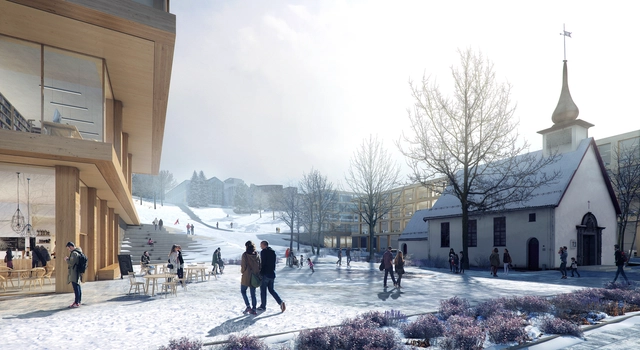
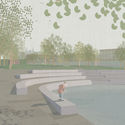
New university buildings form a spatial framing, where the park is the unifying element. The square is enriched with small landscape interventions, and facilitates external business activities. (Illustration by Beauty and the Bit). Image Courtesy of KOHT Arkitekter
KOHT Arkitekter has won an international competition to expand one of Norway’s s largest university campuses. The Norwegian University of Science and Technology (NTNU) in Trondheim launched their masterplan competition in December last year, setting the deadline for the first stage in January 2017. The emerging studio, consisting of Anders Olivarius Bjørneseth (27), Kenneth Larssen Lønning (25), Jonas Velken Kverneland (27) and Christopher Wilkens (32) beat 39 competing proposals before winning in the two-stage competition.
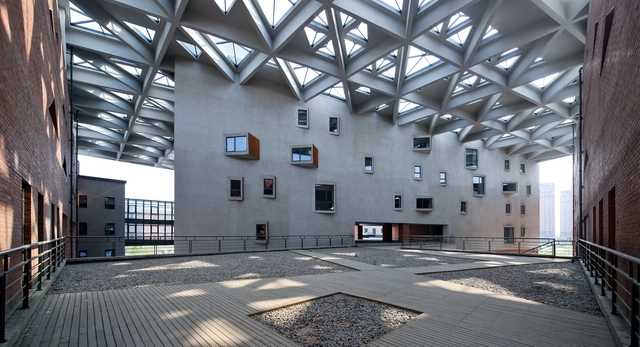
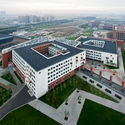
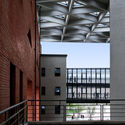
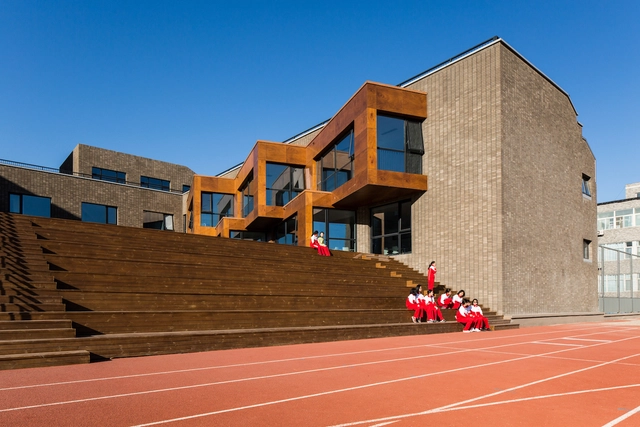
Architects: THAD (Architectural Design and Research Institute of Tsinghua University) : THAD - Architectural Design & Research Institute of Tsinghua University
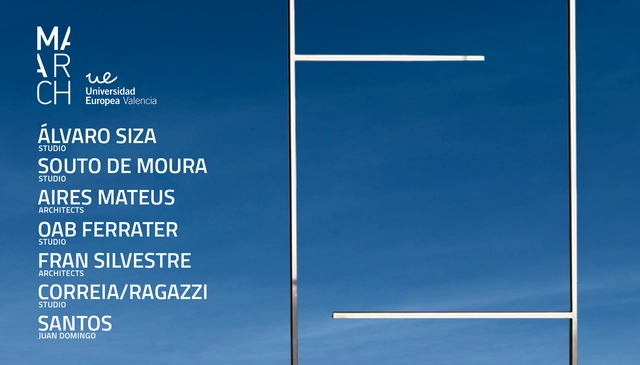
MArch Valencia originates as a cultural meeting point for professional architects and designers, students and companies with a same set of values; with the aim of bringing together and sharing all different experiences that arise during creative processes.
A nexus between the academical, professional and enterprise worlds, which is vital nowadays.
This different master and postgraduate MArch programs, are directed by Fran Silvestre and feature influential speakers and studios from the current architecture as Alvaro Siza Studio, Souto de Moura Studio, Manuel Aires Mateus Architects, OAB • Ferrater, Juan Domingo Santos and Fran Silvestre Architects.
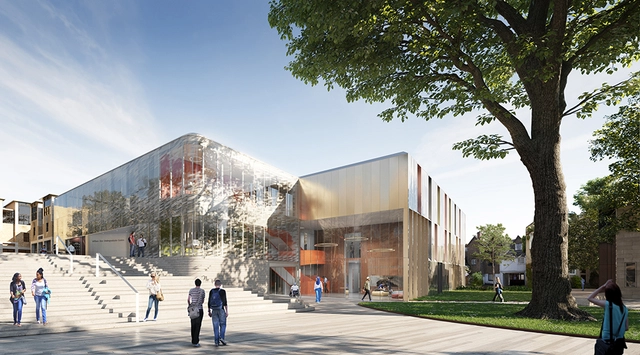
The project aims to extend and reinvigorate the campus core along McCaul Street in downtown Toronto and will include approximately 55,000 square feet of new construction, in addition to the renovation of 95,000 square feet of existing campus space.
https://www.archdaily.com/803612/morphosis-teeple-architects-among-firms-to-lead-ocad-universitys-expansion-in-torontoOsman Bari
One of the main difficulties encountered by students when looking for a job is dealing with a lack of professional experience. This fact is a paradox since people who apply for a trainee position have often never worked in the chosen area. Therefore, it is vital to invest in education and also to know the cultural diversity that’s available. Below we have 10 tips that serve as guidelines for students who want to build up their CV and get through the interview processes:
Thinking of continuing your studies but don't want to start a master's or a doctorate just yet? Around the world, short-term courses taken remotely are increasingly popular alternatives, and platforms such as edX, created by Harvard and MIT Universities make it even easier to dive deeper into the most diverse topics.
Of course, for long-term and undergraduate courses, the face-to-face experience cannot be replaced by online classes. However, being able to follow lessons and participate in discussions with people from around the world online is definitely an important advantage offered by the internet.
We have compiled a few courses in areas ranging from video game design to bio-cellular engineering, and from the history of Japanese architecture to courses in architectural imagination. See our list below:





















.jpg?1482771046&format=webp&width=640&height=580)