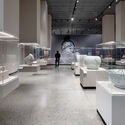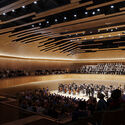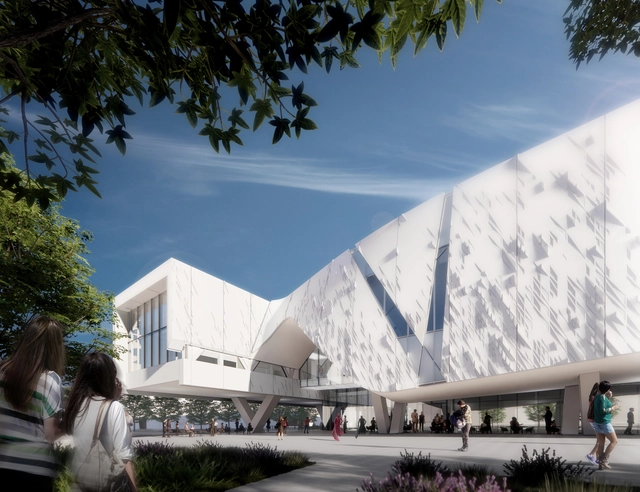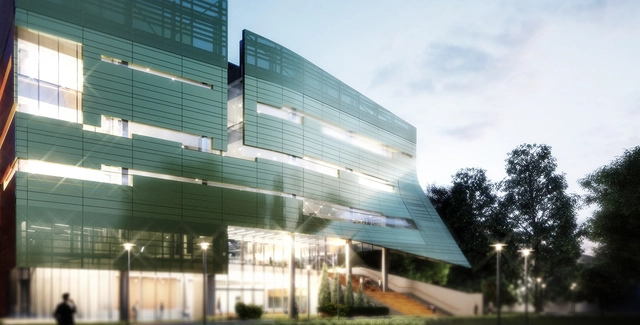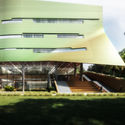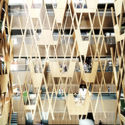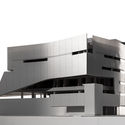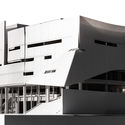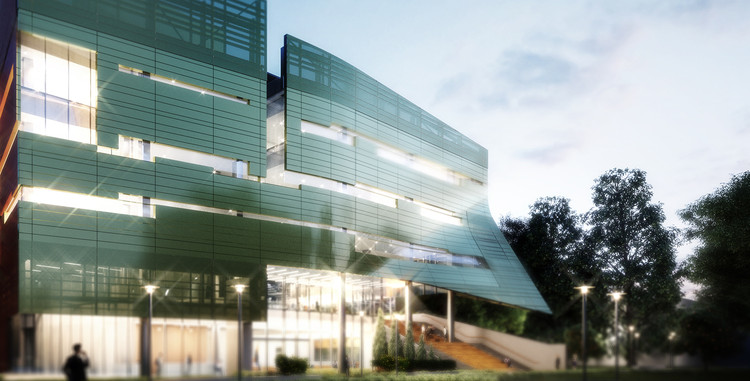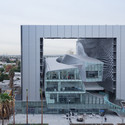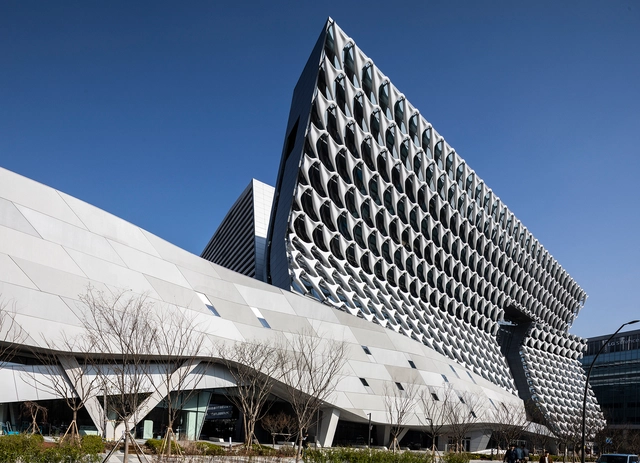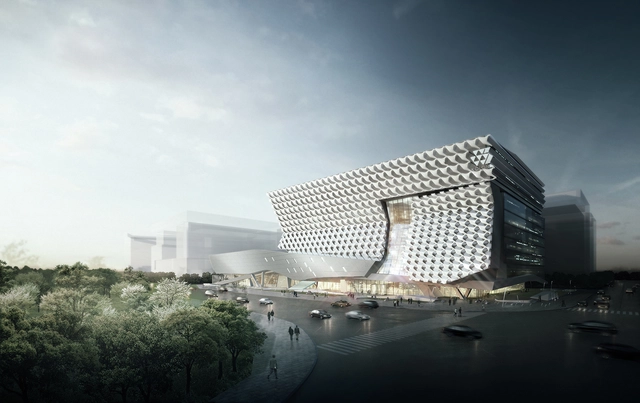
Rendering of Crow Museum of Asian Art at the O’Donnell Athenæum at UT Dallas, view of arrival and drop off from northwest. Image Courtesy of Morphosis Architects
The new arts campus, designed by global architecture and design firm Morphosis, has broken ground in Dallas, Texas. This marks the beginning of the first phase of construction for Edith and Peter O’Donnell Jr. Athenæum, a twelve-acre expansion of the University of Texas at Dallas (UT Dallas). The Athenæum complex will feature three main buildings: the Crow Museum of Asian Art (Phase I), a performance hall (Phase II), and a museum for the traditional arts of the Americas (Phase III). Phase I of the plan, the Crow Museum of Asian Art, is expected to be completed in 2024. The whole project is catalyzed by a $32 million donation from the O’Donnell Foundation.
This new cultural district, located at the southeastern edge of the UT Dallas campus, aims to become an arts destination for students, faculty, and the community. It also represents the latest milestone in a period of significant growth of the arts at UT Dallas, a school that had historically focused on science, engineering, technology, and business.
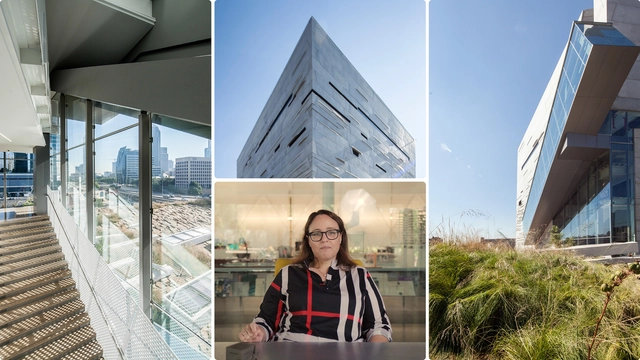
Morphosis has joined DesignClass, a growing collection of online classes featuring innovators from architecture, design, and creative leadership. Each class aims to build "curious and creative confidence" in future generations of creative professionals. Delving into design process, logic, and architecture, the new class focuses on how to translate ideas into dynamic architecture with one of the leading practices today.
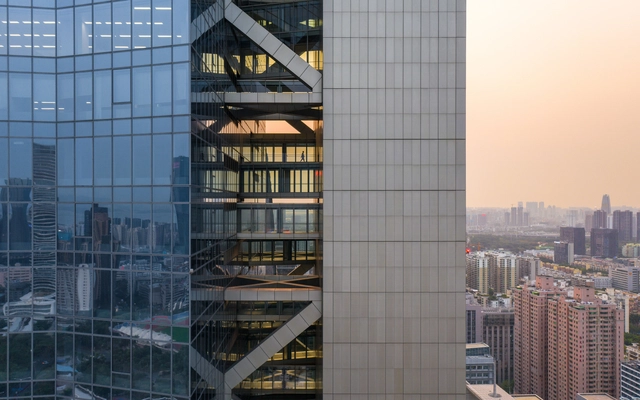
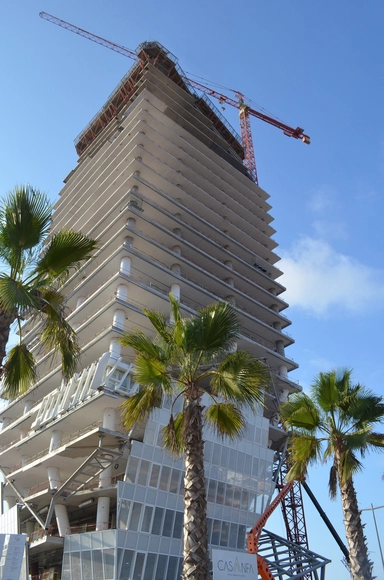
With its Shenzen project, design firm Morphosis reimagines the skyscraper typology, maximizing the flexibility of the floor plan through a detached-core scheme that shifts circulation, services and amenities to the building's exterior. Using a pioneering structural system, the project's spatial configuration diversifies the interiors' functional possibilities while reshaping the circulation routes within the building, with glass sky-bridges and large-scale steel braces knitting the core to the tower's main body. Completed in 2018 with a gradual opening that continues into 2021, the 359.8-metre tower is currently the tallest detached-core building in the world.
Dallas is home to a high concentration of structures by world-renowned architects. With some of the most iconic architecture per square mile of any American city, Dallas boasts designs by six Pritzker Prize Laureates, all within close distance to the up and coming Arts District. From Norman Foster’s Opera House to Thom Mayne’s Museum of Nature and Science, these projects are emblematic of a larger city-wide design culture.
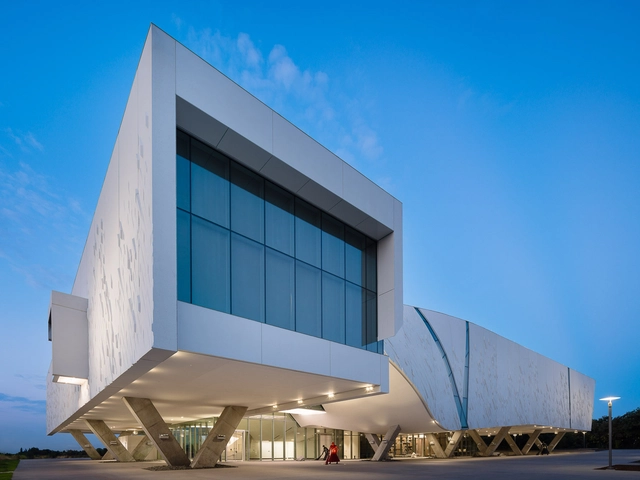
Judy Genshaft Honors College. Image Courtesy of Morphosis
Architecture and design practice Morphosis has broken ground on the new Judy Genshaft Honors College at the University of South Florida (USF). The five-story, 85,000-square-foot building is the latest in the firm's portfolio of educational facilities, a project that marks the university’s ongoing expansion and growth. Located on USF’s campus in Tampa, the honors college was designed to encourage interdisciplinary exchange while providing flexible spaces to learn.
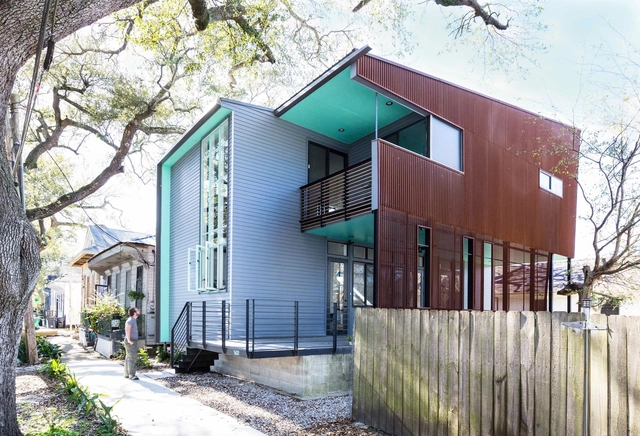
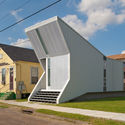
New Orleans is a city unlike any other. Defined by a rich cultural history, the Big Easy has been shaped by it's geography along the Mississippi Delta and the local climate. After the devastation of Hurricane Katrina in 2005, designers and architects looked to the city with a renewed focus to build a better future. From the Lower 9th Ward to the French Quarter and beyond, modern designs were created within a diverse urban fabric.
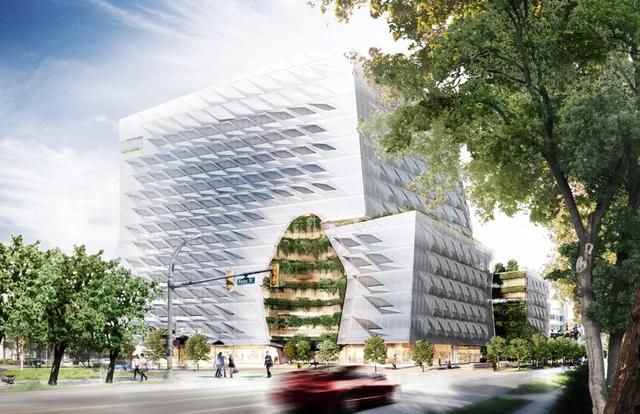
Morphosis will design a new high-tech global headquarters for lululemon in Vancouver, Canada. Working with Francl Architecture and Clive Wilkinson Architects, the team will create the main office to serve as an extension of the core values of the brand itself. The design for the 13-story headquarters is made to create strong connections between the building and its site, landscape, and community, with exterior and interior spaces that encourage collaboration and innovation.
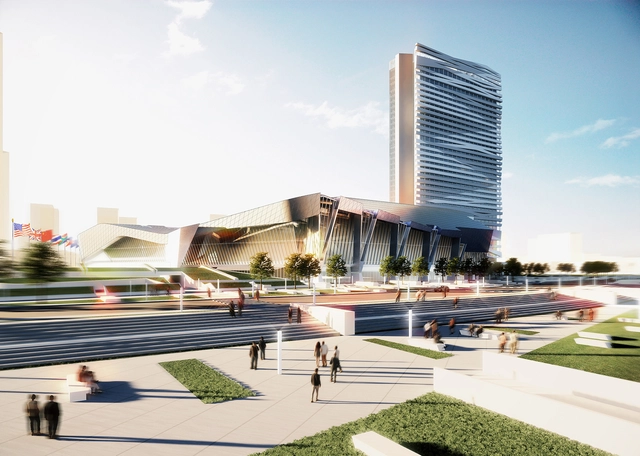
Morphosis Architects designed a new conference center for the city of Nanjing in China. Located in the New Jiangbei District, the project is situated between China’s eastern coastal cities and the Yangtze River Delta region. The conference center design was made as a flagship project to embody a charter for sustainable and ecologically-sensitive development.
Design:ED Podcast is an inside look into the field of architecture told from the perspective of individuals that are leading the industry. This motivational series grants unique insight into the making of a successful design career, from humble beginnings to worldwide recognition. Every week, featured guests share their personal highs and lows on their journey to success, that is sure to inspire audiences at all levels of the industry. Listening to their stories will provide a rare blueprint for anyone seeking to advance their career, and elevate their work to the next level.
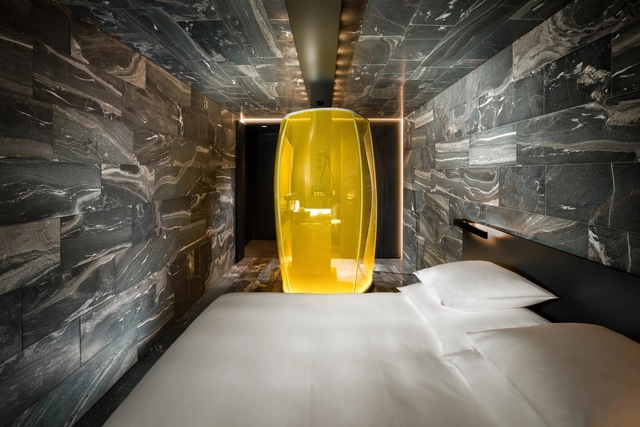
In this episode, Morphosis Partner Arne Emerson joins the podcast to discuss the new tower at the 7132 Hotel in ValsSwitzerland, the firm’s recent leadership expansion, and how Morphosis is advancing the field of architecture.
Shifts in technology reflect how designers are creating experiences of architecture and cities. New advances engender novel ways of working, and in turn, shape our design process. As a practice defined by pushing boundaries, experimenting with workflows, and embracing new design technologies, Morphosis has a forty-year history of enthusiastically wondering at the future.
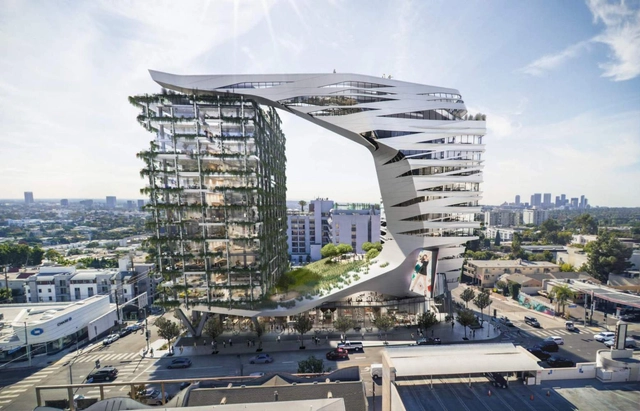
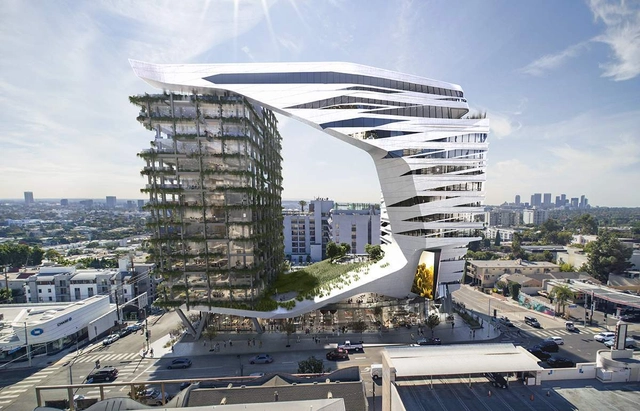
Morphosis has unveiled new images of the proposed 15-story mixed-use development along the Sunset Strip in Los Angeles. Spanning along Sunset Boulevard between San Vicente Boulevard and Larrabee Street, the 369,000-square-foot building is designed with a gym, movie screening room, and a rooftop pool. The project would include a new home for the landmark Viper Room, as the sinuous residential tower and hotel redefines one of L.A.'s most iconic streetscapes.
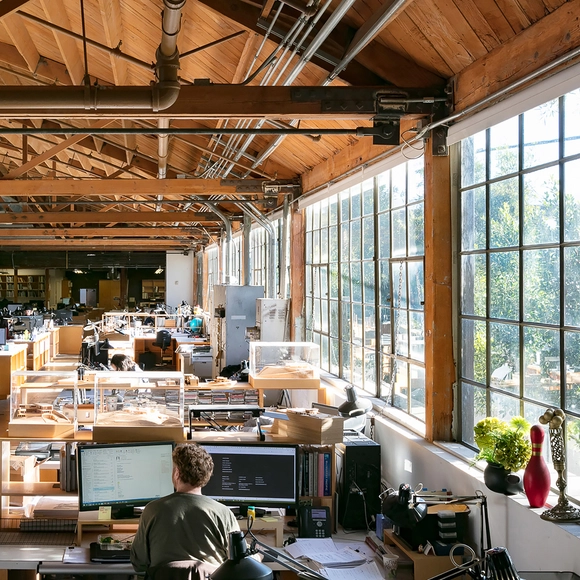
After having previously photographed the offices of architecture firms in the Netherlands, Dubai, London, Paris, Beijing, Shanghai, Seoul, the Nordic countries, and Barcelona, architectural photographer Marc Goodwin continues the series with an exploration of 15 large architecture and design studios in Los Angeles. Featuring a set of emerging and world-renowned offices alike, the series gives a glimpse into the life of designers across the City of Angels.
8850-8878 Sunset Boulevard. Image Courtesy of Morphosis
Morphosis has revealed a design for a new 15-story hotel along the Sunset Strip in Los Angeles. The design comes four months after Silver Creek Development purchased the property and the site of the landmark Viper Room night club. At nearly 200 feet in height, the mid-rise structure would feature an a large interior opening through two connected towers. The sinuous hotel would redefine one of L.A.'s most iconic streetscapes.
This Fall, global architecture and design firm, Morphosis has their plate full as four of their projects reach significant construction milestones. From Africa to the Middle East, Europe and the U.S., Morphosis is creating international landmarks that display their values of sustainability and future development. Read on to learn more about what Thom Mayne's team is up to.
Four top architects – Thom Mayne (Morphosis), Tadao Ando, Kengo Kuma and Peter Zumthor – have been tapped to contribute designs for the new “House of Architects” at the 7132 Hotel in ValsSwitzerland. The latest addition to the hotel, The House of Architects features a lobby and entrance also designed by Morphosis Architects, and 7 room designs centered around a single material.
Morphosis Architects has revealed their designs for a new headquarters for manufacturing corporation The Kolon Group to be located in in emerging Magok district of Seoul, South Korea. Part of a revitalization effort fostered by the Seoul Metropolitan Government to turn the area into a new “industrial ecosystem,” the four-acre project will sit adjacent to Magok’s central park, becoming the district’s first major completed building.