1. ArchDaily
  2. Sustainable Architecture

Sustainable Architecture: The Latest Architecture and News

Buildner and Dubai Celebrate Global Visionaries in €250K House of the Future Contest

 | Sponsored Content

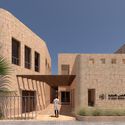
Buildner, in partnership with the Government of Dubai, has announced the results of the 2024/25 House of the Future competition. Following the success of its inaugural edition in 2023, this second edition invited architects and designers worldwide to develop an affordable, expandable, and forward-thinking prototype home tailored to the evolving needs of Emirati families.

Organized in collaboration with the Mohammed bin Rashid Centre for Government Innovation and the Sheikh Zayed Housing Programme, the competition offered a total prize fund of €250,000 (1 million AED). Winning entries are now being reviewed for potential inclusion in the UAE's national catalogue of housing designs, which provides citizens with a selection of pre-approved, innovative home models.

Reimagining Lisbon’s Azulejos: Regenerative Biomaterial Tiles from the Tagus River

Subscriber Access | 

All materials come from somewhere, embedded in a chain of extraction, supply, production, and disposal that, depending on its scale, leaves more or less significant marks on the environment. In architecture, we usually approach this trajectory through the lens of materials' circularity, considering how they can re-enter production cycles rather than become waste. Yet, broadening our view to unexpected places reveals parallel systems where by-products from one industry become resources for another. This approach has found fertile ground in organic waste transformed into biomaterials, with one of the most recent examples being the work of Fahrenheit 180º. Through their installation, "From the Tagus to the Tile", they repurpose oyster shells initially discarded by food systems to create a reinterpretation of Lisbon's iconic tiles.

Reimagining Lisbon’s Azulejos: Regenerative Biomaterial Tiles from the Tagus River - Imagen 1 de 4Reimagining Lisbon’s Azulejos: Regenerative Biomaterial Tiles from the Tagus River - Imagen 2 de 4Reimagining Lisbon’s Azulejos: Regenerative Biomaterial Tiles from the Tagus River - Imagen 3 de 4Reimagining Lisbon’s Azulejos: Regenerative Biomaterial Tiles from the Tagus River - Imagen 4 de 4Reimagining Lisbon’s Azulejos: Regenerative Biomaterial Tiles from the Tagus River - More Images+ 10

UIA 2030 Award Launches Its Third Cycle Highlighting Sustainable Development Goals

The International Union of Architects (UIA), in collaboration with UN-Habitat, has announced the launch of the third cycle of the UIA 2030 Award. Introduced in 2021, the biennial international prize highlights the role of architecture in advancing the UN 2030 Agenda for Sustainable Development, with a particular emphasis on SDG11: Sustainable Cities and Communities and the New Urban Agenda. Organized by the UIA's UN 17 SDGs Commission, the award recognizes built projects that combine architecture with measurable contributions to the Sustainable Development Goals (SDGs). Structured to coincide with the schedule of the World Urban Forum (WUF), the award will run through five cycles.

UIA 2030 Award Launches Its Third Cycle Highlighting Sustainable Development Goals - Image 1 of 4UIA 2030 Award Launches Its Third Cycle Highlighting Sustainable Development Goals - Image 2 of 4UIA 2030 Award Launches Its Third Cycle Highlighting Sustainable Development Goals - Image 3 of 4UIA 2030 Award Launches Its Third Cycle Highlighting Sustainable Development Goals - Image 4 of 4UIA 2030 Award Launches Its Third Cycle Highlighting Sustainable Development Goals - More Images+ 1

Understanding Eco Brutalism: The Paradox of Structure, Sustainability, and Style

Subscriber Access | 

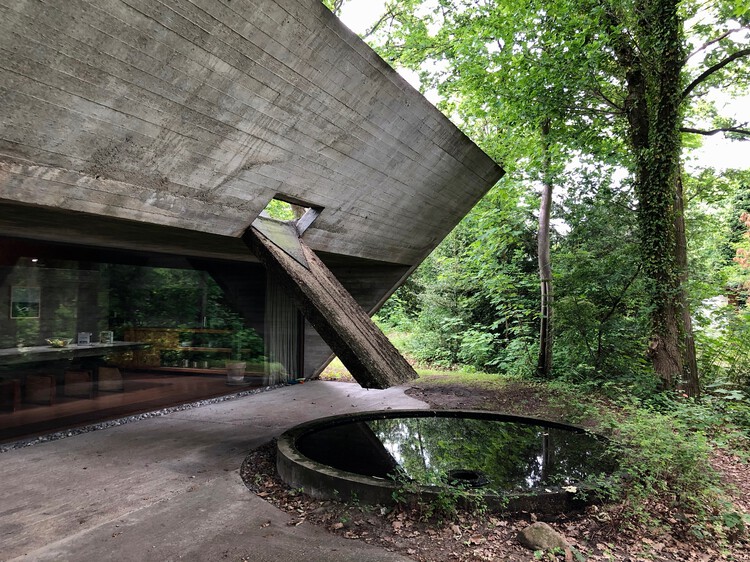
The built environment is expected to reduce carbon emissions, support biodiversity, and respond to changing ecological conditions, all while providing housing for communities and reflecting their cultural values. In this shifting landscape, a once-maligned architectural style emerges in a surprising new form. Brutalism, long associated with institutional gravitas and material austerity, is now being reframed through an ecological lens. This hybrid movement, known as eco-brutalism, combines the power of concrete with greenery and climate-sensitive design strategies. The result is a set of spaces that are visually arresting, conceptually complex, and increasingly popular among designers, urban planners, and the general public. This movement includes not only the direct lineage of 1960s Brutalism but also contemporary projects that, while not strictly Brutalist, share its material honesty, monumental scale, and use of expressive concrete forms.

Understanding Eco Brutalism:  The Paradox of Structure, Sustainability, and Style - Image 1 of 4Understanding Eco Brutalism:  The Paradox of Structure, Sustainability, and Style - Image 2 of 4Understanding Eco Brutalism:  The Paradox of Structure, Sustainability, and Style - Image 3 of 4Understanding Eco Brutalism:  The Paradox of Structure, Sustainability, and Style - Image 4 of 4Understanding Eco Brutalism:  The Paradox of Structure, Sustainability, and Style - More Images+ 39