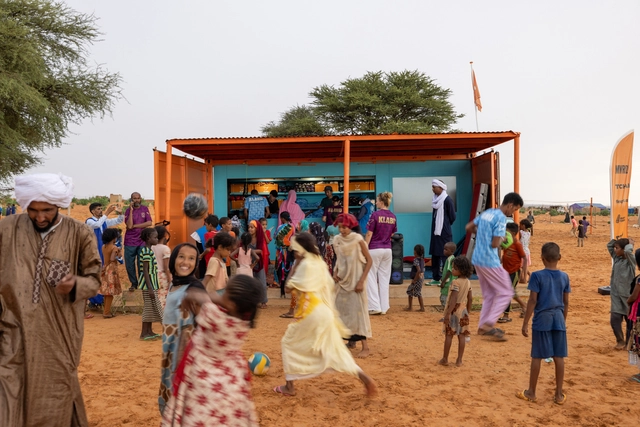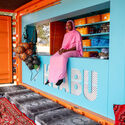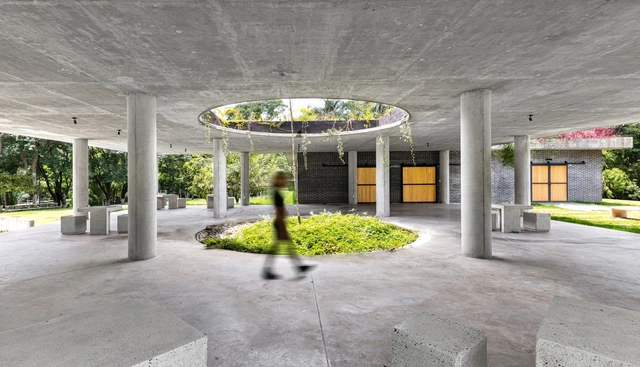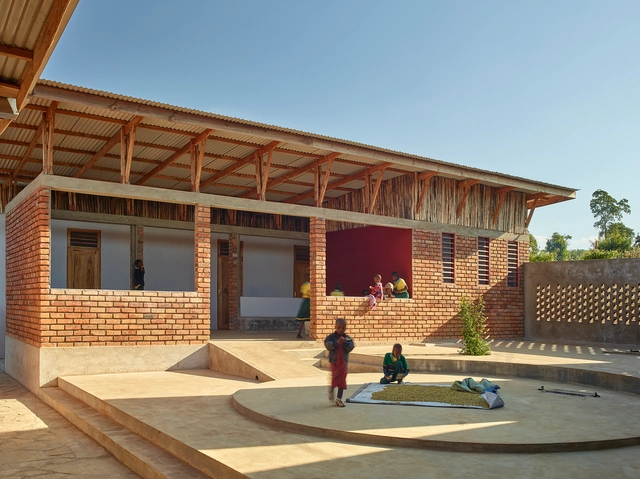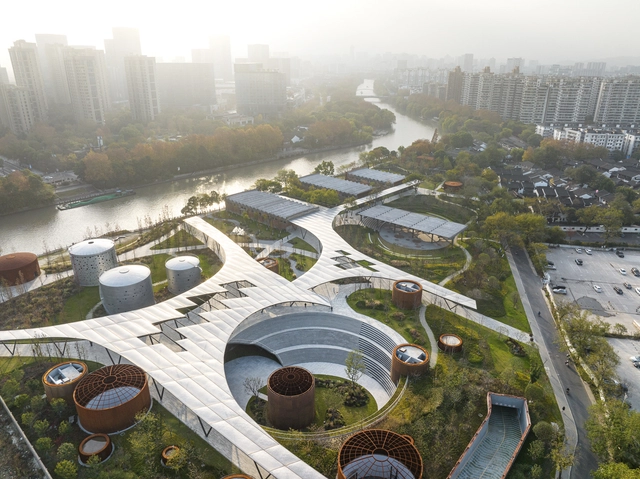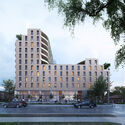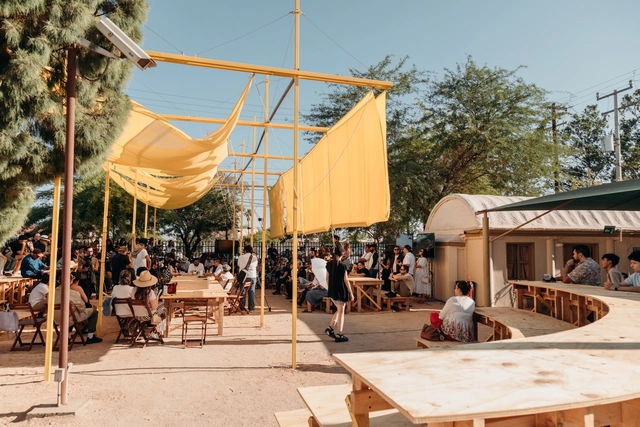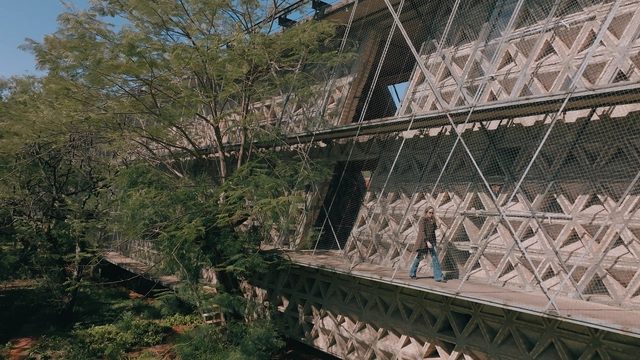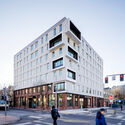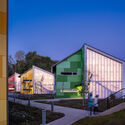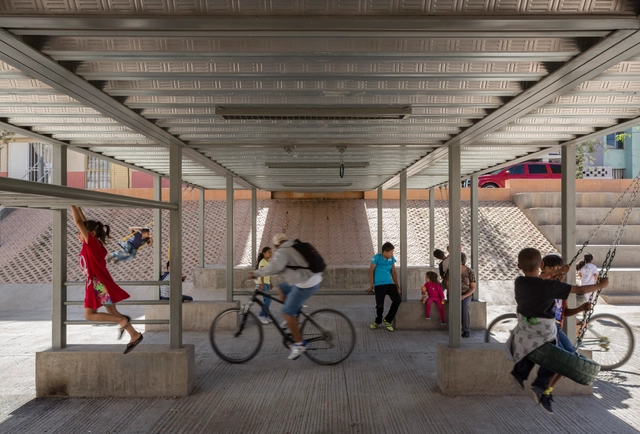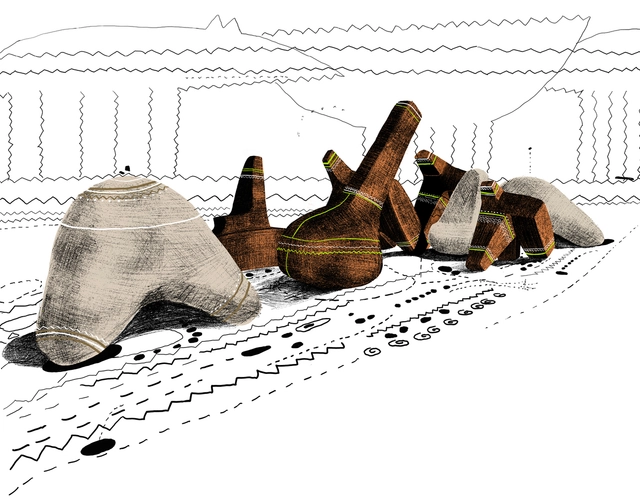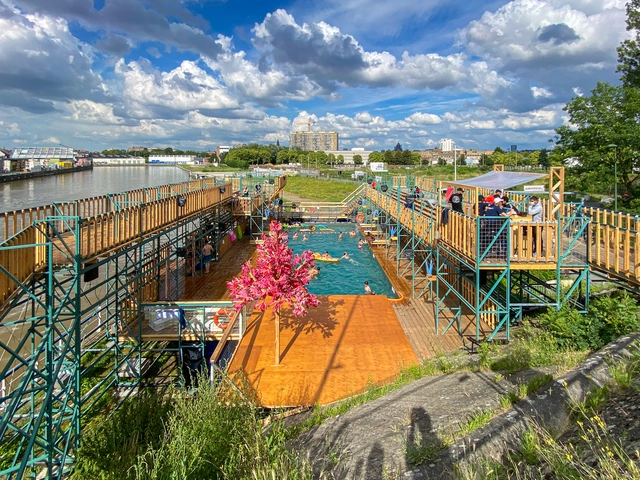
The Design Educates Awards 2024 has just announced the winners of this year’s winners, celebrating projects that excel in addressing complex social and environmental challenges while carrying significant educational value. Held annually, the awards recognize projects that respond to social and environmental issues and promote sustainability, even if the educational impact is gradual. In fact, it aims to highlight projects that offer long-term value and address the complexities of modern life.
Celebrating groundbreaking projects that showcase sustainable construction practices, this year’s winners of the Holcim Foundation for Sustainable Construction 2023 highlight innovative approaches across various scales, forms, geographies, and forms. The Gold Prize for North America was awarded to Partisans Architects and Well-Grounded Real Estate with their high-tech, low-cost modular housing solution for urban living in Toronto. In a video interview for ArchDaily, Jonathan Diamond from Well-Grounded Real Estate discusses the development of the winning project and the forces that shaped it.
As dwellers of big cities, we tend to be dragged into a very fast-paced lifestyle. Surrounded by monumental buildings and infrastructure, we can easily lose sight of key spaces that connect us with our neighborhood and provide us with rare moments of peace and enjoyment. Appropriation of the environment we inhabit becomes an uncommon circumstance.
Noemí Blager and Tapio Snellman are presenting a new video installation at the Architectural Association (AA) in London. The exhibition titled “A Lot with Little” set out to explore and showcase how architects can employ a more economical use of resources to create architectural works that are both sensible and sustainable. Previously shown in Germany, Switzerland, China, Czechia, the US, and the Venice Architecture Biennale, this London debut aims to highlight the global relevance of resource-efficient architectural practices. The exhibition is now on view at the AA School in London from April 26, until May 30, 2024.
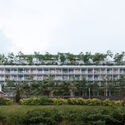

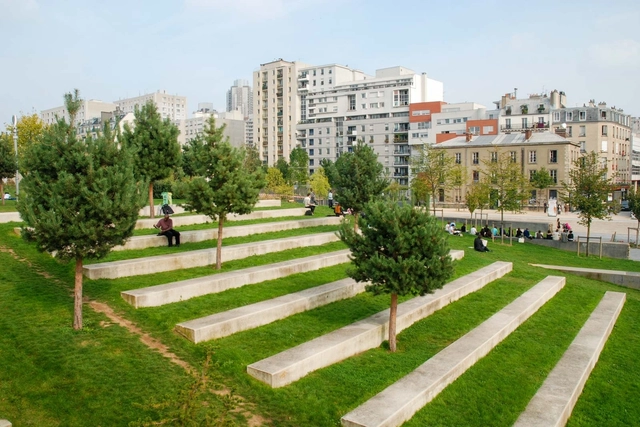
Social infrastructure encompasses the resources and services that allow the creation of communal bonds and social connections. Within the built environment, it manifests through public spaces like parks, libraries, and community centers alongside threshold spaces such as public transportation stops.
These public social spaces play a crucial role in strengthening communities and, in turn, their ability to respond to catastrophic climate-related events. They can provide physical shelter to the populations most vulnerable to these events and foster resilient networks of people who can more quickly recover. Given the escalating frequency of extreme weather events in the United States due to climate change and its social infrastructure inadequacies, examining public spaces as a critical tool for climate resilience becomes vital.
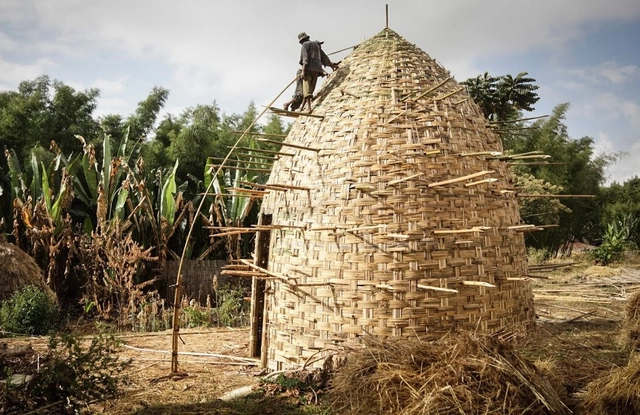
Weaving is not only a technical craft but also a way to design material experiences. Engaging in the process of weaving allows us to structure, communicate, reflect on, and connect with our designs. By experimenting with different fabric structures, we gain insight into how materials behave under tension and compression. This understanding helps us push the boundaries of textiles and their limitations, resulting in designs that stretch and test the properties of the materials.
In architecture, the construction mechanism of weaving centers the shelter to the building process. In this sense, shelter becomes a direct manifestation of material production. Additionally, weaving offers numerous environmental and social benefits by creating shelters that actively engage with materials, tools, technologies, and creative potentials, thereby supporting placemaking.
One of the most radical instances of public space transformation happened recently. During the early months of the Covid-19 pandemic, public space transformed into “a medical resource, a distribution hub, an overflow space, a center of protest and resistance, a gym, a senior center, a community center, a daycare center, a schoolyard, a night club, a transportation corridor, an outdoor restaurant, a shopping mall, a children’s playground, an outdoor theater, a music venue, a nature center, and a place of belonging and ‘being at home.’”
https://www.archdaily.com/1010271/socially-just-public-spaces-are-crucial-to-flourishing-societiesGrace Mitchell Tada
Despite the bad reputation of public housing in the United States, organizations, planners, and architects in Portland, Oregon are determined to create affordable housing that does not sacrifice quality or aesthetic appeal. While Portland has developed a bad reputation regarding its homelessness problem, in the past four years resources have flowed in the right direction, and designers have taken this in stride to design livable and striking buildings, within very restrictive budgets. Through innovative and creative approaches to construction and design, these organizations and designers have utilized federal, state, and city resources to make these types of projects a reality.
In the realm of media architecture and its role in supporting struggles for social justice, the recent Media Architecture Biennale 2023 (MAB23) in Toronto, Canada, shed light on a captivating aspect: The rapid and vast propagation of solidarity lighting in response to Russia's invasion of Ukraine in 2022. The synchronized illuminations, infused with activism and global art projects, became a powerful emblem of worldwide support for Ukraine during its time of crisis. Two emphatic female political leaders in Europe initiated the lighting solidarity message. Surprisingly, the blue and yellow Ukrainian flag illumination on iconic buildings worldwide defined an image of solidarity even faster in the press than large crowds of people in anti-war protests the weekend after the war began.
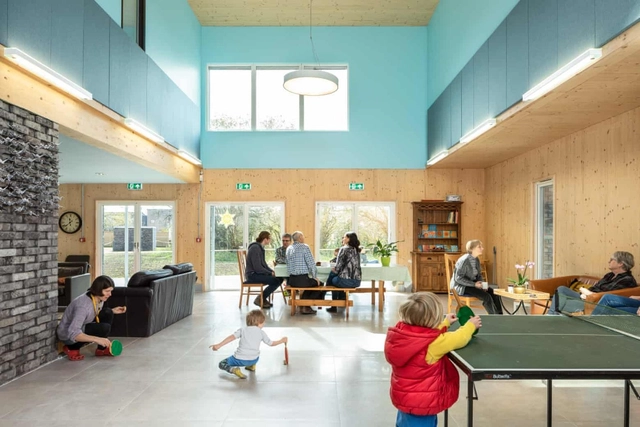
Courtesy of David Butler | Marmalade Lane Cohousing development
The International Day of Cooperatives is a celebration of the cooperative movement, which takes place annually on the first Saturday of July. In 1992, the United Nations General Assembly established it a national day, celebrating the cooperative movement worldwide with yearly themes. The cooperative movement is an association focused on achieving common goals and addressing collective communal needs. Cooperatives believe in community development at their core, prioritizing people and supporting local communities to improve their well-being. Moreover, the co-living models that have been adapted from it have become an enormous success over the past few decades, providing a form of cost-effective social housing. The cooperative structure redefines how people live, work, play, and collaborate. This year's theme is “Cooperatives: Partners for accelerated sustainable development.”
As cooperative principles continue to be injected into built environments today, the concept has created different models of co-op housing, leading to co-living. Over the past years, established European awards have celebrated co-living and architecture studios and developers worldwide have designed different models exploring co-living. The articles and projects selected in this article address what it means to live together, work together, and form healthy communities in this day and age.
February 20th marks a new edition of the World Day of Social Justice. The theme, "Overcoming barriers and unlocking opportunities", is a perfect occasion to reflect on the importance of equity in all areas of society - and especially from architecture and urbanism. And yes: they both have a fundamental role in building accessible cities and are important tools for addressing the challenges of economic inequality and social exclusion.
Courtesy of the South African Pavilion at Biennale Architettura 2023
For the 18th International Architecture Exhibition – La Biennale di Venezia, the South African Pavilion explores the architectural representation of social structures through an exhibition titled “The Structure of a People.” Prior to the exhibition, the pavilion curators, Mr. Stephen Steyn, Dr. Emmanuel Nkambule, and Dr. Sechaba Maape, conducted a national architecture competition titled “Political Animals,” aimed at gathering artifacts crafted by lecturers and architecture students to represent the structures of their schools or universities. The resulting models and miniature architectures, produced by ModelArt, will be exhibited within Zone III, Political Animals, as part of the South African Pavilion.
Dwellings can be understood as the most significant and primary form of architecture, as the house is intimately related to the idea of shelter, one of humanity’s basic needs. In the words of architect Mario Botta, “As long as there is a man who needs a house, architecture will still exist.” Yet, in spite of its ubiquity, or perhaps because of it, an exact definition of a home is difficult to find. Throughout history, different functions and spaces have been added and subtracted from this unit, reflecting directly the character of the society that produced it.
The list of expectations that a house has to fulfill is long and ever-evolving: to provide intimate and safe spaces where one can recharge their energy, but at the same time to allow for interaction, welcoming friends and family to join in; it is the purveyor of leisure and relaxation, but also the site of most labors of care, while also providing a small incubator for starting entrepreneurs. This tendency to demand a residential unit to fulfill multiple roles was heightened to unprecedented levels during the pandemic. Health concerns led to the closing of most workspaces, the second place where people spent most of their time, and of cafes, restaurants, cinemas, and malls, the “third places.” Suddenly, the home had to become an all-purpose space.
The year 2022 was marked by several socio-cultural and economic crises across the globe, from the Russian invasion of Ukraine to the increasing cost of living worldwide, combined with a number of natural disasters such as the devastating floods in Pakistan and hurricane Ian in the US. In these difficult times, architects are stepping up and embracing their role in developing design-based solutions to humanitarian crises, ranging from temporary shelters and affordable housing schemes to centers for protecting at-risk groups such as homeless underage girls, children from low-income environments, or families in need of medical care.
This week's curated selection of Best Unbuilt Architecture highlights projects submitted by the ArchDaily community that engage with their local communities, offering safe spaces for disadvantaged and at-risk groups. From a sanctuary for homeless girls in Iraq to an affordable housing project in Prague’s first skyscraper, this selection features projects centered around people, their needs, and desires. Many of the projects employ local materials such as clay bricks to lower the construction costs. They also reuse existing buildings and hope to engage the local community in building and appropriating the proposed spaces.
The philosopher and sociologist Henri Lefebvre coined the notion of "production of space" in 1974, breaking with the vision of space as a container or scenario of objects and social relations, to move towards space understood as a process. From this vision based on the Marxist tradition, space is a product and a producer of social relations and processes.
The new metaverse platform pax.world, set to launch in early 2023, has announced its collaboration with global architecture offices Grimshaw, HWKN, Farshid Moussavi, and WHY to create “Metaserai,” a vast social and cultural hub envisioned as the core of the new virtual community. The hubs are designed to host virtual cultural, social, and educational events such as concerts, theatre shows, digital art galleries, markets, lectures, parties, and festivals.
The pax.world platform aims to develop into a fully functioning society governed by a Decentralized Autonomous Organization, also known as a DAO. The virtual space will be divided into privately-owned plots of land punctuated by Metaserai communal hubs. These take inspiration from the Caravanserai of the ancient Silk Road, which became hubs for commerce and cultural exchange. Each of the architects is designing their own interpretation of Metaserai.
Architecture has been criticized for being a primary elitist indulgence. Most architectural projects are funded by the wealthy and seen as a means of bringing beauty into the surrounding environment. Architecture, however, is a double-sided coin with functionality balancing out aesthetics. With the ability to strategize radical solutions, architects equally find themselves at the forefront of solving complex issues. The context of Southeast Asia offers a demanding challenge with various social problems, giving architects a chance to save the world with humanitarian design.