

Team Rambo, also known as Ramboland, is a project born from the need of Ron Rambo, born with Cerebral Palsy, for a home that can support his disability and increase his quality of life. However, Ramboland doesn’t just stop there. LEED Fellow Max Zahniser, has used his experience with Green Architecture to combine Ron’s social vision with an environmental one that can benefit the entire community. The meeting of these objectives has been defined by the goal “to design a project that will actually increase the vitality of life and life-support systems in every way possible,” using architecture to make a difference.
Social Architecture: The Latest Architecture and News
Ramboland Is Increasing Self-Sufficiency for People with Disabilities through Architecture Designed To Heal




https://www.archdaily.com/797360/ramboland-is-increasing-self-sufficiency-for-people-with-disabilities-through-architecture-designed-to-healAriana Zilliacus
Call for Entries: 2017 Rudy Bruner Award for Urban Excellence
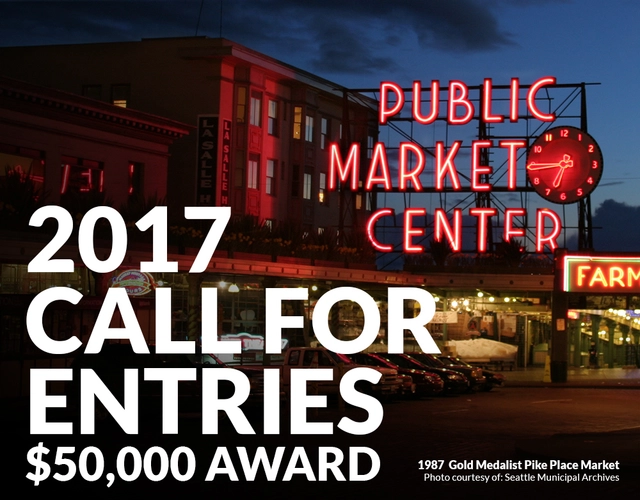
The Rudy Bruner Award for Urban Excellence celebrates urban places that are distinguished by quality design and their social and economic contributions to our nation’s cities. Winners offer creative placemaking solutions that transcend the boundaries between architecture, urban design and planning and showcase innovative thinking about American cities.
https://www.archdaily.com/795406/call-for-entries-2017-rudy-bruner-award-for-urban-excellenceRene Submissions
Buildify: Unlock the Potential of Bottom-Up Architecture
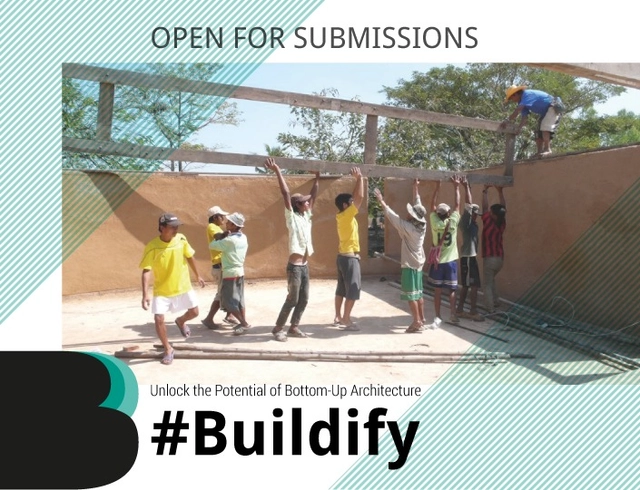
Buildify connects global professionals with local, community-driven architecture initiatives in need of support. Submit your project today!
Buildify - Architecture in Development’s new initiative is seeking new projects that aspire to improve the lives of rural or urban communities. Buildify supports community-driven architecture projects, helping them connect to the expertise and resources needed to upscale their impact.
https://www.archdaily.com/791757/buildify-unlock-the-potential-of-bottom-up-architectureRene Submissions
Built-In: NYC Drinks @ Black Door
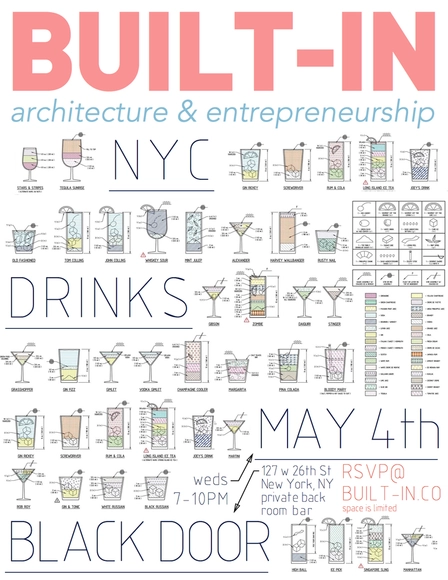
We're back from hiatus and have some exciting and high profile panel events we'll be announcing soon, but first we'd like to get everyone together for a bit of social libations. Join us at Black Door weds, May 4th and meet other entrepreneurially-spirited New Yorkers over beers or the drink of your choice. We trade industry happenings, projects, and thoughts on technological/cultural trends.
https://www.archdaily.com/786036/built-in-nyc-drinks-at-black-doorRene Submissions
A Look Back: 8 Years of Social and Urban Projects

In the past eight years the world has seen important changes – stemming from natural catastrophes, global warming, war, diseases, political and economic crisis among other things – all of which have a direct impact on the way we inhabit our planet and therefore how architects and planners are managing context-related designs for community living.
The importance of socially engaged architecture was highlighted by this year's Pritzker Prize winner Alejandro Aravena, whose work appeals to the idea of an active, committed architect who seeks for a democratic urban environment. This development also resonates strongly with ArchDaily's mission statement "to improve the quality of life of the next 3 billion people that will move into cities in the next 40 years, by providing inspiration, knowledge and tools to the architects who will have the challenge to design for them."
Therefore, in celebration of ArchDaily's 8th birthday, our Projects Team curated a selection of 24 exemplary projects divided into 3 categories. Each of these projects published over the past 8 years dedicate their design to find greater social, community, civil and humanitarian needs.
https://www.archdaily.com/783459/a-look-back-8-years-of-social-and-urban-projectsAD Editorial Team
An Open Call: Frontiers of Responsive Architecture

The students of the MA Architecture + Urbanism invite contributors to participate in their forthcoming symposium FRONTIERS OF RESPONSIVE ARCHITECTURE to be held in summer 2016. If you feel that your Research / Practice responds to the mission statement outlined in previous posts in English / Italian / French / Chinese / Turkish / Arabic we would love to hear about it from you.
https://www.archdaily.com/778379/an-open-call-frontiers-of-responsive-architectureRene Submissions

Vila Matilde House / Terra e Tuma Arquitetos Associados
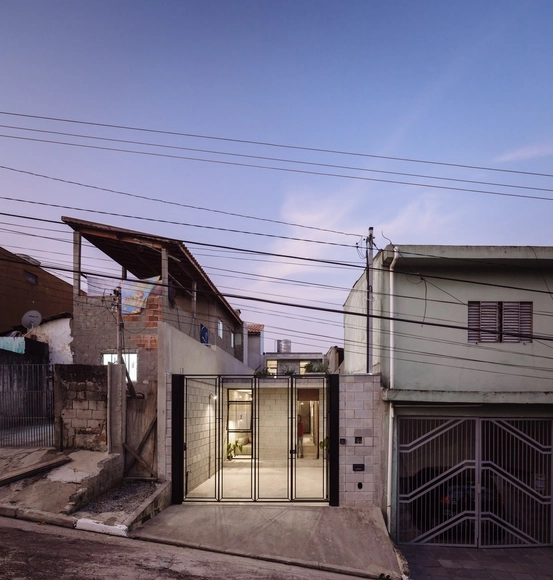


-
Architects: Terra e Tuma Arquitetos Associados
- Year: 2015
-
Manufacturers: Glasser
https://www.archdaily.com/776909/vila-matilde-house-terra-e-tuma-arquitetosVictor Delaqua
Summer School: Critical Concrete 2016

In 2015 Critical Concrete was founded with the ambition of promoting a new model: the refurbishment of abandoned places for social housing and cultural initiatives through summer camp programs centered around sustainable architecture and art in context.
In this sense, we want to conceptually reconnect the artist to the amateur and foster the sharing of skills and knowledge between experienced practitioners and surrounding communities, material reuse and sustainable, ecological constructions.
https://www.archdaily.com/776256/summer-school-practice-and-theory-of-sustainable-and-social-architectureRene Submissions
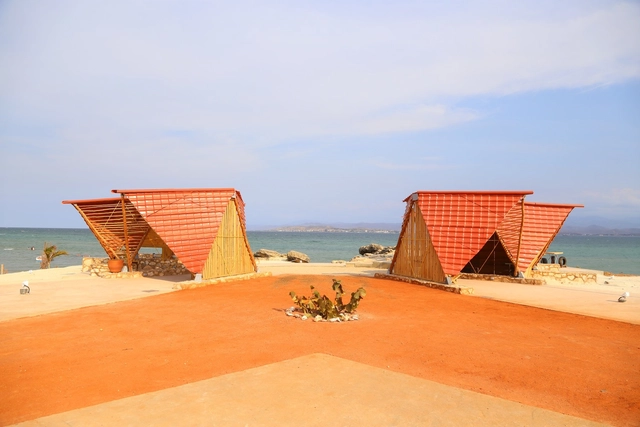
Punta Arenas Tourist Service Station / Colectivo Taller Independiente + Ruta 4 Taller + Pico Estudio


-
Architects: Colectivo Taller Independiente, Pico Estudio, ruta 4 taller
- Year: 2015
https://www.archdaily.com/769664/punta-arenas-tourist-service-station-colectivo-taller-independiente-plus-ruta-4-plus-pico-estudioDaniel Sánchez
The Courtyard of Our Dreams / Lukas Fúster
.jpg?1425437290&format=webp&width=640&height=580)
.jpg?1425437238 "© Federico Cairoli")
.jpg?1425437209 "© Federico Cairoli")
.jpg?1425437048 "© Federico Cairoli")
.jpg?1425437170 "© Federico Cairoli")
.jpg?1425437290)
https://www.archdaily.com/607006/the-courtyard-of-our-dreams-lukas-fusterCristian Aguilar
Archiculture Interviews: Shigeru Ban
“An earthquake doesn’t kill people, the collapse of a building kills people.” In Arbuckle Industries’ latest interview released following their world premiere of Archiculture, architect humanitarian Shigeru Ban clearly delineates “natural” disasters as a product of mankind, rather than nature. Hear the Pritzker laureate’s thoughts on designing for minorities, disasters, and the importance of travel in the video interview above.
https://www.archdaily.com/583088/archiculture-interviews-shigeru-banKarissa Rosenfield
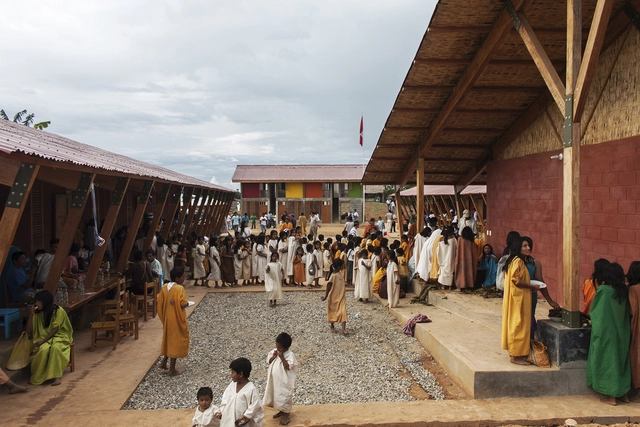
School in Chuquibambilla / AMA + Paulo Vale Afonso + Bosch Arquitectos



-
Architects: Bosch Arquitectos, Marta Maccaglia, Paulo Vale Afonso, Semillas
- Year: 2013
https://www.archdaily.com/579909/school-in-chuquibambilla-ama-bosch-arquitectosCristian Aguilar
LCD Exhibits "As Autumn Leaves" at Beijing's 2013 Design Week
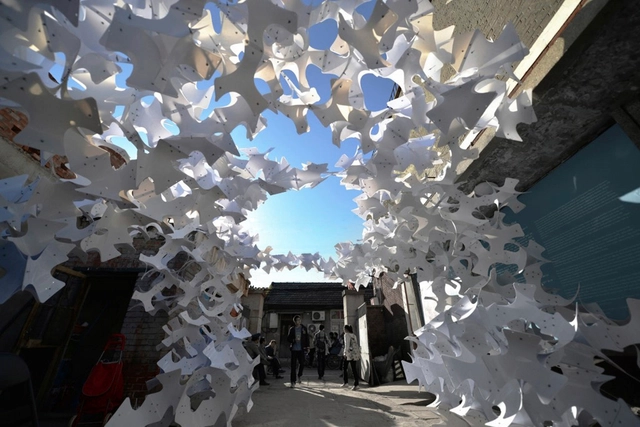
"As Autumn Leaves" (AAL) is a spatial installation designed and built by students of the Laboratory for Computational Design (LCD) for Beijing's 2013 Design Week. Located in a historic hutong district in Beijing, AAL highlights the existing entrance to Dashilar Factory where emerging creatives exhibit their design. The concept is based on ephermerality of nature. As temperatures change, autumn turns to winter, and trees shed their leaves, AAL recalls the passage of time through changing seasons.
https://www.archdaily.com/451572/lcd-exhibits-as-autumn-leaves-at-beijing-s-2013-design-weekJose Luis Gabriel Cruz
Nosara Recycling Plant / sLAB
A small group of students and architect Tobias Holler of sLAB Costa Rica at the New York Institute of Technology, have teamed up to design and build a communal recycling center for Nosara, Costa Rica – a city that is facing grave problems with sanitation and illegal dumping of garbage on beaches and in wildlife areas. Construction started last summer after a Kickstarter campaign that raised $15,000 helped provide expenses and costs associated with housing the students that assisted with the construction. A relaunch of the Kickstarter campaign will provide the project with additional funds to bring the students back to accelerate the pace of construction. The funds also support the documentary by Ayana de Vos, whose film follows the progress of the project and features waste management and sustainability in Costa Rica.
Join us after the break for more.
The motivation behind building a Communal Recycling Center is based in the severe problems that Nosara specifically, and Costa Rica in general, has in municipal waste management. Without appropriate infrastructure and policies, over 1400 tons of waste is deposited into unregulated dumps daily. A lot of the garbage makes its way into rivers and forests, pollutes ground water, threatens the health of local communities and destroys wildlife.
https://www.archdaily.com/297779/nosara-recycling-plant-slabIrina Vinnitskaya