What kind of city is a people-oriented city? This is a difficult question to answer because humanistic cities evaluate the city by "people”, and people are extremely diverse, producing individual different evaluation standards. For example, a city that is friendly to car drivers, may not be so friendly to pedestrians.
Nonetheless, there is a general perception that some cities seem to be more friendly to people than others. Why is this the situation?
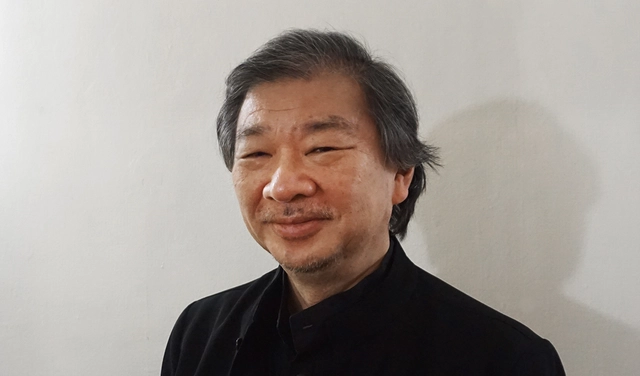
From the 21st to the 25th of September, the Mextrópoli Festival + XII Ibero-American Biennial of Architecture and Urbanism took place in Mexico City. As part of the event, ArchDaily spoke with 2014 Pritzker Prize winner Shigeru Ban about the central theme "Inhabiting at the margins", a proposal that sought to make visible the work of those who are providing solutions to the growing social, environmental, and economic needs at the margins of the system.
LaBoqueria is an architecture studio in Barcelona that has the experience of multiple local and international collaborations. This global, multidisciplinary and participative perspective allows them to have a renewed and different vision of architecture.
Focusing on social, economic and environmental aspects, they seek to approach their projects in a comprehensive way, bringing together the different people involved in the process. Among their works are the housing building La Balma carried out together with the architects' cooperative Lacol; the Reformation of premises together with Marta Peinado Alós; and the Ca's Bouer House together with Jordi Queralt.
ArchDaily, interested in collaborative and participatory processes through the theme Democratization of Design, conducted an interview with LaBoqueria to learn about their main inspirations, challenges and visions.
El proceso de HerCity usando la herramienta MethodKit en GoDown, Nairobi, Kenia. Image Cortesía de ONU-Habitat
Many of us agree that design is still not considered for everyone. That is why we must ask ourselves what is truly democratic in the matters of design - in order to define our vision toward a more just society. From the perspective of architecture and urbanism, we can look at this democratization from different angles, including citizens in participatory processes, in order to find answers to our constant search to improve habitability and accessibility.
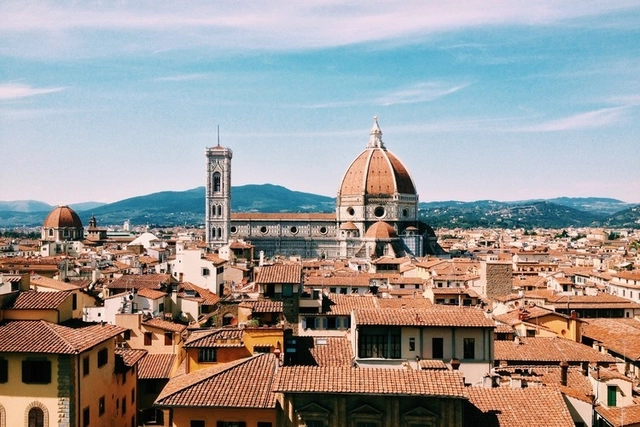
After a prolonged period known as the Middle-Ages, a growing desire to both study and mimic nature itself began to emerge, with an inclination to discover and explore the world. Between 1400-1600 A.D. Europe was to witness a significant revival of the fine arts, painting, sculpture, and Architecture. The ‘Renaissance’, meaning ‘rebirth’ in French typically refers to this period of European history, although most closely associated with Italy, countries including England and France went through many of the same cultural changes at varying timescales.
Prior to the dawn of the Renaissance, Europe was dominated by ornate and asymmetrical Gothic Architecture. Devoured by the plague, the continent lost approximately a third of its population, vastly changing society in terms of economic, social and religious effect. Contributing to Europe’s emergence into the Renaissance, the period ushered in a new era of architecture after a phase of Gothic art, with the rise of notions of ‘Humanism’. The idea of attaching much importance to the essence of individualism. The effect of Humanism included the emergence of the individual figure, greater realism and attention to detail, especially in depictions in art.
The election of Kéré is not only symbolic in a time of identity demands, where the institutions that make up the mainstream are required to more faithfully represent the social, cultural, and sexual realities that make up our societies, but it also confirms the recent approach of the Pritzker Prize jury.
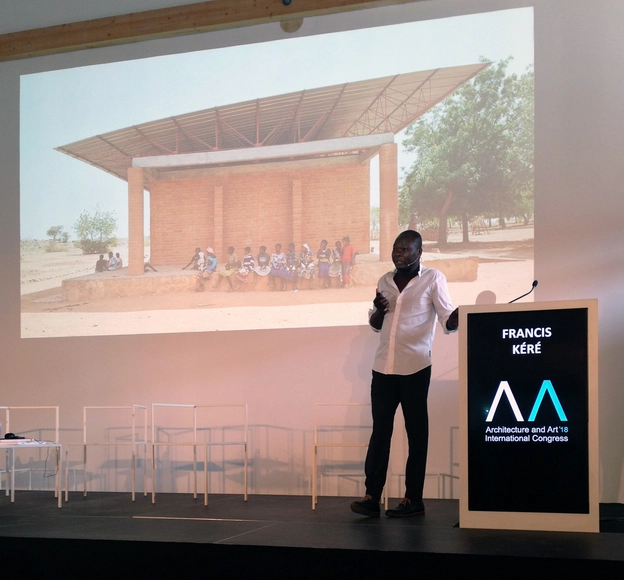
"I Draw on Paper, but I Prefer to Draw on the Ground". This phrase caught my eye during Diébédo Francis Kéré's speech at the AAICO (Architecture and Art International Congress), which took place in Porto, Portugal from September 3 to 8, 2018. After being introduced by none other than Eduardo Souto de Moura, Kéré began his speech with the simplicity and humility that guides his work. His best-known works were built in remote places, where materials are scarce and the workforce is of the residents themselves, using local resources and techniques.
Following decades of ongoing socio-cultural and economic crises across the globe, the design community has realized that it is time to “design like they give a damn”. And with that, they embraced a movement that saw architects and designers use their acquired skills to develop design-based solutions to humanitarian crises, ranging from building modular housing and mapping landscapes, to developing mobile applications and documentaries, all from an altruistic standpoint. But since pro bono work is not yet ingrained in the ethos of architecture, how have architects broken out of the traditional model of “corporate” architecture and established a way to ensure ethical responsibility for human welfare?
Videos
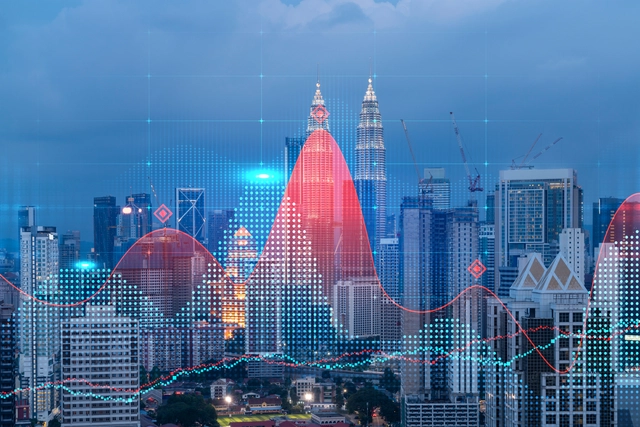
The Digital Twin . Image via Shutterstock/Videoflow
The emergence of the Digital Twin phenomenon has heralded a great change in terms of urban planning. It essentially presents the city as dynamic, in virtual form. Ensuring every element from the historic fabric, new construction, and public transit is accounted for in one three-dimensional model. Not only does it present key elements in terms of the landscape, but it also encompasses often overlooked conditions such as the presence of light throughout the day, shadows, and the presence of vegetation and trees. All of which contribute to a better preliminary process of site analysis.
Many of us have already lived, are living, or will live in a shared student house - a good mix of cheap housing and intense socializing with friends and school mates. For a reasonable price, it is possible to have a single private room and share common spaces. In fact, not only university students are living this way nowadays. The concept of co-living is becoming more and more an attractive and effective solution.
In the introduction of Cities for People, Jan Gehl stated clearly that most cities have neglected the human aspect when planning the built space. While technologies have allowed us to build large, our focus shifted from creating architecture for humans to erecting structures that look like they are meant for a different kind of species. Top-down urban planning decisions have ignored scales adapted to the senses and organic growth, and new ideologies prioritized speed, functionality, and profitability.
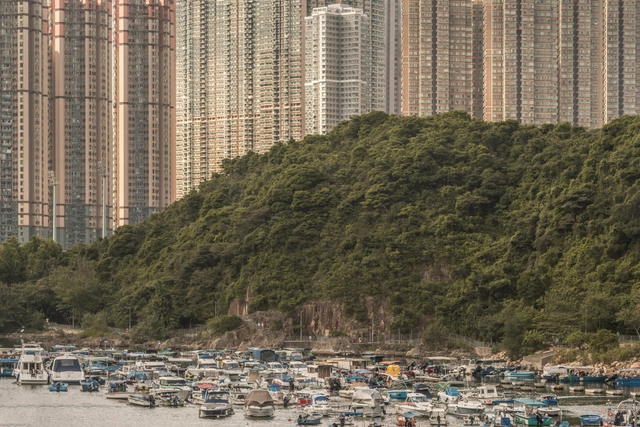
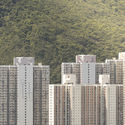
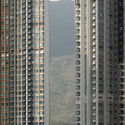
Dictating our city experience, scale, this major spatial component related to the human dimension, stimulates our senses, and influences our well-being. In this article, we lay down historical changes and underline scientific facts to highlight how scale can impact our daily city life, guided by Eden of the Orient, a series of photos by Belgian photographer Kris Provoost, portraying a battle of scale in Hong Kong.
Imagen editada por Fabian Dejtiar. Image Cortesía de Mi Parque
The series of articles developed by Nikos A. Salingaros, David Brain, Andrés M. Duany, Michael W. Mehaffy and Ernesto Philibert-Petit researches the peculiarities of social housing in Latin America. This time, examples of strategies and planning in their construction are reviewed, such as the importance of collaborative social processes and the specific sequences of stages.
https://www.archdaily.com/944295/examples-of-patterns-and-generative-codes-on-socially-organized-housing-in-latin-americaNikos A. Salingaros, David Brain, Andrés M. Duany, Michael W. Mehaffy & Ernesto Philibert-Petit
Casa Meche / ENSUSITIO Arquitectura. Image Cortesía de ENSUSITIO Arquitectura
The series of articles developed by Nikos A. Salingaros, David Brain, Andrés M. Duany, Michael W. Mehaffy and Ernesto Philibert-Petit researches the peculiarities of social housing in Latin America. This time the authors explain a construction strategy through iterative design and the emergence of form.
https://www.archdaily.com/944293/a-construction-strategy-for-socially-organized-housing-in-latin-americaNikos A. Salingaros, David Brain, Andrés M. Duany, Michael W. Mehaffy & Ernesto Philibert-Petit
El Trébol / Arquitectura Expandida. Image Cortesía de Arquitectura Expandida
The series of articles developed by Nikos A. Salingaros, David Brain, Andrés M. Duany, Michael W. Mehaffy and Ernesto Philibert-Petit researches the peculiarities of social housing in Latin America. This time, the authors focus on the role of participation in design processes and in the construction of a healthy urban fabric based on the experience of Christopher Alexander.
https://www.archdaily.com/944291/socially-organized-housing-in-latin-america-the-experience-of-christopher-alexanderNikos A. Salingaros, David Brain, Andrés M. Duany, Michael W. Mehaffy & Ernesto Philibert-Petit
"Public space" is a legal terminology that tackles the notion of land ownership, suggesting that this type of parcel does not belong to anyone in particular, but to the state itself. Open, free, accessible to all, and financed by public money, these spaces are not only the results of planning, but the consequences of the public practices they hold. Actually, people define how public space is used and what it means.
Protests - powerful political tools for change - from the March on Washington in 1963, the Arab Spring in the early 2000s to recent Black Lives Matter Movements, are altering the world. In times like these, while people still need to "take their issues to the streets" to be heard and seen, public spaces have resurfaced as a topic of discussion.
Kohn Pedersen Fox Associates (KPF) has just received planning consent for Lucan Place in Chelsea, a mixed-use project that provides new homes, nursery, and specialist educational accommodation. The project, a redevelopment of the site of the former Chelsea Police Station, will generate a total of 31 new homes, as well as social and community functions.
Espacios de Paz / PICO Estudio & Movimiento Por la Paz y la Vida. . Image Cortesía de ASF International Awards
The series of articles developed by Nikos A. Salingaros, David Brain, Andrés M. Duany, Michael W. Mehaffy and Ernesto Philibert-Petit researches the peculiarities of social housing in Latin America.
This time, the proposal focuses on how human health and well-being depend on the geometry of the environment. Check the previously published pieces and the new article, below.
https://www.archdaily.com/922149/socially-organized-housing-biophilia-connectivity-and-spiritualityNikos A. Salingaros, David Brain, Andrés M. Duany, Michael W. Mehaffy & Ernesto Philibert-Petit
Program Minha Casa Minha Vida - Luís Correia/PI. Foto: Otávio Nogueira, via Flickr. Licencia CC BY 2.0
Having explored the design that establishes 'emotional ownership' and the antipatrons of social housing, Nikos A. Salingaros, David Brain, Andrés M. Duany, Michael W. Mehaffy and Ernesto Philibert-Petit continue their series of articles on social housing in Latin America. This time, the proposal studies how control influences the urban form and the form of housing.
https://www.archdaily.com/917182/socially-organized-housing-the-geometry-of-controlNikos A. Salingaros, David Brain, Andrés M. Duany, Michael W. Mehaffy & Ernesto Philibert-Petit