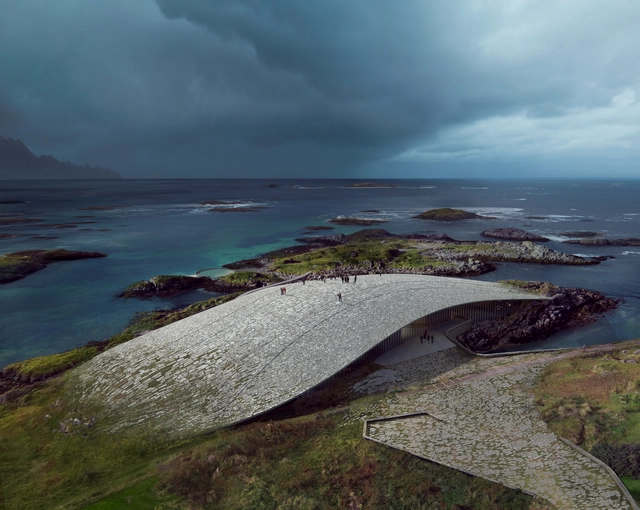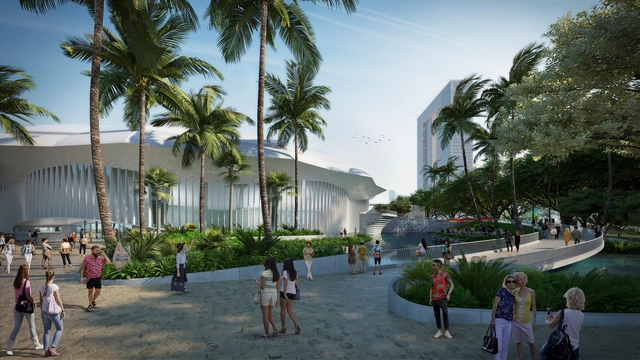
Bolzano Museum Quarter. Image Courtesy of Snøhetta
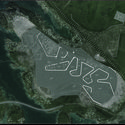
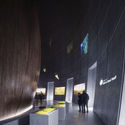
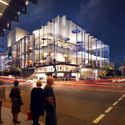
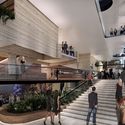
Snøhetta has designed a new Museum Quarter for Bolzano, Italy that will be home to Ötzi the Iceman. Sited atop Virgl mountain, the project would overlook the city and connect to the new Bolzano cable car. As an open landmark, the Museum Quarter was made to serve as a terrace for Bolzano. The elevated museum and park will include exhibition and collection space around the iconic 5,300-year old glacier mummy.
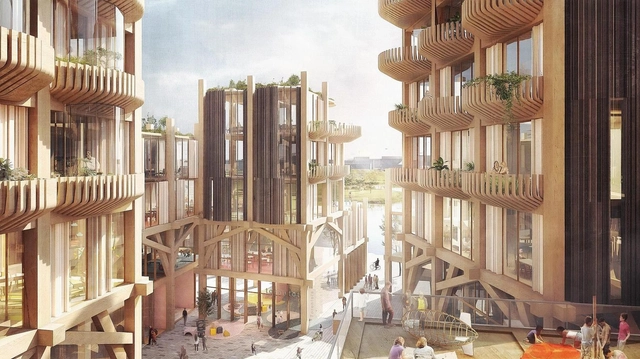
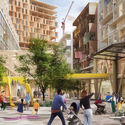
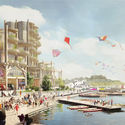
Sidewalk Labs has released new renderings from Snøhetta and Heatherwick Studio of the Quayside neighborhood development in Toronto. After announcing plans to create a model smart city, Sidewalk Labs has been working to pioneer a new approach to future urban developments. Plans for Quayside were first revealed last summer, designed to be interconnected smart neighborhood for the city. The latest renderings were released with further documents outlining how the company plans to pay for the ground-up development.
The role of architecture is to create strong and sustainable identities for cities and their communities. With well-conceived design, we can help things run more fluidly, improve people’s well-being, and make life more enjoyable. Every project is a unique expression of the ethos of its users, climate, and context. A built environment can be seen as a point of departure: it is where the architecture starts to communicate, the point from where it starts to interact with the public and its users. Followed by a talk with Jette Hopp of SNØHETTA.
Design practice Snøhetta has created a series of secluded wooden shelters for Norway's largest hospitals. Sited in the forest, the shelters were created on behalf of the Friluftssykehuset Foundation. Designed to make hospitalization easier for patients and their families, the outdoor retreats offer a physical and psychological respite from treatments and the isolation that can follow long-term hospitalization.
Budapest South Gate Masterplan. Image Courtesy of Filippo Bolognese, Snøhetta
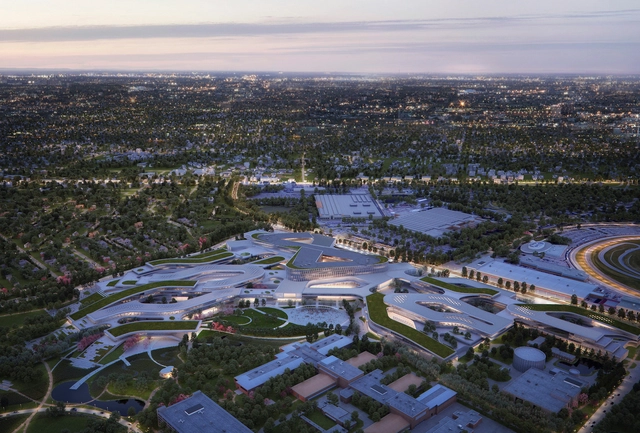
Snøhetta has won the competition to create a new neighborhood connected to the Danube River in Budapest. The brief asked for innovative proposals for 12,000 students along with educational, recreational and sports facilities. The South Gate masterplan for the 135-hectare site in the Hungarian capital focuses on urban relations and connects the new city quarter to the water to create a strong identity. Aspiring to create a lively, diverse and colorful new urban quarter, the project aims to create a lively waterfront for the people of Budapest.
A rejection of the bland and cold functionality of Midtown's crystal skyscrapers, the AT&T building was intended to encourage a more playful approach architecture in the corporate world; the crazy socks beneath a three-piece suit. It was not without controversy. Upon its completion, the building was derided for its decorative and outsized pediment and occasionally dark interior spaces. Indeed, the building's arched entry spaces were among the only architectural elements to be met with praise from both critics and the public.
Snøhetta has been announced as the winner of a design competition for the renovation of the avant-gardist Théâtre Nanterre-Amandiers in Nanterre, France. The renovation seeks to breathe new life into the 1960s theater, known for its high-quality performances and global collaborations.
The renovations will include the addition of a 200-seat theater, and the reconfiguration of the building’s restaurant, bookshop, and atrium space, with an emphasis on flexibility and natural light.
https://www.archdaily.com/904425/snohetta-to-renovate-avant-garde-theater-in-nanterre-france-with-dynamic-extensionNiall Patrick Walsh
El Paso Children's Museum. Image Courtesy of Snøhetta
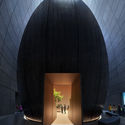
Snøhetta has been selected to design the El Paso Children’s Museum in the city’s Downtown Arts District. The team proposed a vaulted museum lifted of the ground, a design made to preserve public space and an interactive garden below. Snøhetta was one of three finalists alongside Koning Eizenberg Architecture and TEN Arquitectos, each invited to submit concepts for the museum. The Children’s Museum aims to welcome and engage children and families from El Paso, Ciudad Juarez, the American southwest, and the Mexican states of Chihuahua and Sonora.
Celebrating Paddington Central’s first year as a Design Route at the London Design Festival, the design practice Snøhetta created a rotating book pavilion for British Land. Snøhetta wanted to create a project that would reimagine the traditional principles of a library through a mechanized pavilion that generates varied spatial types. Designed for visitors to immerse themselves into a world of books, the pavilion encourages exploration, interaction and reflection.
Oslo councilors have voted to halt the Snøhetta-designed “A House to Die In,” located in the grounds of painter Edward Munch’s former house and workshop in western Oslo. The recent vote, reported by Norwegian newspaper The Local would appear to put an end to the 8-year collaborative process between Snøhetta and Norwegian artist Bjarne Melgaard.
https://www.archdaily.com/899511/controversial-snohetta-renovation-of-philip-johnsons-at-and-t-headquarters-halted-by-individual-landmark-designationNiall Patrick Walsh
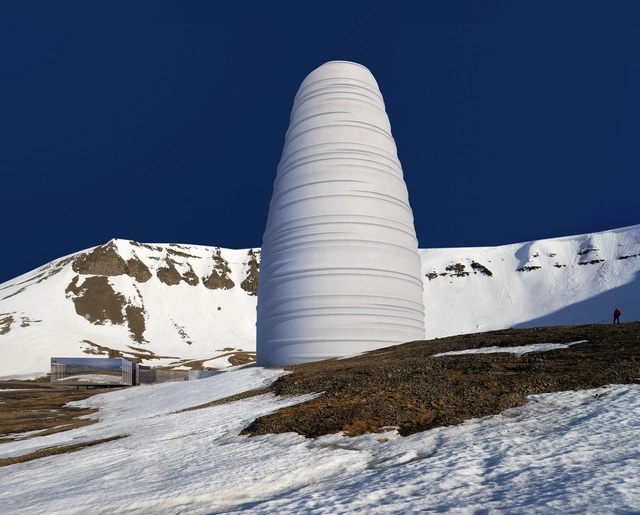
Snøhetta has released images of its proposed sustainable data center concept, named “The Spark.” The project seeks to address the typical high-energy-consuming typology of the data center, transforming it into an “energy-producing resource for communities to generate their own power.”
The proposal is adaptable for a wide range of contexts and can be scaled for any location around the world, fueling connected cities with energy from the center’s excess heat.
https://www.archdaily.com/896905/snohetta-designs-sustainable-data-center-as-the-body-and-brain-of-future-citiesNiall Patrick Walsh
Lasting for close to two decades now, the annual Serpentine Gallery Pavilion Exhibition has become one of the most anticipated architectural events in London and for the global architecture community. Each of the previous eighteen pavilions have been thought-provoking, leaving an indelible mark and strong message to the architectural community. And even though each of the past pavilions are removed from the site after their short summer stints to occupy far-flung private estates, they continue to be shared through photographs, and in architectural lectures. With the launch of the 18th Pavilion, we take a look back at all the previous pavilions and their significance to the architecturally-minded public.
Aldo Amoretti has released new photographs as construction continues on Europe's first underwater restaurant in Norway, designed by Snøhetta. The structure is currently being built on a floating barge in close proximity to its final location. Upon completion, the scheme will also house a marine life research center, teetering over the edge of a rocky outcrop, semi-submerged in the ocean.
Built from concrete, the monolithic structure will come to rest on the seabed 16 feet (five meters) below the water's surface, fusing with the ecosystem of the concealed shoreline. Below the waterline, the restaurant’s enormous acrylic windows will frame a view of the seabed.
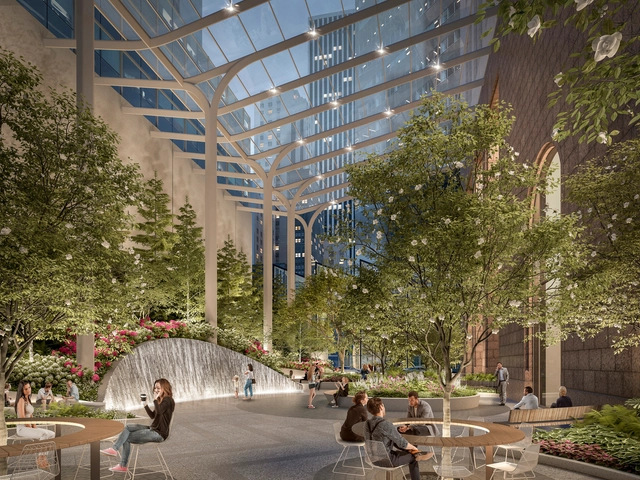
Verizon Executive Education Center and Graduate Hotel / Snøhetta and James Corner Field Operations. Image via New York City Public Design Commission
The New York City Public Design Commission and Mayor Bill de Blasio have announced the 11 projects selected as winners of their 2018 Awards for Excellence in Design. Established in 1983, the award has been bestowed annually to projects from the city’s five boroughs that “exemplify how innovative and thoughtful design can provide New Yorkers with the best possible public spaces and services and engender a sense of civic pride.”
The 2018 awards recognized projects which responded to the de Blasio Administration’s commitment to providing an “equitable, resilient, and diverse city for all New Yorkers.” All five New York boroughs feature in the awards, with schemes encompassing education, culture, art, and recreation.
Not all architects get the opportunity to design a museum. Between budget, scale and factors external to the field of architecture, designing a museum--and actually getting it built-- may mark the pinnacle of one's professional trajectory.
These public buildings provide an invaluable service to the communities in which they are located; from education to commemoration and (occasionally) the provision of public space, museums are "shining lights" in which architecture plays a fundamental role.
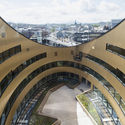
Snøhetta have released images of their proposed planetarium and visitor’s center for Norway’s largest astronomical facility. Nestled in a dense forest 28 miles (45 kilometers) north of Oslo, the scheme features a new 16,000 square foot (1,500 square meter) planetarium, and “interstellar cabins” mimicking small planets.
The facilities seek to offer a range of scientific activities to be experienced by the public, including astronomy, sun studies, and natural science, permitting the exploration of the night sky, and the Northern Lights.