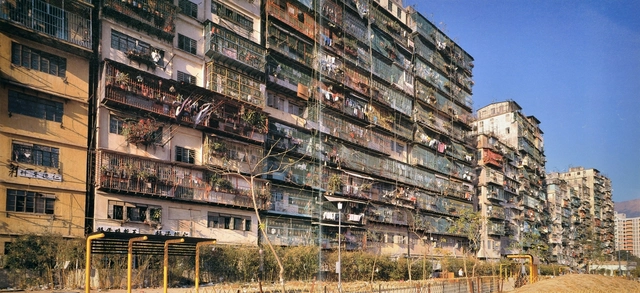
Kowloon Walled City, Hong Kong. Image Courtesy of 'City of Darkness Revisited’
Cities are growing, and they are growing upwards. This is far from just being a contemporary phenomenon of course – for more than a century, high-rises have been an integral part of urban settlements worldwide. This growing of cities encompasses a complex web of processes – advancements in transport links, urbanisation, and migration to mention a few. This growth of cities, however, is all too often linked with governmental failure to adequately support all facets of the urban population. Informal settlements are then born – people carving out spaces for themselves to live amidst a lack of state support.
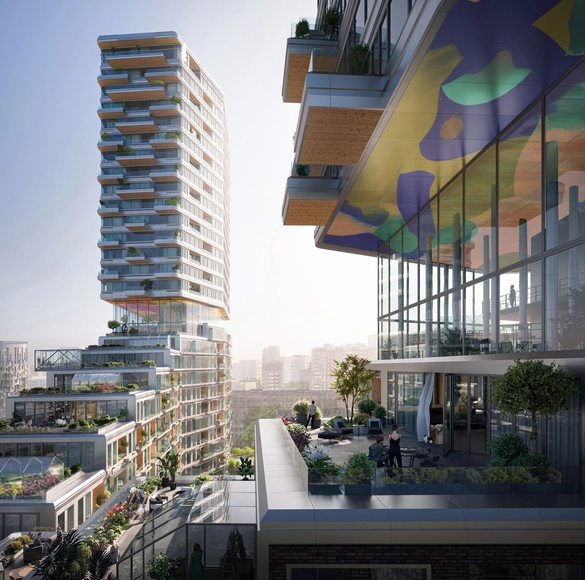
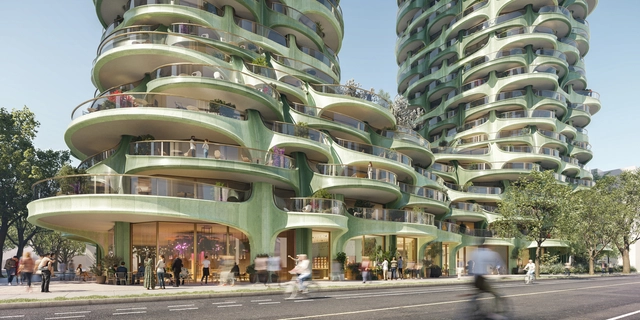
Heatherwick Studio has unveiled an entirely new update for its 1700 Alberni Towers residential project in Vancouver, British Columbia. The new design features extended outdoor living areas with soaring views of the surrounding built environment and landscape, inspired by the province's strong connection with the wilderness, as well as the use of long-lasting, local materials.
It's not uncommon to see housing complexes integrate commercial spaces at the ground level, but the challenge of mediating between the private and public realm on a smaller scale, especially with the rise of the home office, has forced architects to explore all aspects of the structure, from the topography it sits on, to the direction of light and wind, to the design and organization the domestic space. This interior focus explores different design solutions that show how architects and interior designers transformed their projects from a living space into a mixed-use typology, taking into account privacy, flexibility, functionality, and predefined spatial requirements.
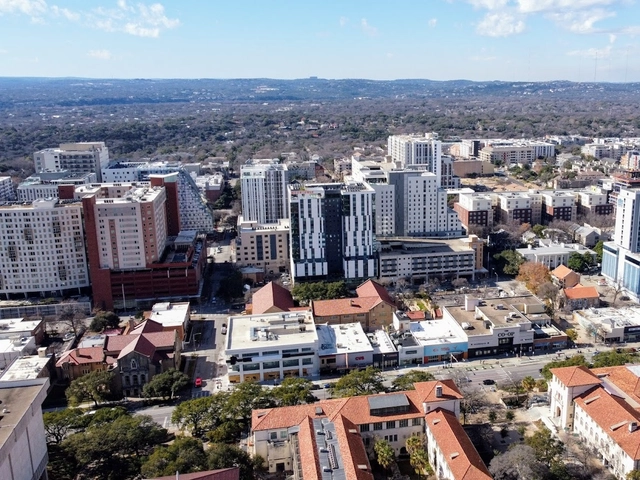
West Campus Neighborhood, Austin, Texas. The University of Texas campus is in the foreground. Image Courtesy of Jack Myer/The Daily Texan.
Juan Miró, co-founder of Miró Rivera Architects reflects in an opinion piece on the student housing situation in the United States. The architect explores different dormitory conditions across the country and questions whether these leading public universities "enthusiastically endorse the idea of putting thousands of its students in windowless rooms in the name of density and efficiency".
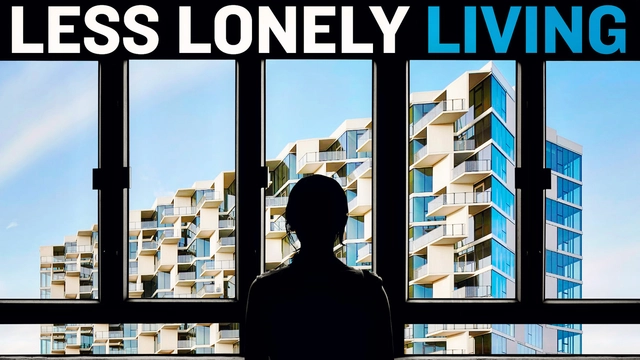
Data shows that many more people are living alone, but the surprising fact is that living alone does not necessarily correspond with an increase in feelings of loneliness. Architecture has been evolving towards increases in privacy and private space for centuries. This video looks at architectural designs that attempt to reverse those trends by designing living scenarios that incorporate more opportunities for public engagement. These include Studio Gang’s City Hyde Park project in Chicago with its angled balconies. But the video goes deeper to look at examples that radically rethink residential architecture, its construction, design, and inclusion of public space.
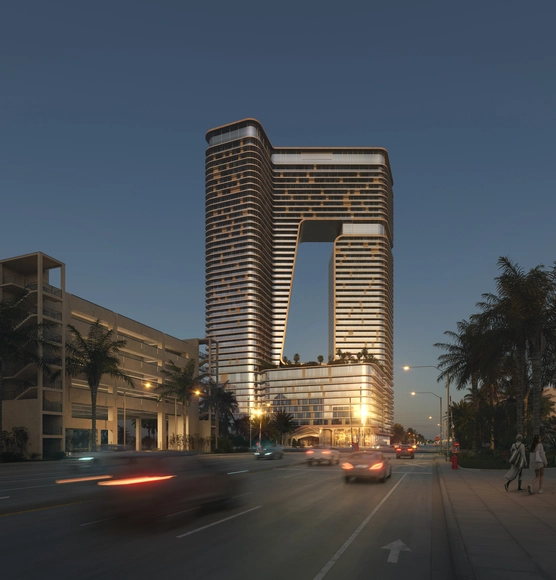
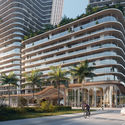
ODA New York has revealed the design of "300 West Broward Blvd", its new residential tower in Fort Lauderdale, South of Florida. The 38-storey tower, which marks the firm's first project in that region, will serve as an urban gateway in the heart of the city, bringing together a diverse mixed-use program across 10 floors, topped by an all-inclusive residential program that will become an new landmark to the area's growing skyline.
Another year comes to an end and with it, another round up that explores the most important events that took place over the past twelve months. In this article, we look into the photos that received the most interactions (likes, comments, shares, and saves) on ArchDaily's Instagram.
The word commensality refers to the act of eating together, sharing a meal. Much more than a mere function of essential human need, sitting at the table is a practice of communion and exchange. An article by Cody C. Delistraty compiles some studies on the importance of eating together: students who don't eat regularly with their parents miss school more; children who do not have daily dinner with their family tend to be more obese and young people in families without this tradition can have more problems with drugs and alcohol, in addition to poorer academic performance. Evidently, all these issues raised are complex and should not be reduced to just one factor. But having a suitable place to have meals, free from distractions, is a good starting point for at least one moment a day that is focused on conversation and food. This is where dinner tables come in. In this article, we review some projects to classify the most common ways to deploy these important pieces of furniture.
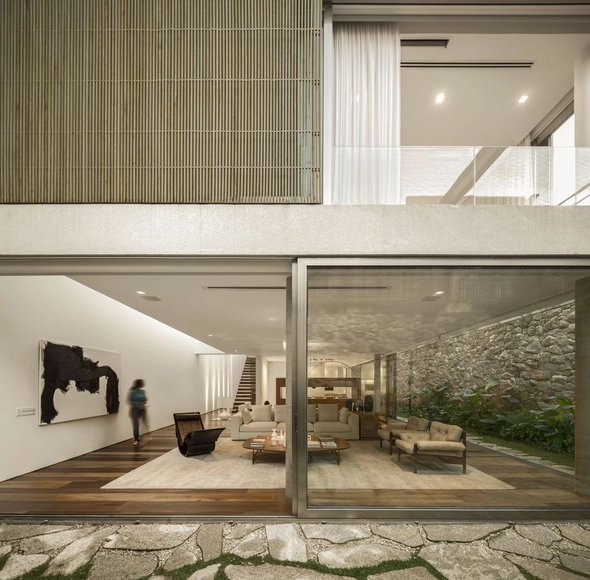
Valuing formal simplicity and delicate attention to details and finishing, Studio MK27 was founded in the late 1970s by Marcio Kogan and currently has more than 30 members based in São Paulo and other collaborators around the world. Its work, as described on its website, seeks to fulfill the task of rethinking and continuing Brazilian modernism.
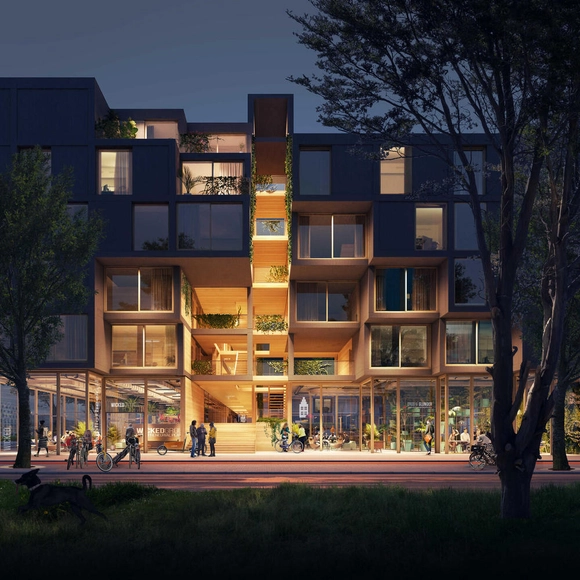
The first wooden housing modules of Juf Nienke, a new circular prefabricated timber housing project by SeARCH, RAU, and DS landscape architects, has been installed in Amsterdam. The project will feature 61 rental homes made entirely of wood, and will sit at the entrance of Centrumeiland, a newly raised piece of land on Lake IJmeer that features 1500 housing units. It is set to be one of the most sustainable apartment buildings in the Netherlands, incorporating an innovative cross-laminated timber construction and utilizing recycled materials.
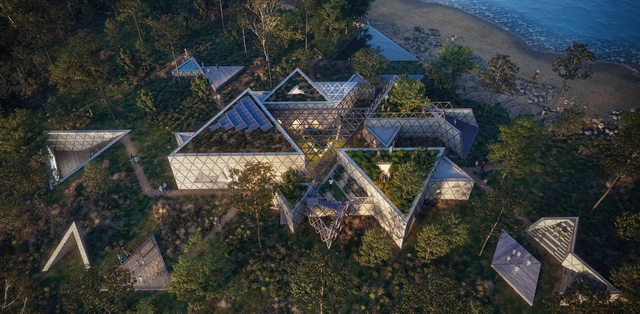
noa* network of architecture has unveiled a prototype of a Centre for Culture and Community (CeCuCo) questioning "what form flexibility takes, how nature can be embedded in the project and how far the role of the architect goes, in the belief that a project only works when people make it their own". The center is a research project that explores how to create flexible and multifunctional spaces without a fixed context, giving the community the chance to decide, act, and circulate within the architecture.
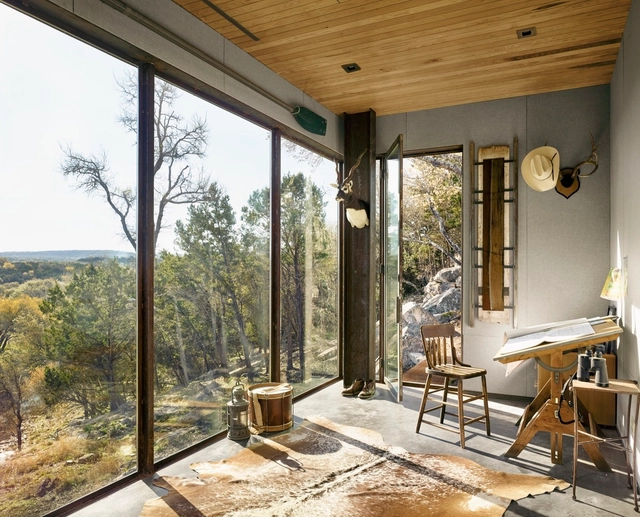
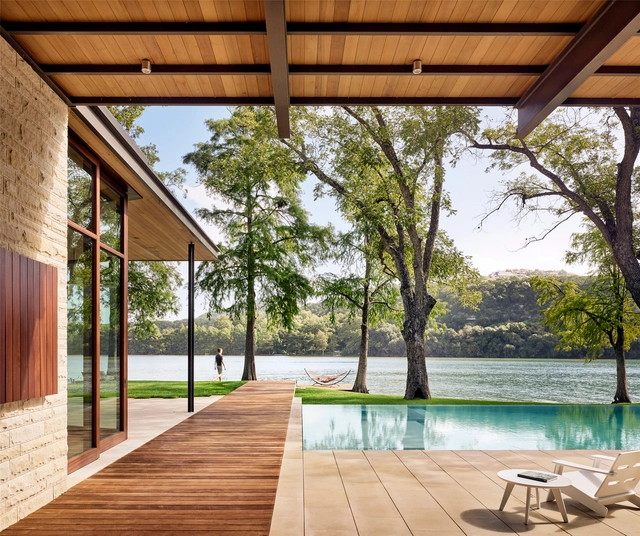
Few cities have a growing design culture like Austin, Texas. Ranked as one of the best places to live in the United States, the city is experiencing a building boom in recent years. With a wide variety of residential styles, architects are continuing a legacy of modernist design. With an emphasis on craft and detailing, these new homes use simple geometry and forms as they open up to hills, lakes and the urban fabric.
Although the design diversity of private homes often relies on how each project responds to the topography, context, and material availability, the most significant factor of residential architecture is users and what they require in terms of spatial needs and preferences. This user-centric approach has long been practiced, Mies van der Rohe once explained that "the architect must get to know the people who will live in the planned house. From their needs, the rest inevitably follows".
This week’s curated selection of Best Unbuilt Architecture highlights private residential projects submitted by the ArchDaily community. From a private family house nestled in the forests of Russia to a reinvention of Colombia's traditional courtyard typology, this round up of unbuilt projects showcases how architects design private spaces that combine nature, functionality, privacy, and locality. The article also includes projects from Kosovo, Spain, United States, and Serbia.
OF.studio has unveiled the design of PZ Torre Residencial, a residential building within the Zapata Palace in Mendoza, Argentina, seeking to recreate the traditional courtyard of Cuyanas houses, a common style in northern Argentina.
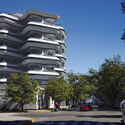
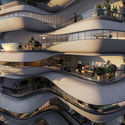
MVRDV has revealed "O", one of four letter-shaped apartment buildings that spell out the word HOME in Franklin Mitte, Mannheim. The 15-storey residential building features a brightly colored structure with 120 apartments, commercial spaces, and a terrace, and is part of Franklin Mitte's complete master plan transformation.
UNStudio revealed its competition-winning design for K31 Courtyard, a residential complex in Moscow that fosters community-building in the context of a rapidly changing city. The proposal features a stepped podium and two towers and reinterprets Moscow’s typical courtyard block, aiming to create a new neighbourhood through various housing typologies, amenities, and outdoor spaces.



























.jpg?1637314414&format=webp&width=640&height=580)
.jpg?1637314414 "Courtesy of MVRDV")

.jpg?1637314404 "Courtesy of MVRDV")
.jpg?1637314508 "Courtesy of MVRDV")
.jpg?1637314414)