1. ArchDaily
  2. Public Art

Public Art: The Latest Architecture and News

BIG Wins Competition to Transform Three Urban Plazas into an Interconnected 'City Stage' in Copenhagen, Denmark

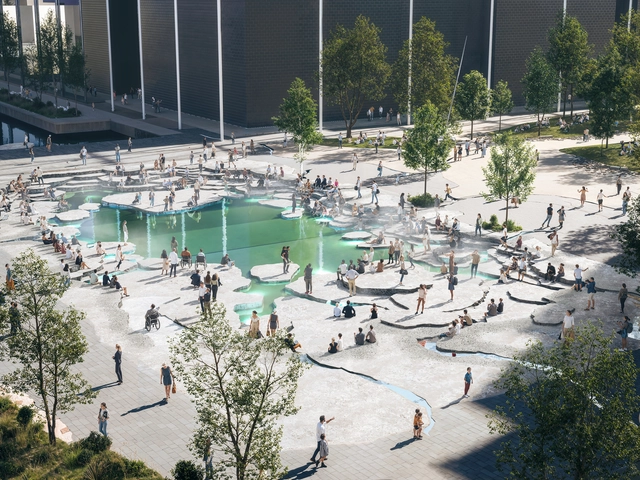
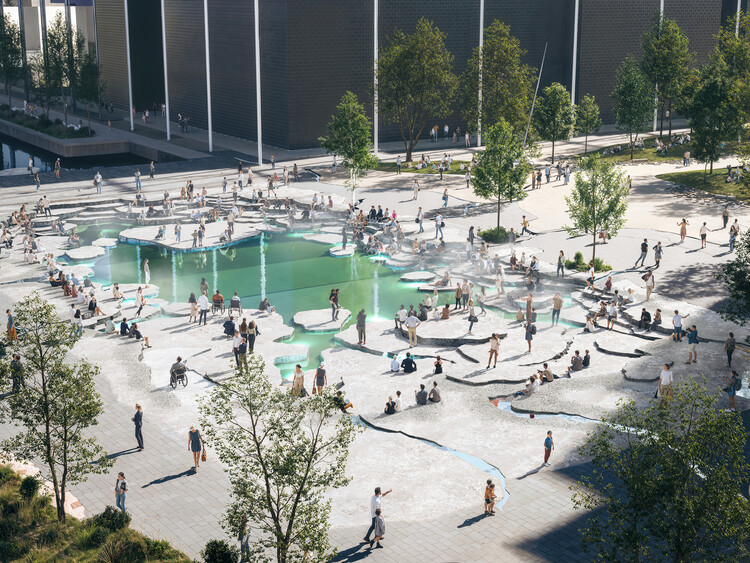
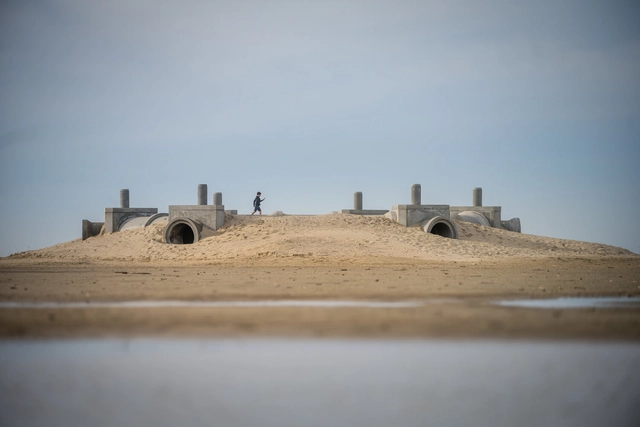
BIG, artist Doug Aitken Workshop, NIRAS, Volcano, and RWDI have won a competition to redesign three public spaces surrounding major music venues in Ørestad, Copenhagen. The initiative, titled Byens Scene ("The City's Stage"), aims to revitalize the areas around DR Koncerthuset, Bella Arena, and Royal Arena, transforming them into an interconnected landscape for everyday use and public performances.

BIG Wins Competition to Transform Three Urban Plazas into an Interconnected 'City Stage' in Copenhagen, Denmark - Imagen 1 de 4BIG Wins Competition to Transform Three Urban Plazas into an Interconnected 'City Stage' in Copenhagen, Denmark - Imagen 2 de 4BIG Wins Competition to Transform Three Urban Plazas into an Interconnected 'City Stage' in Copenhagen, Denmark - Imagen 3 de 4BIG Wins Competition to Transform Three Urban Plazas into an Interconnected 'City Stage' in Copenhagen, Denmark - Imagen 4 de 4BIG Wins Competition to Transform Three Urban Plazas into an Interconnected 'City Stage' in Copenhagen, Denmark - More Images+ 19

The Transformative Power of Sculptures and Landmarks in Urban Spaces: The Case of AL Khobar, Saudi Arabia

 | Sponsored Content

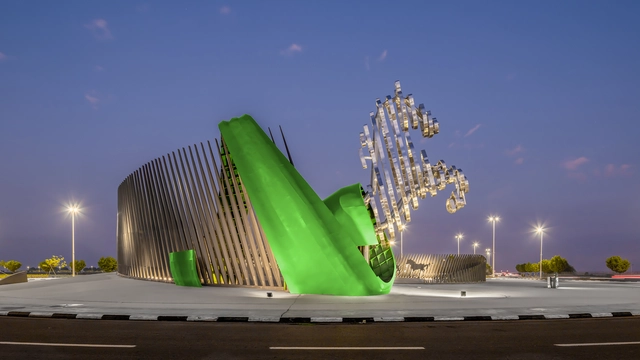
Cities are vibrant environments where architecture, public spaces, and art intertwine to shape the human experience. Sculptures and landmarks are essential components of urban design, creating cultural connections and enhancing both functionality and aesthetics. They define a city's identity while fostering community interaction and civic pride.

In Alkhobar, Saudi Arabia, public art has played a transformative role in reshaping the cityscape, with projects like Alarda, Alkhobar Memory, Aebayah Roundabout, and Albairaq Roundabout. These initiatives, many spurred by the Mujassam Wattan competition (MW Award), highlight the profound impact of integrating art into urban design.

DIALOG and HOK Redesign Calgary's Scotia Place: A Celebration of Community and Indigenous Heritage in Canada

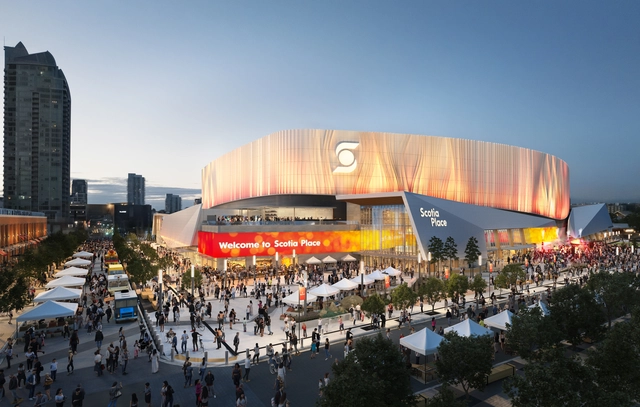
DIALOG and HOK have just revealed the redesign of Scotia Place, Calgary’s new event center in Canada. Set to become a hub of community and culture, Scotia Place is inspired by Indigenous ancestral lands and cultural significance, integrated these perspectives with the natural beauty of Calgary. Commissioned by the City of Calgary and the Calgary Sports and Entertainment Corporations, Scotia Place seeks to bring people together and activate the public realm.

DIALOG and HOK Redesign Calgary's Scotia Place: A Celebration of Community and Indigenous Heritage in Canada - Image 1 of 4DIALOG and HOK Redesign Calgary's Scotia Place: A Celebration of Community and Indigenous Heritage in Canada - Image 2 of 4DIALOG and HOK Redesign Calgary's Scotia Place: A Celebration of Community and Indigenous Heritage in Canada - Image 3 of 4DIALOG and HOK Redesign Calgary's Scotia Place: A Celebration of Community and Indigenous Heritage in Canada - Image 4 of 4DIALOG and HOK Redesign Calgary's Scotia Place: A Celebration of Community and Indigenous Heritage in Canada - More Images+ 7

Spaces of Possibility: Unveiling the Installations of Bruges Triennale 2024

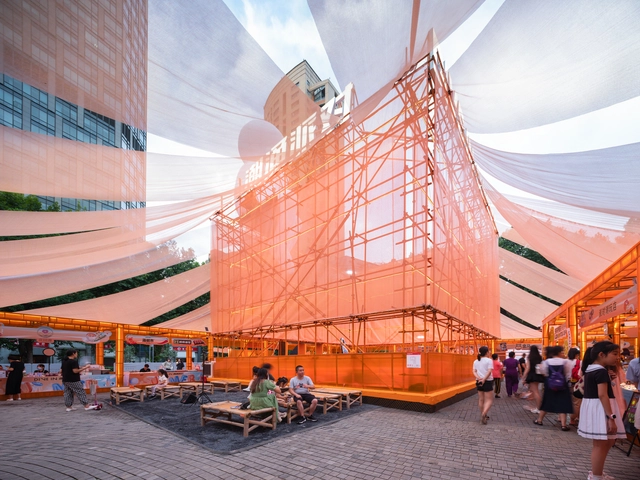
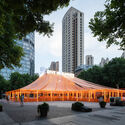
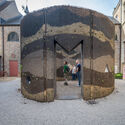
The fourth edition of the Bruges Triennial: Spaces of Possibility, curated by Shendy Gardin and Sevie Tsampalla, will be held from Saturday 13 April to Sunday 1 September 2024. This event promises to transform the streets and historic center of Bruges, Belgium, into a showcase of contemporary art and architectural interventions. With a focus on exploring the latent potential of this UNESCO World Heritage Site, the festival raises questions about how concepts like change and sustainability can interact with preservation.

The 12 selected artists and architects have been prompted to challenge the existing spaces within Bruges. Among the invited names are Boonserm Premthada’s Bangkok Project Studio, Mona Hatoum, Studio Ossidiana, and Sumayya Vally, founder of Counterspace and curator of the first Islamic Arts Biennale, among others. Until September 1st, they are presenting temporary interventions and large-scale installations that seek to reveal the hidden potential of the city, echoing the festival's theme. Against the backdrop of Bruges' rich history, this edition of the Bruges Triennial underscores the importance of adaptable urban spaces in today's ever-evolving world.

Spaces of Possibility: Unveiling the Installations of Bruges Triennale 2024 - Image 1 of 4Spaces of Possibility: Unveiling the Installations of Bruges Triennale 2024 - Image 2 of 4Spaces of Possibility: Unveiling the Installations of Bruges Triennale 2024 - Image 3 of 4Spaces of Possibility: Unveiling the Installations of Bruges Triennale 2024 - Image 4 of 4Spaces of Possibility: Unveiling the Installations of Bruges Triennale 2024 - More Images+ 10

Digital Art and Architecture: Beyond Billboards and Spheres

Subscriber Access | 

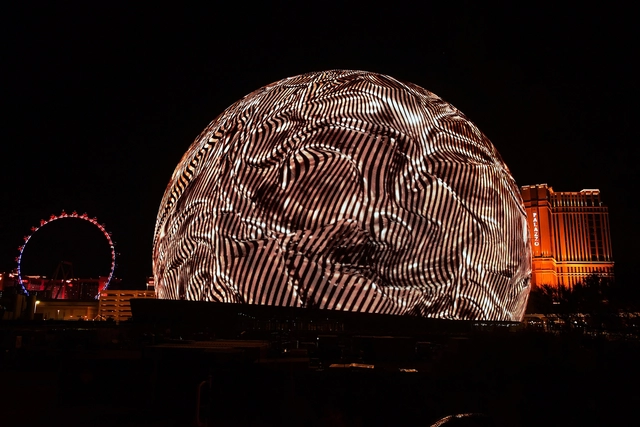
In July, Las Vegas unveiled an extravagant spectacle - a colossal LED-wrapped spherical structure, standing 366 feet tall and 516 feet wide. This entertainment event venue instantly captured the public's gaze, becoming a local landmark and attracting global attention through extensive news coverage. Similar spherical concepts have been proposed in London and at a smaller scale in Los Angeles. These massive display structures open up questions about facades as digital canvases. What role can architecture take as an urban canvas other than as a billboard? And what are different ways for architecture to engage the public through digital art besides gigantic LED spheres?

Digital Art and Architecture: Beyond Billboards and Spheres - Image 1 of 4Digital Art and Architecture: Beyond Billboards and Spheres - Image 2 of 4Digital Art and Architecture: Beyond Billboards and Spheres - Image 3 of 4Digital Art and Architecture: Beyond Billboards and Spheres - Image 4 of 4Digital Art and Architecture: Beyond Billboards and Spheres - More Images+ 2

Utopian Practice, Political Power, and Community in Architecture: An Interview with Olalekan Jeyifous

Subscriber Access | 

After being awarded the prestigious Silver Lion for his contribution to this year's Venice Architecture Biennale, Brooklyn-based artist Olalekan Jeyifous shows no signs of slowing down. Currently in the midst of preparing his entry to the next Sharjah Architecture Triennial, he also recently celebrated the opening of Climate Futurism, a group exhibition that highlights the power and efficacy of artists’ methods and processes to imagine a more equitable future – and is working on a public monument to former United States Representative Shirley Chisholm as part of New York City's She Built NYC initiative, among other projects.

Utopian Practice, Political Power, and Community in Architecture: An Interview with Olalekan Jeyifous - Image 1 of 4Utopian Practice, Political Power, and Community in Architecture: An Interview with Olalekan Jeyifous - Image 2 of 4Utopian Practice, Political Power, and Community in Architecture: An Interview with Olalekan Jeyifous - Image 3 of 4Utopian Practice, Political Power, and Community in Architecture: An Interview with Olalekan Jeyifous - Image 4 of 4Utopian Practice, Political Power, and Community in Architecture: An Interview with Olalekan Jeyifous - More Images+ 3

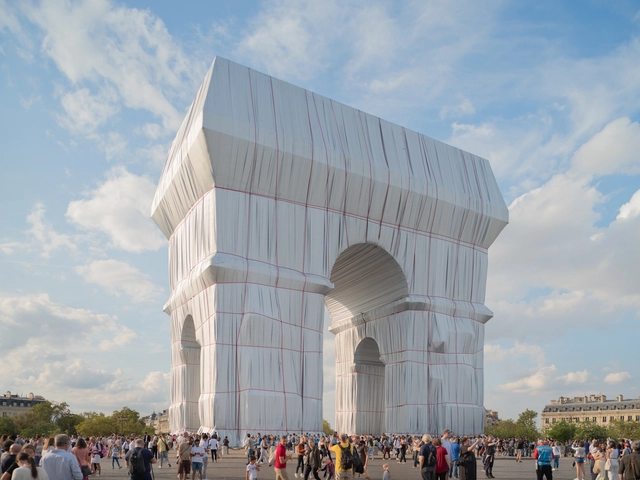
Christo and Jeanne-Claude’s L’Arc de Triomphe Wrapped to Be Recycled by Parley for the Oceans

Two years ago, on September 18, 2021, Christo and Jeanne-Claude's L'Arc de Triomphe, Wrapped, 1961–2021, was inaugurated. The monumental public artwork wrapped the Parisian monument in over 25,000 square meters of silvery fabric tied in place with 7,000 meters of red rope. The materials, all made out of woven polypropylene, a type of thermoplastic, are now being reused, upcycled, and recycled, following the artists’ vision. Most of the materials will be transformed to serve practical uses for future public events in Paris. The Christo and Jeanne-Claude Foundation is also collaborating with Gagosian to bring Christo’s early works to London’s East End for an exhibition open from October 6-22, 2023.

Christo and Jeanne-Claude’s L’Arc de Triomphe Wrapped to Be Recycled by Parley for the Oceans - Image 1 of 4Christo and Jeanne-Claude’s L’Arc de Triomphe Wrapped to Be Recycled by Parley for the Oceans - Image 2 of 4Christo and Jeanne-Claude’s L’Arc de Triomphe Wrapped to Be Recycled by Parley for the Oceans - Image 3 of 4Christo and Jeanne-Claude’s L’Arc de Triomphe Wrapped to Be Recycled by Parley for the Oceans - Image 4 of 4Christo and Jeanne-Claude’s L’Arc de Triomphe Wrapped to Be Recycled by Parley for the Oceans - More Images+ 5

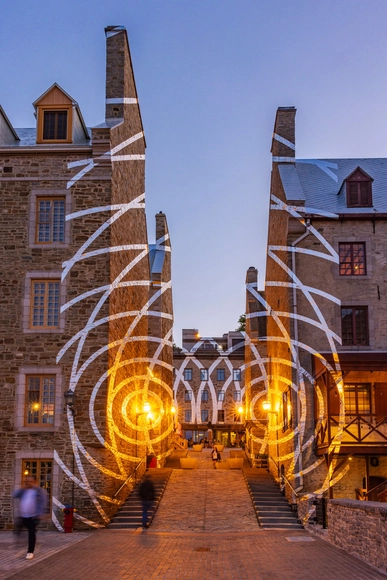
Public Art Circuit Passages Insolites 10 Proposes a Retrospective Route to Explore Quebec City, Canada

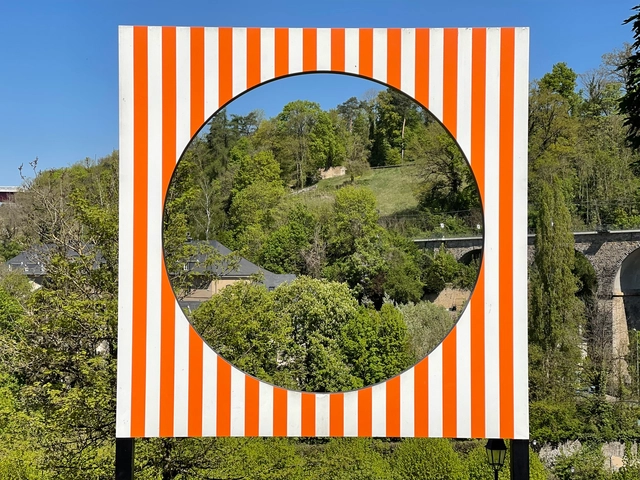
The 10th edition of Passages Insolites is taking place from June 22 until October 9, 2023, bringing together artists from around the world. The public art circuit is presented by the City of Quebec and created by EXMURO arts public to showcase a retrospective artistic path through the city, recalling the event’s previous editions. The public art event takes place every summer in Quebec City in in the Place Royale, Petit Champlain and Old Port districts. This year, the event presents works of art from 40 artists, headlined by Felice Varini, who presents a monumental three-dimensional work at Place-Royale.

Public Art Circuit Passages Insolites 10 Proposes a Retrospective Route to Explore Quebec City, Canada - Image 1 of 4Public Art Circuit Passages Insolites 10 Proposes a Retrospective Route to Explore Quebec City, Canada - Image 2 of 4Public Art Circuit Passages Insolites 10 Proposes a Retrospective Route to Explore Quebec City, Canada - Image 3 of 4Public Art Circuit Passages Insolites 10 Proposes a Retrospective Route to Explore Quebec City, Canada - Image 4 of 4Public Art Circuit Passages Insolites 10 Proposes a Retrospective Route to Explore Quebec City, Canada - More Images+ 20

Expanded Public Art within Media Architecture(s)

Subscriber Access | 

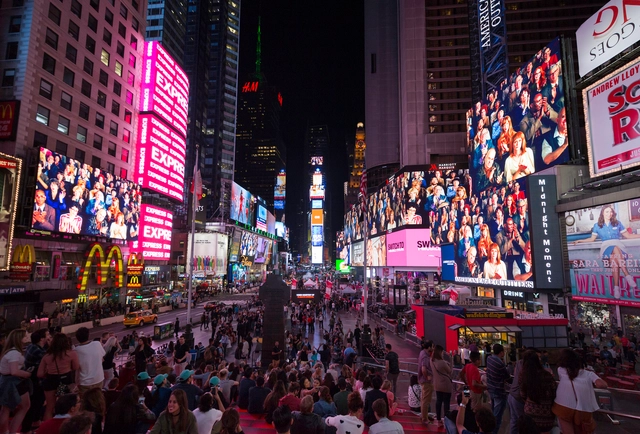
Toronto’s digital billboard-laden Yonge and Dundas Square is owned by the city but managed through a public-private partnership. While primarily hosting commercial content and activities, the spaces and screens of the square are often used for cultural events and artistic content. As cities, arts organizations, governments, and corporations increasingly seek to engage people in public spaces through combinations of media and architecture, what are some of the possibilities and pitfalls associated with their approaches individually and in concert with one another? How does media architecture modulate civic, creative, and commercial interests and impacts?

A Central Square in Greece and a Giant Clock in Germany: 8 Unbuilt Public Spaces Submitted by the ArchDaily Community

Subscriber Access | 

Public spaces are the beating heart of our cities. They act as the hubs of social and cultural activity where people congregate, interact, and escape the clamor of the city. These areas are crucial in determining a city's identity, character, and citizens' well-being and standard of living. Public spaces can define our communities and significantly impact how we live, work, and interact with one another through their architectural designs, facilities, and activities. Furthermore, they provide leisure, exercise, and recreation opportunities, allowing individuals to escape the confines of their daily routines and connect with nature.

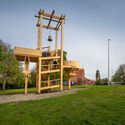
This week's curated selection of Best Unbuilt Architecture highlights projects submitted by the ArchDaily community showcasing different proposals made to enhance public space. Ranging from reimagining central squares to placing massive land art in the urban epicenter, these public spaces enhance the quality of life for the city's locals. In Germany, the redesign of the entire Memorium Nürnberger Trials reimagines this as a place to come together, grounded in its history, while in Havana, the new Cuban Square reimagines the metaphor of unity in the city center. The design and accessibility of public spaces significantly impact our well-being and quality of life. Thoughtfully planned and inclusive spaces with seating, greenery, and pedestrian-friendly infrastructure can promote physical activity, mental health, and community engagement in a city.

A Central Square in Greece and a Giant Clock in Germany: 8 Unbuilt Public Spaces Submitted by the ArchDaily Community - Image 6 of 4A Central Square in Greece and a Giant Clock in Germany: 8 Unbuilt Public Spaces Submitted by the ArchDaily Community - Image 42 of 4A Central Square in Greece and a Giant Clock in Germany: 8 Unbuilt Public Spaces Submitted by the ArchDaily Community - Image 43 of 4A Central Square in Greece and a Giant Clock in Germany: 8 Unbuilt Public Spaces Submitted by the ArchDaily Community - Image 44 of 4A Central Square in Greece and a Giant Clock in Germany: 8 Unbuilt Public Spaces Submitted by the ArchDaily Community - More Images+ 40

Anish Kapoor Unveils His First Permanent Public Artwork in New York City

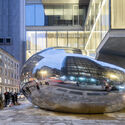
On January 31st, construction scaffolding and barriers were disassembled from the site at 56 Leonard Street, revealing Anish Kapoor’s first permanent artwork in New York City. The 48-foot-long, 19-foot-tall, 40-ton sculpture is nestled partially beneath the Herzog & de Meuron-designed residential building in the Tribeca neighborhood in Lower Manhattan. The mirrored sculpture is reminiscent of Kapoor;’s work called Cloud Gate, also known as “The Bean,” in Chicago, US.

Anish Kapoor Unveils His First Permanent Public Artwork in New York City - Image 1 of 4Anish Kapoor Unveils His First Permanent Public Artwork in New York City - Image 2 of 4Anish Kapoor Unveils His First Permanent Public Artwork in New York City - Image 3 of 4Anish Kapoor Unveils His First Permanent Public Artwork in New York City - Image 4 of 4Anish Kapoor Unveils His First Permanent Public Artwork in New York City - More Images+ 11

Temporary, but with Long-Lasting Effects: 6 Ways in Which Architecture Festivals Can Revitalize a City

Subscriber Access | 

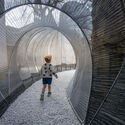
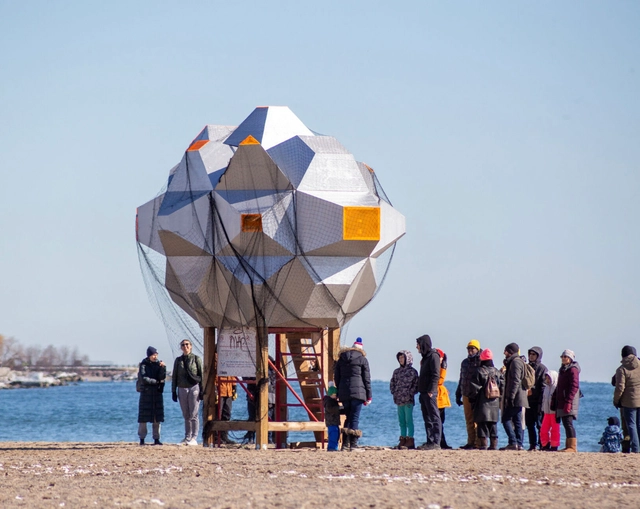
Biennales, exhibitions, and architecture focused festivals provide a platform for opening debates, conducting research, and driving innovation, but they can also contribute to the incremental changes that shape the image and the character of a city. Through temporary installations and experiments, this type of events have the opportunity to open lines on inquiry into the quality of urban spaces, inviting visitors and residents to slow down, break away from their daily routine and interrogate their local environments. The effects might not be immediate, but by cumulating these impressions and moments of contemplation, architecture and design festivals can have a long-lasting impact on the cities that welcome them.

Temporary, but with Long-Lasting Effects: 6 Ways in Which Architecture Festivals Can Revitalize a City - Image 1 of 4Temporary, but with Long-Lasting Effects: 6 Ways in Which Architecture Festivals Can Revitalize a City - Image 2 of 4Temporary, but with Long-Lasting Effects: 6 Ways in Which Architecture Festivals Can Revitalize a City - Image 3 of 4Temporary, but with Long-Lasting Effects: 6 Ways in Which Architecture Festivals Can Revitalize a City - Image 7 of 4Temporary, but with Long-Lasting Effects: 6 Ways in Which Architecture Festivals Can Revitalize a City - More Images+ 6

Media Architecture Biennale -- Call for Awards

We invite you to submit your contribution to the Media Architecture Biennale 2023 (MAB23), which will take place June 14 - June 15 (online) and June 21-23, 2023 (in-person/hybrid) featuring an online programme as well as on-site events in Toronto, Canada.

Media Architecture Biennale -- Call for Student Awards

We invite you to submit your contribution to the Media Architecture Biennale 2023 (MAB23), which will take place June 14 - June 15 (online) and June 21-23, 2023 (in-person/hybrid) featuring an online programme as well as on-site events in Toronto, Canada.