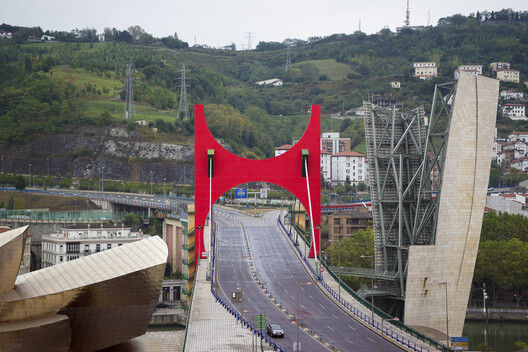
Public space has long been central to architectural thought, often framed in terms of planning, infrastructure, and regulation. From Haussmann's Paris to contemporary masterplans, architects have worked to define and formalise collective life through spatial tools. Yet, outside of these frameworks, artists have continuously offered alternative ways of understanding and inhabiting public space—ways that rely not on construction or permanence, but on presence, perception, and participation. Through actions, objects, or atmospheres, artists engage the city as a site of friction and imagination. These gestures challenge architectural conventions and invite artists to reconsider public space not as a solved form, but as a contingent and open process.

As theorist Miwon Kwon observed in her work on site-specificity, the shift from object to relationship, from space as a container to space as interaction, is reshaping how we understand spatial practice. Rather than treating space as a fixed backdrop for action, this approach frames it as something continuously shaped by social, political, and sensory exchanges. In Kwon's analysis, site no longer refers solely to a physical location but to a set of conditions—temporal, institutional, and communal — that evolve. This redefinition has profound implications for architecture, where the design of public space often centres on durability, legibility, and programmatic clarity. As urban environments become increasingly complex and contested, architects are asked not only to construct spaces but to engage with the multiplicity of forces that produce them. This calls for tools and methods that embrace negotiation, incompleteness, and relationality—capacities more commonly explored in the field of art. By looking at how artists navigate context, participation, and temporality, architects can begin to rethink their practice as a mode of spatial mediation rather than control. In this light, public space becomes less a resolved artefact and more a field of interaction — an unfinished project that unfolds through shared presence and use.
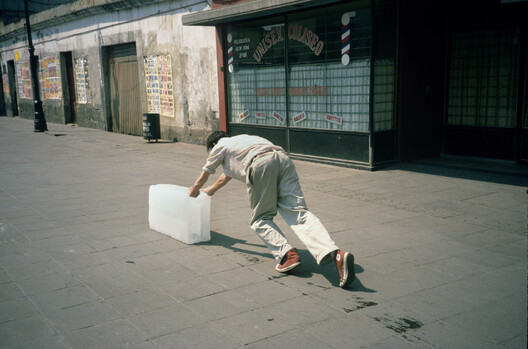
Public space is not a neutral or stable concept. As Henri Lefebvre and Don Mitchell have pointed out, public space is a site of negotiation, where rights, power, and visibility are constantly contested. Who has the right to be present, to speak, or to intervene? Artistic practices often highlight the exclusions embedded in what is often assumed to be "open" space. In many cases, artistic actions expose the frictions and complexities inherent in public space. A striking example of this relational thinking is found in the work of Francis Alÿs. In The Green Line, the artist walks through Jerusalem while trailing a line of green paint, echoing the 1949 Armistice border. The act is quiet, almost invisible, yet loaded with historical and political weight. In another piece, Paradox of Praxis 1 (Sometimes making something leads to nothing), he pushes a block of ice through the streets of São Paulo until it melts. These works reveal a model of public engagement that resists monumentality or formalism. Instead, they map the city through movement and gesture, revealing tensions that are often spatial but rarely visible. This performative approach recalls what Jane Rendell defines as critical spatial practice —acts that operate between art and architecture, provoking new interpretations of space through minimal, yet charged, interventions. While architects are trained to resolve problems through built form, such artistic actions remind us that ambiguity and transience can be equally powerful tools for engaging urban complexity.
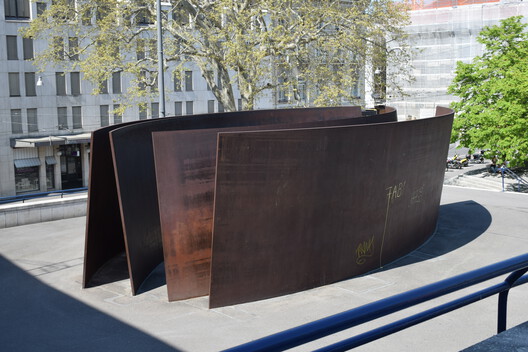
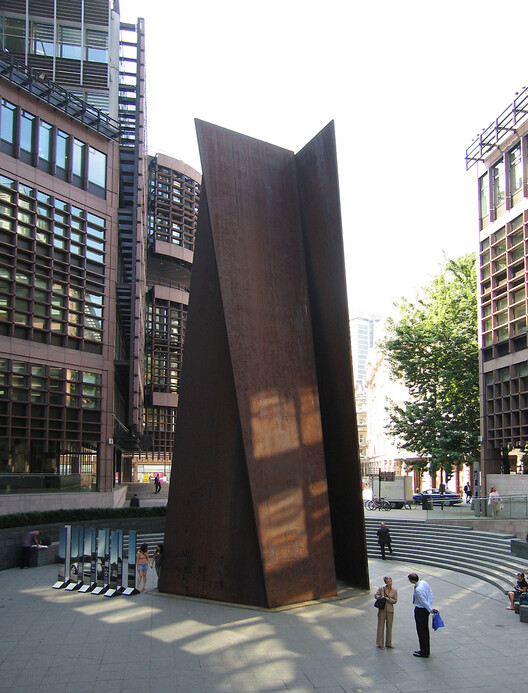
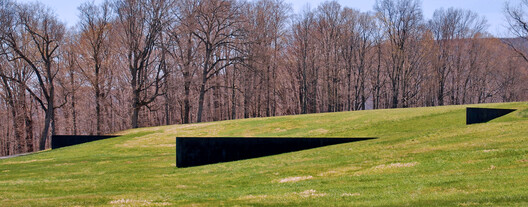
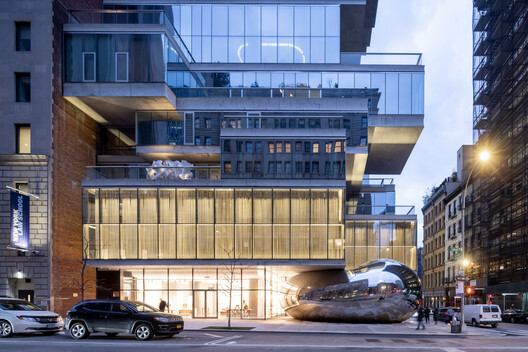
The body's role in public space is further explored in the work of Richard Serra, whose massive steel sculptures alter perception and movement at an architectural scale. His Tilted Arc, placed in New York's Federal Plaza, became a focal point of controversy and was ultimately removed after public and institutional backlash. Serra's insistence on the physical experience of space—the way his work disrupts sightlines, channels sound, and forces detours — aligns with architectural concerns, yet also exceeds them. His practice exposes the latent politics of spatial design: who decides what is welcome in public space, and for whom that space is intended. For architects, Serra's work serves as a reminder that spatial intervention always carries social and political consequences. His refusal to compromise reflects an ethic of spatial authorship that stands in contrast to more conciliatory forms of design, yet raises questions about participation, control, and public agency that remain unresolved in both disciplines. These questions of participation, authorship, and control echo across architecture, particularly in projects that navigate institutional critique, such as Diller Scofidio + Renfro's The Shed, which transforms its volume and permeability through movement.
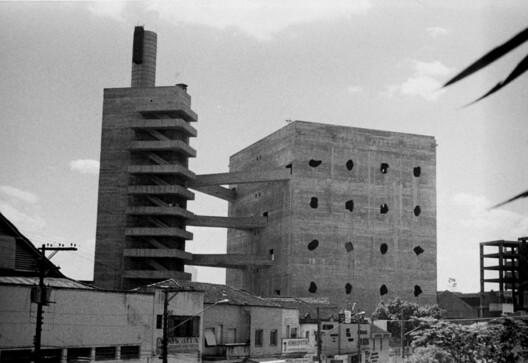
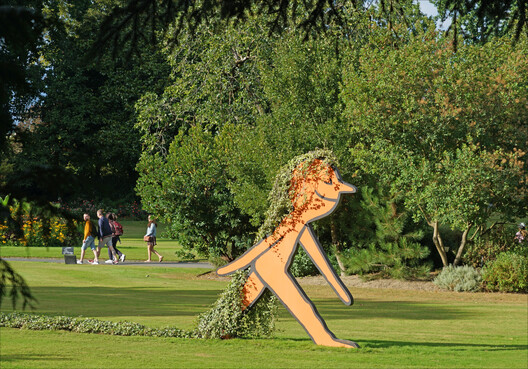
Beyond monumentality, many contemporary artists explore public space through playfulness and participation. Jean Jullien, known for his humorous and expressive graphic style, has translated his illustrations into three-dimensional installations in parks and city squares. His works create immediate connections with passersby by anthropomorphising street furniture or transforming surfaces into whimsical characters. Similarly, Yinka Ilori uses vibrant patterns and colour palettes to reimagine everyday urban elements, such as pedestrian crossings or bus stops, transforming them into joyful, inclusive environments. These artists do not propose new buildings or infrastructures, but rather new attitudes towards existing space. Their interventions often emerge through collaboration with local communities and encourage a sense of belonging and shared authorship. This is echoed in architectural approaches like those of Assemble Studio, whose Granby Four Streets project in Liverpool blends renovation, community activism, and spatial storytelling. In São Paulo, Lina Bo Bardi's SESC Pompéia transformed an old factory into a hybrid cultural centre, where ramps, sports courts, and galleries coexist in a space shaped as much by occupation as by design. By operating in the space between art and design, such practices highlight the potential of small gestures to foster collective meaning and activate underused or overlooked parts of the city.
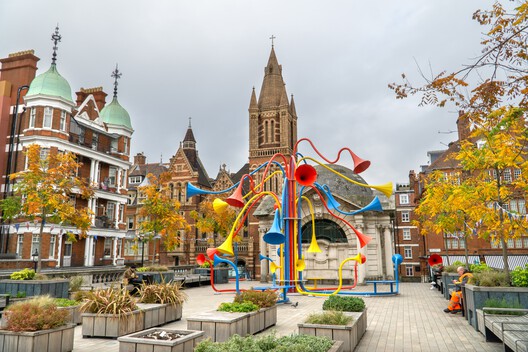
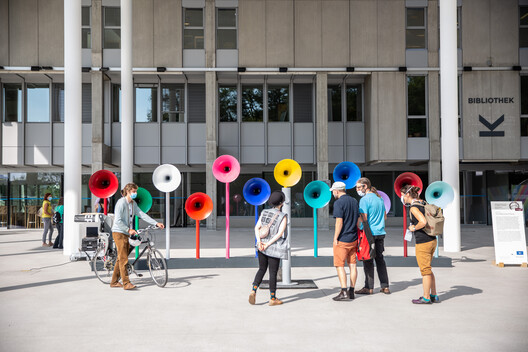
Sound, too, has emerged as a medium for rethinking spatial experience. Designer Yuri Suzuki's Sonic Playground at Atlanta's High Museum reimagined the plaza as an acoustic field. Sculptural devices allowed visitors to send, distort, and receive sound, creating unexpected connections across space. These experiments resonate with architectural explorations of soundscapes and psychoacoustics, but differ in their emphasis on discovery and interaction. Rather than calibrating space for acoustic optimisation, Suzuki opens space to user improvisation. Projects like these echo the thinking of architects such as Bernard Tschumi, who in The Manhattan Transcripts argued for an architecture of events, where space is shaped not only by its geometry but by the actions it hosts. When designers take cues from sound artists, they begin to understand space as dynamic, porous, and open to reinterpretation.
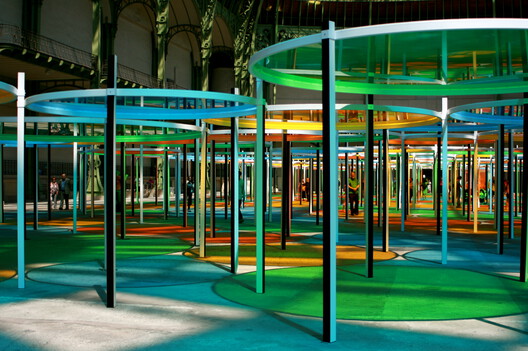
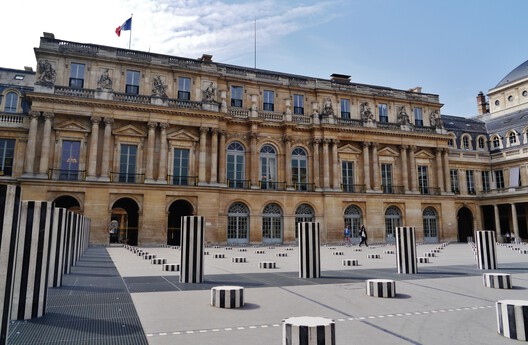
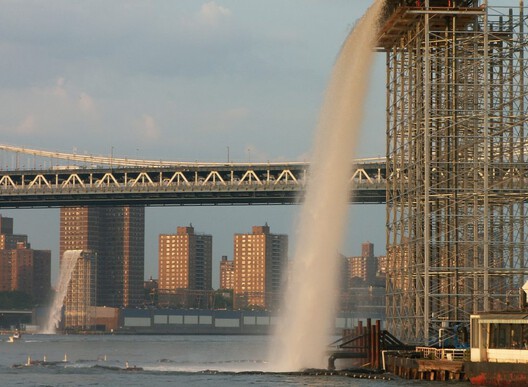
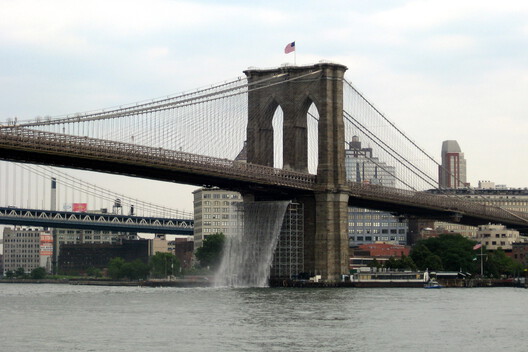
Ephemerality, often viewed with suspicion in architecture, becomes a strength in many artistic interventions. Daniel Buren's striped installations reframe familiar spaces through temporary overlays that alter perspective and rhythm. Olafur Eliasson's Green River series, in which he dyed rivers in urban centres using environmentally safe pigments, produced fleeting yet intense reconfigurations of place. These works do not propose permanent transformations but temporary shifts in awareness. They recall the role of atmosphere in architecture, explored by figures like Juhani Pallasmaa or Gernot Böhme, who emphasise the sensory and emotional dimensions of spatial experience. Temporary installations, by heightening perception and disrupting routine, make space visible again. They also offer a low-impact method for testing ideas, an increasingly relevant tactic in the context of climate urgency and spatial overproduction.
It is worth noting that not all public art serves the same purpose or holds the same critical potential. Many cities have integrated art into urban design through public art programs, often resulting in decorative objects placed in plazas or transit hubs. While such works may enhance the aesthetic value of public space, they sometimes lack engagement with context or community. What distinguishes the practices discussed here is their ability to question, reframe, and expand the definition of public space itself. They do not merely occupy space — they interrogate it. They prompt questions about access, agency, temporality, and meaning. In doing so, they invite architects to reflect on their assumptions and consider more open, participatory approaches to design. As Claire Bishop argues, participatory art is not about consensus or harmony — it is about constructing encounters that reveal conflict, difference, and possibility. Architecture that takes this seriously must also embrace complexity over resolution.
The intersection of art and public space offers architects a lens through which to reconsider the boundaries and possibilities of their discipline. Rather than viewing space solely as something to be planned, measured, and built, artistic interventions suggest that space is also something to be sensed, narrated, and shared. They teach us that meaning arises not only from form, but from use, encounter, and imagination. In a time when cities face increasing pressures — from real estate speculation to social segregation—reclaiming the city as a site of critical, collective experimentation becomes urgent. Artistic practices are not just enriching architecture; they are exposing its limits.
In a discipline increasingly defined by regulation, capital, and inertia, artistic approaches remind us that the city is not a given — it is a political, affective, and shared construction. Architecture does not simply benefit from learning with artists; it must, if it wishes to remain socially and culturally relevant. Through their gestures — monumental or minimal, playful or provocative — artists remind us that the public realm is not fixed, but continuously made and remade through collective action and creative expression.