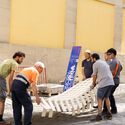
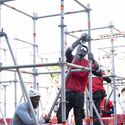
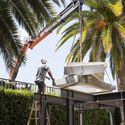
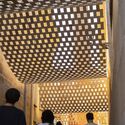
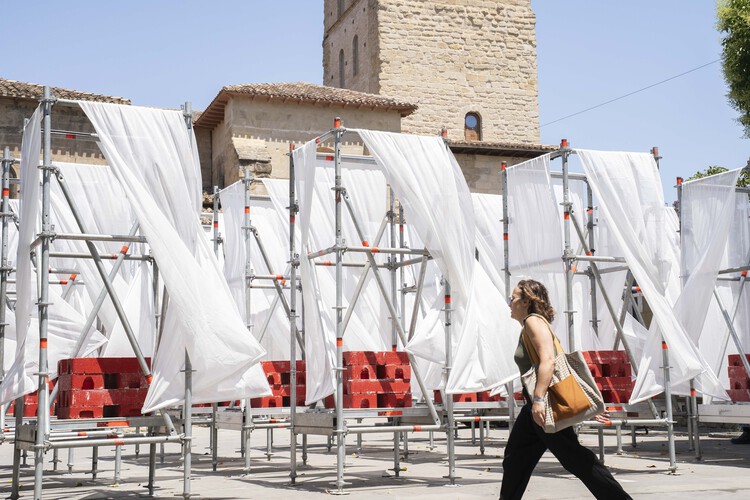
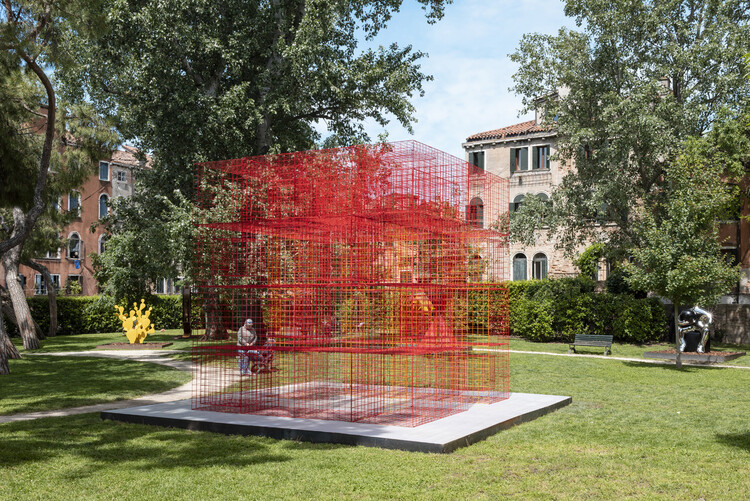
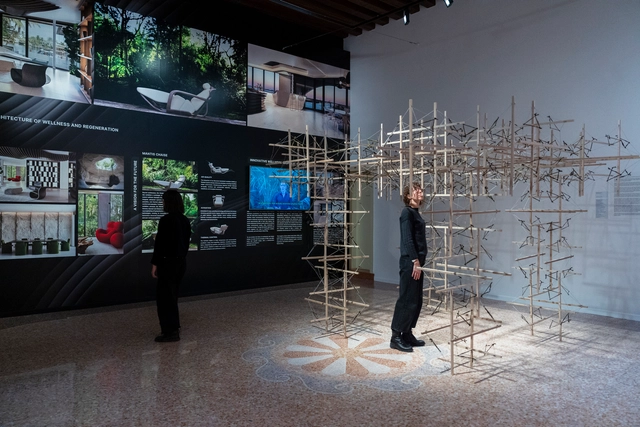
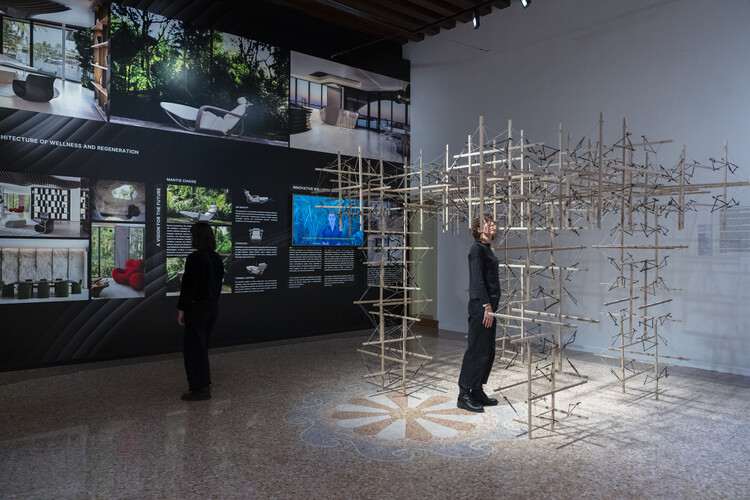
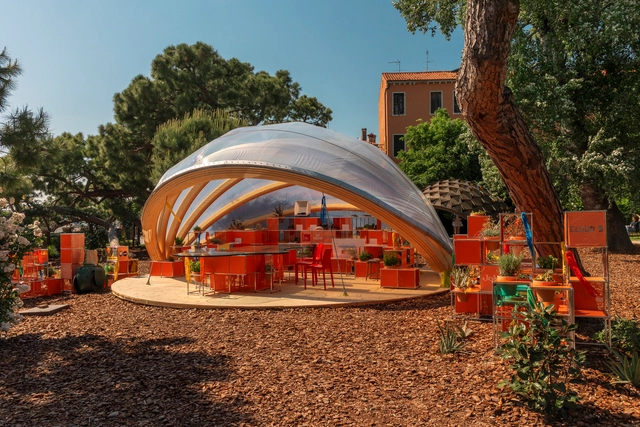
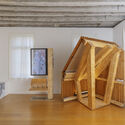
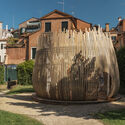
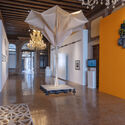
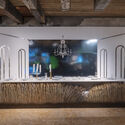
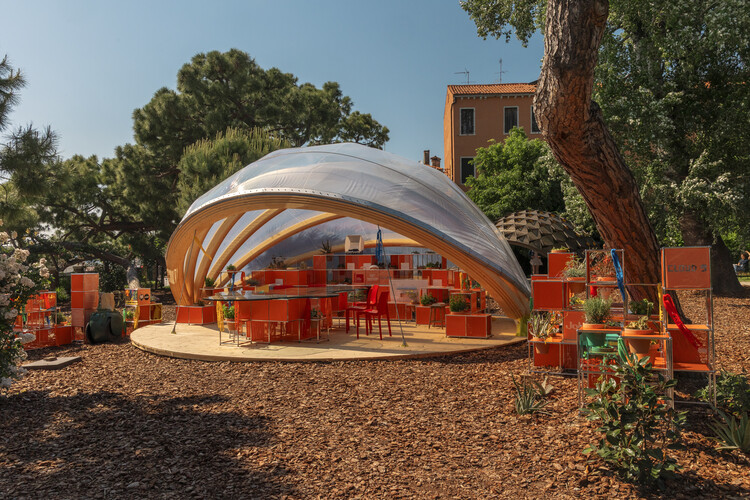
The European Cultural Centre Italy has announced the finalists of the ECC Awards, presented as part of Personal Structures – Confluences, the eighth edition of its international contemporary exhibition, running in parallel with the VeniceArt Biennale. Running in Venice from 9 May to 22 November 2026 across Palazzo Bembo, Palazzo Mora and the Marinaressa Gardens, the exhibition provides the backdrop for the awards, which celebrate artistic practices engaging with the show's theme, Confluences, through research, interdisciplinarity and dialogue with place. The winners will be announced on 22 November 2026, during the exhibition's closing event.
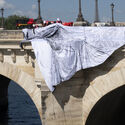
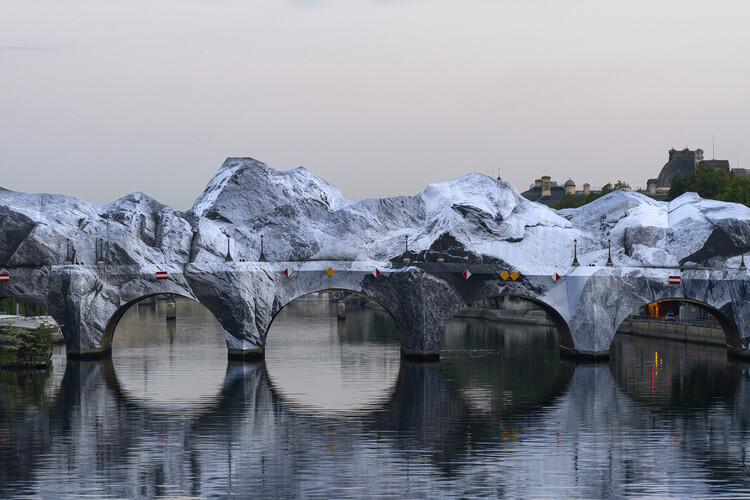
On May 21st, a realistic cave took shape on Paris' Pont Neuf, the oldest standing bridge across the Seine. The inflatable artwork was designed and built by French photographer and street artist JR, along with an extensive multidisciplinary team. La Caverne du Pont Neuf was conceived in honor of Christo and Jeanne-Claude's 1985 work The Pont Neuf Wrapped, an environmental artwork in which the artists wrapped the historic bridge in sandstone-colored fabric for two weeks. The structure creates a trompe-l'œil effect that mimics a textured rock formation through photographic printing in tones of white, black, and gray. The shape of the exterior already gives the public the optical illusion of the artwork, while paving the way for the final stage of the interior design.
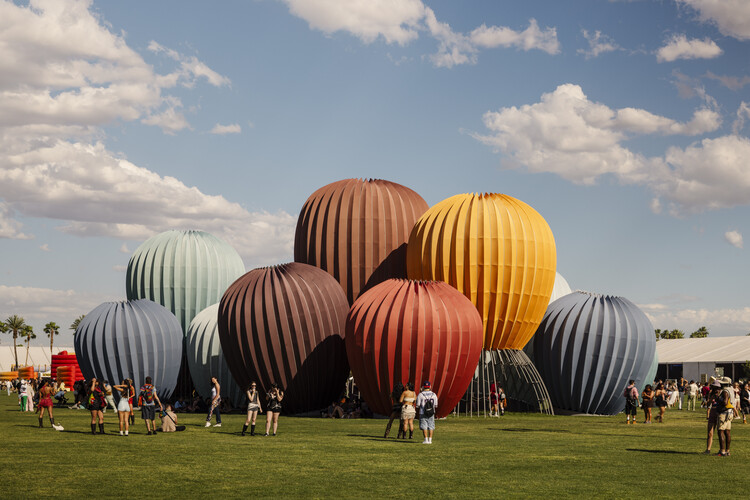
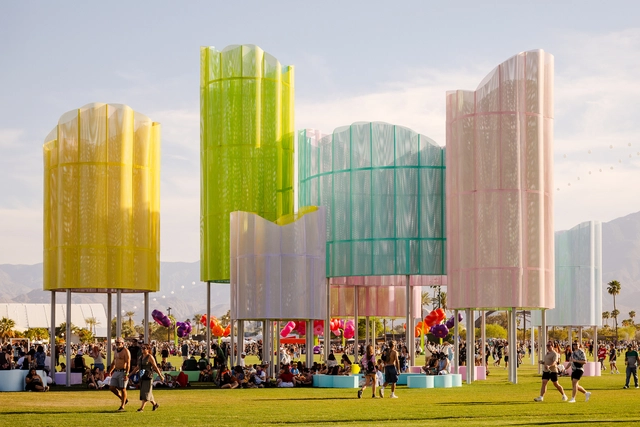
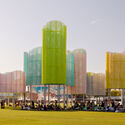
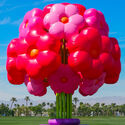
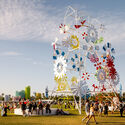
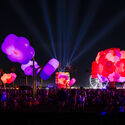
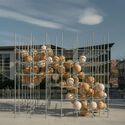
The 25th edition of the Coachella Valley Music and Arts Festival returns to the Empire Polo Club in Indio, California, from April 10 to 12 and April 17 to 19, 2026, bringing together more than 130 acts alongside an ambitious program of large-scale art installations. Presented by Public Art Company (PAC) and curated by founder Raffi Lehrer in collaboration with Goldenvoice Art Director Paul Clemente, this year's selection explores monumentality through luminance, transparency, and lightness of form. Set within Coachella's desert oasis, the installations invite visitors to engage physically and sensorially, responding to shifting daylight and the evolving atmosphere from sunrise to nightfall.
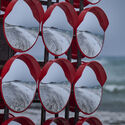
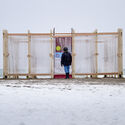
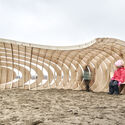
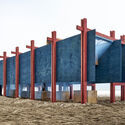
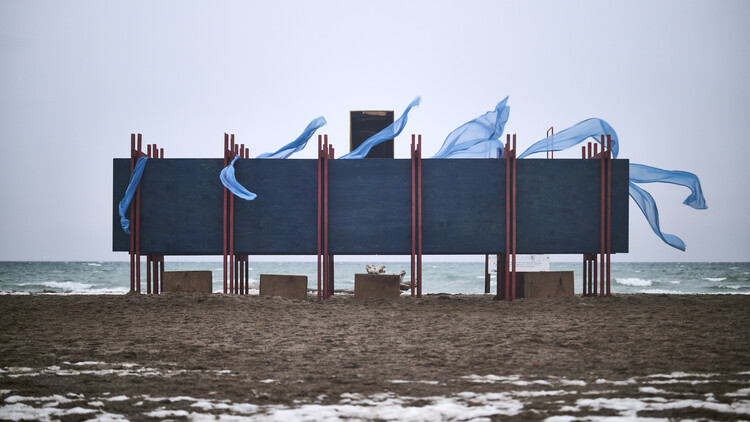
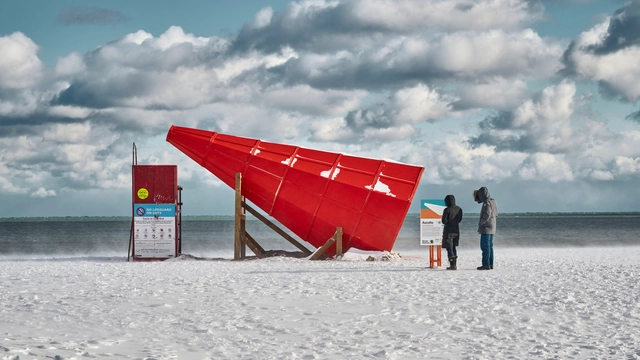
The annual Winter Stations design competition returns to Toronto for its twelfth edition, once again transforming the lifeguard stations of Woodbine Beach into temporary works of public art. On view from February 16 to March 30, 2026, this year's exhibition is organized under the theme Mirage, inviting participants to examine perception, illusion, and the shifting boundaries between what is seen and what is constructed. Selected from more than 300 international submissions, three winning proposals from Canada, the United States, and a Germany–Ukraine collaboration are presented alongside two installations developed by university teams. Installed along the frozen shoreline of Lake Ontario, the projects reinterpret seasonal infrastructure as platforms for spatial experimentation during the winter months.
The European Cultural Centre (ECC) has announced the winners of the ECCAwards 2025, selected from participants of the seventh edition of Time Space Existence and unveiled during the exhibition's Closing Day on 23 November 2025 in Venice. Bringing together 207 practices from more than 52 countries, this year's edition highlighted a broad spectrum of architectural and design approaches responding to the themes of Repair, Regenerate, and Reuse. The awards recognise four projects that stood out for their originality, execution, narrative clarity, and forward-looking engagement with questions of sustainability, community, and the future of the built environment.
The European Cultural Centre Italy has organized the ECC Awards since 2010 to recognize artists, architects, designers, and academics in their respective fields. The Awards highlight projects featured in the Time Space Existence exhibition, which runs in parallel with the Venice Architecture Biennale and showcases tangible approaches to building more sustainably, aiming to position architecture as a force for environmental and social repair. The seventh edition of Time Space Existence is a group exhibition spanning three Venetian venues: Palazzo Bembo, Palazzo Mora, and the Marinaressa Gardens. This year, the exhibition focuses on the themes of Repair, Regenerate, and Reuse, emphasizing the essential role of architects and designers as agents of positive change in shaping sustainable, inclusive, and regenerative ways of living.
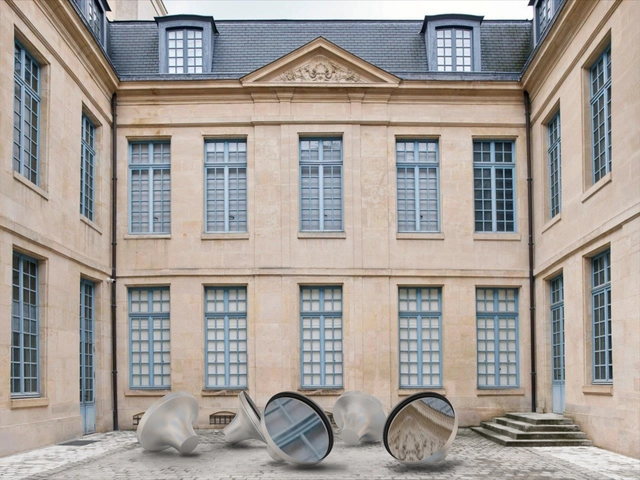
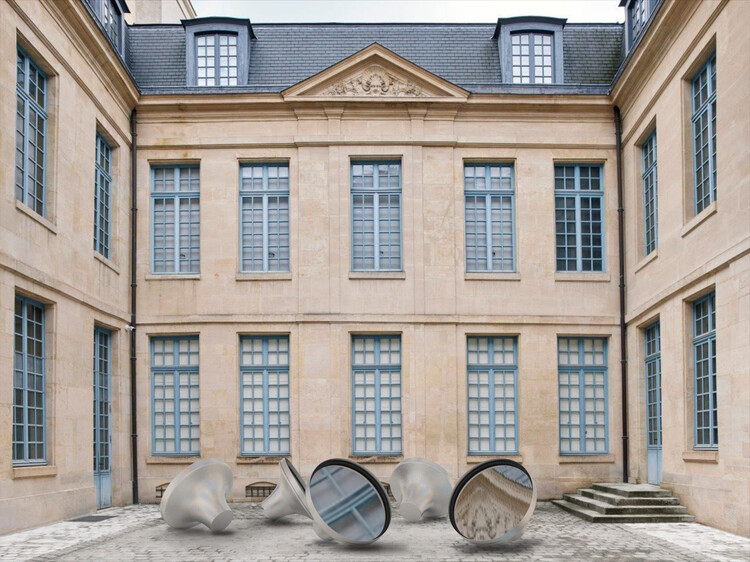
"Spinning Around" installation by Sophia Taillet. Musée de la Chasse et de la Nature, 4–13 September 2025. Image Courtesy of Maison & Objet
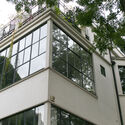
This year, the Maison&Objet interior design trade fair and the city-wide celebration Paris Design Week joined forces to highlight emerging designers, bring renewed value to French métiers d'art, and temporarily transform heritage landmarks with contemporary design visions. Both events began on September 4, turning Paris into a city-wide design festival. Galleries, showrooms, and concept stores opened their doors, while renowned landmarks became venues for designers from more than 30 countries. The abundance and diversity of the program have drawn comparisons to Milan Design Week, while giving Paris a distinct platform on the global design calendar. This article presents a selection of installations and exhibitions of architectural interest that emerge from the synergy between the two initiatives.
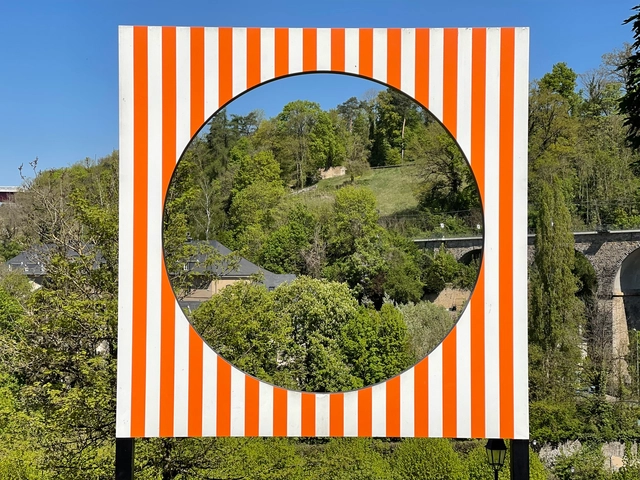
Public space has long been central to architectural thought, often framed in terms of planning, infrastructure, and regulation. From Haussmann's Paris to contemporary masterplans, architects have worked to define and formalise collective life through spatial tools. Yet, outside of these frameworks, artists have continuously offered alternative ways of understanding and inhabiting public space—ways that rely not on construction or permanence, but on presence, perception, and participation. Through actions, objects, or atmospheres, artists engage the city as a site of friction and imagination. These gestures challenge architectural conventions and invite artists to reconsider public space not as a solved form, but as a contingent and open process.
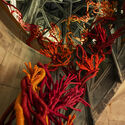
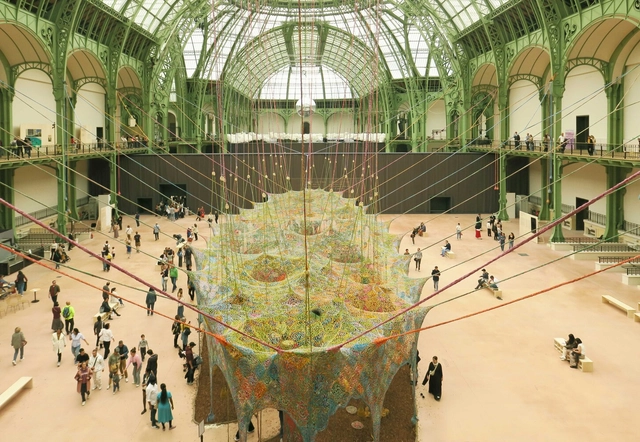
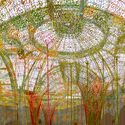
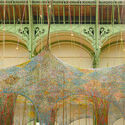
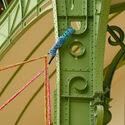
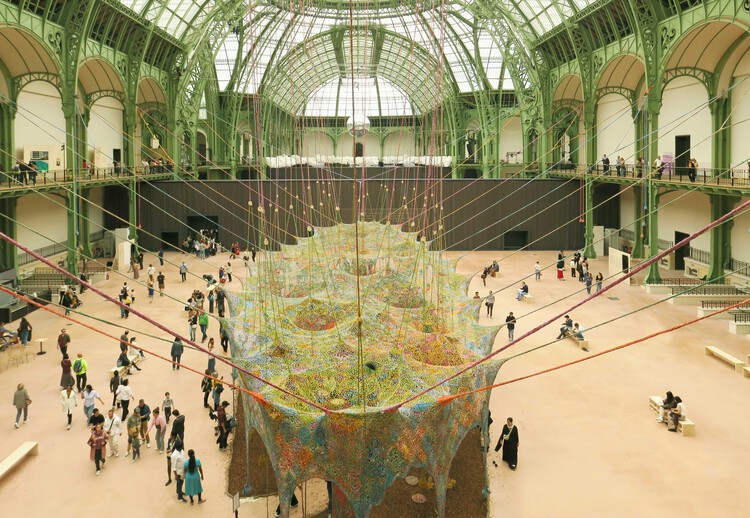
The exhibition "Nosso Barco Tambor Terra" by Brazilian artist Ernesto Neto, held at the recently renovated Grand Palais in Paris from June 6 to July 25, 2025, is a large-scale, immersive installation that invites visitors to reconnect with nature and community through sensory experience. Drawing inspiration from Brazilian and Indigenous cultures, Neto uses textiles, scents, and organic materials to create a space for reflection and interaction. The textile installation was recently captured by photographer Paul Clemence, who sought to portray its architectural qualities.
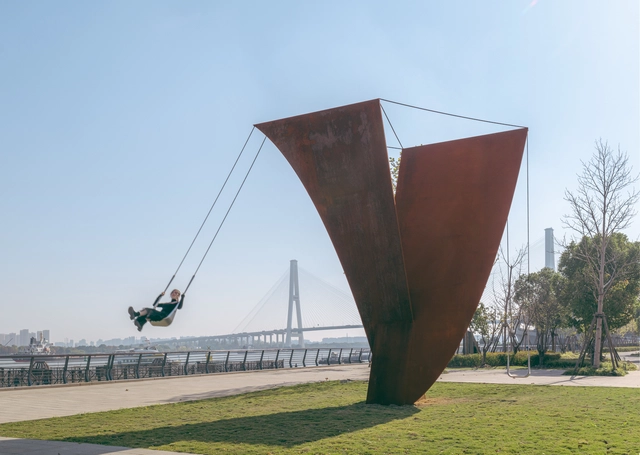
In the productivity-driven dynamics of contemporary cities, playful interventions in public spaces offer an innovative way to reclaim urban environments. These interventions encourage new ways of thinking and acting, temporarily breaking the monotony of everyday life and redefining the concept of play. Once confined to childhood and separate from daily activities, play has begun to intertwine with routine paths, becoming an integral part of urban life even outside traditional leisure times. In this way, reintroducing the swing—the most iconic children's toy—becomes particularly significant. As a symbol of childhood, pleasure, and joy, the swing contrasts sharply with the rigid appropriations of most public spaces, inviting a more relaxed and playful engagement with the urban environment. On June 11th, the UN International Day of Play reminds us of the benefits of incorporating diverse activities into urban spaces, for both children and adults, fostering community, creativity, and well-being.
The 2025 edition of the Coachella Valley Music & Arts Festival continues its tradition of merging large-scale contemporary art with music, transforming the Empire Polo Field into a dynamic landscape of immersive installations. Curated by Raffi Lehrer of Public Art Company (PAC) in collaboration with Goldenvoice Art Director Paul Clemente, this year's program explores themes of movement, illusion, and impermanence through newly commissioned works and returning artists. Since 2016, Coachella's art program has evolved into a multidisciplinary platform, with most of its production managed in-house and on-site. The 2025 festival runs across two weekends, April 11-13 and April 18-20. This year's edition includes three newly commissioned art installations in addition to the permanent and returning exhibits.
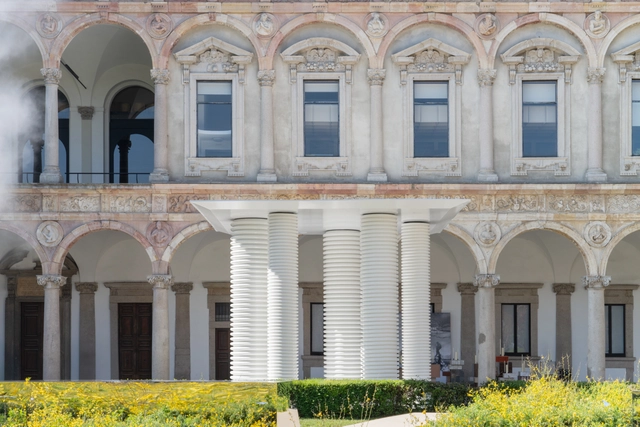
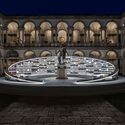
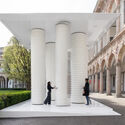
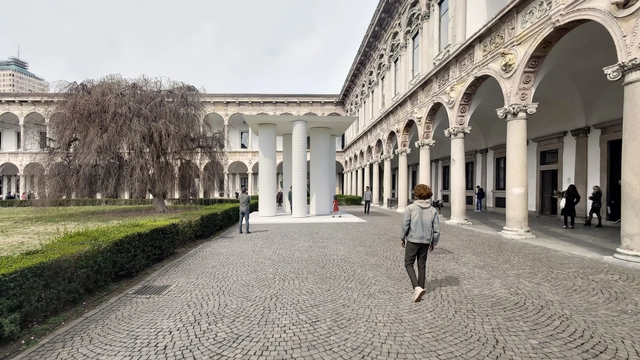
The 2025 edition of Milan Design Week and Salone del Mobile.Milano, spanning April 7th to 13th, brought together a diverse range of temporary installations at the intersection of architecture, design, and material innovation. Spread across historic sites, courtyards, and exhibition venues throughout the city, these site-specific works explored concepts such as sustainability, impermanence, sensory experience, and spatial interaction, in line with the theme of this edition of exploring the deep connections between humanity and design. Architectural studios, designers, and artists collaborated with brands and institutions to create environments that responded to context while proposing new approaches to how spaces are designed, experienced, and constructed. The following selection highlights ten installations presented during the week, reflecting a range of design approaches, materials, and spatial concepts.
Milan Design Week 2025 is one of the most significant events in the design world, taking place from April 8 to April 13. Following in the previous years' tradition, the city of Milano will host a variety of exhibitions, installations, and discussions throughout its diverse districts, each offering a unique atmosphere and thematic focus. Alongside the renowned Salone del Mobile 2025 at the expansive Rho Fiera exhibition grounds, numerous activities and initiatives will be featured, all coordinated under the Fuorisalone agenda. This article will help navigate the many events by highlighting key venues and installations, ranging from the major fair to vibrant design districts and distinctive locations, such as historic courtyards and revitalized industrial spaces.
Videos
Courtesy of Katia Sei Fong, Ken Sei Fong, Luis Sei Fong
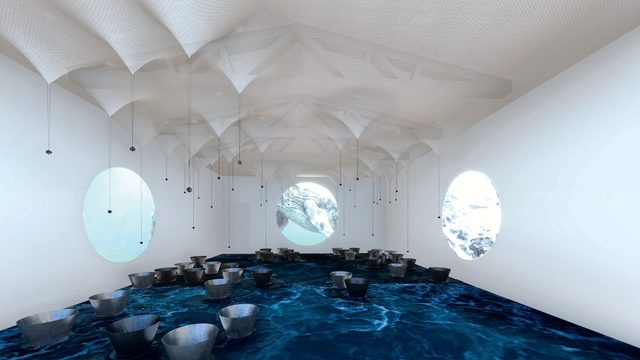
The national exhibition of Uruguay at the 2025 Venice Architecture Biennale, titled "53.86% Uruguay, Land of Water," explores the intrinsic relationship between architecture, territory, and water. Curated by architects Katia Sei Fong and Ken Sei Fong, along with visual artist Luis Sei Fong, the exhibition proposes that we may be entering the age of water, the "Hydrocene", and that the way humanity manages and conserves this resource will shape its future. In this context, the project highlights that Uruguay's maritime territory (53.86%) is larger than its land territory. Water, therefore, is not only a natural resource but a fundamental element of the country's history and culture, essential to its development.
The Winter Stations annual design competition celebrates its 11th edition in 2025. The competition challenges international artists and designers to reimagine lifeguard stations as captivating, interactive art installations. Designed to harmonize with the environment at Woodbine Beach in Toronto, Canada, these installations encourage immersive engagement with art in a public space, offering a transformative experience. Following its 10th anniversary in 2024, Winter Stations introduced an additional challenge, inviting participants to consider the future of the stations and their evolving relationship with the public and the environment. The theme for the 2025 edition, Dawn, calls on designers to explore how the stations can adapt, grow, and transform in the coming years.
I love putting together lists of original manifesto-like statements by architects perpetually searching for breaking new ground. They provoke us to imagine possibilities we haven't dared to consider before. Questioning conventions should be a critic's primary objective to engage in a conversation with a creative. Otherwise, what is there to discuss, really? That's why speaking with Elizabeth Diller about her studio's work and intentions is like a breath of fresh air, especially nowadays when so many architects are happy to align themselves in pursuing what's expected. In one of our previous conversations, Diller put it bluntly: "We don't take professional boundaries seriously. Every time we are handed a program, we tear it apart and continuously ask new questions. Nothing is fixed." This time, we spoke about Diller Scofidio + Renfro's new monograph, "Architecture, Not Architecture." The book, a project in itself, aims to rethink the very limits of architecture. It reinvents what a book can be in the process. During our 1-1/2-hour discussion over Zoom, which I prefer for its frontal dual recording, she said eagerly, "We were always critiquing; we were always throwing grenades at things."