The Centre Pompidou will host a year-long exhibition of MAD Architects in Paris, France. The exhibition, titled MAD X, showcases ten of MAD’s most significant projects to date. Exploring unchartered territory, the show is made to exhibit the evolution of MAD’s architectural practice and design philosophy since its establishment in 2004, led by Ma Yansong, Dang Qun, and Yosuke Hayano. The exhibition centers on how MAD reimagines the future of design.
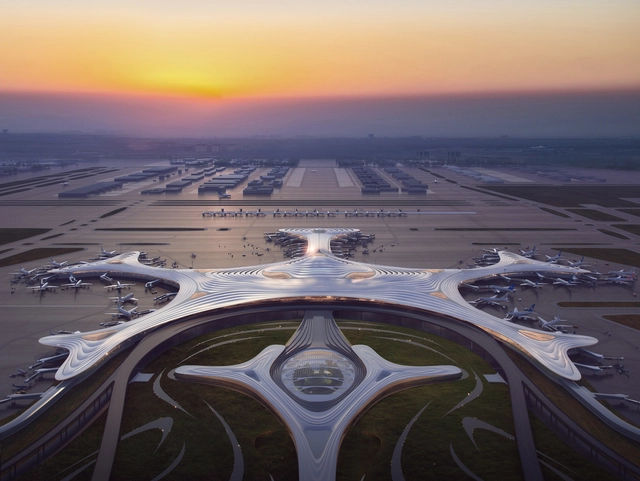
MAD Architects, led by Ma Yansong, has released details of their design for Terminal 3 at Harbin Taiping International Airport in Northern China. Referencing the gentle slopes of the surrounding landscape, and the region’s immense snow and ice, MAD’s scheme creates an architectural poetry that settles into its locale in the spirit of a snowflake falling to earth, while simultaneously expressing the surreal, interstellar space of future air travel.
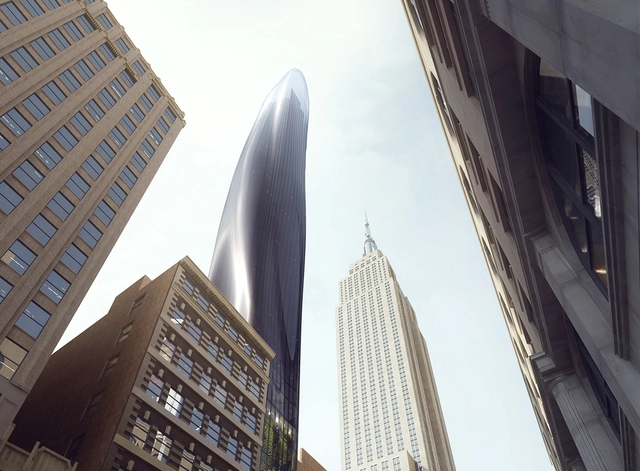
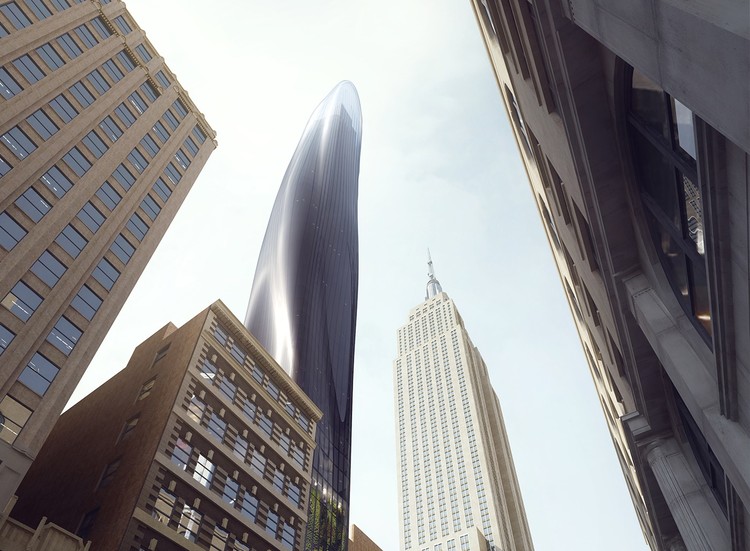
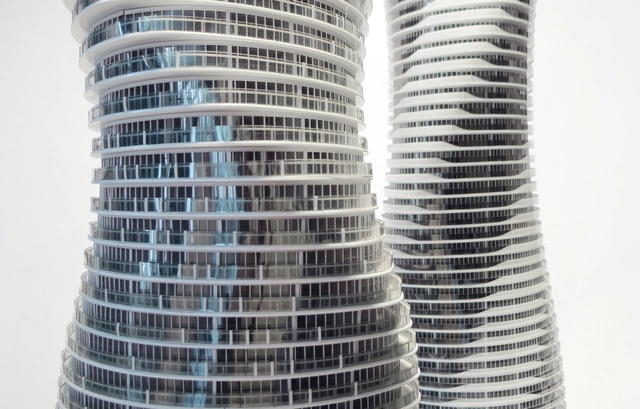
MAD Architects have revealed a new vision for New York City skyscrapers with a sinuous slender tower near the Empire State Building. Dubbed ‘East 34th’, the project was designed with a dark-colored glass facade that was made to fade into the atmosphere. Located adjacent to one of New York's most iconic structures, the project rethinks the city's rectilinear towers and sharp edges to create a new form for the Manhattan high-rise.
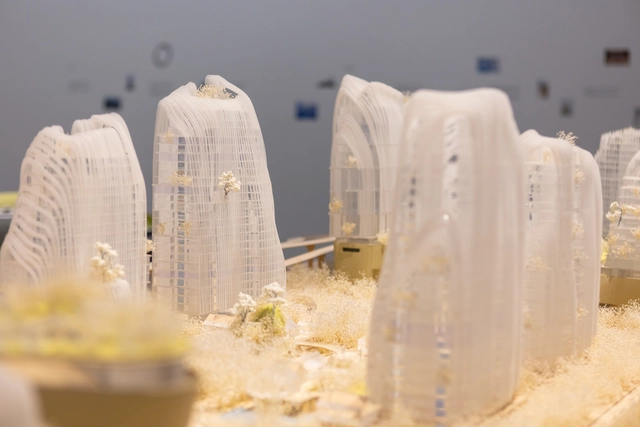
The Centre Pompidou in Paris has acquired 12 architectural models by MAD Architects, depicting 10 significant projects undertaken by the firm. Each model embodies MAD’s core values that “look to envisioning a futuristic architecture that is akin to dream-like earthscapes – one that creates a conversation with nature, the earth, and the sky.”
The collection, permanently acquired by the Pompidou, represents projects developed by MAD between 2005 and the present day, demonstrating the evolution of the firm’s design process. The Pompidou has become the first major European cultural institution to acquire such a collection of MAD’s work, on display in an exhibition beginning in April 2019.
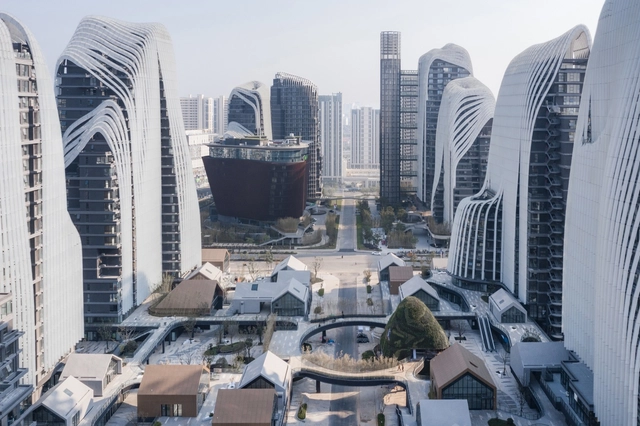
MAD Architects have revealed new photographs of their Nanjing Zendai Himalayas Center, as work nears completion in China. The mixed-use development, totaling over 560,000 square meters of building area, will host commercial, hotel, office, and residential functions. The development “seeks to restore the spiritual harmony between humanity and nature” through integrating contemplative spaces that merge nature with the demands of modern living.
A series of low-rise buildings and footbridges allow the scheme to unfold onto the city, with curving, ascending corridors and elevated pathways weaving through commercial buildings. The routes are activated by public gardens and social spaces, to “create a spiritual and poetic retreat in the middle of the city.
Though seemingly opposite environments, cities are a lot like rainforests. At ground level, the world is dank, dark, and full of predators. Inhabitants seeking fresh air, sunshine, and privacy have only one direction to go: up.
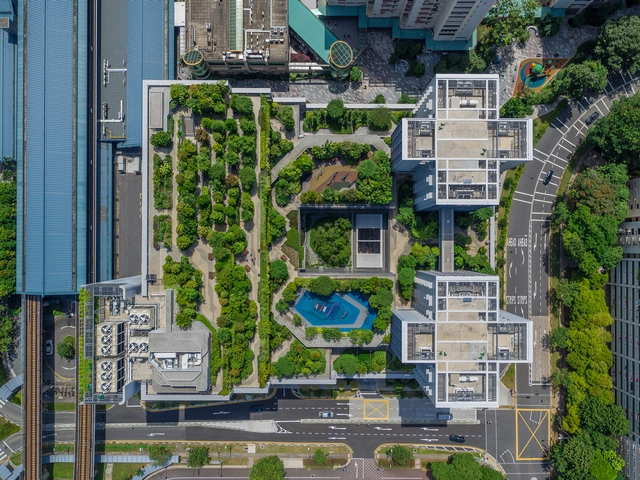
So in the urban jungle, it’s only natural to build a “canopy” in the form of rooftop architecture. The popularity of rooftop amenities across residential, commercial, hospitality, and even health-care projects shows that’s exactly what’s happening.
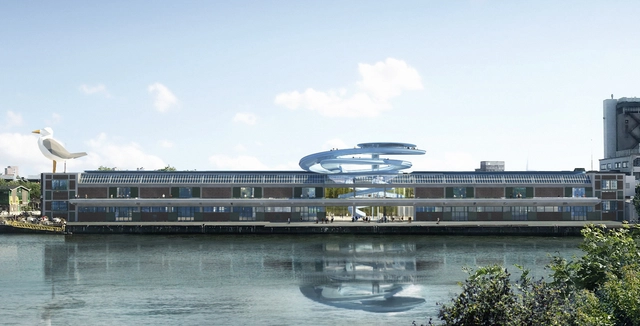
MAD Architects has unveiled images of their proposed panoramic viewpoint for the Fenix Warehouse in Rotterdam, commissioned by the Droom en Daad Foundation. The scheme represents MAD’s first public cultural project in Europe, which sees them tasked with uncovering the forgotten history of what was once one of the biggest warehouses in the world.
The viewpoint is to form part of a restoration project of the historic warehouse itself, to be led by Rotterdam-based Bureau Polderman. The scheme is situated on the site of one of the oldest Chinatowns in Europe, on the southern banks of the port of Rotterdam.
https://www.archdaily.com/906500/mad-architects-design-panoramic-viewpoint-for-historic-warehouse-in-rotterdamNiall Patrick Walsh
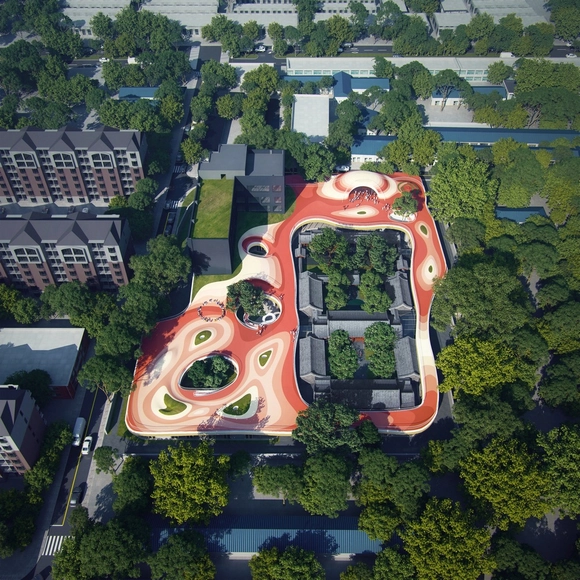
Construction has begun on MAD Architect’s “Courtyard Kindergarten” in Beijing. Located on the site of a traditional siheyuan courtyard dating from 1725, MAD’s proposal sees a new building inserted to protect the surroundings, and reinvigorate the existing buildings into use.
The courtyard will be surrounded by a “dynamic floating roof” offering a “multi-layered urban narrative, where old and new co-exist.” The rooftop element is envisioned as a “place full of magic – a playful escape for the children that is a symbol of freedom and endless imagination.”
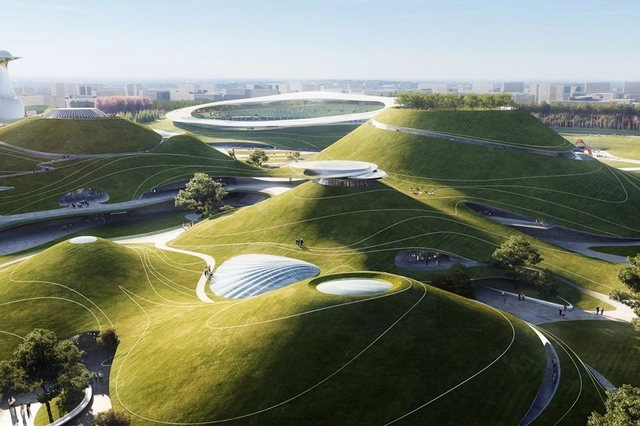
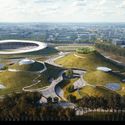
Quzhou Sports Campus. Image Courtesy of MAD Architects
MAD Architects have officially begun construction on the QuzhouSports Campus in China. Led by the Ma Yansong, the team designed the campus as a futuristic landscape with mountains and a lake conceived as a sunken garden. The design connects to the historic city as a surreal, ethereal and tranquil landscape. The 700,000 sqm sports campus combines the functions of a sports park with natural and organic forms to embrace thousands of years of history and culture in Zhejiang.
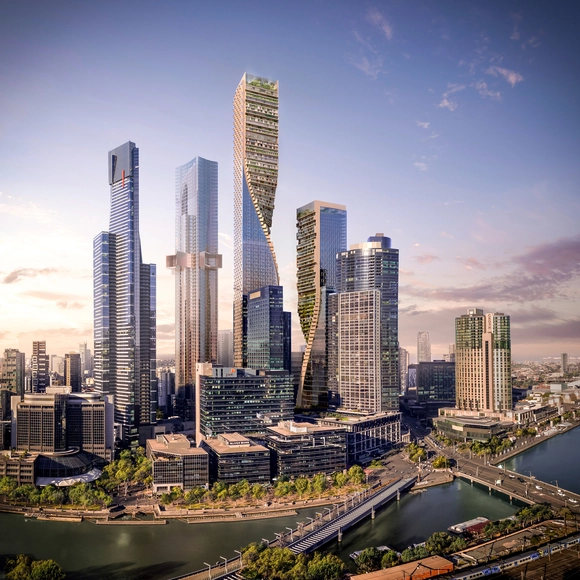
Green Spine / UNStudio + Cox Architecture . Image Courtesy of UNStudio / Cox Architecture
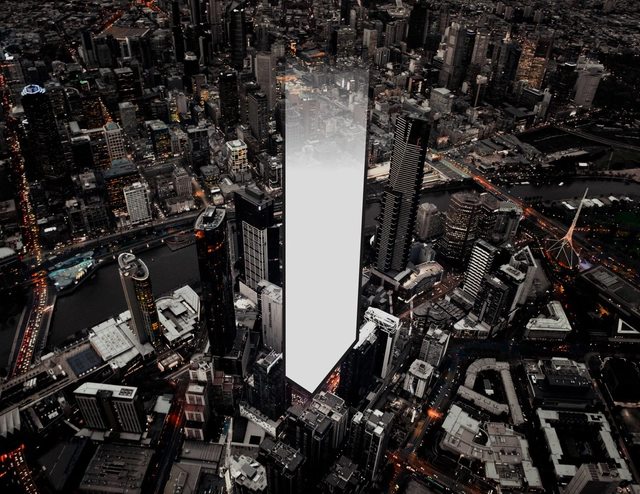
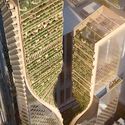
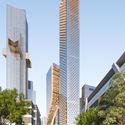
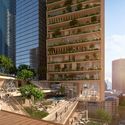
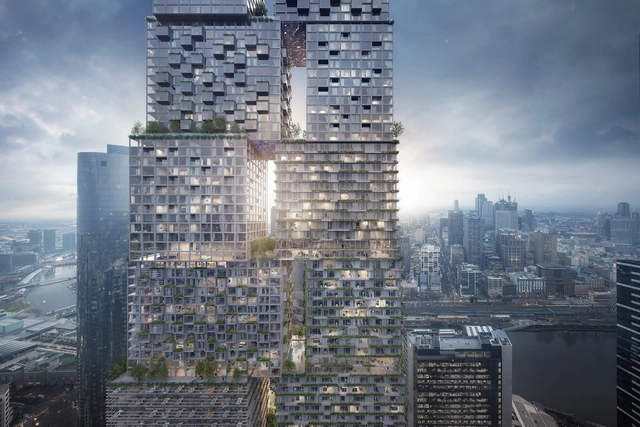
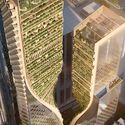
UNStudio and Cox Architecture have officially been announced as the winners of Melbourne’s landmark Southbank Precinct overhaul. Selected from a range of high-profile offices, including BIG, OMA, and MAD, UNStudio's vision for the $2 billion project includes a pair of twisted towers called Green Spine. As the largest single-phase project in the history of Victoria, Australia, the Green Spine is designed as a state-of-the-art, mixed-use environment centered around innovation in architecture and design.
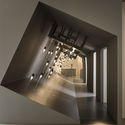
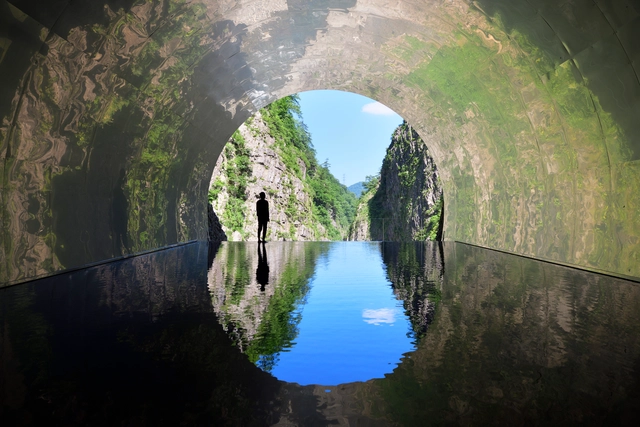
MAD Architects have completed their restoration work on the Kiyotsu Gorge Tunnel in Japan’s Niigata prefecture, transforming the historic lookout tunnel into a trail of artistic spaces. The “Tunnel of Light” was opened as part of the 2018 Echigo-Tsumari Triennale, cutting through 750 meters of rock formations to offer a panoramic view across one of Japan’s great landscapes.
MAD’s scheme seeks to “transform points along the historic tunnel through the realization of several architectural spaces and artistic atmospheres." Inspired by the five elements of wood, earth, metal, fire, and water, the scheme explores the relationship between humans and nature, and "re-connects locals and visitors alike with the majestic beauty of the land."
The Lanescraper. Image Courtesy of BIG – Bjarke Ingels Group / Fender Katsalidis Architects
A prominent shortlist including BIG, OMA, and UNStudio have revealed their visions for Melbourne’s landmark Southbank Precinct overhaul. The $2 billion project will be the largest single-phase project in the history of Victoria, Australia, intended as “a state-of-the-art, mixed-use environment” to be “centered around innovation in architecture and design.”
The six shortlisted schemes include twisting towers, interlocking blocks, and stacked neighborhoods, all focusing on the 6,000-square-meter BMW Southbank site. The designs were revealed at a public symposium on July 27th featuring speakers from the shortlisted firms.
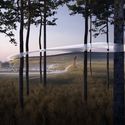
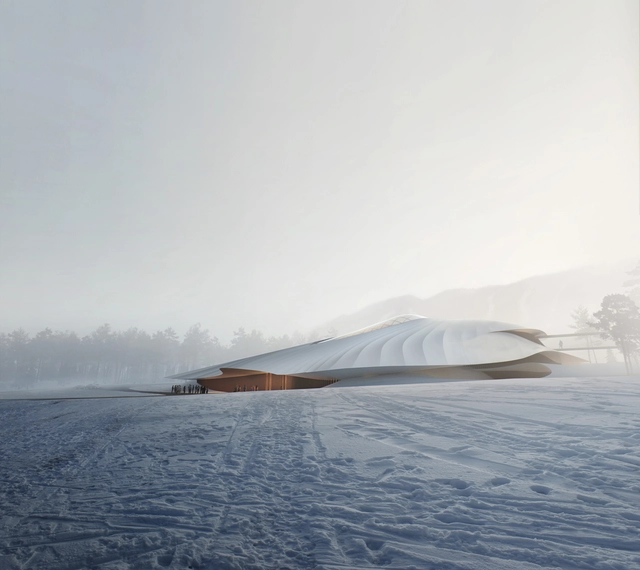
The groundbreaking ceremony has occurred for MAD Architects’ China Entrepreneur Forum Conference Centre, settled in the mountains of Yabuli in Northeastern China. A snow-capped mountainous landscape known for its rugged terrain and freezing temperatures, Yabuli is home to the annual summit of the China Entrepreneur Forum (CEF) considered to be the “Davos of Asia.”
MAD’s scheme, also referred to as the “Yabuli Conference Centre” seeks to embody and showcase the “ambitions, ideologies, and forward critical thinking of CEF members” through a tent-like structure defined by soft, sloping lines.
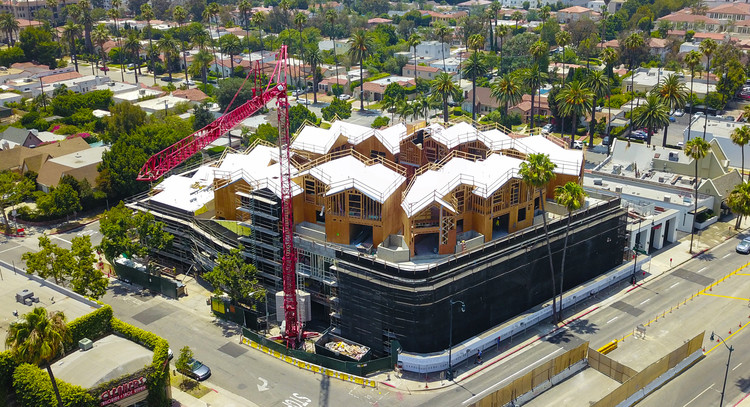
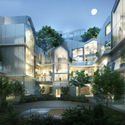
MAD Architects’ first project in the U.S., an 18-unit residential complex, has topped out in Beverly Hills. The project named ‘Gardenhouse’, is founded upon the idea of coalescing nature and the built environment in a dense urban center, providing residents an experience similar to that of living in a “hilltop village”. Once fully completed, Gardenhouse will feature a terraced arrangement of urban villas atop a plant-covered podium.
To architecture students worldwide, MAD encourages you to apply for the 2018 MAD Travel Fellowship.
Ma Yansong, founding principal partner of MAD Architects, initiated MAD Travel Fellowship in 2009. During the past 8 years, the program has sponsored 45 students for their overseas architecture travels to Africa, Asia, Europe, and North America. MAD believes it is only through travel – the visceral experience of interacting with, and being influenced by, different spaces – that one can begin to understand ideas of context and gain a deeper insight into architecture.
https://www.archdaily.com/894689/open-call-2018-mad-travel-fellowshipAD Editorial Team
The shortlist for a new landmark project in Melbourne has been announced, comprising award-winning global architects such as Bjarke Ingels Group, MVRDV, and OMA. For the “Southbank by Beulah” mixed-use development, the shortlisted architects will engage in a design competition working in collaboration with local Australian firms, each producing a design proposal for Melbourne’s BMW Southbank site.
With an end value in excess of $2 billion, Southbank by Beulah will be the first large-scale private project adhering to the Australian Institute of Architecture guidelines, while the design competition will be chaired by a jury of seven regarded individuals from academic, architectural, property and government sectors.
https://www.archdaily.com/893437/big-oma-and-mvrdv-among-shortlisted-firms-for-melbourne-landmark-competitionNiall Patrick Walsh
Future Space / Peter Pichler Architecture. Image Courtesy of Peter Pichler Architecture
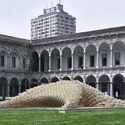
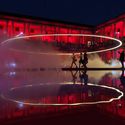
The 2018 Milan Design Week is now underway, a festival which this year is expected to attract over 300,000 visitors. Every year, the festival brings together a wide range of practitioners and design companies resulting in unusual yet fascinating collaborations and installations.
Below, we have compiled a list of collaborations to look out for throughout the week, including investigations into water, healthcare, and micro-living.





























.jpg?1530607923 "Interior. Image Courtesy of MAD Architects")