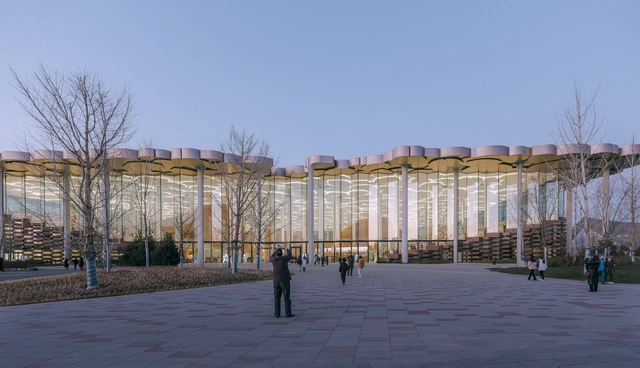
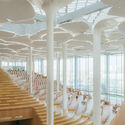
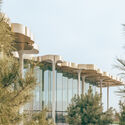
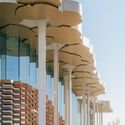
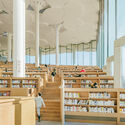
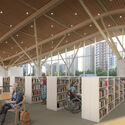
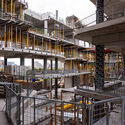
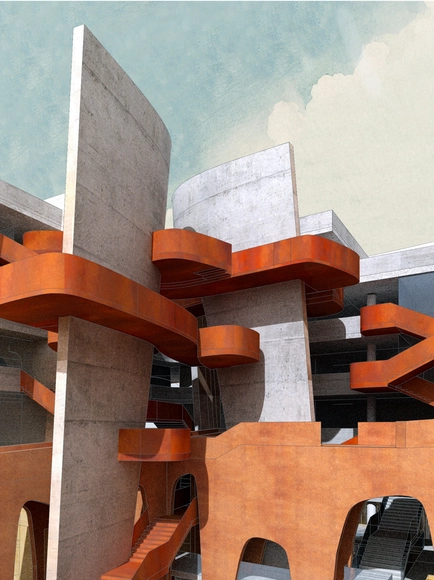
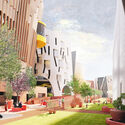
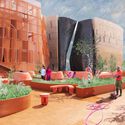
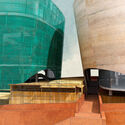
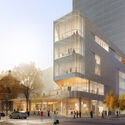
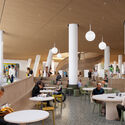
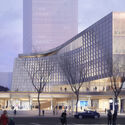
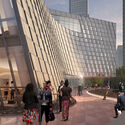
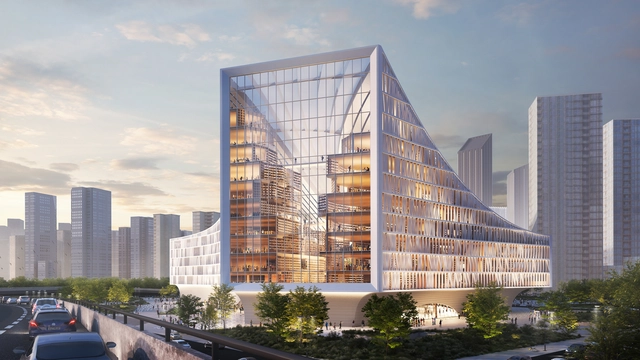
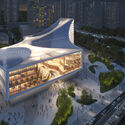
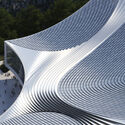
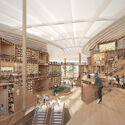
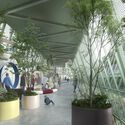
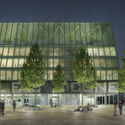
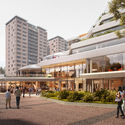
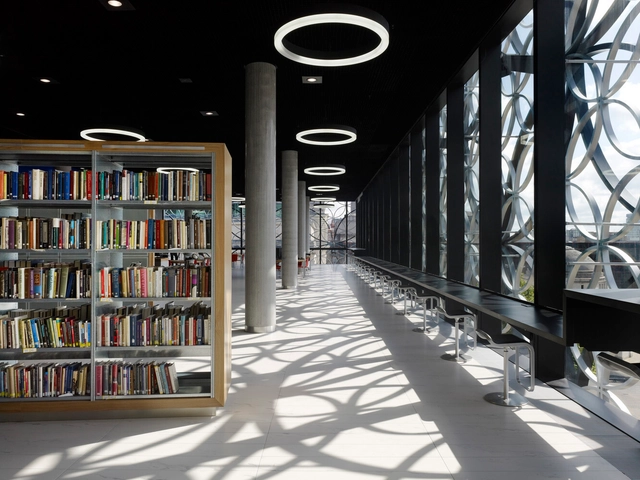
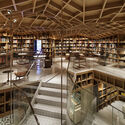
Snøhetta’s Beijing City Library has opened its doors to the public, introducing a unique space for learning and knowledge-sharing in Beijing’s cultural scene. As one of the most anticipated projects of 2024, the library features the world's largest climatized reading space, in addition to various facilities aimed at creating a vibrant cultural destination in the city. Snøhetta was awarded the Beijing City Library in 2018 through an international competition and the project was completed with local partner ECADI.
Sir Peter Cook and Gavin Robotham’s CRAB Studio has unveiled the design for a new cultural center to be constructed in New Delhi, India. Located on the site of a former quartzite quarry, the BRIJ offers facilities for the visual, performing, literary, and culinary arts as well as a new arts academy. The scheme, aiming to promote interactions between artists and audiences via an immersive environment, is designed by CRAB Studio, now led by Gavin Robotham, and CP Kukreja Architects (CPKA) as Executive Architect.
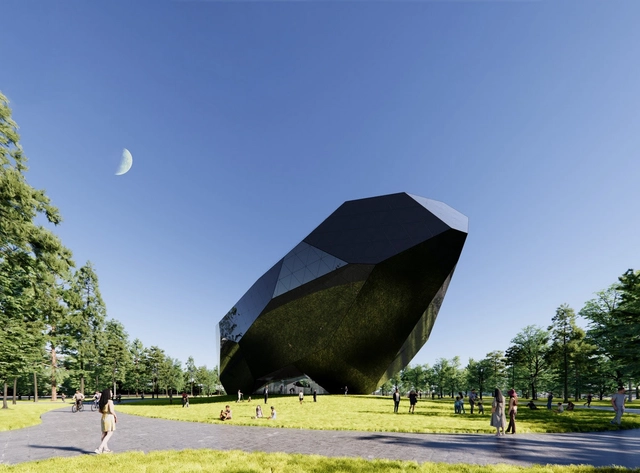
OPEN Architects has just revealed the architectural designs for two separate cultural projects situated along the coastline of Yantai,China. One of them is “The Space Crystals,” a futuristic digital museum and experiential hub resembling an otherworldly entity that has mysteriously descended upon a seaside mark. Meanwhile, “Sea Square” is square-shaped, providing a library and community service facility, levitating above a restored sea dock. The two structures engage in a spatial and temporal conversation, one reaching towards the sky and the other facing the sea, bridging the present, the past, and the future.
Charlotte Mecklenburg Library. Image Courtesy of Snohetta
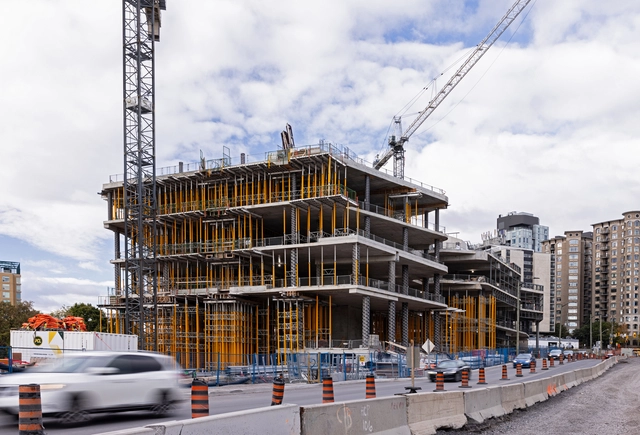
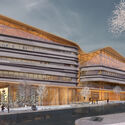
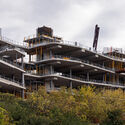
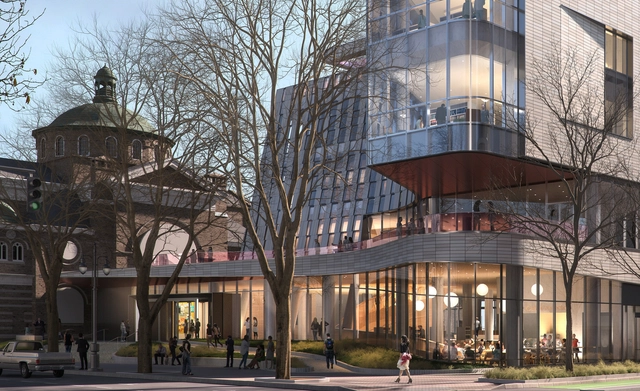
Construction has just begun on Snøhetta’sCharlotte Mecklenburg Library in North Carolina,USA. The new project is designed to become a significant destination in Uptown Charlotte. Last week, the main library organized a commemoration to celebrate the beginning of the demolition phase on site in anticipation of the upcoming construction. It is set to open in the spring of 2026.
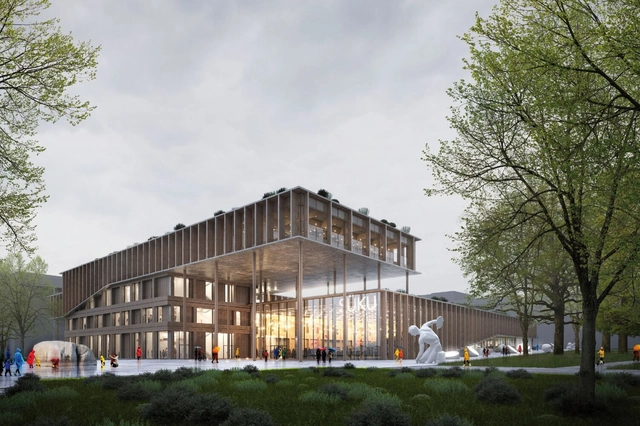
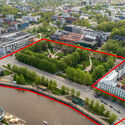
Estonian studio OÜ Kolm Pluss Üks won the international architecture competition for the Tartu Cultural Center. Selected out of a total of 107 proposals, the winning project titled “Paabel” is set to become the cultural heart of the city center, capturing the competition's main goal and developing an outdoor space solution. Kadarik Tüür Arhitektid OÜ took the second position for their design of “Tarte Tatin”, while the third place went to Denmark-based architectural studio Atelier Lorentzen Langkilde Aps.
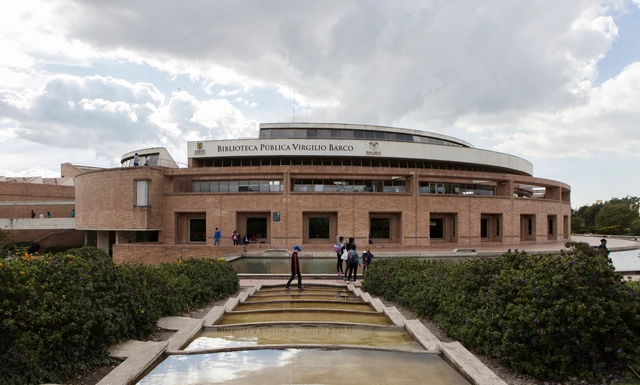
Located in the Teusaquillo neighborhood, in the northeastern sector of Bogotá, the Virgilio Barco Library forms a complex integrated by the Simón Bolívar Metropolitan Park and the Virgilio Barco Library Park. The consolidation of the social, recreational, and cultural development center displays the library a particular approach between the built work and the natural capital environment. Through its tour, it progressively reveals the solution of a program designed to form a cultural and landscape ensemble omitting its position within the city.
Recognized as one of Rogelio Salmona's emblematic works, its circular forms open to the environment attract between 60,000 and 65,000 visitors a month. Initially, it was to be called the Simón Bolívar Park Library, due to its proximity to the metropolitan park, but because of the patronage it received from former Colombian president Virgilio Barco, it ended up taking his name.
Heatherwick Studio has revealed their first public library design, planned for Howard County Libraries in Maryland, United States. The building will serve as a community center and was designed to reflect the changing and complex role of libraries within cities. The program expands beyond book lending services, providing spaces for cultural events, collective learning, workshops and lending of objects of use. Construction is expected to begin in 2024, and the library is scheduled to open to the public in 2027.
In any city, cultural centers can play a significant role in preserving and celebrating the community’s heritage and history, officing space for a vast array of activities and initiatives to encourage social interaction and the sharing of ideas and memories. They are also institutions that promote education and learning, often offering classes, workshops, and lectures on various topics related to culture, history, and the arts. By fulfilling these crucial roles within a given community, they can also become attractive centers for tourists eager to learn about local identities, cultures, and traditions.
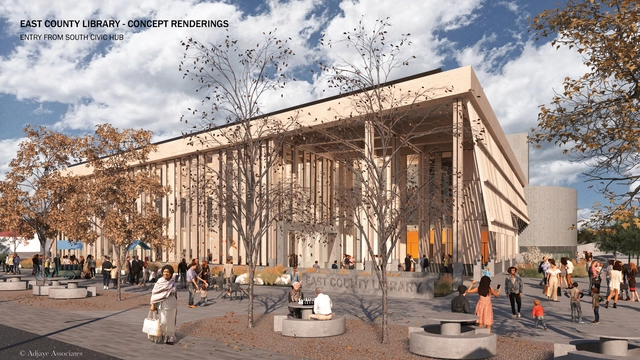
Adjaye Associates, in collaboration with Holst Architecture, the prime architect of record, have unveiled the first renderings for the new East County Library in Portland, Oregon, a new facility that will provide a diverse range of services and programming. The design of the 95,000-square-foot building is informed through extensive community engagement and feedback. Several local organizations aid these efforts by organizing public community events, focus groups, teen outreach, and surveys. As the project is currently in the schematic design phase, the images presented are early drafts, likely to change to reflect the input received.
Tu Casa by Lutolli Architects + Partners. Image Courtesy of Lutolli Architects + Partners
Architects play an important role in creating healthy, functional and aesthetically pleasing environments. Interior design represents a natural continuation of the same prerogative, and its importance has been accentuated in recent years, from the lockdown forcing many people to remain indoors for extended periods of time, to the rise of remote work. The task of the interior designer is not decorating spaces, but planning for an effective use of space, understanding the needs of the user and highlighting the intrinsic qualities of a space. Acoustics, lighting, material properties and proportions all play a role in achieving a coherent and enjoyable interior space.
This week’s curated selection of Best Unbuilt Architecture highlights interior design projects submitted by the ArchDaily community. From a pastel-colored library in Turkey to a renovated symphony hall in San Diego, US, this selection of unbuilt projects showcases how architects design interior spaces by integrating textures, materials, light, and color in well-proportioned spaces. The article includes projects from Turkey, US, Switzerland, Indonesia, UK, and Denmark.
MVRDV, in collaboration with UAD, has been selected as the winner of the competition to design a new library for Wuhan, poised to become one of the largest libraries in China. The large-scale project creates diverse study environments and offers reading and studio spaces while also connecting to its surroundings via three large openings that display the life inside the buildings to invite visitors to enter. Spanning over 140,000 square meters, the distinctive building adapts its volume to reflect its position at the confluence of two main rivers in Wuhan and become a recognizable landmark for the city.
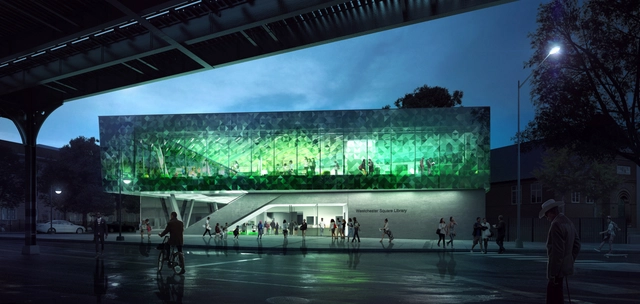
Snøhetta, the New York City Department of Design and Construction (DDC), and the New York Public Library (NYPL) unveiled designs for a new 12,000-square-foot branch library in the Westchester Square neighborhood of The Bronx, NYC. Inspired by the surrounding greenery, the energy-efficient building will be wrapped in pastoral print fritted glass, defining the new structure as an important economic and educational node within the neighborhood. Construction on the new Library is anticipated to start during mid-to-late 2023.
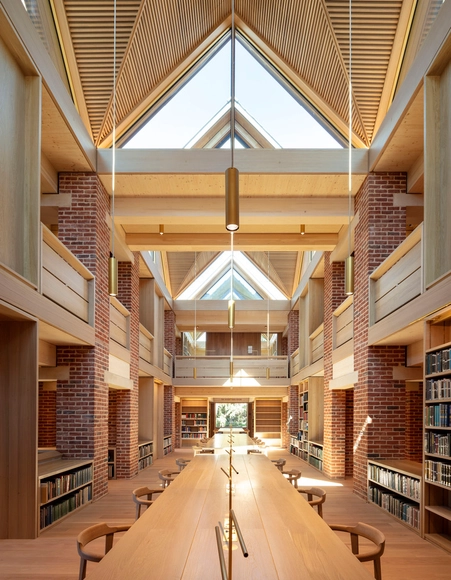
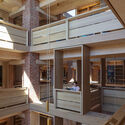
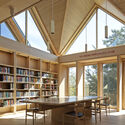
Designed by Níall McLaughlin Architects, the Magdalene College Library was just selected as the winner of the 26th edition of the RIBAStirling Prize. Selected from a pool of shortlisted projects, the outstanding new building replaces a library gifted to Magdalene by Samuel Pepys 300 years ago and provides the students of the University of Cambridge with a new space that includes an archive and an art gallery.
Hard times bring people together. In recent years we have seen how collective work can be a driving force to help those affected by natural or man-made disasters. After a disaster or displacement, a safe physical environment is often essential. Therefore, the need for coordination becomes a key factor in assisting people in times of need.
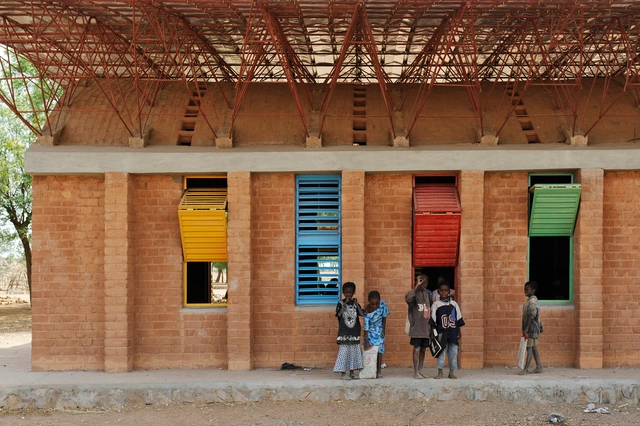
Architects, as "Shelter Specialists", play an important role in creating safe and adequate environments, whether it is individual housing, public buildings, schools, or emergency tent camps. But as architect Diébédo Francis Kéré says, "When you have nothing and you want to convince your community to believe in an idea, it may happen that everybody starts working with you, but you need to keep fighting to convince them."
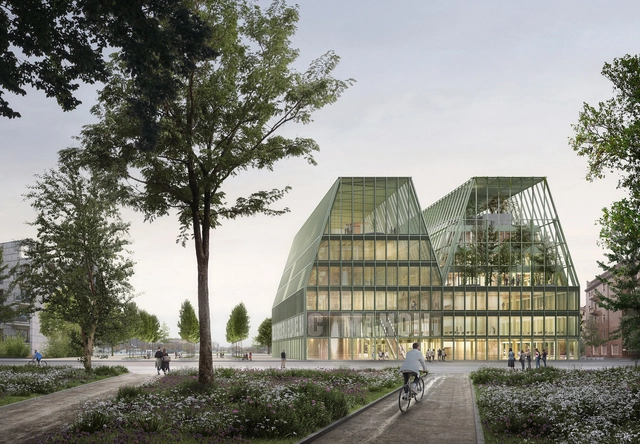
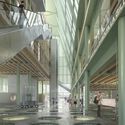
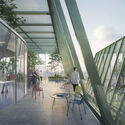
The municipality of Milan has announced the results of the competition to design the new European Library of Information and Culture (BEIC) in Milan, Italy. The winning team is composed of Onsite Studio, baukuh, Yellow Office, SCE Project, Studio Mistretta, Starching, Stain Engineering, Dotdotdot, (ab)Normal, Atmos Lab. The new building, situated in the Porta Vittoria area of Milan, aims to go beyond the traditional functions of a library to become a laboratory for the tools necessary to create contemporary culture.
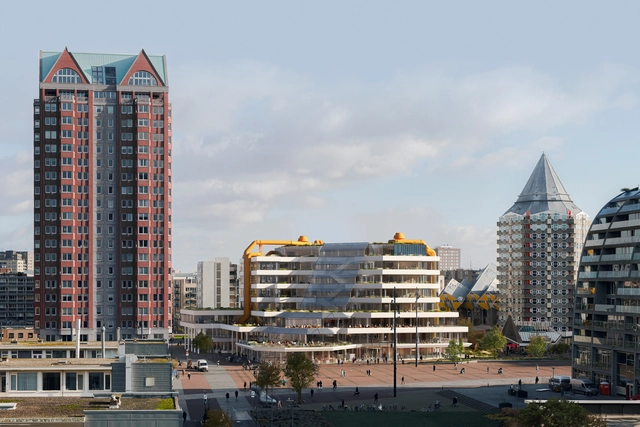
The City of Rotterdam has selected Powerhouse Company, Atelier Oslo, Lundhagem to renew and extend the city’s Central Library, a landmark building from the early 1980s designed by Van den Broek & Bakema. The new design adopts the concept of radical reuse in order to transform a 1980s building into a contemporary library, well-adapted to the necessities of modern users. The team combines the expertise of Powerhouse Company, Atelier Oslo, and Lundhagem, the latter two offices being awarded in 2021 with the Public Library of the Year Award for their design of Oslo!s Deichman library. Construction is expected to begin in 2025 and be completed by the end of 2028, the year marking the building!s 45th anniversary.
As gateways to knowledge and culture, libraries play a fundamental role in society. Foundational in creating opportunities for learning, as well as supporting literacy and education, the resources and services each library offers all work towards helping to shape new ideas that are central to building a creative and innovative society.