Far beyond basic training, reading is a leisure activity that is part of modern society. Whether outdoors, in squares and parks, at home or even at work, this habit, which improves reasoning ability and mental health, already had large spaces dedicated to books in palaces and mansions. We selected 15 projects that demonstrate the different ways of integrating reading at different scales and architectural programs.
This week’s curated selection of Best Unbuilt Architecture highlights educational and cultural projects submitted by the ArchDaily community. Through examples from all around the world, the article explores how these spaces of knowledge and discovery are designed to inspire and inform.
Featuring a monolithic museum in Portugal, a digital heritage centre with a media facade in Korea and a mobility research centre in Turkey, the round-up spans various kinds of educational and cultural spaces, as well as different attitudes towards the built or natural environment. The following projects reveal the ideas that shape spaces of knowledge in different contexts, illustrating diverse approaches toward what constitutes an institution of culture.
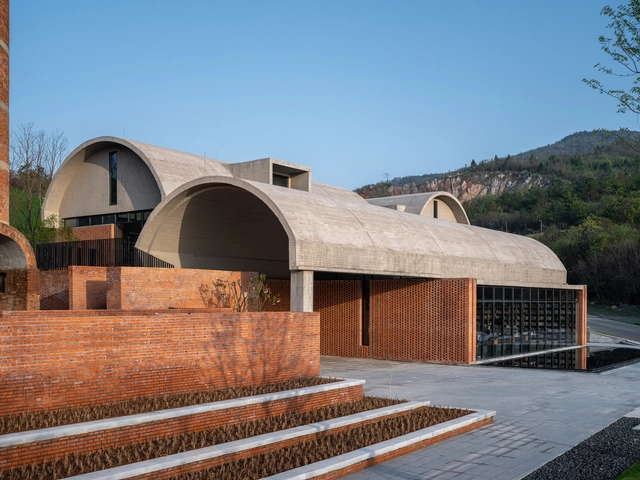
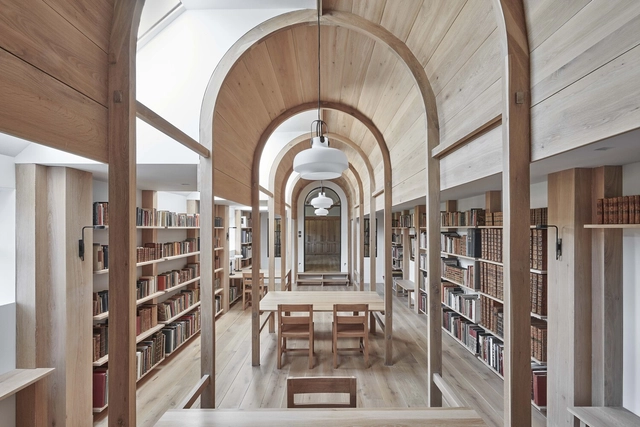
The oldest record of barrel vaults is estimated to date back to 4000 BC. These provided the spans in the Sumerian ziggurat at Nippur in Babylonia, built from fired bricks amalgamated with clay mortar. This type of vault was built as a continuous round arch and became a characteristic architectural element of Roman architecture, later used also in Renaissance architecture.
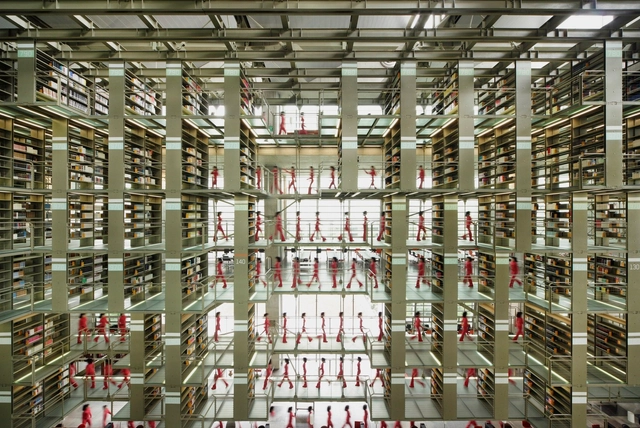
Biblioteca Jose Vasconcelos / Taller de Arquitectura X / Alberto Kalach. Image Cortesía de Taller de Arquitectura X / Alberto Kalach
Over the years, interior design has evolved according to the needs that arise, but above all according to the experiences we seek to provoke in the user. In the last two years, we witnessed a radical change and a particular interest in this subject because the pandemic forced us to pay specific attention to the configuration of the places we inhabit. This brought about much more holistic designs that cater to the wellbeing of the user, combining colours, sensory experiences, technology and natural elements that promote health.
It's not uncommon to see housing complexes integrate commercial spaces at the ground level, but the challenge of mediating between the private and public realm on a smaller scale, especially with the rise of the home office, has forced architects to explore all aspects of the structure, from the topography it sits on, to the direction of light and wind, to the design and organization the domestic space. This interior focus explores different design solutions that show how architects and interior designers transformed their projects from a living space into a mixed-use typology, taking into account privacy, flexibility, functionality, and predefined spatial requirements.
Cavatina Concert Hall by Cavatina. Image Courtesy of Cavatina
The diversity of civic spaces in cities and rural areas have continuously showcased how strongly they explore human connections regardless of program, construction technique, scale, and geography. Ranging from educational facilities and museums, to art centers, libraries, religious halls, and memorials, these projects have enriched urban fabrics with cultural programs that have provided members of the community with places to learn, entertain, create, and unwind.
This week’s curated selection of Best Unbuilt Architecture highlights cultural projects submitted by the ArchDaily community from across the world. From a water management system that targets the natural crises in Egypt to a structurally intertwined memorial in the United States, this round up of unbuilt projects showcases how architects responded to the contextual and spatial needs of their projects through innovative and local solutions. The article also includes projects from Italy, China, Uruguay, Poland, Iran, Hungary, Russia, and the United Kingdom.
Following an international design competition win in 2018, Snøhetta and ECADI have been commissioned to design a new sub-center library in Beijing, offering visitors a contemporary space for learning and sharing knowledge while celebrating the rich cultural China and its capital. The library sets new standards for traditional library designs, featuring technology-driven designs and locally-sourced materials, as well as a glass enclosure of up to 16 meters, which will be China’s first self-supporting glass facade project.
Formerly known as the Bibliotheque du Roi, the Richelieu site of the National Library of France near the Palais-Royal has finally completed construction after almost 10 years of renovations. The transformation of the 300-year-old site included facade restorations, installation of an interior garden, and facilities maintenances, promoting innovation, modernity, and openness to a wider public. The project, which is both a library and a museum, will continue to house a massive campus for the history of the arts and heritage, and provide visitors with a place for walking, discovery, and exchange. The site is expected to be open to the public in summer of 2022.
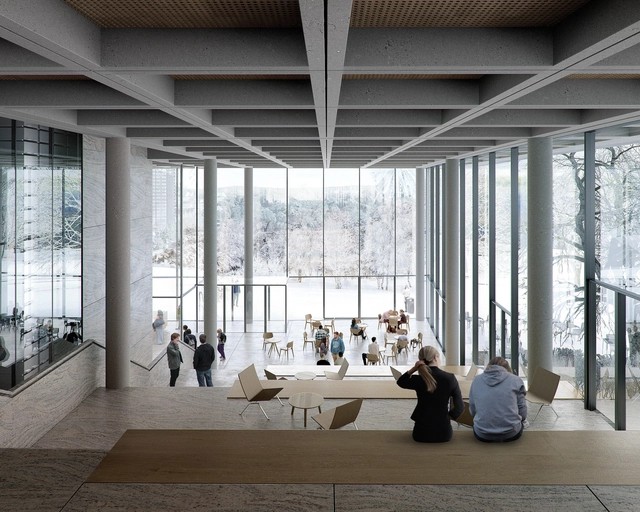
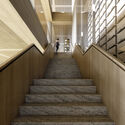
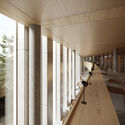
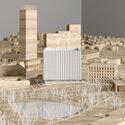
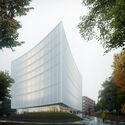
Cobe’s winning design for the new library of the University of Gothenburg proposes a light, clean volume, whose slightly curved facades are a nod to the pages of an open book. The Danish architecture studio translates the concept of knowledge as the heart of a library into the interior spatial configuration of the project, while the architectural image evokes the idea of a lighthouse. Featuring a transparent and open ground floor, the new repository of knowledge creates a strong connection with the surrounding park, becoming a mediator between the city and the university.
This week’s curated selection of the Best Unbuilt Architecture focuses on projects related to learning, research and culture submitted by the ArchDaily Community. From kindergartens to libraries and universities, the article explores how different spaces of knowledge around the world are designed to inspire their users.
Featuring an array of scales and architectural programs, the list of projects includes a circular library in South Korea, a bridge-like kindergarten in Poland, as well a university in Tel Aviv that creates a series of opportunities for unmediated interactions and unscripted learning. The following are architectural programs that cater to the dissemination of knowledge in all its forms and to all age and social groups.
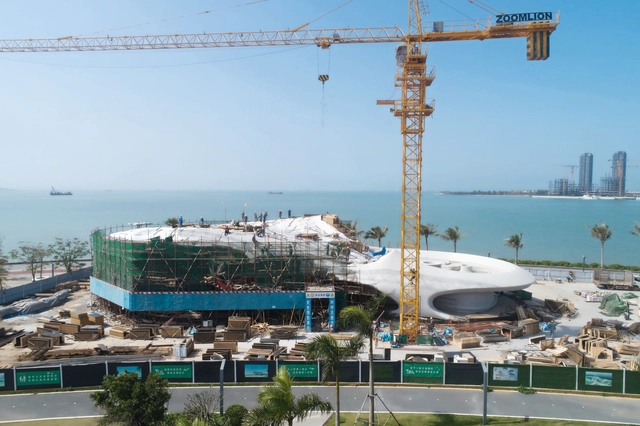
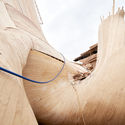
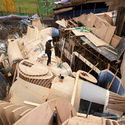
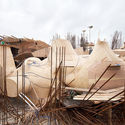
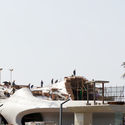
MAD Architects has unveiled that the Wormhole Library, had topped-out in the city of Haikou, China at the end of January 2021. The curved multi-functional structure, cast of white concrete, is scheduled to be completed and operational in the Spring of 2021. Once ready, the project will allow visitors to read, enjoy the sea views and attend open-air performances.
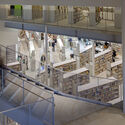
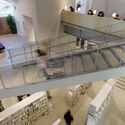
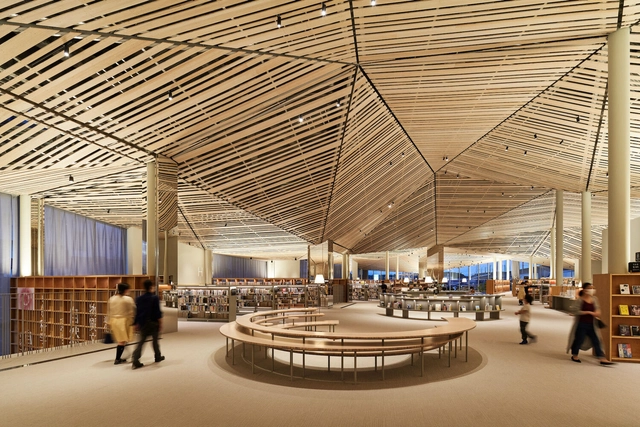
American-Brazilian photo-artist Paul Clemence has just released the first images of the completed renovation and expansion works of Martin Luther King’s Memorial Library, originally designed by Mies van der Rohe in Washington D.C. Hoping to create a modern library that focuses on people while celebrating the exchange of knowledge, ideas and culture, Dutch design practice Mecanoo was commissioned the modernization of the structure back in 2014.




_Maureen_M._Evans.jpg?1646840531 "© Maureen M. Evans")








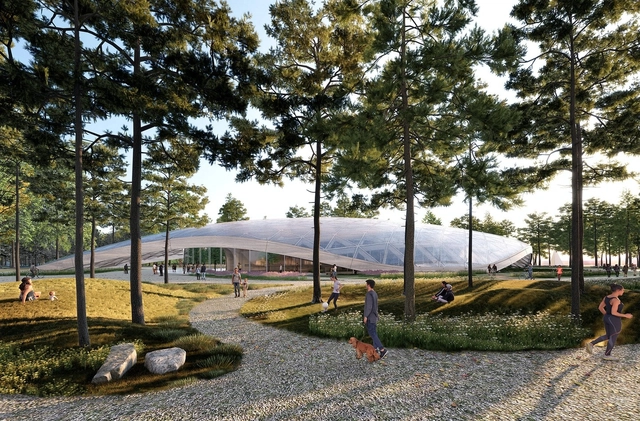


_-_West_Elevation.jpg?1641304390 "So Close , So Far Cultural Center by Shahab Shariat. Image Courtesy of Shahab Shariat")

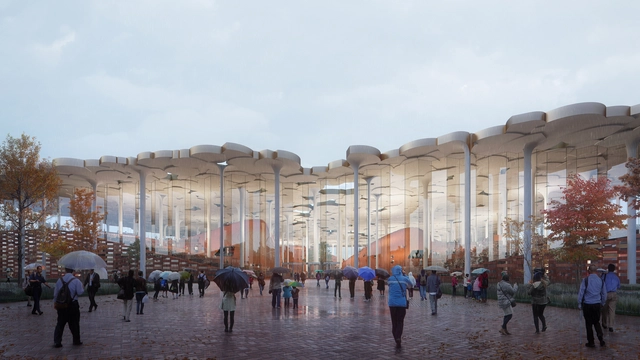


.jpg?1641202772 "Courtesy of Plomp/Snøhetta")


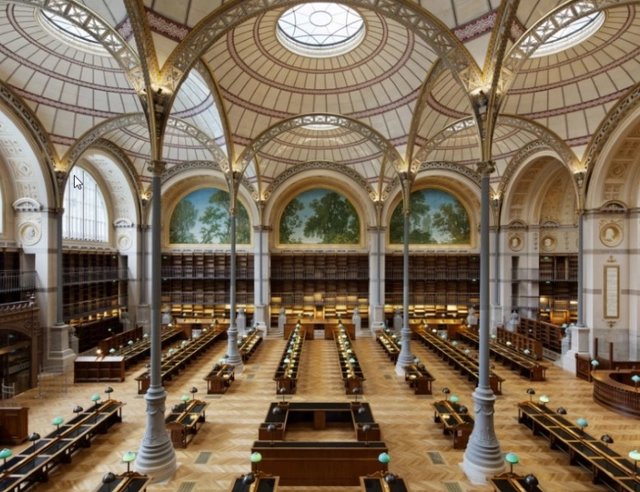
_%C2%A9_Takuji_Shimmura.jpg?1634116877 "© Takuji Shimmura / BnF")


















.jpg?1612774363&format=webp&width=640&height=580)
--.jpg?1612774451 "© Paul Clemence")
.jpg?1612774430 "© Paul Clemence")
.jpg?1612774307 "© Paul Clemence")
.jpg?1612774284 "© Paul Clemence")
.jpg?1612774363)