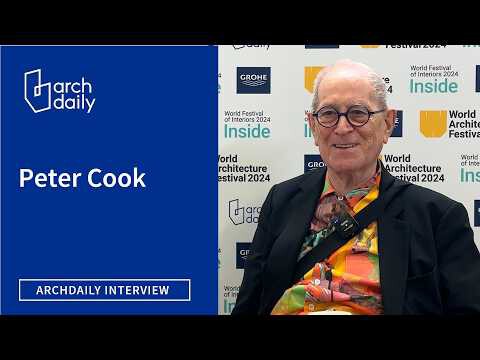
Returning for his second interview with ArchDaily, Sir Peter Cook sat with Editor in Chief, Christele Harrouk, at the World Architecture Festival 2025. While the first conversation focused on his advice for young architects, this one followed his presentation during WAF on the forthcoming book, Archigram Ten, an editorial project reviving the spirit of the original magazine with founding members and contemporary designers. Building on those themes, he reflects on artificial intelligence, the impact of COVID-19 on his own practice, and current architectural pedagogies.
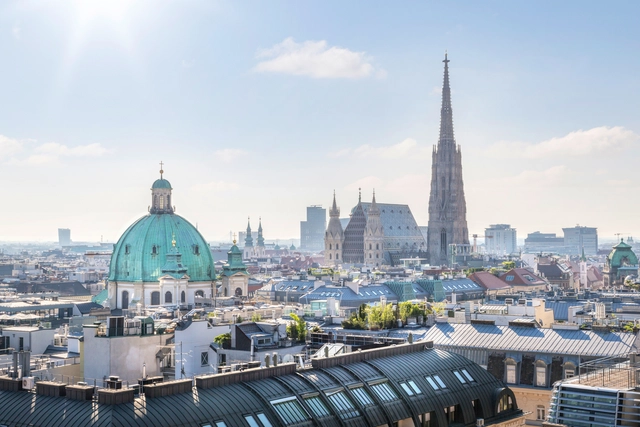
Often referred to as the “City of Music,” Vienna stands as a living testament to architectural evolution across centuries. Bring together an array of styles, ranging from the grandeur of Baroque palaces to the innovative Art Nouveau designs and the Vienna Secession movement, visitors are drawn to the city for its architectural marvels. Vienna's eventful past is reflected in its architectural landscape, which has withstood wars, imperial expansions, and the changes of numerous artistic trends while managing to maintain its unique identity as a symbol of resilience and reinvention.
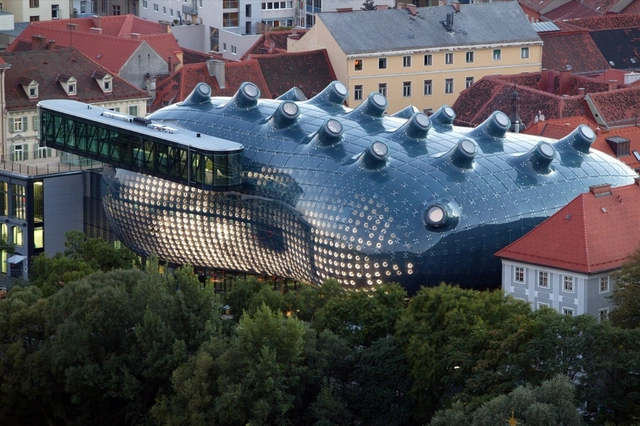
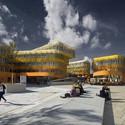
From Adolf Loos, whose radical ideas challenged the trends of his time, to Otto Wagner, a pioneer of Viennese Modernism, Vienna's architectural legacy continued to evolve. Fast-forwarding to contemporary times, Vienna's skyline bears the mark of internationally renowned architects like Zaha Hadid, whose fluid and futuristic designs push the boundaries of architecture. Hadid's work, including the Library and Learning Center at the University of Economics and Business, offers a dynamic contrast to the city's historic landscape. Moreover, firms like CRAB Studio, founded by Sir Peter Cook and Gavin Robotham, bring experimentalism to Vienna's architecture, infusing contemporary concepts into the urban fabric. These architects and firms contribute to Vienna's architectural richness, adding new chapters to its storied history while honoring its innovation and artistic legacy.
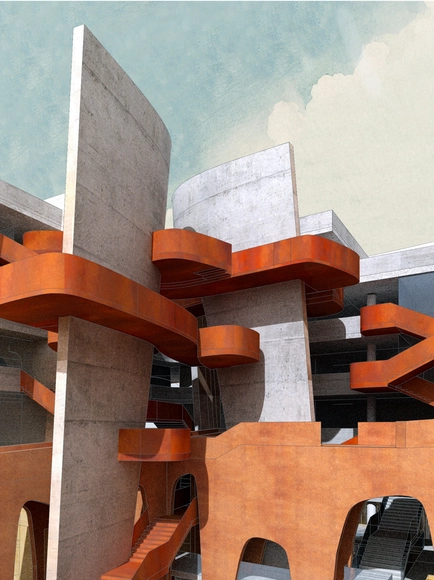
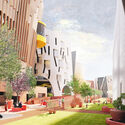
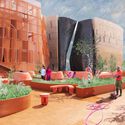
Sir Peter Cook and Gavin Robotham’s CRAB Studio has unveiled the design for a new cultural center to be constructed in New Delhi, India. Located on the site of a former quartzite quarry, the BRIJ offers facilities for the visual, performing, literary, and culinary arts as well as a new arts academy. The scheme, aiming to promote interactions between artists and audiences via an immersive environment, is designed by CRAB Studio, now led by Gavin Robotham, and CP Kukreja Architects (CPKA) as Executive Architect.
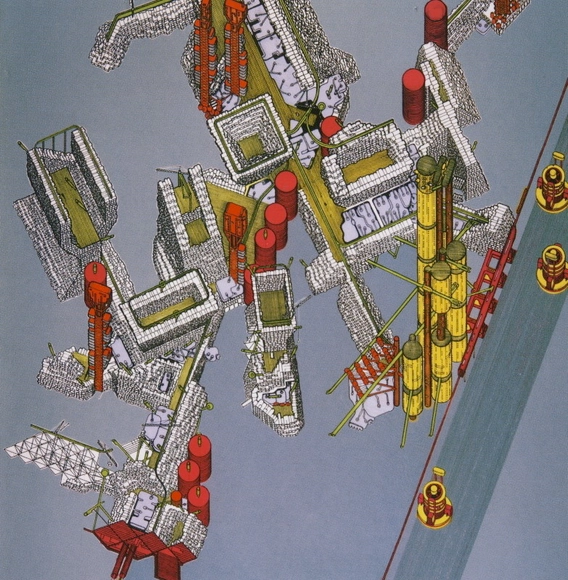
As one of the founding members of Archigram, the avant-garde neo-futurist architecture group of the 1960s, the British architect, professor, and writer Sir Peter Cook (born 22 October 1936) has been a pivotal figure within the global architectural world for over half a century; one of his most significant works from his time with Archigram, The Plug-In City, still invokes debates on technology and society, challenging standards of architectural discourse today.
This week, colorful projects are here to steal the show. Few architects have dared to use color in their works, however, when done so the results can be incredible. Here is a selection of 15 images from prominent photographers such as Gregori Civera, Julien Lanoo and Subliminal Image that show us the huge potential of color.
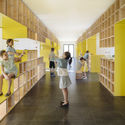
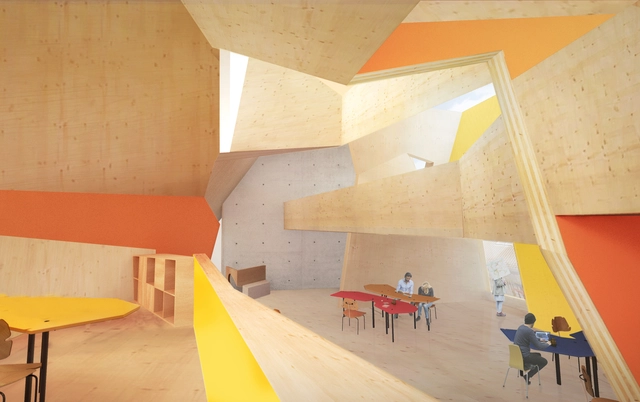
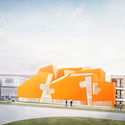
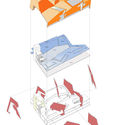
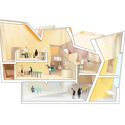
Sir Peter Cook and Gavin Robotham’s CRAB Studio has revealed the design of a new Innovation Studio being constructed at the Arts University Bournemouth in Poole, England.
A conceptual successor to the blue Drawing Studio completed by CRAB on the university campus in 2016, the Innovation Studio will serve a larger program – a space for small start-ups led by recent graduates to develop with support from business experts within the university and from across the globe.
In the sixth episode of GSAPP Conversations, Jarrett Ley (a current GSAPP student) speaks with Sir Peter Cook. They discuss architecture as a tool for shaping radical thought, the relationship of the current political climate in Britain, Europe, and the United States on architectural education and practice, and how the most interesting contemporary architectural projects appear to stem from "unknown architects in smaller countries."
https://www.archdaily.com/870552/peter-cook-concerned-by-contemporary-drawing-culture-gsapp-conversationsAD Editorial Team
The legendary, ever-insightful Sir Peter Cook recently shared some advice for students with Det Kongelige Danske Kunstakademis Skoler for Arkitektur, Design og Konservering (KADK). Recommending ideas such as studying at two or more schools, working in at least two countries, and getting outside and simply watching people, it is clear that the key component to Sir Cook's suggestions for self-improvement as an architect is a diverse and engaged set of personal experiences. ArchDaily has also had a few opportunities to speak with Sir Cook, and just as we see in the video below, his passion and good will always shine.
https://www.archdaily.com/870196/peter-cooks-advice-for-young-architects-get-out-and-lookAD Editorial Team
The Bartlett School of Architecture, UCL, is celebrating the opening of its new building at 22 Gordon Street with an exhibition of work by visionary architect Sir Peter Cook. Running from 23 February to 10 March 2017, the exhibition marks Sir Peter’s 80th year with a celebration of 80 of his inspired and pioneering projects.
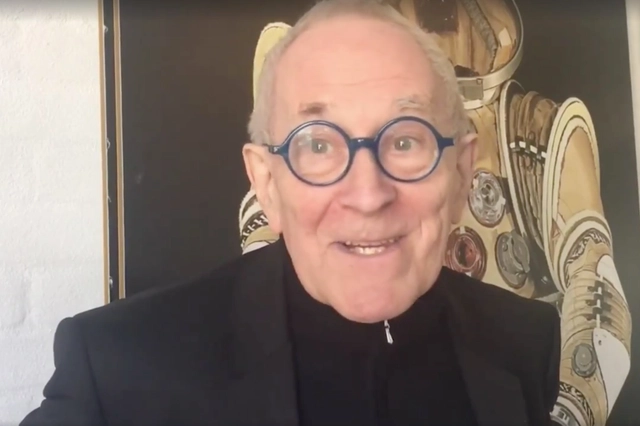
Last week ArchDaily attended the 2016 World Architecture Festival in Berlin. We chatted with Sir Peter Cook and asked him about the current state of global affairs (Brexit, the US election, etc). He explained how his experience and work has influenced a career that has spanned over five decades, and reminds us of the inspiring power of architecture.
Peter Cook: You have to understand that I'm a very particular kind of animal both politically and in my general opinions. I'm what I would call a creative cynic. I'm an old person and I've seen a lot of not very good things happen. On the other hand I was privileged as a child to have free education and free college.
In the following interview, which originally appeared in Zawia#01:Utopia (published December 2013), Sir Peter Cook, one of the brilliant minds behind Archigram, sits down with the editors of Zawia to discuss his thoughts on utopia - including why he felt the work of Archigram wasn’t particularly utopian (or even revolutionary) at all.
ZAWIA: It is perhaps difficult to discuss our next volume's theme - “utopia" - without first starting with archigram and the visions that came out of that period. How do you view the utopian visions of archigram during that specific moment of history in relation to the current realities of our cities and the recent political and social waves of change ?
PETER COOK: Actually... at the time I was probably naive enough to not regard it as Utopian.
Speculating on the potential and possibilities to develop culture in the Gold Coast, professor Sir Peter Cook and Gavin Robotham, directors of CRAB Studio, investigated this idea through the making of a large hanging sculptural piece: The WRAP, and a set of drawings and watercolors. The result is a public art exhibition, ‘Speculator’ in collaboration with Bond University, in Contemporary Temporary Gold Coast Arts Gallery, Surfers Paradise, Australia. The ‘WRAP’ aims to inspire that architecture can be the catalyst for transformation. More images and architects’ description after the break.
Inspired by a reaction to the tsunami, the proposal for the Istanbul Disaster Prevention and Education Center is symbolically and practically rising above the streams. Designed by CRAB, the studio of Sir Peter Cook and Gavin Robotham, the building sits with its blades resting into the ground, ready to divide the streams of water if and when they come. Organized as a series of five clusters, it meanders along the site as a chain of events and somewhat in the manner of a chain of flowers. More images and architects’ description after the break.
Exhibited from April 6 – Mary 13, the Southern California Institute of Architecture (SCI-Arc) is pleased to present “Towards Comfo-Veg,” a large scale, site-specific installation designed for the SCI-Arc Gallery by architect and artist Peter Cook and partner Gavin Robotham of London-based CRAB Studio. Building on CRAB’s internationally recognized experimental work, Towards Comfo-Veg introduces an almost completely light-tight, multimedia experiential space welcoming visitors through a single point of entry and leading towards hints of an invented and dreamlike world. More information after the break.
The Taiwan Conceptual Tower International Competition awarded “The Tower of Droplets” Sir Peter Cook and Gavin Robotham’s London-based Cook Robotham Architecture Bureau (CRAB) won second prize for their entry: “The Tower of Droplets in The Taiwan Conceptual Tower International Competition. Presented here is just one of the 237 entries from 25 countries that were submitted. Crab studio recieved a $65,000 award for their entry for Taichung, Taiwan. The team comprised Jenna Al-Ali, Nuria Blanco, Lorene Faure, and Selma Johannson. Consulting engineer was Michael Kaverne of Buro Happold.