Sand is the most-consumed natural resource in the world after water and air. Modern cities are built out of it. In the construction industry alone, it is estimated that 25 billion tons of sand and gravel are used every year. That may sound a lot, but it’s not a surprising figure when you consider how everything you’re surrounded with is probably made of the stuff.
But it’s running out.
This is a scary fact to think about once you realize that sand is required to make both concrete and asphalt, not to mention every single window on this planet. The United Nations Environment Programme found out that from 2011 to 2013, China alone used more cement than the United States had used in the entire 20th century and in 2012, the world used enough concrete to build a wall around the equator that would be 89 feet high and 89 feet thick (27 by 27 meters).
Artist Christo has released images of his proposed temporary sculpture for Hyde Park, London, to become his first major outdoor public sculpture in the United Kingdom. Titled “The Mastaba (Project for London, Hyde Park, Serpentine Lake)," the sculpture will consist of 7,506 horizontally-stacked barrels floating on the Serpentine Lake throughout the summer of 2018.
“The Mastaba” will coincide with an exhibition of Christo and Jeanne-Claude’s work at the Serpentine Galleries, featuring sculptures, drawings, collages and photographs spanning more than 60 years. Supported by Bloomberg Philanthropies, the exhibition will be the artists’ first in a UK public institution since 1979 and will showcase their long-running exploits with barrel forms, chosen initially for their sculptural effect and low cost.
How can the future design and configuration of cities promote greater sustainability in the conditions of urban life? Dust to Dust: Redesigning Urban Life in Healthy Soils is an urban design ideas competition, supporting the UN Sustainable Development Goals.
We invite ideas for urban designs, planning approaches, and concrete interventions that could be implemented in real-life situations. Successful designs will be exhibited to inform and inspire more sustainable future urban design and development, accounting for a close relationship between urban life and soil ecosystem services.
Dust to Dust will operate as a charrette, held at the Prince’s Foundation, London on 16-18
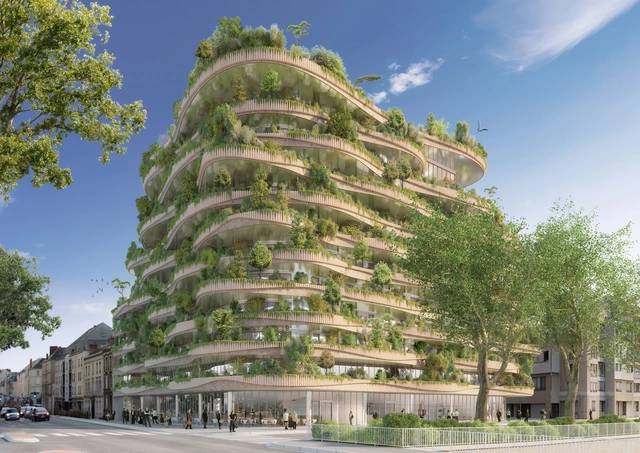
For the "Imagine Angers"international design competition, Vincent Callebaut Architectures worked in collaboration with Bouygues Immobilier group to submit a proposal for the French city at the intersection of social and technological innovation, with a focus on ecology and hospitality. Named Arboricole, meaning “tree” and “cultivation,” this live-work-play environment gives back as much to the environment as it does its users. Although WY-TO prevailed in the competition, the Callebaut scheme succeeded in winning the public vote.
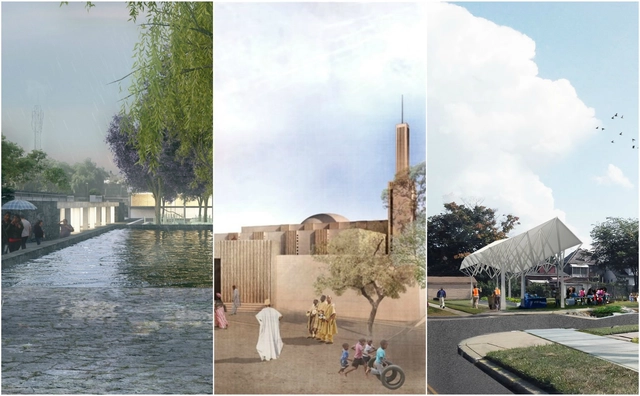
Winning schemes were situated in Mexico, Niger, and the USA. Image Courtesy of Global LafargeHolcim Awards
Results have been announced for the 5th Global LafargeHolcim Awards for Sustainable Construction, with three women-led teams awarded the gold, silver, and bronze positions. The design competition asked participants to speculate on future methods of balancing environmental performance, social responsibility and economic growth, “exemplifying architectural excellence and a high degree of transferability.”
The competition attracted over 5,000 submissions from 131 countries. Having been regionally assessed by juries in Europe, North America, Latin America, the Middle East/Africa and Asia Pacific, 55 successful proposals were entered for the global awards, where six winning schemes were selected.
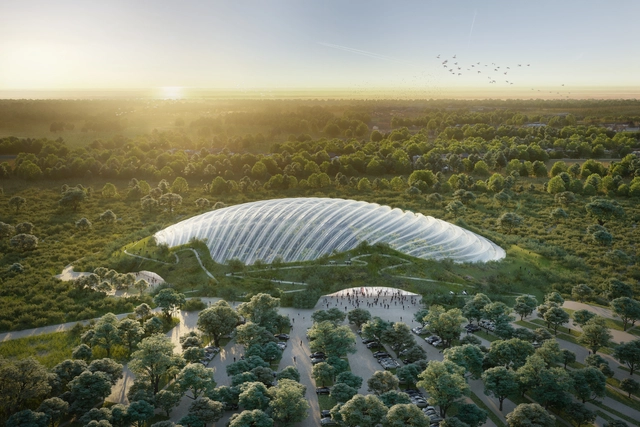
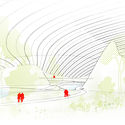
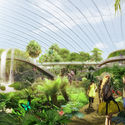
French firm Coldefy & Associates has unveiled images of their design proposal for the world’s largest tropical greenhouse under one roof. Situated in Pas-de-Calais, France, “Tropicalia” will cover an area of 215,000 square feet (20,000 square meters) featuring a tropical forest, turtle beach, a pool for Amazonian fish, and a one-kilometer-long walking trail. The biome aims to offer a “harmonious haven” where visitors are immediately immersed in a seemingly natural environment under a single domed roof.
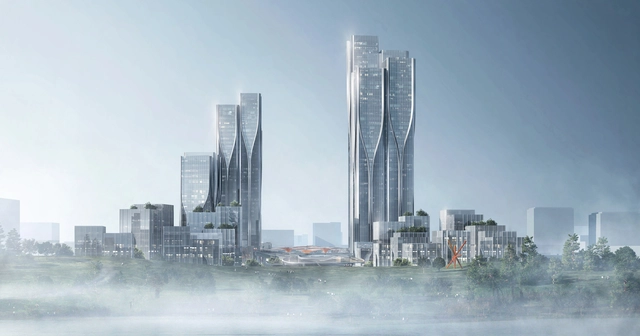
Aedas' latest project is inspired by the tech cloud as a platform to boast connectivity within the mixed-use development and enable maximum productivity between the zones. Vanke Tianfu Cloud City will be within the new development zone in Chengdu, China designated for new hi-tech and sci-tech industries and provide offices, exhibition, residential and retail facilities.
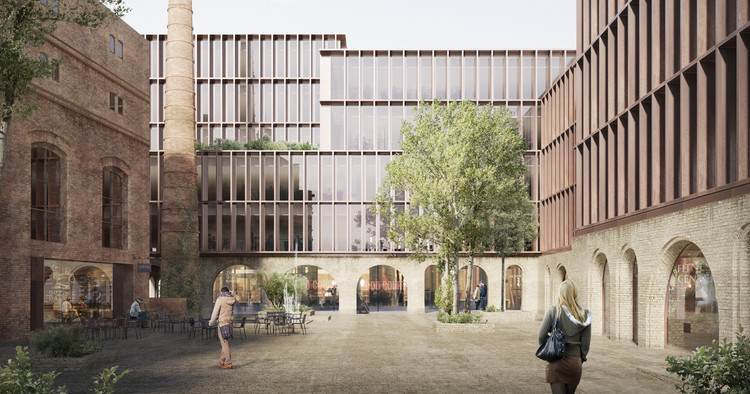
The proposal for the 120,000-square-foot (11,500-square-meter) district manifests as a vibrant, public-orientated program, including a gym, child care center, café, food court, and spa. A series of courtyards and plazas are laced throughout the scheme, connecting old and new in a “timeless, classic appearance that is also uniquely contemporary.” The design took 2nd place in a competition in which no first place winner was selected, as the jury felt that no entry fully met the competition criteria. As the highest-placing entry, the competition organizers have committed to begin negotiations with Schmidt Hammer Lassen to refine the design.
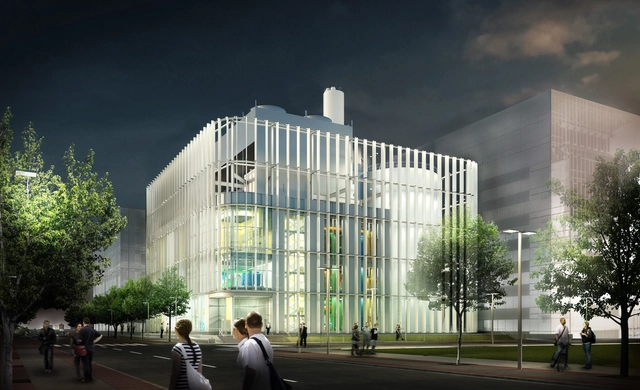
Night view. Image Courtesy of Leers Weinzapfel Associates
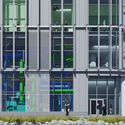
On a prominent, highly visible site within Harvard University’s Allston Campus, a celebration of the beauty of infrastructure is beginning to take shape. Designed by Boston-based Leers Weinzapfel Associates, the 58,000 square foot Allston Campus District Energy Facility (DEF) represents a new, highly efficient infrastructure typology, delivering electricity and water for the campus, whilst simultaneously showcasing the intricate complexity of engineering and design.
https://www.archdaily.com/890489/power-on-campus-harvard-energy-facility-showcases-the-beauty-of-infrastructureNiall Patrick Walsh
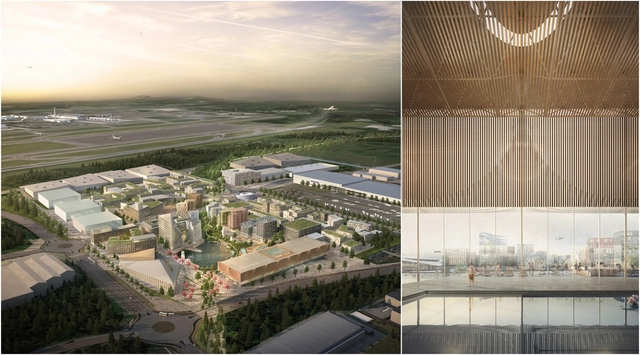
Chicago-based Skidmore, Owings and Merrill (SOM) have won an international competition for the design of an enhanced urban district in Charenton-Bercy, on the eastern edge of Paris. Working with a team of urbanists, landscape designers and community think tanks, SOM have proposed a highly connected urban landscape incorporating a 180-meter energy efficient tower, and contemporary rotunda serving as a virtual reality hub.
https://www.archdaily.com/890669/som-selected-to-design-green-masterplan-for-eastern-parisNiall Patrick Walsh
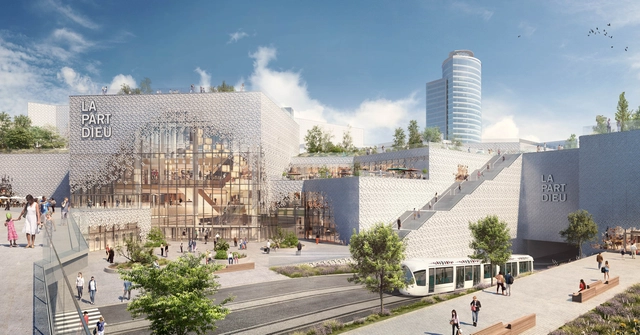
In the 3rd Arrondissement of the French city of Lyon, construction has begun on Lyon Part-Dieu, an MVRDV-designed scheme seeking to transform the city’s main shopping center. Featuring partly-transparent glass and a public green roof, the MVRDV scheme will revitalize and integrate what was formerly an introverted complex built for an era dominated by the car.
At 166,000 square meters, Lyon Part-Dieu is the largest downtown shopping center in Europe, built in 1975. In order to improve the existing outdated complex, MVRDV worked with co-architects SUD to produce a design that offers a contemporary update to the existing façade and a re-organization of the interior program.
https://www.archdaily.com/890665/construction-begins-on-mvrdvs-redesign-for-europes-biggest-urban-shopping-centerNiall Patrick Walsh
In this interview with ArchDaily, the founders of O-office speak about their philosophies regarding refurbishments and the current state of architecture in China.
LEGO is going green. The Danish company has announced that they have begun production on a range of pieces made from a plant-based plastic sourced from sugarcane.
As a nod to their plant-based origins, the first sustainable pieces will take the form of LEGO botanical elements such as leaves, bushes and trees.
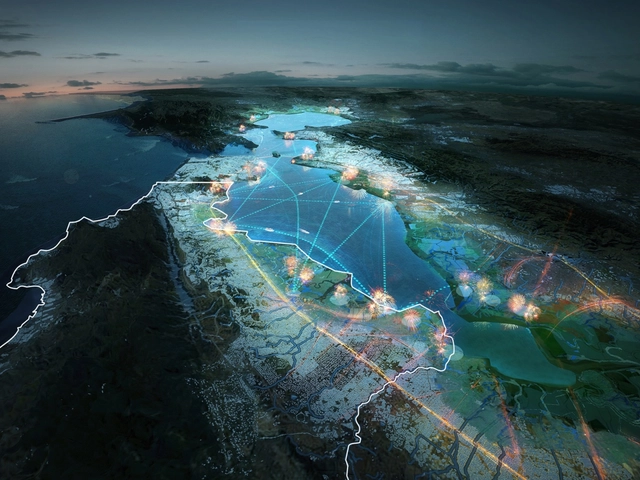
Following recent natural disasters including the Northern California wildfires, the HASSELL + team have been inspired to reimagine the San Francisco Bay Area as a vibrant community hub, equipped to provide temporary facilities in an emergency. As part of the competition Resilient by Design, the ten teams were asked to provide solutions for the waterfront through site-specific conceptual design and collaborative research projects.



_-_The_Mastaba_(Project_for_London__Hyde_Park__Serpentine_Lake)_(1).jpg?1522847854&format=webp&width=640&height=580)
_-_The_Mastaba_(Project_for_London__Hyde_Park__Serpentine_Lake).jpg?1522848242 "Courtesy of Christo")
_-_The_site_of_The_Mastaba_in_Serpentine_Lake.jpg?1522848328 "Courtesy of Christo")
_-_The_Mastaba_(Project_for_London__Hyde_Park__Serpentine_Lake)_(5).jpg?1522848162 "Courtesy of Christo")
_-_The_Mastaba_(Project_for_London__Hyde_Park__Serpentine_Lake)_(4).jpg?1522848063 "Courtesy of Christo")
_-_The_Mastaba_(Project_for_London__Hyde_Park__Serpentine_Lake)_(1).jpg?1522847854)