


-
Architects: Tim Spicer Architects
- Area: 540 m²
- Year: 2018
-
Professionals: Creative Lighting, Neil Williams and Sons, Nexus Designs



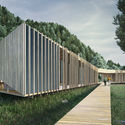
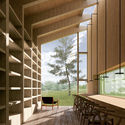
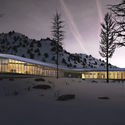
PEACE PAVILION In memory of the innocent victims of war in Africa
“Peace is a dream, it can become a reality… but to build it we must be capable of dreaming.” (Nelson Mandela)
THEME
Intercultural hostility and the exploitation of resources on the African continent have triggered a succession of armed conflicts resulting in millions of innocent lives lost and refugees seeking hope in a better life elsewhere. Communities annihilated. Villages and cities torn to the ground. Nations in chaos.
ArchDaily has become the most consulted architecture website in the world and the volume of our traffic reveals key data about the topics that architects consider relevant. In the past few months, user behavior has shown a growing interest in various concepts related to comfort in architecture.

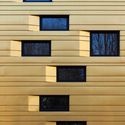
Since its discovery in 8700 B.C., copper has been one of the most used metals in the history of humankind. It has a variety of uses from coins and weapons to statues and even architecture. One of its first architectural uses was in Ancient Egypt for the massive doors of the temple to Amen-Re at Karnak in 300 B.C.
The versatility of the material continues in architecture to this day, allowing for a variety of unique designs and uses. The innovative, efficient, and lightweight material is versatile in its use, ranging from facades to roofs, interior applications, and high tech solutions. Sustainable in its natural form, the material is 100% recycled. As the state of architecture becomes more focused on sustainability, copper becomes the ideal material for the buildings of today.
Below, we’ve selected 7 projects that use architecture's original bling.
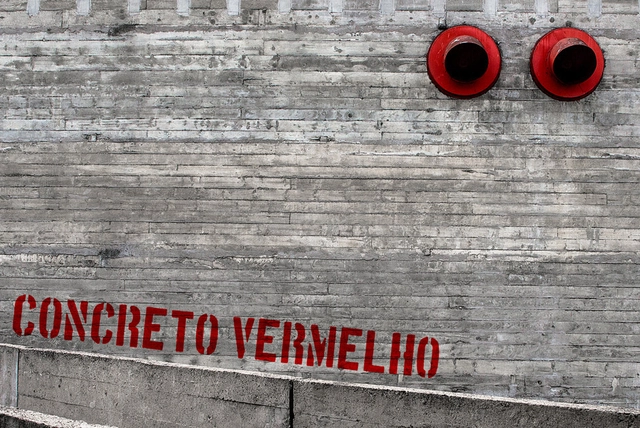
For thousands of years, concrete has been a foundation of the built environment: the most widely used man-made material on the planet. However, as architects, and the public alike, sharpen their focus on the causes and effects of climate change, the environmental damage caused by cement has become a subject of unease.
As exhibited in a recent in-depth article by Lucy Rodgers for BBC News, cement is the source of about 8% of global CO2 emissions. The piece was written off the back of the UN’s COP24 climate change conference in Poland and found that in order to meet the requirements of the 2015 Paris Climate Agreement, annual cement emissions must fall by 16% by 2030.

The California Building Standards Commission has approved a new rule starting in 2020 that requires all new homes built in the state to include solar panels. As the first of its kind in the United States, the new rule includes an incentive for homeowners to add a high-capacity battery to their electrical system. The move hopes to help meet the state's goal of sharply reducing greenhouse gas emissions while drawing all electricity from renewable energy sources.
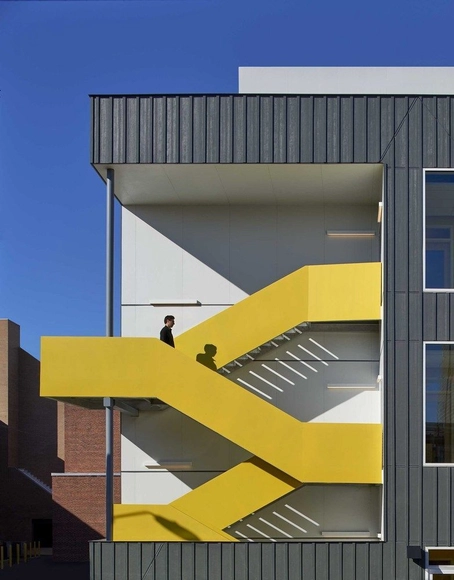
A misconception often surfaces in design circles that architectural beauty and evidence-based environmental performance are mutually exclusive. To address this, the American Institute of Architects (AIA) Committee on the Environment (COTE) is releasing a new tool that can assist architecture firms in designing high-performance energy-efficient buildings.
Despite the federal stance on paramount environmental issues, the AIA upholds and advocates for the responsibility of architects to mitigate against the effects of climate change. Aware that the construction industry consumes nearly 40% of the energy supply nationwide, the AIA COTE® Top Ten Toolkit presents a series of strategies to promote sustainability without compromising the design.
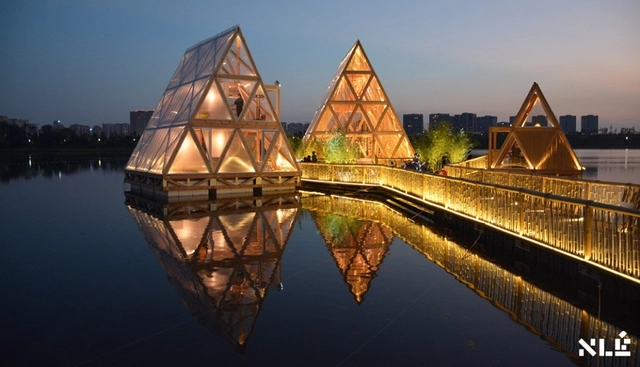
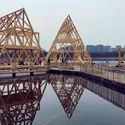
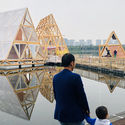
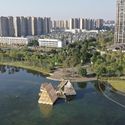
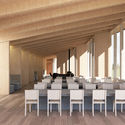
As part of a collaboration between the Centre Pompidou and the Mao Jihong Arts Foundation, the Cosmopolis #1.5: 'Enlarged Intelligence' exhibition features the developments of NLÉ Makoko Floating School. The Minjiang Floating System (MFS IIIx3), the fourth prototype and the third iteration of the prefabricated self-built system for water, investigates methods to counter the challenges posed by urbanization and climate change.
Earlier prototypes of the Makoko Floating School include the Waterfront Atlas (MFS II) launched in Venice, Italy and the Minne Floating School (MFS III) in Bruges, Belgium. The project, initially developed for the water in Lagos, is now usable in all these sites including the Jincheng Lake in Chengdu.
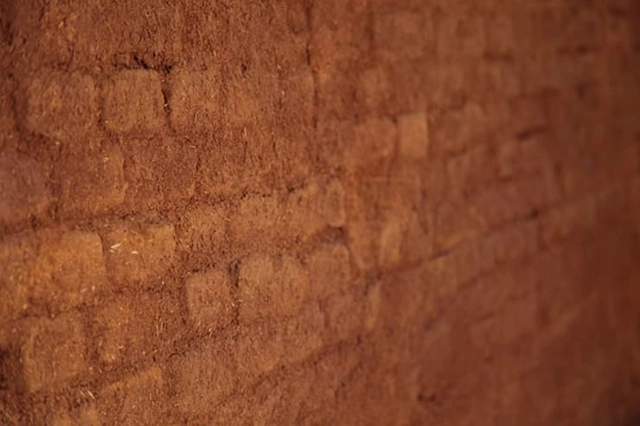
The use of earth plaster is very common in natural buildings; it is the same mixture used in adobe. Though easily made, its use is not widely known. Rafael Loschiavo, from Ecoeficientes, teaches the step-by-step method for bringing a new life to a run-down wall without the need for major renovations.
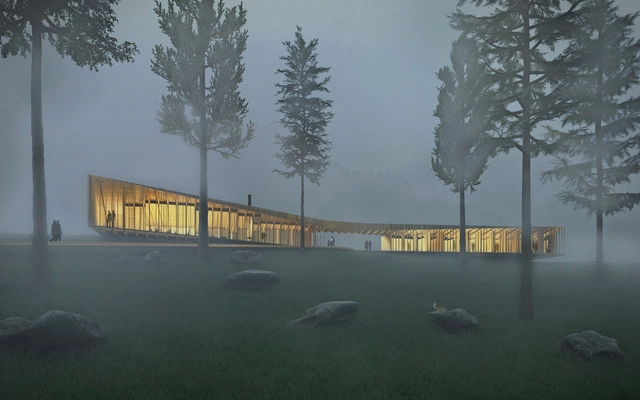
The 'Long Lodge' proposal for residential cabins along the Appalachian Trail, recently named the Honor Award Winner of the 2018 Maine Mass Timber Design Competition, highlights simple yet creative ways to spotlight the possibilities and natural beauty of timber as a construction material. The winning four-person design team created a lodge that not only serves as a temporary living space but rather becomes a memorable spatial experience through the effects of the structural design choices.
.jpg?1541082998&format=webp&width=640&height=580)
Benthem Crouwel Architects has designed a multifunctional building for the University of Amsterdam’s Faculty of Science. The 14,000-square-meter scheme is envisioned as a “lively lab of research, development, and co-creation, in the center of the campus and society.”
The competition-winning “LAB 942” centers on energy neutrality, flexibility, and openness. A modular framework and circular construction made of recycled and recyclable material enable the scheme to operate as a future-proof, adaptable addition to the school’s rapidly-expanding investigations in innovation and artificial intelligence.

With rising sea levels and incessant consumption of plastic, the state of the earth's oceans is rapidly deteriorating. Instead of discarding or burning this plastic, architects Erik Goksøyr and Emily-Claire Goksøyr questioned whether any architectural potential exists in this neglected material. By conducting an extensive material study, the duo designed three prototypes to postulate this theory.
Though starting out as a humble thesis, this project is being actualized under the organization, Out of Ocean. From the shores of the Koster Islands in Sweden, plastic samples were collected and studied for their various material performance in areas such as color, texture, light, and translucency.
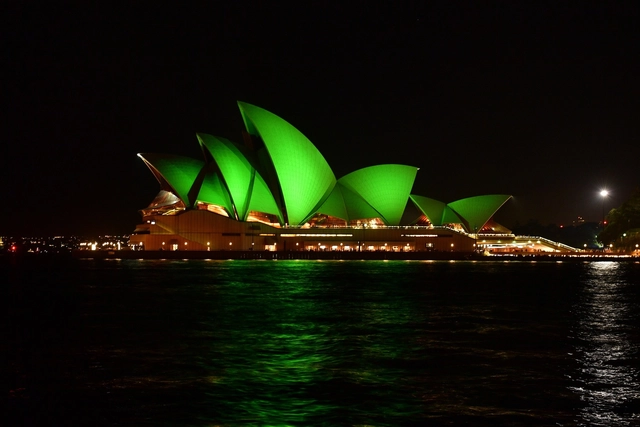
The Sydney Opera House is celebrating a significant environmental milestone, having become carbon neutral five years ahead of schedule. For reducing its carbon dioxide emissions through efficiencies in waste and energy management, the Opera House was awarded certification from the Australian Government’s National Carbon Offset Standard (NCOS).
The sails of the Sydney Opera House were illuminated green on the night of Monday 24th September to celebrate the carbon neutral certification.
_Prudence_Upton.jpg?1537804562 "© Prudence Upton")


_Hamilton_Lund_2017251.jpg?1537804531 "© Hamilton Lund")


OOPEAA, working in collaboration with Lundén Architecture Company, has won a design and build competition for a timber housing development in Kivistö, Vantaa in the Helsinki metropolitan area of Finland. Organized by the City of Vantaa, the competition asked entrants to design a district of wooden housing, part of a commitment “to provide climate-conscious development in housing.”
Titled “Upstairs – Downstairs, Living Together on Three Levels,” the OOPEAA and Lundén scheme will form part of the broader sustainable district, creating a link between natural forest, active streets, and railway infrastructure.
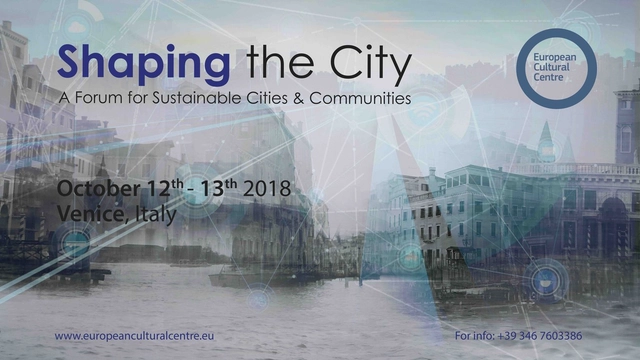
The European Cultural Centre for the Exhibition “Time-Space-Existence” in context of the 16th Venice Architecture Biennale is organizing its first conference under the title of: “ Shaping the City : A Forum for Sustainable Cities and Communities”. It includes all participating architectural schools and universities from across the globe in TSE 2018 along with other international institutions and architecture studios.
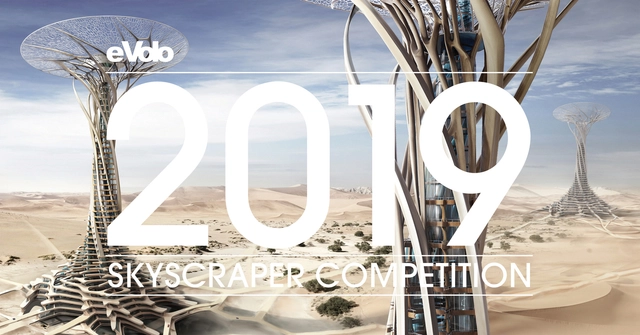
eVolo Magazine is pleased to invite architects, students, engineers, designers, and artists from around the globe to take part in the 2019 Skyscraper Competition. Established in 2006, the annual Skyscraper Competition is one of the world’s most prestigious awards for high-rise architecture. It recognizes outstanding ideas that redefine skyscraper design through the implementation of novel technologies, materials, programs, aesthetics, and spatial organizations along with studies on globalization, flexibility, adaptability, and the digital revolution. It is a forum that examines the relationship between the skyscraper and the natural world, the skyscraper and the community, and the skyscraper and the city.

James Stirling (1926-1992) was a British architect who is considered by many as the premier architect of his generation and an innovator in postwar architecture. Some of his most famous projects include the Sackler Museum, No 1 Poultry, and the Neue Staatsgalerie. Through the influence of his teacher Colin Rowe, Stirling had a deep understanding of architectural history, yet never adopted a singular doctrine. His career began with designs that were more aligned with what would later be labeled as the high-tech style, but evolved into buildings that were a series of dynamic and often colorful arrangements. Stirling’s aesthetic tropes ultimately gave the final push that broke architecture free from the clutch of post-war European Modernism as he turned the Modernist canon of “form follows function” into a hyperbole by celebrating the expression of a building’s program with his over-the-top details. Stirling’s work is still largely influential, and the recursive wave of history has shown that the underlying implications of his oeuvre remains somewhere in all architectural practice of the present day.