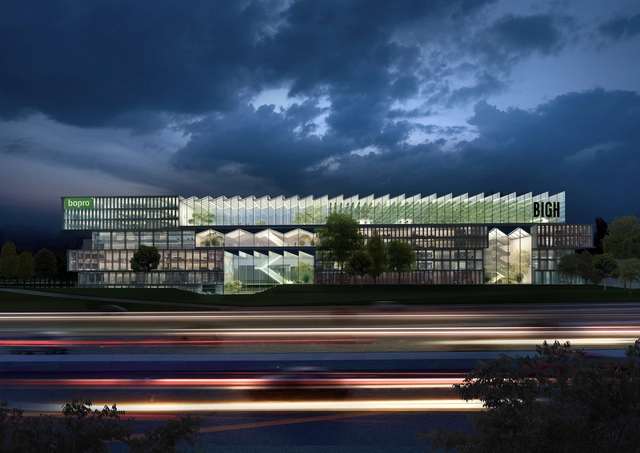
Dutch Firms Team RAU, SeARCH, and karres +brands have been named as one of the winners of the Inventons la Metropole de Grand Paris, the largest European competition for city planning, architecture and public space. Their project, Triango, reinvents Paris’ Triangle de Gonesse into a dynamic and lively business park which promotes sustainability in every sense of the word.
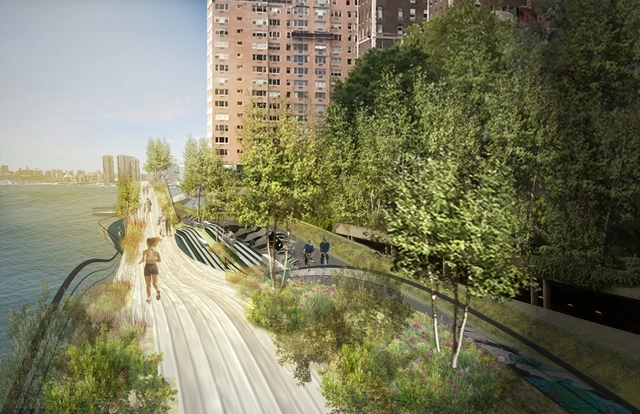
The city of New York is connecting all 32-miles of coastline with public amenities, piece by piece. To link the East River’s greenways, the interdisciplinary practice, wHY has submitted an RFP to the New York City Economic Development Corporation for the 1.1-mile long coastal stretch.
The landscape and urban design workshop as part of wHY -- wHY GROUNDS, has tackled the linear site, stretching from 53rd to 61st street, encompassing 1.72-acres of public space. The site is exceptional with its views to Roosevelt Island, the Queensborough Bridge, the Queens/Brooklyn waterfront and down to Lower Manhattan.
The Kingdom of Saudi Arabia has announced ambitious plans to build a $500 billion technological megacity “the size of a country” that will be run entirely of renewable energy sources. Known as NEOM, the innovation hub will cover a 10,232-square-mile (26,500-square-kilometer) area in the northwest of the country along the Red Sea and Gulf of Aqaba. The city is planned to extend into neighboring Egypt and Jordan, making it the first private zone to span three countries.
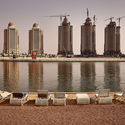
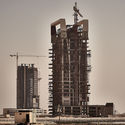
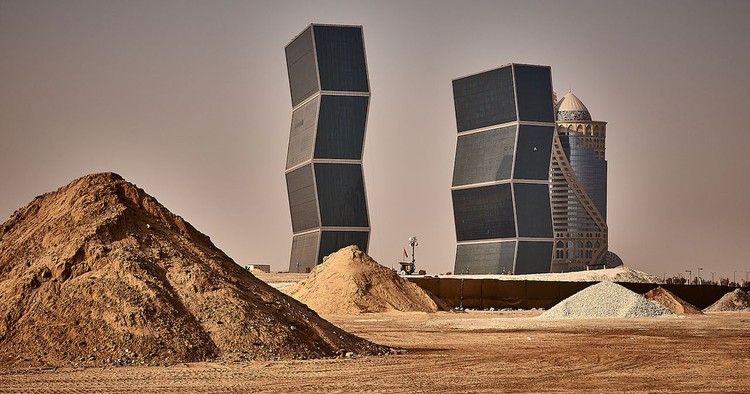
The history of the Qatar Peninsula—or Catara, as first labeled on an ancient map drawn by the Greco-Roman polymath Claudius Ptolemaeus—dates back to the Paleolithic Age. By the 1930s, the tiny Gulf state was struggling to maintain its position as the center of the pearl trade, but soon after, in the 1940s, it found itself at the forefront of economic growth and progress after the discovery of its vast oil reserves. Today, Qatar is the world’s richest country per capita; its capital Doha an ever-growing crop of shiny high-rises, with occasional buildings by the world's most sought-after architects thrown in for effect, its skyline flecked with tireless cranes, and its suburbs strewn with bulldozers, machinery, and endless mounds of displaced sand.
Seen in these photographs by Manuel Alvarez Diestro is a record of the country's impatient race towards an extravagant desert dream—but perhaps it can also be read as a subtle nod towards Qatar’s sheer determination to forge ahead, despite being steeped in controversies and crises during recent years.
Videos
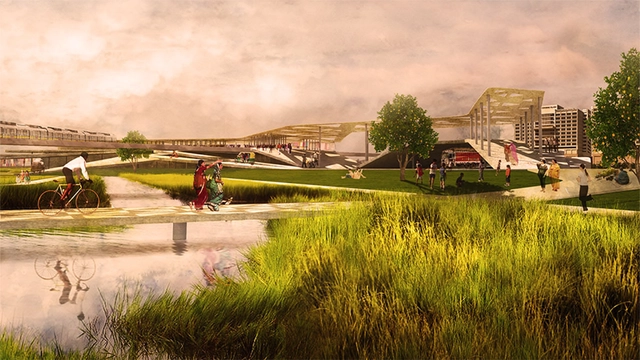
Shahadra Park proposes to bring life back to part of the Yamuna River. Situated in-between dense urban fabric, this highly vegetated, expansive mandi creates a new ground over the drains. Courtesy of UVA School of Architecture / Brittany Duguay
The University of Virginia’s School of Architecture Dean Ila Berman recently announced her intention to launch the NEXT CITIES INSTITUTE, an interdisciplinary design and research platform focused on the rapidly changing dynamics of global urban futures. With an aim to forecast and shape the vital urbanism of this century, the NEXT CITIES INSTITUTE will be a university-wide initiative, led by the School of Architecture and coalescing expertise throughout the University of Virginia, with partners in its Schools of Law, Leadership and Public Policy, Engineering, and Arts and Sciences. Dean Berman spoke about the NEXT CITIES INSTITUTE, its mission, and how it will transform the way students of architecture and its related fields will approach the design of future cities.
The International Journal of Environmental Science & Sustainable Development (ESSD) is calling for papers for its third issue titled Environmental Sustainability: Methods for Green Energy Management.
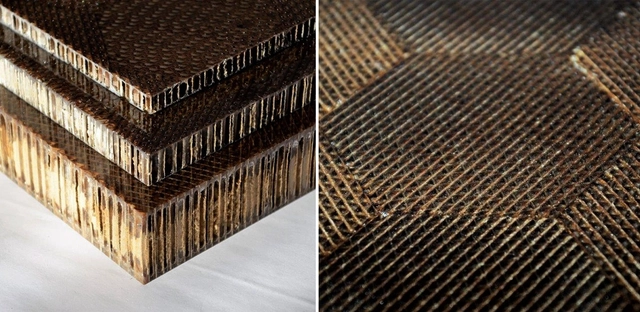
Contemporary designers are recycling waste materials into useable and well-crafted objects, and it’s easy to get the impression that this burgeoning realm of fabrication is destined only for the craft fair. A quick survey of Blaine Brownell’s new guide Transmaterial Next: A Catalog of Materials That Redefine Our Future turns up a half-dozen Etsy-ready art and furniture curios. There’s jewelry made from coffee grounds, bowls made from plastic bags, and a chair made from artichoke thistle fibers (the “Artichair”).
But these items don’t demonstrate the necessary capacity for heavy lifting and mass-market applicability for an age of climate change and dwindling resources. To grasp the kind of architectural upcycling that can divert trash from landfills and carbon from the atmosphere on a mass scale, it pays to step out of the design gallery and into the laboratory, where architects are inventing a new breed of modular building materials.
Videos
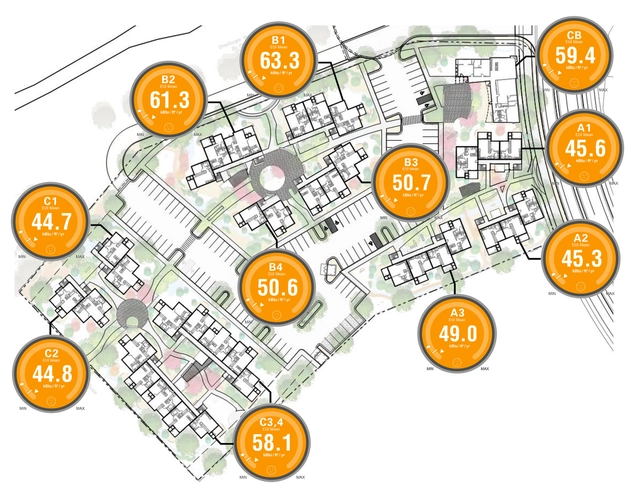
Site-wide pEUI Analysis using Autodesk Insight: helps identify outliers that could possibly impact the site’s energy consumption the greatest.. Image Courtesy of Dekker/Perich/Sabatini
Dekker/Perich/Sabatini (D/P/S) has made a strategic business decision, one that architecture firms are starting to adopt as a means to help them achieve their own sustainability goals and drive more business. With the implementation of a Building Performance Analysis (BPA) team and equipped with time-saving design tools, D/P/S has been leveraging building information modeling (BIM) for energy analysis. Since joining the AIA 2030 Commitment last year, the firm has already analyzed and reported nearly 1 million square feet in new construction projects.
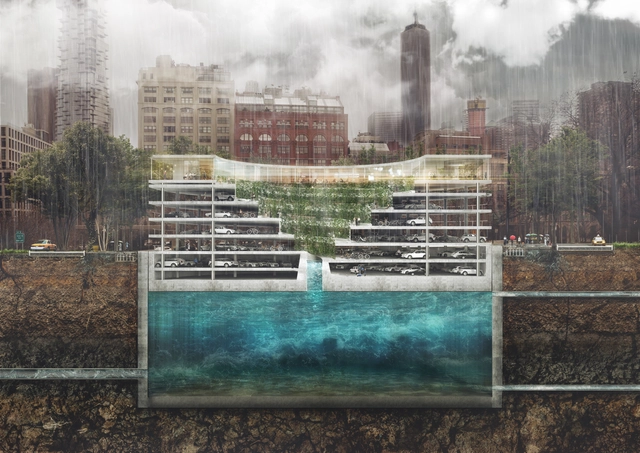
As Earth’s population continues to grow, so does car traffic and issues related to climate change. It has been estimated about 30% of urban roadway congestion are drivers searching for a place to park. Car culture puts the pressure on cities to build more parking garages, which usually win out over green parks. Meanwhile, climate change continues to challenge cities to handle a great deal of stormwater. The 2017 Atlantic hurricane season is proof of this - as of Monday, 13 named storms have formed in the Atlantic ocean, costing 210 lives and counting.
THIRD NATURE, a Danish architecture firm, designed a solution for the modern-day urban issues of flooding, parking and lacking green spaces with their project, POP-UP. A stacked green space, car park, and water reservoir, from top to bottom respectively, POP-UP uses Archimedes’ principle to store water and create floating space to store cars.
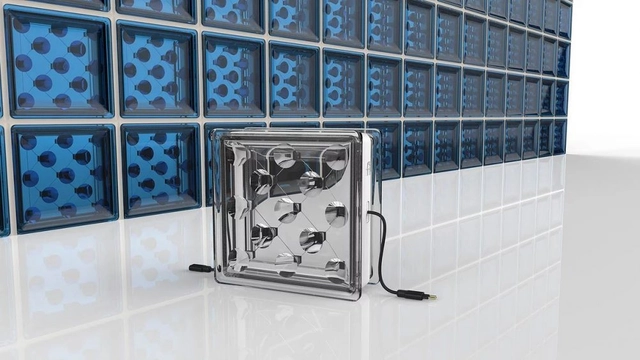
Renewable energy experts from the University of Exeter in England have developed a glass block with built-in solar cells. The idea is that with the spread of technology, it is possible to build a house or a whole building's facade using blocks that generate energy.
The product has been named Solar Squared, tests done at the university have shown that they guarantee thermal insulation and allow natural light to enter the building.
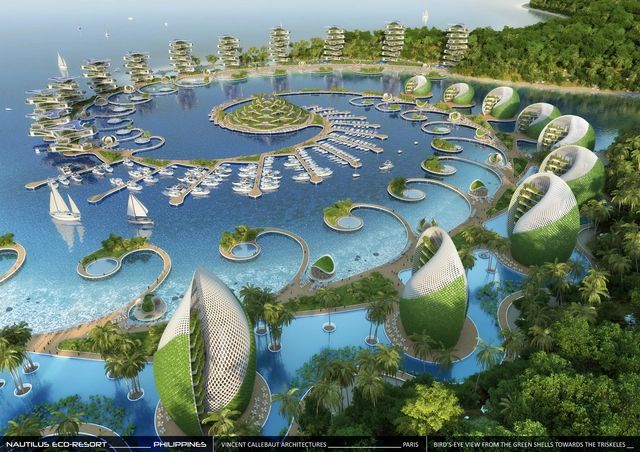
Vincent Callebaut Architectures has released a design proposal for a new eco-tourism resort in The Philippines inspired by natural coastline forms. Making extensive use of cradle-to-cradle and other sustainable design principles, the resort features a series of spiraling apartment buildings and shell-shaped hotel buildings, themselves positioned on two Fibonacci spirals of land in a coastal lagoon. At the center of the ensemble, a mountain-like complex combines a school, recreational swimming pools, sports halls, the resort's kitchens, and a suite of laboratories for environmental scientists.
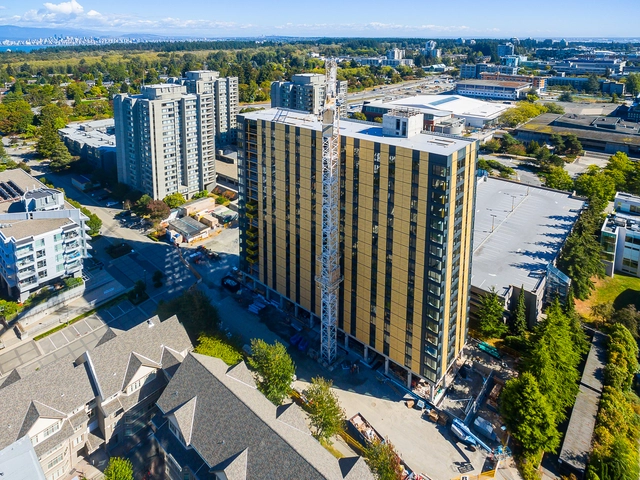
“Plyscraper,” “woodscraper,” call it what you will, but the timber age is upon us. Brock Commons Tallwood House, the recently completed student residence building at the University of British Columbia (UBC) in Vancouver, now occupies a prominent position within architecture: the tallest building with a timber structure in the world.
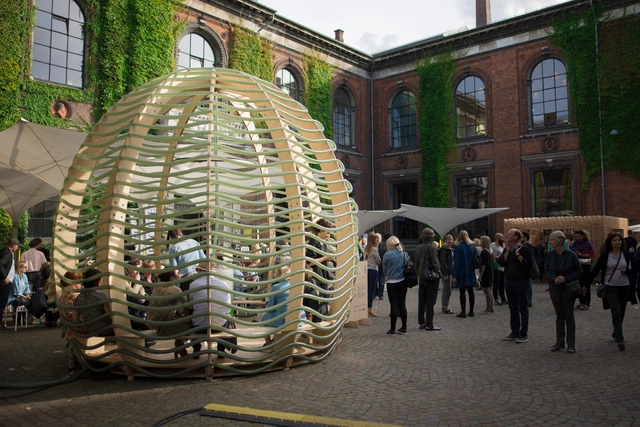
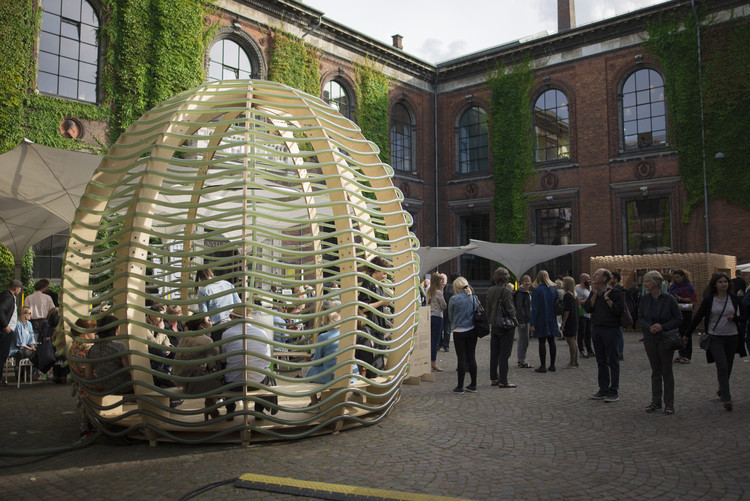
SPACE10's latest project displayed last week at Copenhagen's CHART art fair hosts the secret to combating malnutrition, greenhouse gases and ending deforestation - a pretty steep demand for a structure only four meters tall. The hero of this story is a microalgae that runs through the three hundred and twenty meters of tubing entwined around the pavilion.
IKEA's future living lab worked with bioengineer, Keenan Pinto and three architects, Aleksander Wadas, Rafal Wroblewski and Anna Stempniewicz to build a photobioreactor that facilitates the high production of microalgae that can be grown almost anywhere on the planet. During the three days of the fair, 450 liters of algae was grown as visitors got to experience the full extent of the neon green process.
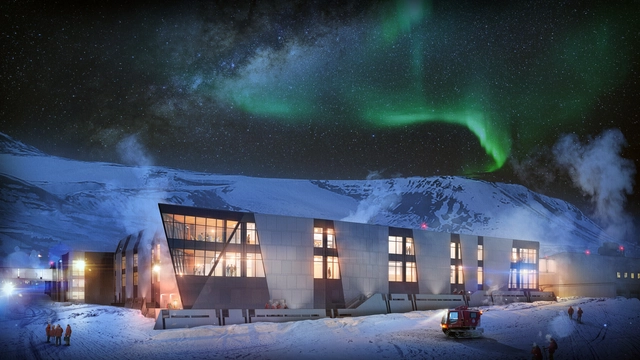
McMurdo Station, the American Antarctic base, was never meant to be a permanent settlement when it was built in 1956, yet today it is home to 250 people full-time in addition to approximately 1,000 summer workers each year. Consisting now of over 100 buildings spread across 164 acres, the settlement acts as a logistical base for field science but is dysfunctional for the scientists and researchers who live and work there and inefficient in terms of meeting the demands of Antarctica’s harsh climate. OZ Architecture has recently unveiled a new master plan for McMurdo that aims to turn the station into a model of American leadership in science, engineering, sustainability, and architecture, condensing the current sprawl into a 300,000 square foot campus composed of 6 buildings.
Architects play a crucial role in addressing both the causes and effects of climate change through the design of the built environment. Innovative design thinking is key to producing architecture that meets human needs for both function and delight, adapts to climate change projections, continues to support the health and well being of inhabitants despite natural and human-caused disasters, and minimizes contributions to further climate change through greenhouse gas emissions. Preparing today’s architecture students to envision and create a climate adaptive, resilient, and carbon-neutral future must be an essential component and driving force for design discourse.
This year’s collaboration with Architecture 2030 – INNOVATION 2030 – is a design-and-ideas competition focused on addressing and designing for the future impacts of climate change.
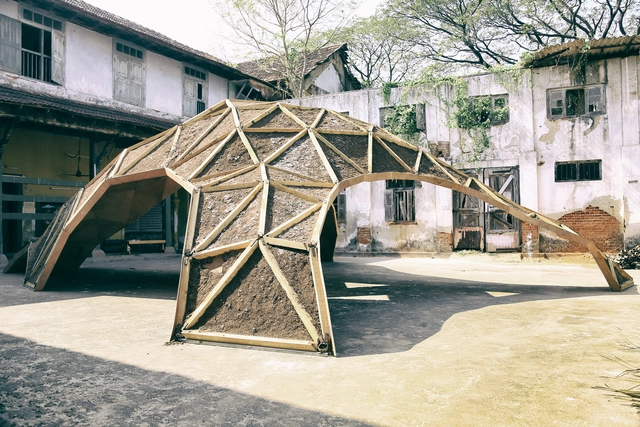
Are the concrete buildings we build actually a sign of architectural progress? Defunct housing projects abandoned shopping malls, and short-sighted urban projects are more often than not doomed to a lifetime of emptiness after they have served their purpose. Their concrete remains and transforms into a lingering reminder of what was once a symbol of modern ambition. Stadiums and their legacies, in particular, come under high scrutiny of how their giant structures get used after the games are over, with few Olympic stadiums making successful transitions into everyday life. With a new approach to sustainability, the Shell Mycelium pavilion is part of a manifesto towards a more critical take on building. Say the designers on their position: “We criticize these unconscious political choices, with living buildings, that arise from nature and return to nature, as though they never existed.”
The Shell Mycelium Pavillion is a collaboration between BEETLES 3.3 and Yassin Areddia Designs and offers an alternative to conscious design through temporary structures. Located at the MAP Project space at the Dutch Warehouse, the pavillion formed part of the Kochi Muziris Biennale 2016 Collateral in India.
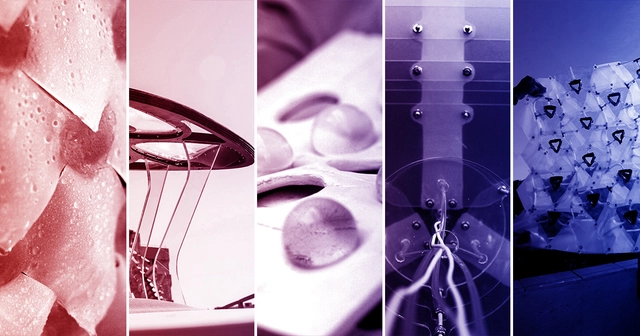
The IAAC (Institute for Advanced Architecture of Catalonia) has developed a series of advanced materials and systems for air conditioning and passive ventilation, allowing homes to reduce interior temperatures up to 5 degrees lower while saving the electricity consumption caused by the traditional air-conditioning. The systems are made from long-lifespan materials, which lower the costs of maintenance in the long-term and can be used as low-cost alternative building technologies.
The projects highlighted are the Breathing Skin, Hydroceramics, Hydromembrane, Morphluid and Soft Robotics - all developed by students of the IAAC's Digital Matter Intelligent Constructions (conducted by Areti Markopoulou). The passive air-conditioning of spaces is investigated using a combination of new materials that mimic organic processes, adaptive structures and Robotics that help regulate temperature and create sustainable micro climates.
The Australasian Student Architecture Congress (ASAC)—titled Agency 2017—will be held in Sydney from the 28th of November to the 2nd of December. It will be the first congress held in Sydney since 1999 and student-led by ASAC Inc., a non-profit student body based in NSW, Australia.






















.jpg?1503515565&format=webp&width=640&height=580)