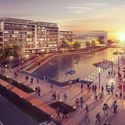
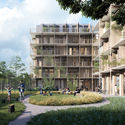
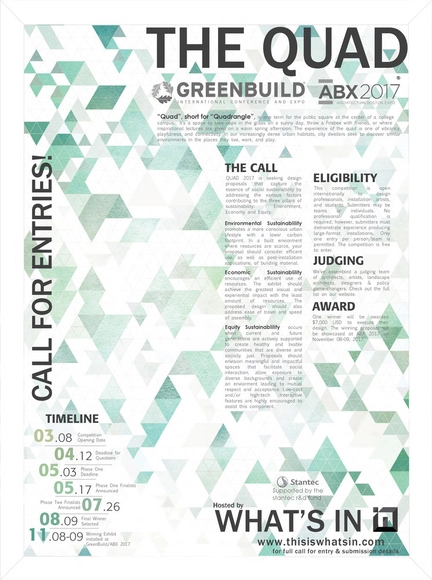
Imagine that London becomes the world’s first National Park City. This large-scale and long-term vision has the potential to transform how Londoners live and how the city works. But what would London look like?


Imagine that London becomes the world’s first National Park City. This large-scale and long-term vision has the potential to transform how Londoners live and how the city works. But what would London look like?
Omar Gandhi (Canada) from Omar Gandhi Architect is recognized as one of the world’s top 20 young architects by Wallpaper* Magazine and as one of 2016’s ‘Emerging Voices’ by The Architectural League of New York will be one of four keynote presentations by critically acclaimed architects that will be live-streamed from the international forum for daylight and architecture, the VELUX Daylight Symposium, to be held for the 7th time, 3-4 May 2017.

Future cities have captured our imaginations for centuries. From Thomas F. Anderson’s 1900 vision for a Future Boston, through Le Corbusier’s 1924 Ville Radieuse, to modern ‘future-proof’ cities such as Songdo, South Korea, architects and town planners have considered how cities will respond to the movement of people, capital, technology, and ideas.
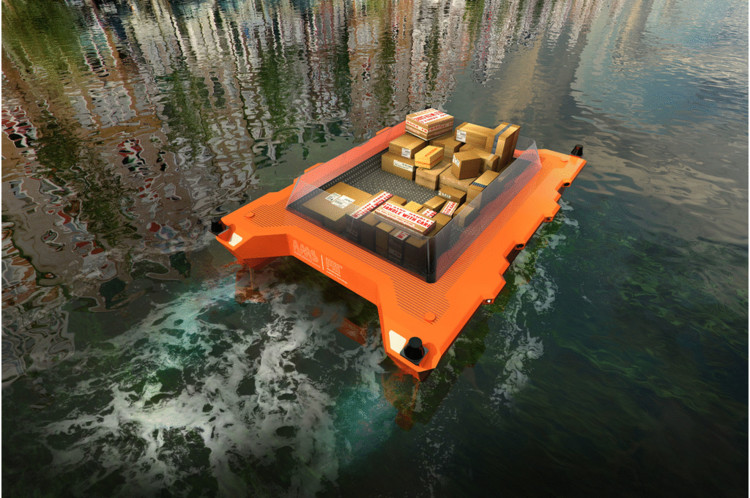
Today, groups such as the Senseable City Laboratory at MIT have been created with the goal of suggesting ideas for the city of tomorrow. Through a technique known as ‘Futurecraft’, the Senseable City Lab places the designer in a possible future environment and asks them to generate design proposals which could enhance daily life. As we are about to see, some of their ideas would make heads turn even in a galaxy far far away.
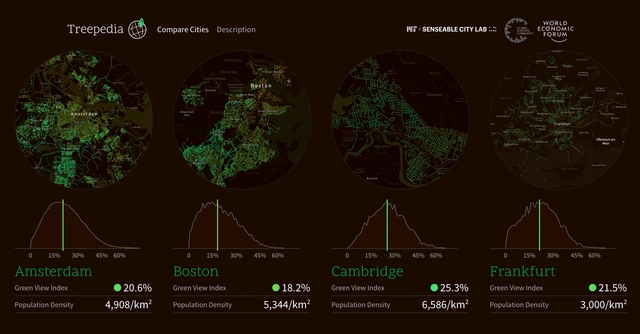
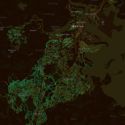
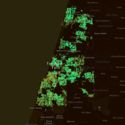
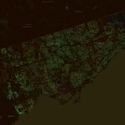
Researchers at the MIT Senseable City Lab have launched a new platform using Google Street View data to measure and compare the green canopies of major cities across the world. Treepedia, created in collaboration with the World Economic Forum, is an interactive website which allows users to view the location and size of their city’s trees, submit information to help tag them, and advocate for more trees in their area. In the development of Treepedia, the Senseable City Lab recognizes the role of green canopies in urban life, and asks how citizens can be more integral to the process of greening their neighborhoods.
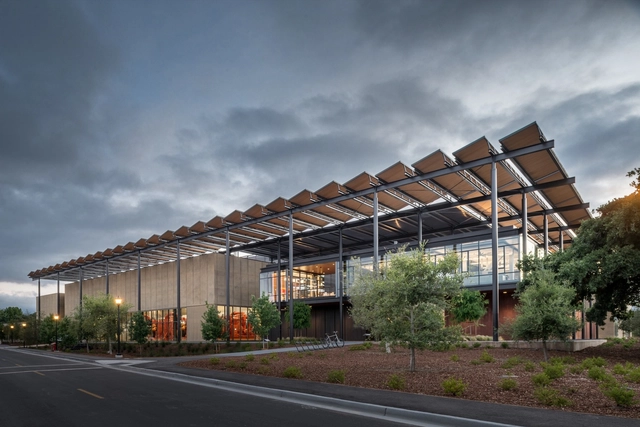
The American Institute of Architects (AIA) and its Committee on the Environment (COTE) have named the recipients of the 2017 Top Ten Awards, celebrating buildings that best exemplify the integration of great design, great performance and sustainable design excellence.
Now in its 21st year, the COTE Top Ten Awards program was established to honor projects that protect and enhance the environment through an integrated approach to architecture, natural systems, and technology.
_Atchain_(2).jpg?1491918884&format=webp&width=640&height=580)
Chicago-based Skidmore Owings & Merrill (SOM) has unveiled plans for One Bangkok, a new 16Ha mixed-use development in the heart of Bangkok, Thailand. Working in collaboration with architects, engineers, sustainability experts and landscape architects, both local and international, SOM seeks to create the single largest private-sector development in Thailand to date - a vertical village providing homes and places of work for an estimated 60,000 people. Through One Bangkok, SOM challenged themselves to translate the vibrancy and energy of Bangkok's neighborhoods into a vertical environment, whilst promoting a 'sense of place' and district-level sustainability.
_Atchain_(2).jpg?1491918884 "One Bangkok will provide retail, hotels, offices, as well as homes for 60,000 people. Image Courtesy of SOM via Atchain")
_Atchain_(3).jpg?1491918690 "Situated adjacent to Lumphini Park, the scheme offers 8Ha of public space. Image Courtesy of SOM via Atchain")
_Atchain_(4).jpg?1491918823 "Streetscapes, public plazas and greenspaces all contribute to a welcoming sense of place. Image Courtesy of SOM via Atchain")
_Atchain_(1).jpg?1491918919 "A variety of towers will feature individual identities such as green terraces and sky gardens. Image Courtesy of SOM via Atchain")
_Atchain_(2).jpg?1491918884)
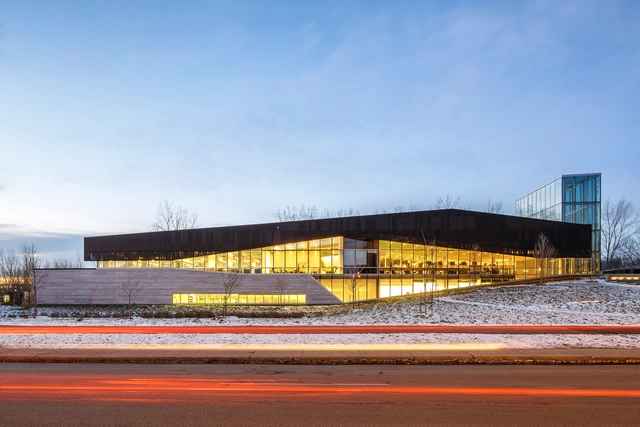
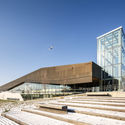
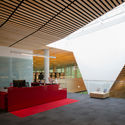
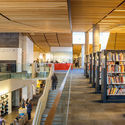
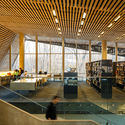
The Royal Architectural Institute of Canada (RAIC) and the Canada Green Building Council (CaGBC) have awarded Montreal’s Bibliothèque du Boisé with the annual Green Building Award for 2017. Designed by the trio of Consortium Labonté Marcil, Cardinal Hardy and Eric Pelletier architectes, the library is situated in the city’s Saint-Laurent district, and received the distinction as an example of “buildings that are environmentally responsible and promote the health and wellbeing of users.”
"The library offers a variety of beautifully lit and welcoming spaces throughout, maximizing daylight and views and the use of natural elements, such as wood, to create an environment that contributes to health and wellbeing,” said the jury. “Their approach to high-performance building through whole systems design and strategy has resulted in an impressive achievement.”
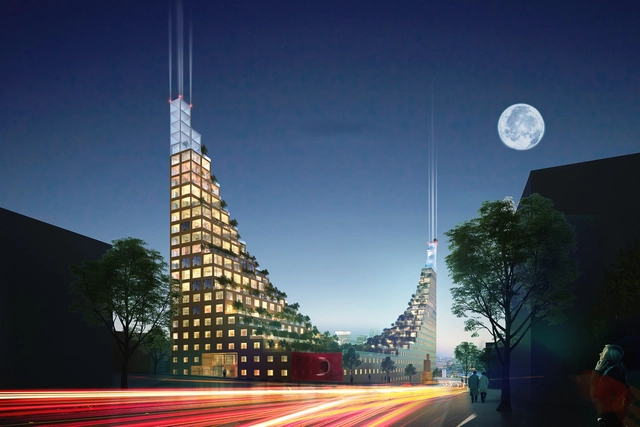
A new housing complex in the form of 500 terraced units has been proposed by London practice Architects of Invention for the city of Birmingham, in response to its growing multicultural population. Drawing inspiration from the ancient Hanging Gardens of Babylon, Garden Hill’s formal composition is that of two staggered 25-storey towers, with private and communal gardens on each level of terraces.
With the project's swooping mass, the residences aim to offer panoramic views of Birmingham, given its central location in the Digbeth area, a 10-minute walk from the city center. Additionally, the staggered towers capture ample daylighting over the course of the day, with the south end benefitting from the morning sun and the north end in the evening.
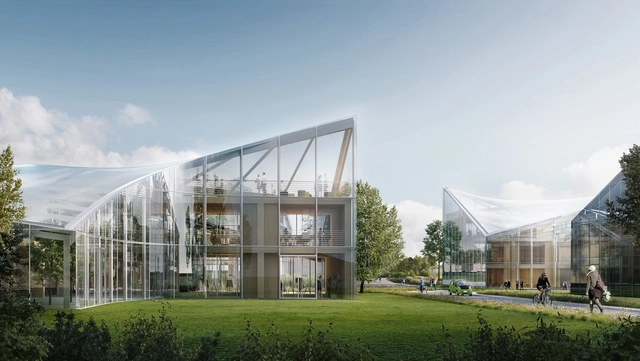
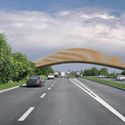
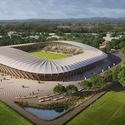
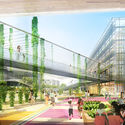
British green energy company Ecotricity has revealed plans for a new Zaha Hadid Architects-designed green technology hub in Stroud, England. The project, known as the “Gateway to Stroud,” will consist of several greenhouse-like buildings and a wooden footbridge that will connect the campus to the future all-wood stadium for the Forest Green Rovers football club, also designed by ZHA and revealed late last year.
Planned as a center for local sports and sports science, the ECO park will provide state-of-the-art office space for environmentally-focused companies as well as public access to a wide range of health and leisure activities.
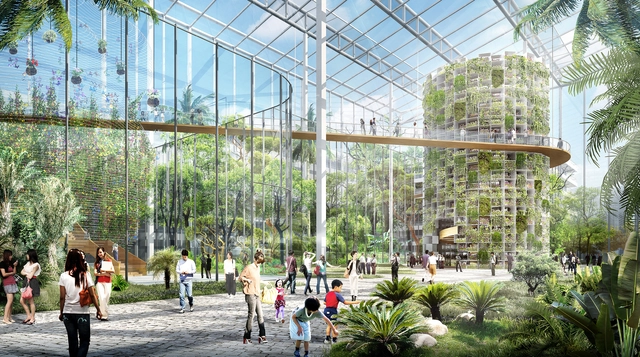
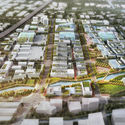
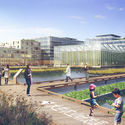
With nearly 24 million inhabitants to feed and a decline in the availability and quality of agricultural land, the Chinese megacity of Shanghai is set to realize the Sunqiao Urban Agricultural District, a 100-hectare masterplan designed by US-based firm Sasaki Associates. Situated between Shanghai’s main international airport and the city center, Sunqiao will introduce large-scale vertical farming to the city of soaring skyscrapers. While primarily responding to the growing agricultural demand in the region, Sasaki’s vision goes further, using urban farming as a dynamic living laboratory for innovation, interaction, and education.
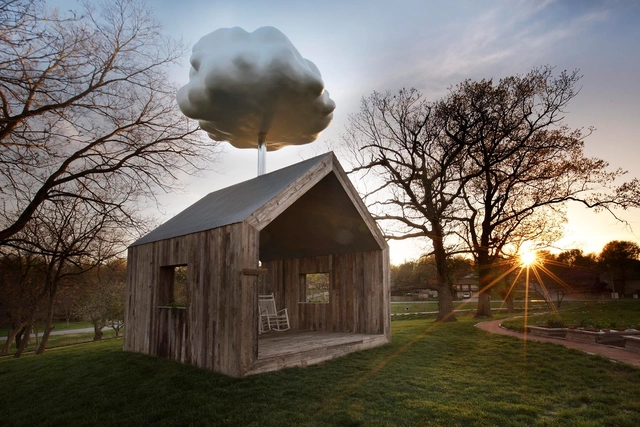
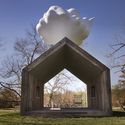
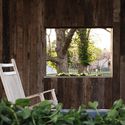
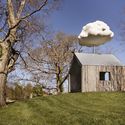
Few sounds in this world are quite as satisfying as that of fresh rainwater falling on a tin roof. However, this soothing sensation is just one element of the Cloud House, a unique, interactive rainwater-harvesting system created by designer Matthew Mazzotta in Springfield, Missouri. From the comfort of a wooden rocking chair, the user is immersed in a rural farm experience, offering passers-by a moment to slow down, enjoy fresh edible plants and, as promised, bask in the sound of rain striking a tin roof.
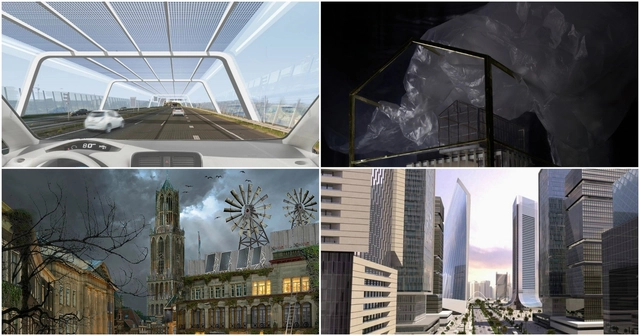
Utrecht University’s Urban Futures Studio have announced the 10 finalists for their Post-Fossil City Contest, judged by a jury which included MVRDV co-founder Winy Maas. Each of the successful submissions responded to the contest’s call for the design of a sustainable city no longer reliant on non-renewable energy sources. Designers and makers were invited to envision this new future, which “will reshape our cities and everyday lives so radically that it is hard to imagine what it might feel, taste, smell, and look like.”
Out of the 250 total entries, below are the 10 selected finalists along with a snippet of their proposed futures as described by the competition website.
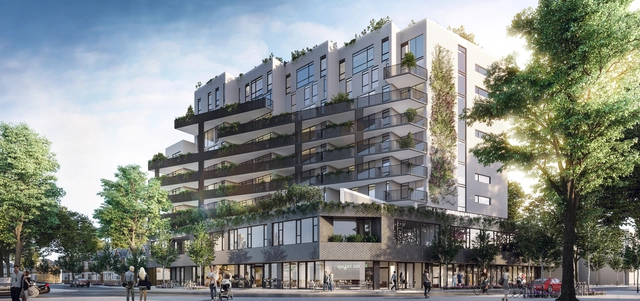
With the ever-expanding global population, cities around the world today are caught in the midst of mass urbanization; the resultant problems are the topic of much of the current architectural discourse. From these trends stems the challenges of providing adequate amounts of both housing and urban green space, and by extension, providing adequate food production. In order to address this divide, Toronto will soon be home to The Plant – a mixed-use community revolving around sustainable residential urban farming and social responsibility in the Queen Street West neighborhood.
“It might seem extreme, but we orientated this entire project around our connection to food,” says Curated Properties partner Gary Eisen, one of the developers involved in the project. “It’s our guiding principle and the result is a building that lives and breathes and offers a better quality of life to the people who will live and work here. The Plant is a community that fits with the foodie culture that has come to define Queen West.”

Tesla CEO Elon Musk has announced via Twitter that his company’s fully-integrated solar roof system is nearly ready to be released to the public, and will begin taking orders on the shingles starting next month.
The solar roof project was announced this past October after acquiring energy services provider SolarCity for $2.1 billion. Offered in four different styles – smooth glass, textured glass, French slate and Tuscan glass – the shingles would allow homeowners to make the switch to solar without having to change their aesthetic tastes. Though exact costs have yet to be released, Musk believes the system could be more affordable than a traditional roof.
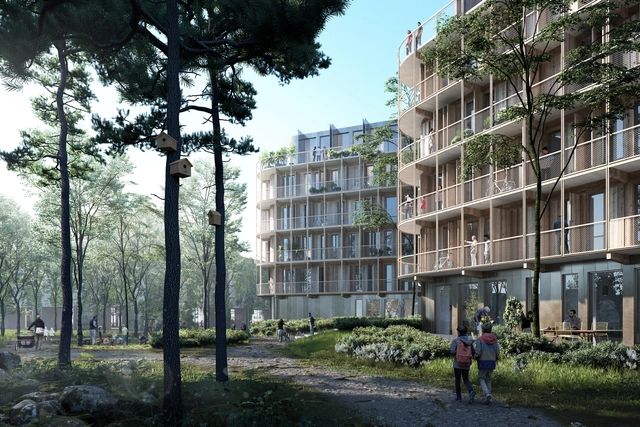
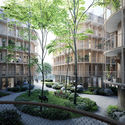
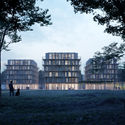
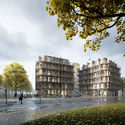
Swedish architecture firm Kjellander Sjöberg has released images of their proposed new city block to enrich the Swedish city of Uppsala. The four competition-winning residential buildings, known collectively as the Tunet, will feature cross-laminated timber construction and wood detailing, creating an environmentally-friendly addition to the city.