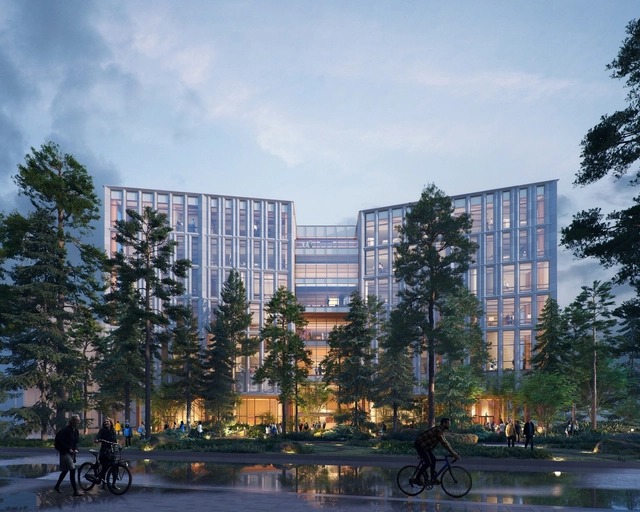
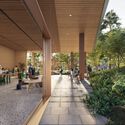
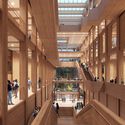
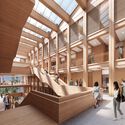
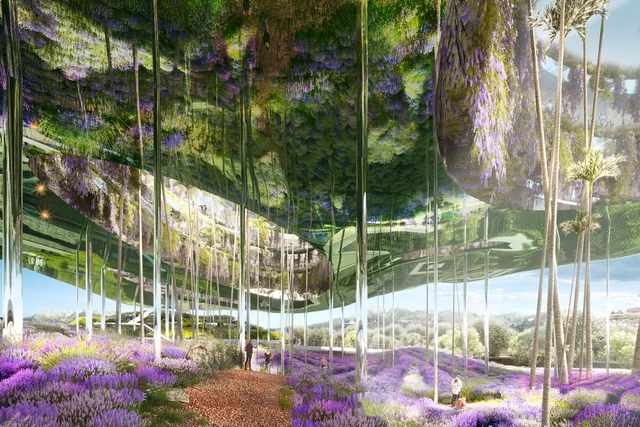
Perkins & Will has just begun construction on the Gateway Project for the University of British Columbia. The project will serve as the primary entrance point to the campus, as well as the new hub for the Nursing, Kinesiology, Language Science, and the university's health clinics. This project is inspired by the surrounding landscape and is informed by the Musqueam people, who have been occupying these territories for generations.
Students at the School of Engineering, RMIT University recently published a study experimenting with a new form of waste management and recycling. As they note in their research, cigarette butts are the most commonly discarded single waste item in the world, with an estimated 5.7 trillion having been consumed around the globe in 2016. However, the materials in cigarette butts—particularly their cellulose acetate filters—can be extremely harmful to the environment due to poor biodegradability. The RMIT study builds on a previous research study by Mohajerani et. al (2016) that experimented with adding discarded cigarette butts to clay bricks for architectural use. In their research, the RMIT students found that such a measure would reduce the energy consumption of the brick production process and lower the thermal conductivity of the bricks, but that other issues including bacterial contamination would have to be addressed prior to successful implementation. Below, we explore this research in more detail, investigating its relevance to the architecture industry and imagining possible futures of application.
https://www.archdaily.com/956164/is-it-possible-to-create-lightweight-bricks-by-recycling-cigarette-buttsLilly Cao
Carbon footprint, circularity and environmental sustainability are terms that are increasingly present in many professional fields, but what do they mean? How do they relate to architecture and the built environment? We spoke with civil, environmental and sanitary engineer Lucas Rosse Caldas about these and other emerging architectural issues.
Lucas is a professor at the Graduate Program in Architecture at the Federal University of Rio de Janeiro and the Civil Engineering Program at the same institution. He participated in chapter 9 of the sixth report of the Intergovernmental Panel on Climate Change (IPCC) on buildings. He wrote several scientific and technical articles about architecture and sustainable construction.
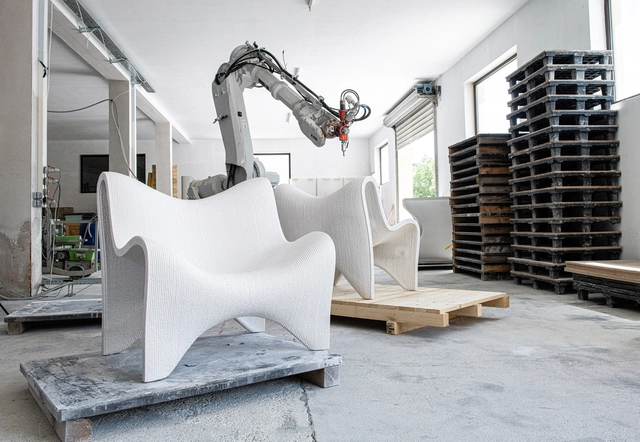
Can you imagine being able to prototype a piece of furniture at the touch of a button and testing it in just a few hours? This might become a common practice sooner than we may think. Fueled by material innovation, automation and cutting-edge technology, a new era in home decor is emerging; one where 3D printing opens up a world of creative possibilities that transcend the bounds of traditional design. Yes, furniture is still mass-produced using conventional methods –molding, cutting, bending–, but 3D printing continues to disrupt the industry. As the revolutionary technology evolves and becomes more accessible, it has unleashed an unparalleled level of creative expression and efficiency. The concept is simple: a digital design is created using 3D modeling software and then printed, layer by layer, in the form of a physical object, bringing complex geometries to life. It’s a whole new kind of digital craftsmanship.
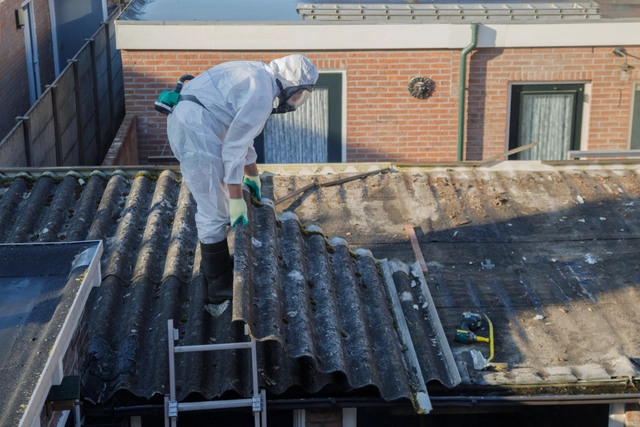
Dozens of countries around the world have already banned the use of asbestos in the civil construction sector. Cheap to extract and abundant in nature, it is a natural fiber used to manufacture water tanks, insulation, partitions, tiles and decorative elements. Its properties include great flexibility and high chemical, thermal and electrical resistance, making it a seemingly ideal material. However, there is scientific evidence that links exposure to asbestos to several types of cancer, as well as to asbestosis - when the fibers of the mineral lodge in the pulmonary alveoli, compromising the respiratory capacity. The asbestos case shows how certain construction materials can –suddenly or not– become a distant memory because of their negative impacts. In addition to the effects on health, the use of materials with high energy consumption or made of rare raw materials is currently under pressure, as experts call to reduce their use or to make their manufacturing methods "greener". The penalty? Disappearing in the near future, becoming yet another in the list of banned building materials. In this article, we delve into some of these materials and what their risks are.
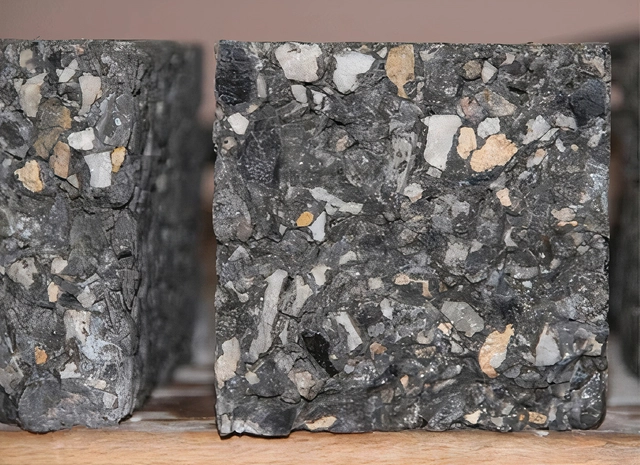
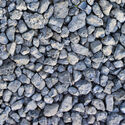
No-Fines Concrete with Steel Slag Samples by L.Korat et al. (2015). Image via ResearchGate. Licensed Under CC BY-SA 3.0
The construction industry is one of the largest in the world, and cement and concrete are literally the building blocks of its success. Evolving from prehistoric caves to today’s towering skyscrapers, concrete structures have and will continue to be vital components of modern civilization, providing long-lasting, reliable support for buildings, roads, bridges, tunnels and dams. So much so that concrete is the most consumed material on Earth, second only to water, while the steel used to reinforce it is by far the most commonly used metal. But this doesn’t come without high environmental costs: concrete accounts for 8% of global CO2 emissions, much of which come from the extraction and transportation of aggregate materials such as sand, gravel and crushed stone.
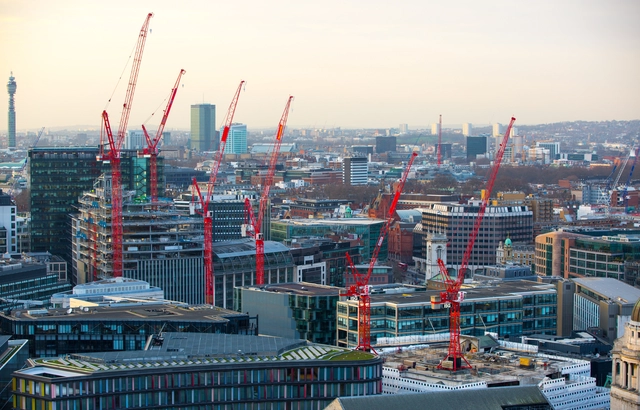
The 2022 United Nations Conference of the Parties, more commonly referred to as COP27, was held between November 6 and November 18, 2022, in Sharm El Sheikh, Egypt. The conference included more than 90 heads of state and an estimated 35,000 representatives, or delegates, from 190 countries. Aimed at encouraging and guiding countries to take effective action against climate change, the next edition of these conferences, COP28, is already scheduled from 30 November to 12 December 2023, in the United Arab Emirates. The CEO of the Abu Dhabi National Oil Co, an oil company chief who also oversees renewable energy efforts in the Emirates, was appointed to preside over the negotiations and talks, which led to a wave of criticism from environmental activists.
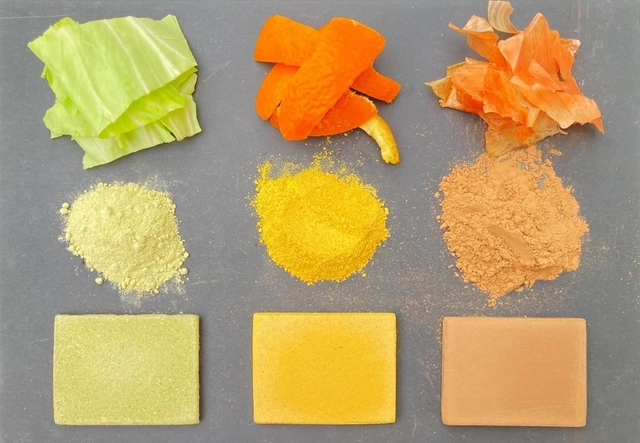
Add cabbage leaves, orange peels, onions, bananas and a few slices of pumpkin to get... cement. That's right, researchers from the University of Tokyo in Japan have developed a technique through which it is possible to produce cement from food waste. Besides being used in construction, the innovative initiative is edible as well. You can make boiled cement into a delicious meal by adjusting flavors, adding seasonings, and breaking it into pieces.
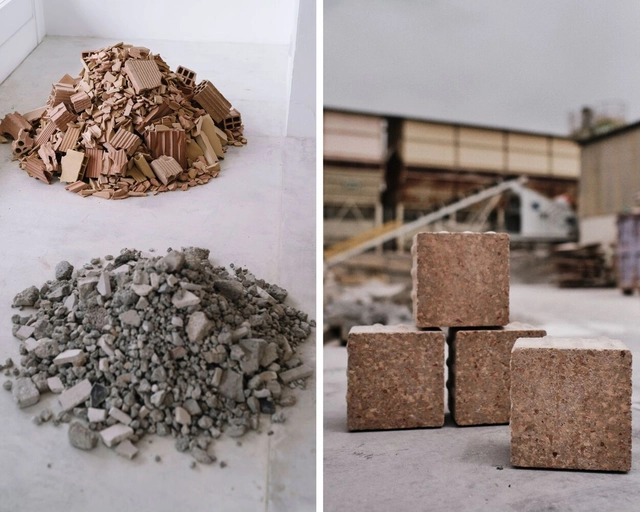
Cities are filled with waste materials and the need to reuse existing resources has become key in fighting the increase in waste production. More than a third of all the waste generated in the EU comes from construction and demolition, containing different materials such as glass, concrete, bricks and ceramics. But how to manage this staggering amount of waste production from construction? According to the Spanish Law on Waste and Contaminating Soils, concrete and ceramic waste with no considerable processing can both be reused in construction . By combining reused material waste with technology, architectural design can create innovative solutions that contribute to minimizing environmental impact.
At a historical moment when industrialization and urbanization are continuing at a fast and predatory pace, we need to design and produce spaces that can adapt to new realities. Based on this need, concepts that can guide the transformation and production of future cities emerge.
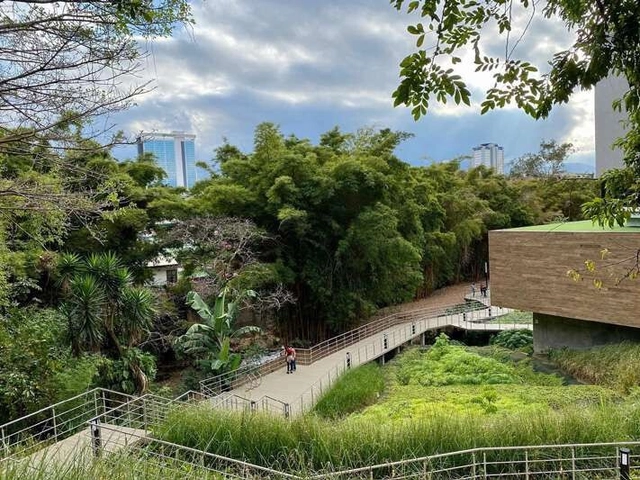
Rutas Naturbanas (San José, Costa Rica. 2015 – 2020). Fundación Rutas Naturbanas - Federico Cartín. Image Courtesy of Jeannette Sordi
Green corridors, or biodiversity corridors, are large portions of land that receive coordinated actions to protect biological diversity. According to Brazil’s National System of Nature Conservation Units, they strengthen and connect protected areas, encouraging low-impact use by implementing a more comprehensive, decentralized and participatory conservation alternative.
Jean Nouvel + OXO Architectes design Mountainous Mixed-Use Campus in Antibes. Image via Compagnie de Phalsbourg
Nowadays, much is said about the importance of collaborative design processes that involve joint creation, affirming a context in which there is less and less room for individual work and much more for the logic of collective and co-creation. Therefore, the idea that the work is created exclusively by the architect is already understood as a distortion of the complex reality of designing a project, going beyond the technical staff and also adding the community and its users.
Sodium chloride, most commonly known as salt, is everywhere. Ancient in its uses and abundant in nature, it preserves local ecosystems, de-ices roads, is vital in a variety of industrial processes, and is likely sitting on your kitchen table as a seasoning for your meals. Today, it is attributed relatively little value –considering it used to be as worthy as gold–, and unlike other nature-derived alternatives such as algae or mycelium, there doesn’t seem to be enough research and interest around all of its physical, mechanical or aesthetic properties. And yet it is a material with infinite, extraordinary potential. Apart from its life-supporting qualities, salt is affordable, easily available, antibacterial, resistant to fire, can store humidity and heat, and is great at reflecting and diffusing light.
Environmental Activism by Design, a monograph by architects and educators Coleman Coker and Sarah Gamble, challenges designers to actively engage the environmental crisis through their work, while articulating an optimistic, tangible means to pursue community good and environmental justice through design activism and engagement. The authors assert that in addition to greener buildings, cheaper housing, and technological fixes, we must rethink pedagogy and praxis so that every single architecture graduate can define equity and transform the profession.
AHL is the most prominent, prestigious, and progressive architectural practice working in Hawaii. As such, the history of Modern Hawaiian architecture is very much the history of AHL. Over the past 75 years, no firm has built bigger, higher, or more frequently than AHL. This book tells their story and in so doing, tells the story of the making of a modern Hawaii.
2022 could be remembered as the year when surprising AI-fueled tools became accessible to a larger audience: from text-to-image generation Stable Diffusion, Midjourney, and DALL-E 2 to unsettling design experiments such as This House Does Not Exist, to surprisingly smart OpenGPT, a language-processing designed artificial intelligence to generate human-like text.
Cautiously described by OpenAI CEO Sam Altman as "a preview of progress", any user can talk with OpenGPT about almost anything: the results are astonishing and it easily can embody an umpteenth so-called threat for creative-related jobs. However, OpenGPT does not have access to browse the internet. Instead, it interacts based on the gigantic database that it has been trained on. As expressed by Gannett's Eric Ulken, "even the best generative AI tools are only as good as their training", so what an "inappropriate request" is has previously been tuned (by humans) as well.
Whether it is for a break, relaxation, or even free wifi, coffee shops tend to host a series of situations that involve more than just enjoying a cup of coffee. A quiet and pleasant place, which in addition to everything else offers a good hot drink, is a great attraction for those looking for a coffee shop to spend a few hours.
In this sense, a landscape project that integrates greenery into these environments can significantly increase the comfort of customers, by easing temperatures and offering a barrier against atmospheric, noise and visual pollution. In addition, after the restrictions imposed by the Covid-19 pandemic, open spaces, with natural ventilation and gardens became priorities for many projects, including coffee shops.
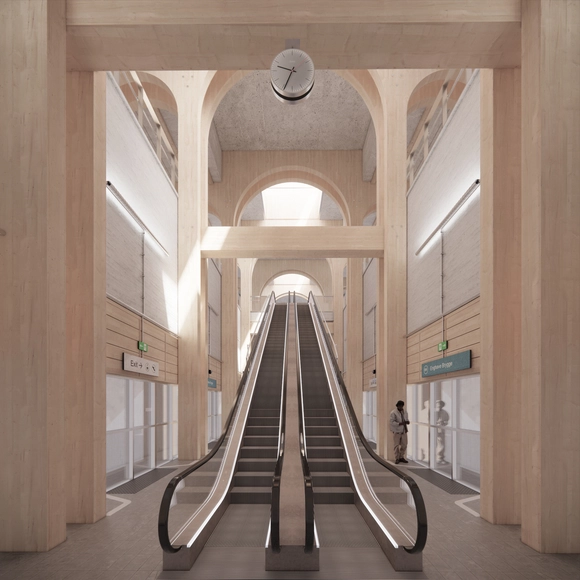
JAJA Architects won the competition organized by Metroselskabet, Denmark, to develop resource-efficient and climate-friendly metro stations. The winning team takes a comprehensive and holistic approach, looking at both material-optimized and sustainable design solutions and the character of the journey that passengers take to reach their destination. The proposal is centered around three core elements: Materials, Mobility Hub and Climate Campaign. While aiming to reduce CO2 emissions, the team also seeks to create an enjoyable and easy-to-navigate space for the many daily passengers. Snøhetta, 3XN/GXN, and Effekt also participated in the competition.