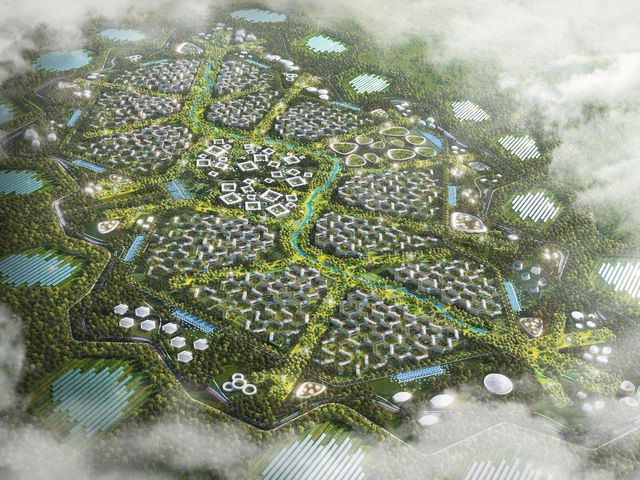
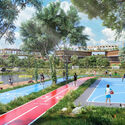
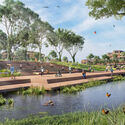
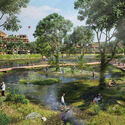
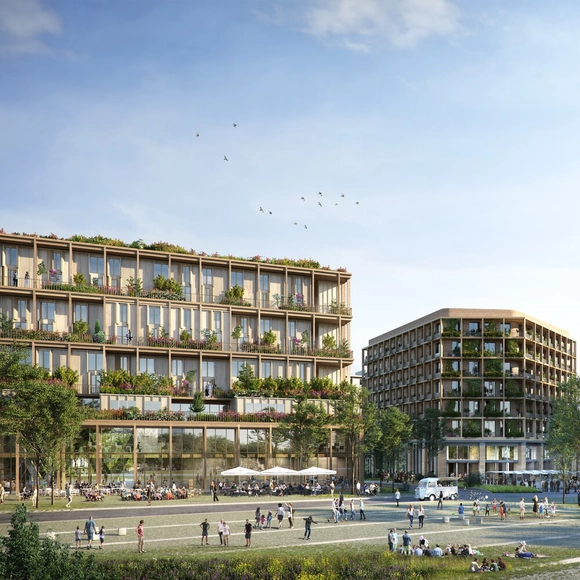
URB has unveiled plans to develop Africa's most sustainable city, a development that can host 150,000 residents. Known as The Parks, the city plans to produce 100% of its energy, water & food on-site through biodomes, solar-powered air-to-water generators, and biogas production. The 1,700-hectare project will feature residential, medical, ecotourism, and educational hubs to become one of the significant contributors to the growing green and tech economy in South Africa.
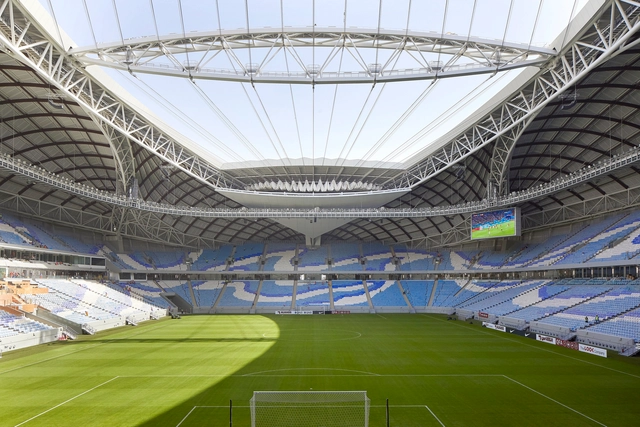
The World Cup will take place between November and December. This is due to the host country’s climate in June and July when Qatar can reach average temperatures of 40 to 50°C.
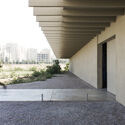
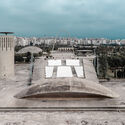
This year, one of the winners of the Aga Khan Award was the Renovation of the Niemeyer Guest House by East Architecture Studio. The project is located on Tripoli’s outskirts in Lebanon, and it is part of the Rachid Karami International Fair (RKIF), an unfinished masterpiece by Brazilian architect Oscar Niemeyer. ArchDaily’s Managing Editor, Christele Harrouk had the chance to sit with Charles Kettaneh and Nicolas Fayad, founders of the East Architecture Studio, on-site in "the Niemeyer Guest House Renovation" project. Talking about modern heritage and the challenges of renovations, the architects opened the conversation about the role of architecture in building platforms for change.
As climate change continues to reach unprecedented levels, many are pointing towards enhancing circularity in the construction sector. Essentially, the circular economy aims to eliminate waste and the continual use of resources by repeatedly reusing, repairing or recycling materials. The cyclical approach is able to meet demand and minimize CO2 emissions by extending a product’s lifespan, which is especially important when dealing with limited resources. Unlike the traditional linear extractive method –where everything goes through an extremely contaminating process of 'take-make-waste'–, circularity keeps materials in use for as long as possible to extract maximum value. This, in turn, reduces pollution, regenerates natural systems and contributes to a healthier built environment, hence building economic, natural, and social capital.
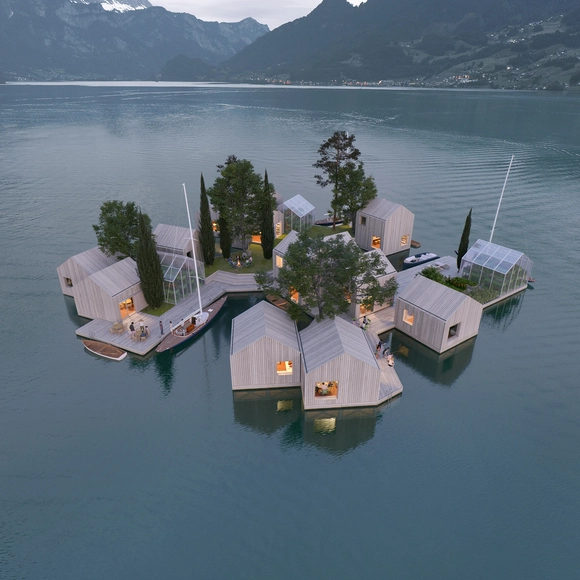
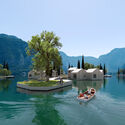
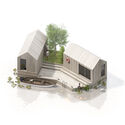
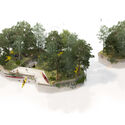
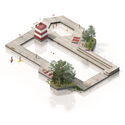
Danish Maritime Architecture Studio MAST has developed the “Land on Water” project, a system that provides an adaptable solution to building almost anything on the water: floating homes, campsites, even small parks, and community centers. The project represents a response to the acknowledgment of raising sea levels and increased risks of urban flooding, which has led to a growing interest in adapting architecture to be built on water. The “Land on Water” proposes a flexible and sustainable solution, a departure point from previous solutions, which are proven to be difficult to adapt, transport and are often using unsustainable materials such as polystyrene-filled concrete foundations or plastic pontoons. The project is developed with the support of Hubert Rhomberg & venture studio FRAGILE.
From smartphones to space rockets and self-driving cars, the power of technology in this modern digital era is enormous (and practically limitless). It has impacted every aspect of our lives and will continue to open up endless possibilities that today we cannot even begin to fathom. When applied in a socially and environmentally responsible way, technology has the power to enhance productivity, communication and sustainability, enabling global communities to function efficiently, addressing people’s everyday needs and improving their quality of life. Simply put, good technology serves humanity. And just as the healthcare or manufacturing industries have taken advantage of this, the architecture, design and construction world cannot fall behind.
Construction practices across the world, as well as the types and uses of building materials, have been identified as key factors that impact global warming. Studies have shown that the building sector will play a central role in achieving the UN Climate Change Conference (COP26) CO2 emissions reduction targets for 2030 and net zero CO2 emissions by 2050.
The construction sector's support for the achievement of these targets must focus on sustainable construction, which entails environmentally-friendly structures that consume less energy and have smaller or even net zero carbon footprints.
Green buildings are structures that, in their design, construction or operation, reduce or eliminate negative impacts on our climate and natural environment. They preserve precious natural resources and improve quality of life.
While the United Nations has been continuously urging architects, engineers, and city shapers to put the 2030 agenda and the SDGs into action, and the IPCC report revealed intensifying climate change, sparking widespread discussion over insufficient action, the 83rd ongoing session of The United Nations Economic Commission for Europe - UNECE Committee on Urban Development, Housing and Land Management taking place in San Marino, has just issued a special declaration on “how to build better, safer, more inclusive, and resilient" cities, ahead of COP27. This set of “Principles for Sustainable and Inclusive Urban Design and Architecture”, or the San Marino declaration has gathered the signatures of Norman Foster and Stefano Boeri.
The first Monday of October of every year marks World Architecture Day and World Habitat Day. Celebrated simultaneously, they both seek to shed light on the built environment and its challenges, taking on a different theme with each new edition. This year, through its World Architecture Day, the UIA is focusing on “Architecture for well-being”, in line with the designation of 2022 as the UIA Year of Design for Health in buildings and cities. In parallel, the UN’s World Habitat Day, is centered on “Mind the Gap. Leave No One and Place Behind”, looking at the problem of growing inequality and challenges in cities and human settlements, due to the triple ‘C’ crises – COVID-19, climate and conflict.
Introducing Urban October, 31 days to promote a better urban future, World Architecture Day and World Habitat Day push forward the debates on urban sustainability. Joining the conversation every year, ArchDaily takes part in this occasion by promoting content that tackles the main objectives of this day, raising awareness, presenting solutions, engaging the international community, and “empowering everyone who makes architecture happen to create a better quality of life”.
Urban October is an initiative that was born with the aim of raising awareness, promoting participation, generating knowledge, and engaging the international community in creating a better urban future. Each year, UN-Habitat and its partners organize a month of activities, events, and debates around urban sustainability.
It’s About Time, the 10th edition of the RotterdamArchitecture Biennale, is a seven-week-long manifestation showing realistic courses toward a livable future at a time when the consequences of climate change are becoming increasingly apparent. Half a century ago, the consequences of climate change were predicted in The Limits of Growth report from 1972. This outlines the possible consequences of an exponential increase in population, agricultural production, and resource extraction. The report is viewed by many as the beginning of environmental awareness. The Rotterdam Architecture Biennale aims to bring these changes into perspective by looking both at the past and the possible future.
In the architectural conversations we are having in today’s world, conversations on materials are widespread. There is discussion on the viability of concrete in the contemporary context, how timber can be more sustainably sourced, and on how biodegradable materials such as bamboo should be more common sights in our urban environments.
But we also need to be talking about what goes into these buildings – that is, the furniture that decorates, enhances, and makes habitable the buildings around us. The materials used to craft these objects have constantly evolved over centuries, and as we approach the end of 2022, it’s worth asking – what does the future hold for what our furniture will be made from?
Climate change is becoming more and more real every day: all over the world, we are witnessing a clear increase in climate disasters. Moreover, the latest IPCC report warns us of possible “tipping points” from which the climate transition could become not gradual, but sudden and irrevocable.
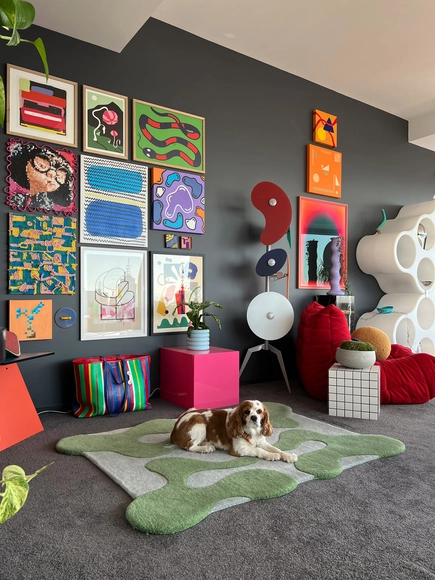
Josh and Matt's apartment embodies their "curated maximalism" style. Image Courtesy of Josh and Matt Design
With the onset of the 2020s, Gen Z is noticeably claiming their place in the world with bold perspectives and even bolder aesthetics. Gen Z proudly experiments with their identities, having grown up on an opinionated internet and through confusing lockdowns. They're bringing in a culture shift with organic shapes, colorful elements, and clashing patterns dominating art, media, fashion, and interior design. The trend is pushing away once-reigning minimalism, shouting Venturi's Less is a Bore.
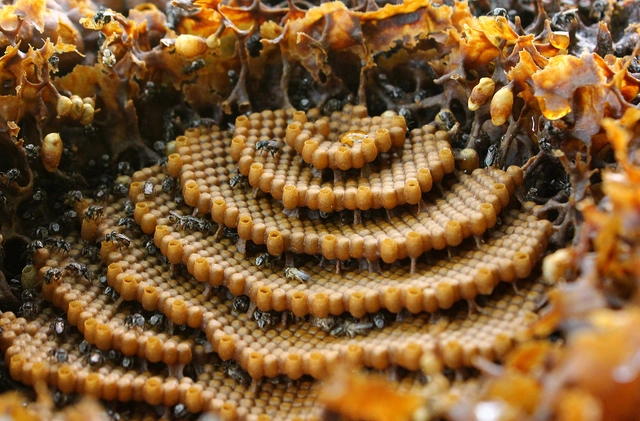
Bees are perhaps the insects that most arouse our fascination and curiosity. With the exception of Antarctica, they are found on all continents, in all habitats that contain insect-pollinated flowering plants. Representations of humans collecting honey from wild bees date back to 15,000 years ago, and pots of honey have even been found in the tombs of Egyptian pharaohs like Tutankhamen. Although we generally have a fixed idea about what cartoon bees look like, there are thousands of species around the world, with different sizes, colors and behaviors. There are even several examples of solitary bees, many without stingers, and even some species that survive by plundering other weaker colonies. But something that has consistently impressed researchers is the organization of their hives, which are truly highly populated cities with an efficiency to make any urban planner envious.
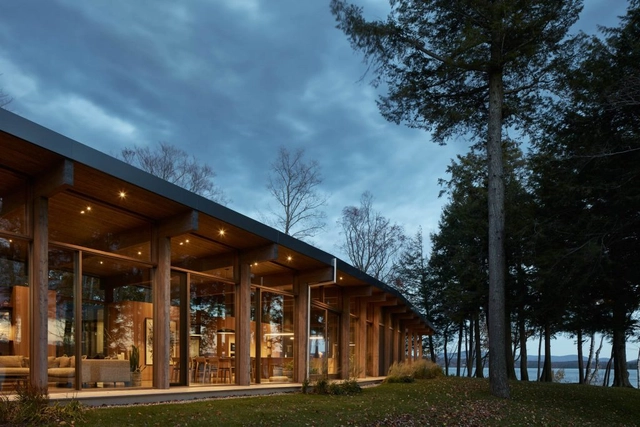
Lac-Brome House - Art Massif Glulam Wood Structure. Image Courtesy of Carbon Fixers
Timber construction and its benefits is moving into the BIM space for even more sustainable uses. A new BIM-integrated web application, called Carbon Fixers (which expands on its Offsite Wood plug-in for Revit), pre-calculates the carbon-benefit of choosing timber and other bio-sourced materials in early design.
Carbon Fixers lets you rapidly build a scenario using only basic architectural program information, such as the type, size, and number of stories in the building. For advanced users, preferences can be saved for firms with a regional expert dashboard, side-by-side comparisons and detailed assemblies.
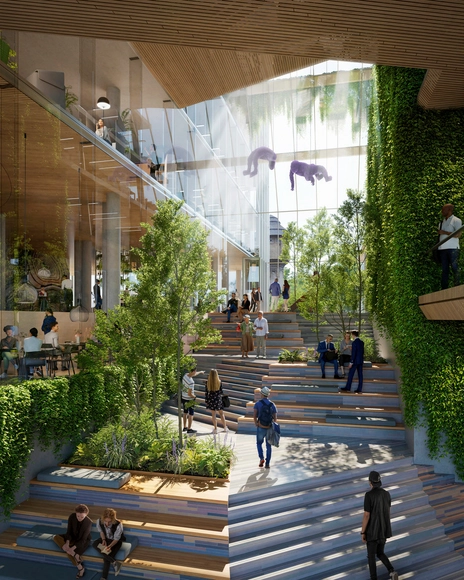
Interior view to the Lobby . Image Courtesy of UNStudio
Incorporating the Environmental, social, and corporate governance objectives, the 45,000 m2 Office Tower in the Europaviertel in Frankfurt aims to be one of Germany's most sustainable office buildings. Designed by UNStudio in partnership with Groß & Partner in collaboration with OKRA landscape architects, the project focuses on environmental and social sustainability as an integral part of Frankfurt's green network. The ecological agenda includes a low-carbon load-bearing structure and recyclable construction materials. The architecture program offers a public urban space to add value to its surroundings to encourage communication and gathering.
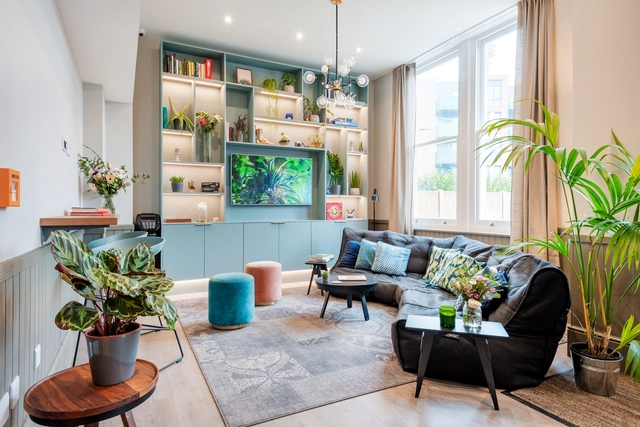
Co-living is a residential community living model, referring to a modern form of group housing that has significantly transformed London life and the UK as a whole. The notion of co-living has even more so been popularized by the rise of housing startups, with many offering affordable housing in homes and apartments alike shared by a handful of adult housemates.