This year's Milan Design Week brought together designers, architects, producers, and key figures from the design world. The events were divided between the Salone del Mobile at Rho Fiera, a trade fair with over 1950 exhibitors, and Fourisalone, featuring various events across Milan. With numerous installations throughout the city and a wide range of events, conferences, and debates, Milan Design Week stands as one of the most significant design-focused events worldwide. For architects, this represents an opportunity to not only exchange ideas but also to actively contribute through collaborations and explorations across disciplines.
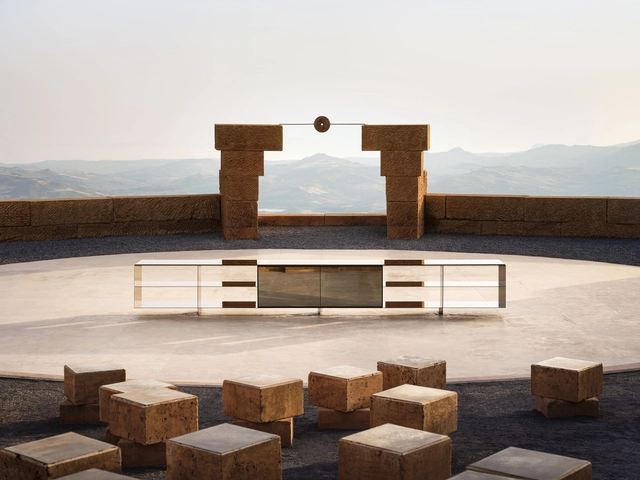
This year, many internationally recognized architects have entered collaborations with furniture and light design companies, exploring the intersection of design and architecture. Despite the change in scale, many of these products reflect the recognizable architectural language of their designers, offering an insight into the principles that guide their practice. In addition to aesthetic explorations, many of the products selected are tackling important themes of interest, from the need to develop more sustainable materials with a reduced carbon footprint, to the potential impact of new technologies such as artificial intelligence.
As cities grow and evolve, the question of preserving, rehabilitating, or adapting historic sites arises. The intervention in such buildings requires a delicate balance between honoring their heritage and meeting contemporary demands. Often, the most innovative and radical solutions emerge when architects attempt to renew a building while maintaining its original footprint and as many features as possible. They then create modern extensions that either harmonize or contrast with the original structure. This approach not only revitalizes the building but also celebrates the synergy between the past and present, including materials, construction technology, architectural movements, stories, and overall building quality. The layering of both old and new elements through harmony or contrast requires an intelligent and sensitive approach that gives the building a unique aesthetic and a new meaning.
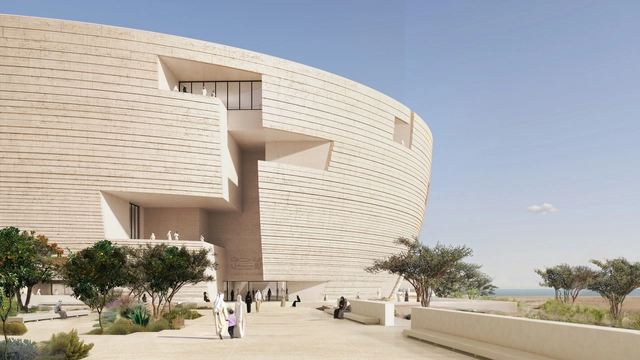
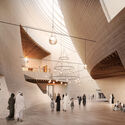
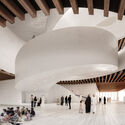
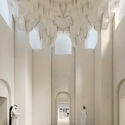
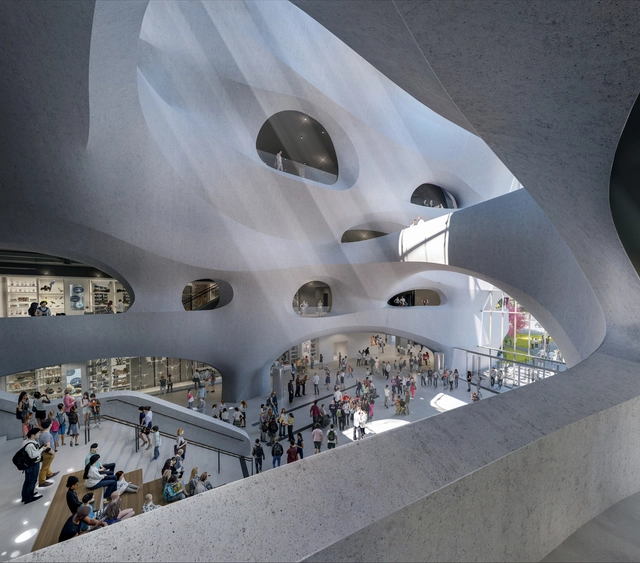
Qatar Museums has released renderings showcasing the future Lusail Museum, designed by Swiss architecture office Herzog & de Meuron. The museum will house one of the largest collections of Orientalist art, exploring the movement of people and ideas across the globe and over the centuries. The new institution also strives to provide opportunities for high-level study for scholars, academics, policymakers, and curators. Consequently, the building is conceived as “a vertically layered souk, or miniature city contained within a single building,” aiming to encourage conversations, debates, and meditation on global issues.
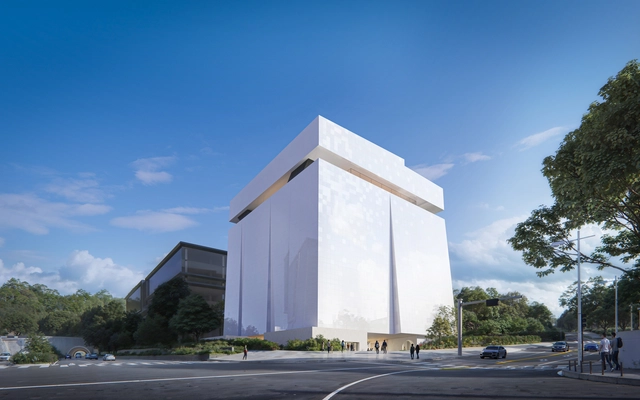
Herzog & de Meuron has revealed the design for the Seoripul Open Art Storage, a collective archive space that will serve three museums in Seoul: the Seoul Museum of Art, the Seoul Museum of Craft Art, and the Seoul Museum of History. Going beyond the archive program, the proposal aims to open up the building to visitors, transforming the art storage into a dynamic civic space. Located on the Eastern Border of Seoripul Park, the building is characterized by a pyramidal glass structure set in a garden that functions as a secluded outdoor space for Archive/Museum visitors.
Chris Bosse started LAVA, Laboratory for Visionary Architecture, with his partners Tobias Wallisser and Alexander Rieck the year Watercube, the Aquatics Centre for the 2008 Beijing Summer Olympics was completed. Bosse was one of the leading designers of Watercube when he worked at PTW Architects in Sydney. Now LAVA employs about 100 people in four offices in Ho Chi Minh City,Sydney, Stuttgart, and Berlin. There are also two satellite offices in Honduras and Parma, Italy, led by former associates. Projects range from furniture to houses and hotels to master plans, urban centers, and airports in the Middle East, Central America, Europe, Australia, and Vietnam.
Ahmadreza Schricker is an architect whose journey was shaped by his work with Herzog & de Meuron and his time with the well-renowned OMA. His studio ASA North, is well known for its award-winning adaptive reuse of the Argo Contemporary Art Museum & Cultural Center, a former distillery that was awarded at the 2020-2022 Aga Khan cycle. It is a testament to the work ASA North does, bridging gaps between past and future, traditional and contemporary. The interview also goes beyond ASA North, looking into its sister company, ASA South. Based in the virtual world, ASA South challenges conventional boundaries and reimagines architectural practice in the digital age.
Vectura CampusF / Schmidt Hammer Lassen Architects. Image Courtesy of Schmidt Hammer Lassen Architects _ By WAX
Exploring unbuilt projects can offer insights into the design process and leading strategies employed by contemporary architecture practices, revealing unexpected solutions, experimental approaches and innovative design concepts. This week’s curated selection of Best Unbuilt Architecture highlights designs submitted by established architecture practices. From a fjord-side regeneration project and oceanography research center to a headquarters building shaped to reflect company’s main focus or a restaurant adapted to extreme conditions, the compilation of unbuilt projects presents the variety of concepts, design philosophies and programs put forward by prominent global architecture studios.
Featuring internationally recognized offices like CRA-Carlo Ratti Associati, Herzog & de Meuron, OODA, KCAP, and Aedas, this selection showcases worldwide interventions that illustrate architectural and civic interventions across diverse scales and programs. Whether tackling the restoration of monuments, interventions in public spaces or the transformation of a city’s waterfront, each of these projects aspires to deliver a fitting response to the spatial, functional, social and ecological requisite of its context.
London’s architectural history is a rich tapestry that weaves together styles of various periods and influences. In the post-war era, the city experienced a surge in modern architecture, becoming a canvas for experimentation. New stylistic movements saw their expression crystalized through buildings such as Richard Rogers’ Lloyd’s Building, one of the most representative examples of High-Tech architecture, or the Barbican Estate, a large-scale housing estate that became the iconic structure for Brutalist architecture.
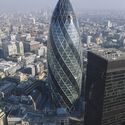
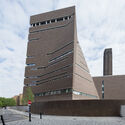
London’s contemporary architectural landscape continues to evolve, in part through the works of internationally-recognized architects such as Norman Foster, Zaha Hadid, and Thomas Heatherwick. This varied blend of styles, and ways of expression reflects the city’s ability to embrace architectural movements of global significance. As a center for innovation, London continues to attract established and emerging architects who shape its skyline and contribute to its international architectural discourse, with each new building offering a glimpse into the ever-changing nature of London’s urban fabric.
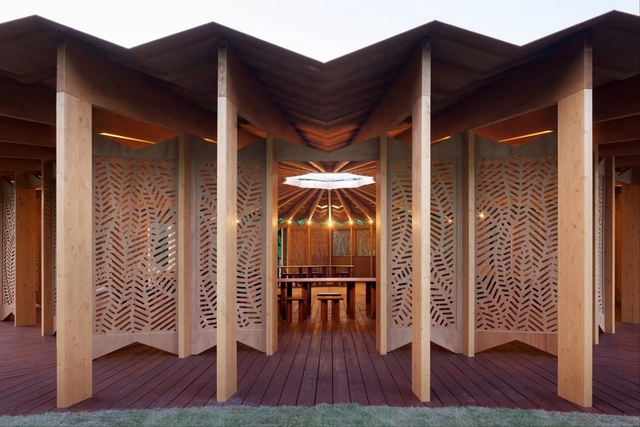
As you make your way through the symphony of wooden colonnades, leafy screen walls, and unfurled roofing, towards the converging veins of flooring and ceiling ribs leading to the light, it feels like a space that was always meant to be there. Part of the park, the pavilion complements the nature around it, reflecting its patterns, and illuminates a main interior feature: a concentric set of tables and stools that inspire people to sit at the moment, hold conversations, and connect with each other. This narrative tells the tale of this year's Serpentine Pavilion, designed by French-Lebanese architect Lina Ghotmeh.
Titled, À table, It draws inspiration from the designer’s connection with nature growing up and is reminiscent of the French call to sit together at a table, share a meal and enter a dialogue. It foregrounds the table as a laboratory of ideas, concerns, joys, connections, and essentially brings people together. It further reflects on the architectural ideals that can provoke and welcome moments of collective conversations.
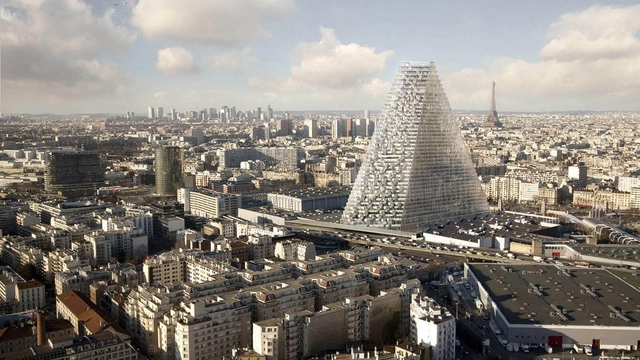
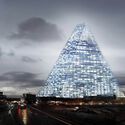
Tour Triangle . Image Courtesy of Herzog & de Meuron
The city of Paris has officially reinstated a rule that limits the height of new buildings in the French capital to 37 meters, or 12 storeys. Among the factors for the decision was the controversy surrounding the construction of the 180-meter-tall Tour Triangle, designed by Herzog & de Meuron, which began in 2021 after more than a decade of legal battles and backlash. The new urban planning regulation is introduced as part of Mayor Anne Hidalgo's Local Bioclimatic Urban Plan, which aims to reduce Paris' carbon emissions.
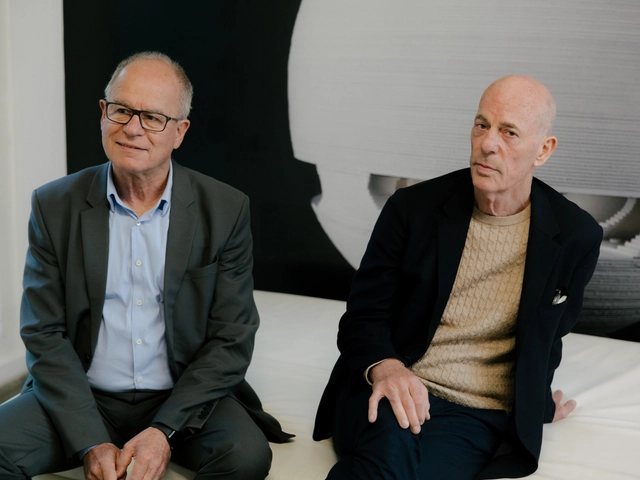
Herzog & de Meuron has been honored as the 36th Louis I. Kahn Award winner by the Center for Architecture and Design in Philadelphia. The annual award, founded in 1983 in memory of Philadelphia architect Louis Kahn, celebrates individuals who have made significant contributions to the field of architecture. Jaques Herzog, one of the two founders of the Swiss-based architecture firm, will present a talk on behalf of this office during the official award ceremony, to be held at the University of Pennsylvania’s Museum of Anthropology and Archeology at 6:30 pm on May 31, 2023.
ELEMENTAL, Herzog & de Meuron, Office for Metropolitan Architecture (OMA), Philippe Starck, and UNStudio are just a few of the internationally renowned architectural firms working with Qatar Museums to establish five new cultural facilities in Qatar. The new constructions will be overseen by Qatar Museums, tasked with maintaining and expanding Qatar's cultural assets through managing the nation's expanding network of museums, heritage sites, festivals, and public art installations.
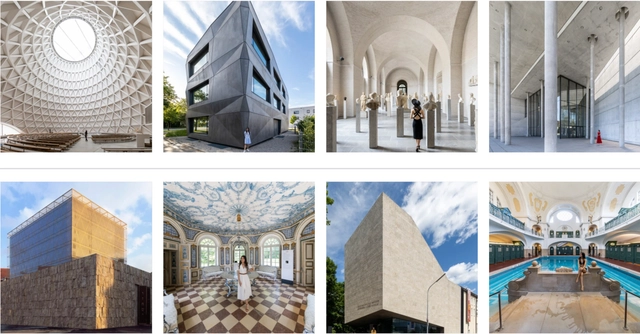
Munich – Bavaria’s capital since 1506 – is a city with layers and layers of history. Its many years as a rising architectural epicenter have left an interesting and unique mix of buildings. From Middle Age churches and cathedrals to contemporary synagogues. From skyscrapers to small pavilions. Brutalism to Art Nouveau. Munich’s architecture is truly extensive and marvelous.
Though not acknowledging Munich’s beer wonders would be wrong, the only mention of this substance would be in the stunning buildings (like the new Paulaner HQ by Hierl Architekten) that contain them. Yes, other aspects of the city are grandiose, but let’s focus on Munich’s top attraction: its architecture.
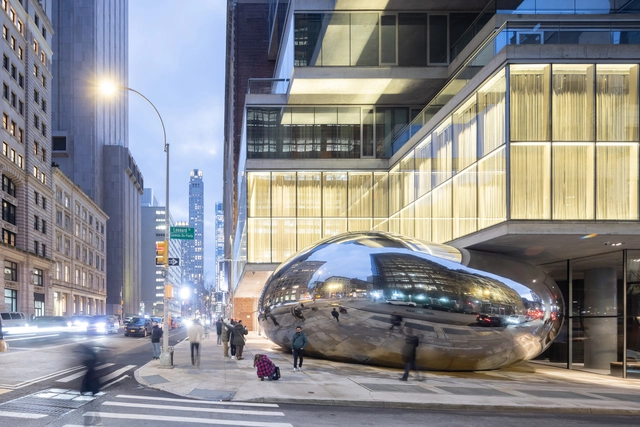
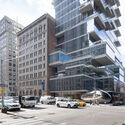
On January 31st, construction scaffolding and barriers were disassembled from the site at 56 Leonard Street, revealing Anish Kapoor’s first permanent artwork in New York City. The 48-foot-long, 19-foot-tall, 40-ton sculpture is nestled partially beneath the Herzog & de Meuron-designed residential building in the Tribeca neighborhood in Lower Manhattan. The mirrored sculpture is reminiscent of Kapoor;’s work called Cloud Gate, also known as “The Bean,” in Chicago, US.
As the new year begins, we look forward to the most exciting projects planned to open in 2023. The world's second-tallest tower is currently under construction in Malaysia; Egypt is almost ready to open its largest archeological museum, while MVRDV is currently renovating a large-scale brutalist landmark in Albania. Featuring internationally renown architectural offices such as Snøhetta, OMA, Studio Gang, Zaha Hadid Architects, BIG, along with the latest winner of the Pritzker Prize, Francis Kéré, the following selection presents projects from all around the world. They also range in scale and program, from international airports to sculptural arts galleries or museum expansions.
Several projects presented here have also featured in the previous year's compilation. Resource availability and labor issues generated by the pandemic have also continued to influence opening schedules, but with a diminishing impact. Following the predicted trends for 2023, more and more projects involve the adaptive reuse of existing structures. An underlying theme is visible in the increased interest in expanding artistic and cultural venues and integrating historical heritage into the expression of contemporary architecture.
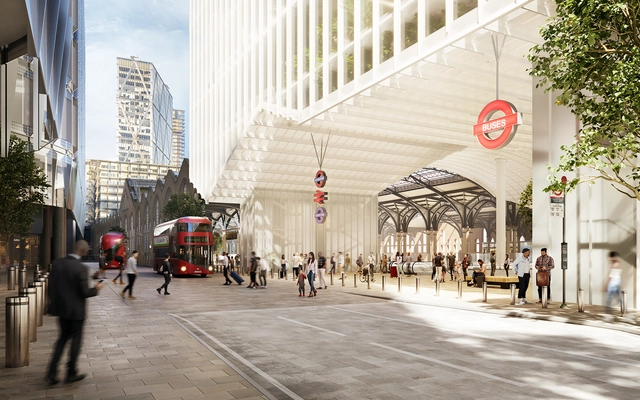
Architecture office Herzog & de Meuron has unveiled plans to revamp the Liverpool Street station in London. The scheme includes “vital upgrades” aimed at transforming the Victorian-era station into a fully accessible transportation hub fit to accommodate the 135 million people using the station annually. It also includes the addition of 840,000 square feet of offices and a 190,000 square feet hotel in two new structures, 10 and 6 stories high, respectively. These new interventions have attracted criticism from conservation groups. The proposal is currently undergoing its first round of public consultation. The development is overseen by Stellar, working with MTR, the operator of rail transport services and Network Rail.
The global pause of the COVID pandemic has provided an opportunity to assess present-day globalism and the architecture that has emerged alongside it. Stemming back to the broad expansion of free trade in the 90s at the end of the Cold War, globalism’s cultural promise was simple and aspirational: integrating markets globally would increase the interaction between and learning of different cultures. By normalizing such experiences in our daily lives, we would become global citizens liberated from our previous prejudices–all well-intentioned objectives.
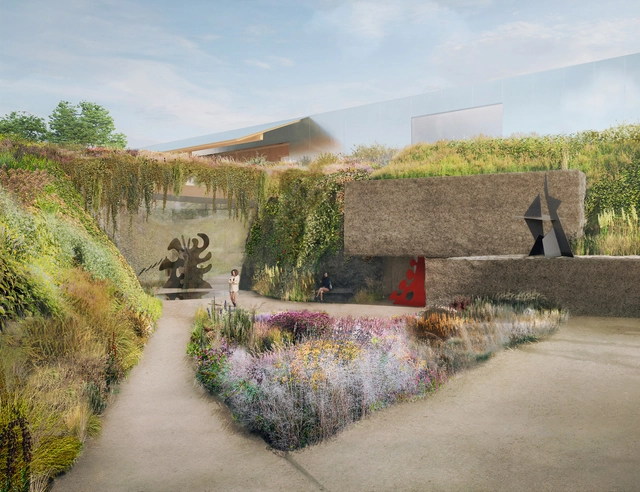
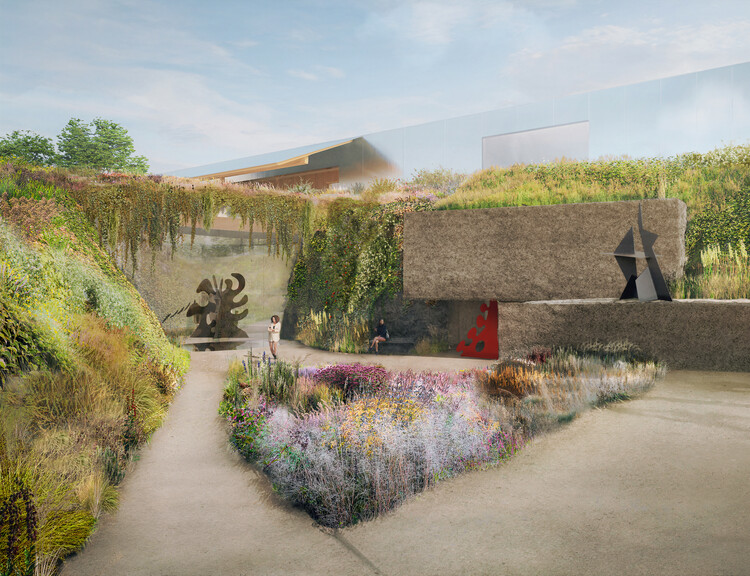
Herzog & de Meuron and landscape designer Piet Oudolf are collaborating to create Calder Gardens, which will house and display artworks by American sculptor Alexander Calder. Located between Vine Street and Benjamin Franklin Parkway in Philadelphia, the 6,500 square meter site will house a two-story building, half of which is developed underground. Instead of developing the site as a typical museum, the team decided to transform it into a garden as an attractive alternative for the people of Philadelphia.