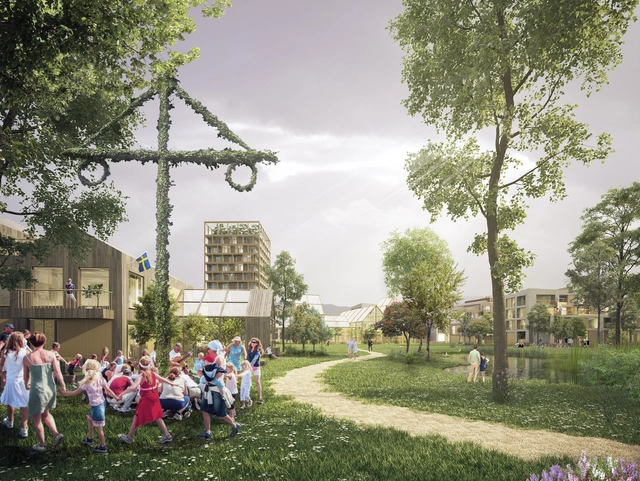
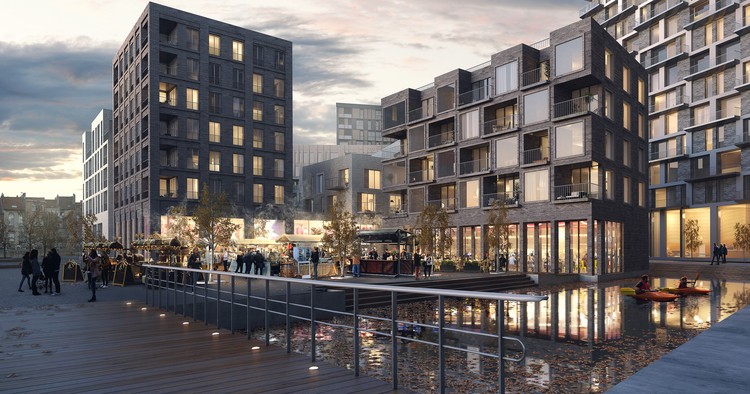
Danish studio Henning Larsen has won the competition to develop a 15.5-hectare urban masterplan south of Gothenburg, Sweden. Designed for 3000 residents, the project represents a community model that was made to refocuse urban energy around green foundations. Named Humlestaden, the masterplan encompasses Gothenburg’s Västra Frö-lunda district, former home of the Pripps brewery. The project is made to reimagine the historic Garden City model and reframe city life through a green lens.
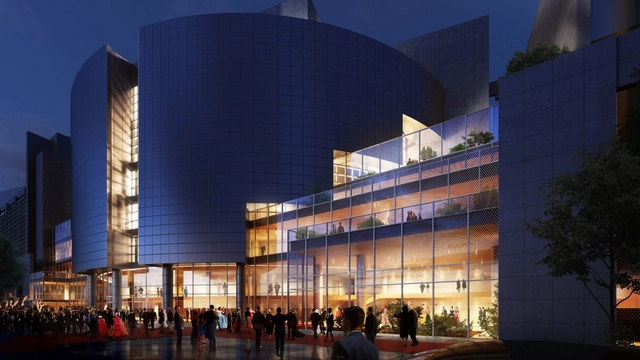
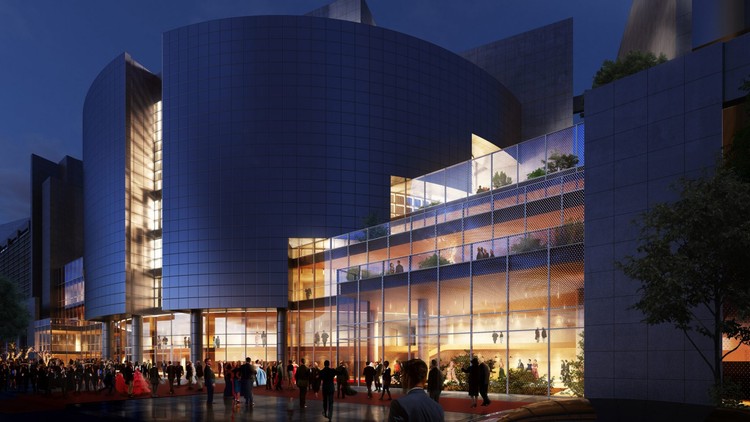
Opéra Bastille Expansion. Image Courtesy of Henning Larsen
Henning Larsen has been selected to expand and transform the French Opéra Bastille, the largest opera house in Paris. Designed with collaborators Reichen et Robert & Associés, dUCKS Scéno, Peutz & Associés Acoustic Consultants and CET Ingénierie, the proposal includes a redesigned and extended public foyer that will open to street-level activity, as well as expanded infrastructure and workshop facilities, and the addition of a new 800-seat auditorium for use as rehearsal and performance space.
Videos
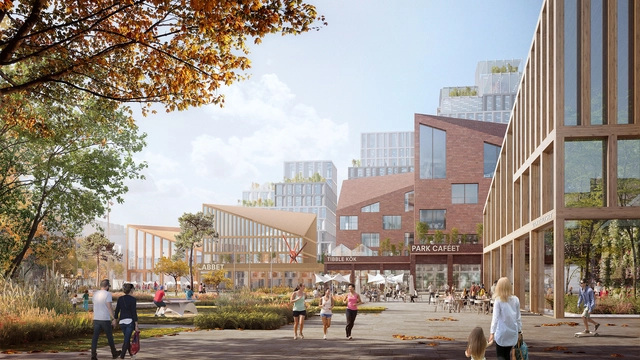
Tibble Masterplan. Image Courtesy of Henning Larsen
Danish practice Henning Larsen has created a new masterplan to reimagine the suburbs and town of Täby, Sweden. Hoping to address the desire for vibrant city life in suburbia, the 292,000 sq meter masterplan emphasizes sports, education, nature, culture and entrepreneurship. Transforming Täby from a suburb into a city, the project will focus on the town's cohesive sense of local identity, as well as its strong emphasis on education and the environment.
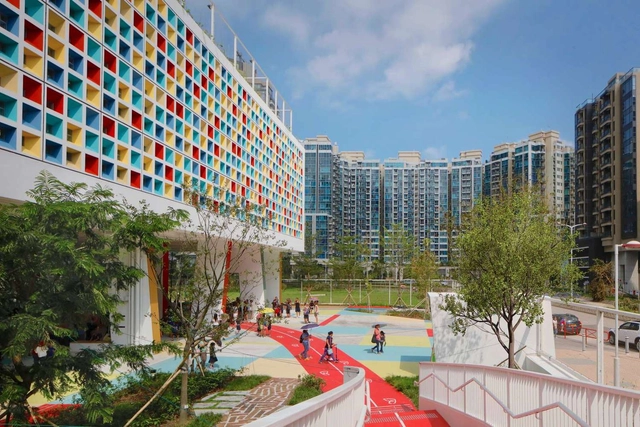
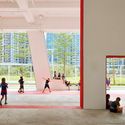
Henning Larsen has completed their new campus for the French International School in Hong Kong, offering a “vibrant green oasis in the dense city.” The 1100-capacity school sits behind a kaleidoscopic façade laid across a grid of 727 multicolored tiles, offering a “vibrant sustainable environment supporting a world-class multicultural education.”
Located in the city’s Tseung Kwan O district, the 19,600-square-meter scheme comprises a series of large open plan spaces called Villas, each with 125 pupils in the same age group. The spaces are arranged around a central Agora, facilitating group activities and collaboration.
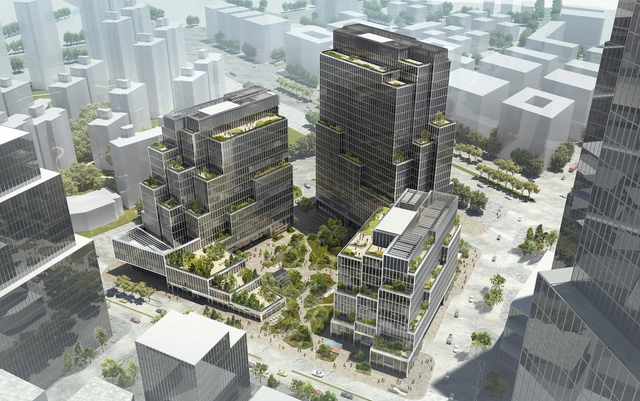
Henning Larsen have created a new proposal for The Springs, an urban oasis designed for Shanghai. Inspired by shan shui, a traditional form of Chinese landscape painting, the project is developed for Tishman-Speyer to evoke the mountain landscapes found throughout rural China. The project will mirror the mountain landscape with tall, terraced towers around a green public square. Made to create workspaces for creative industries, the three buildings will provide wide provide flexible workspace and common areas in the city center.
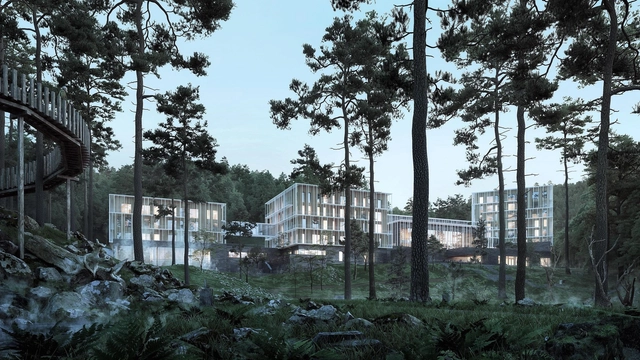
New renders have been released of Henning Larsen’s “luxurious hideaway in the Georgian mountains” after construction started on the 25000m², 135 room hotel earlier this year. The new Agobili Hotel is located at the Abastumani spa resort in Georgia, which itself has been a health retreat for both the Tsar family and general public alike. The new building hopes “to create a story about the magnificent place it inhabits.”
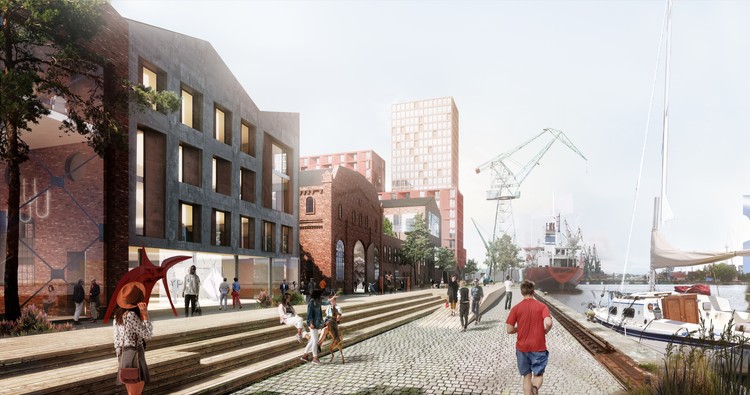
Henning Larsen has released images of their proposed urban development for the historic Imperial Shipyard at Gdansk, Poland. The 4.3million-square foot (400,000-square-meter) development seeks to transform the shipyard, built in 1844, into a “powerful financial and social engine building a thriving, mixed-use, inner-city neighborhood by the waterfront that is alive around the clock.”
The old industrial site has played a central role in the economic development of both Gdansk and Poland, serving as a key shipbuilding hub on the Baltic Coast. Through creating spines of public life centered on pedestrian/bicycle-friendly streets, Henning Larsen seeks to maintain the shipyard’s strong presence through waterfront living, work, and recreation.
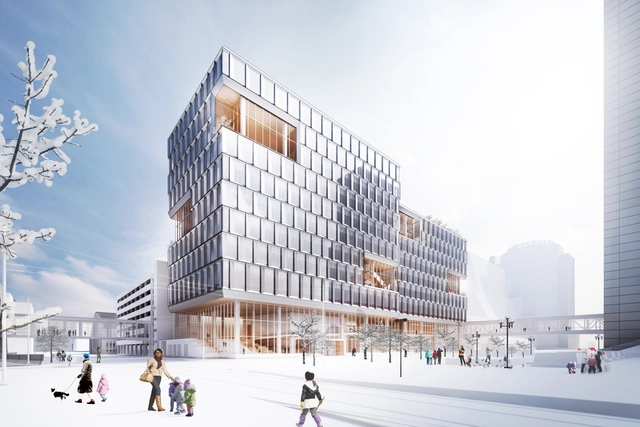
Designed by Henning Larsen and MSR Design, the New Public Service Building for the city of Minneapolis aims to consolidate several departments, currently found across multiple different sites, into one unified building. The scheme promotes the health and well-being of its 1,300 employees through maximizing daylight and green space throughout, integrating a significantly sustainable remit within the 385,000 square foot, 11 story proposal. Located diagonally across from the existing city hall, Henning Larsen brings a “knowledge-based Scandinavian design approach” to the high-performance office space, hoping to set a “new architectural agenda in North America."
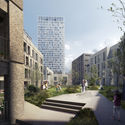
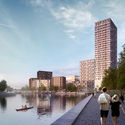
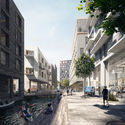
Like many European cities, Brussels is moving towards a post-industrial economy, giving new opportunities to old industrial areas such as the Canal Zone. The Henning Larsenredevelopment seeks to remodel the area as an urban center, tying the urban areas west of the canal to central Brussels.
RESONATE A Conference on Architecture, Art and Sound by MAAT and reSITE in collaboration with Meyer Sound
MAAT Museum and reSITE partner on a Conference on Architecture, Art and Sound and will bring world’s best creators of sound spaces and acoustic experiences to Lisbon. During a one-day international event in collaboration with Berkeley, California’s Meyer Sound, we will be thinking about sound and space with architects of the most fascinating contemporary music and culture venues and designers of intriguing sound environments. Artist-led tours, innovative technologies, demonstrations and performances will be part of the event, on top of keynote lectures and discussions with editors from leading global media. Early Bird registrations are open until January 15 for this one-of-a-kind event for architects, artists, engineers and anyone interested in how sound interacts with architecture.
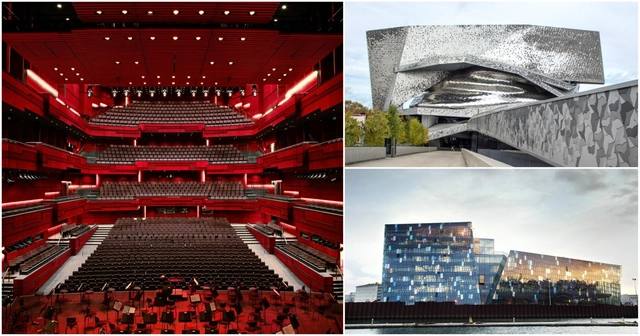
In their video series for the November 2017 World Architecture Festival, PLANE—SITE delves into contemporary concert hall design. The five films highlight major themes in today’s musical architecture through an interactive, multimedia panel. Using Harpa Concert Hall in Reykjavik, Wroclaw’s National Forum of Music, and the Philharmonie de Paris as examples, the videos show how contemporary concert halls are more technological and multi-functional than ever before, demonstrating how architecture redefines the modern-day musical performance experience.
The series acted as a starting point for a conversation between the WAF audience and panelists, moderated by PLANE—SITE’s Andres Ramirez. Panelists included Michel Cova of dUCKS scéno, Tateo Nakajima of Arup, and Jacob Kurek of Henning Larsen.
Currently, virtual reality and 360-degree video are somewhat niche tools, but they are rapidly gaining in popularity. These immersive technologies give architects a means to better decipher a client’s expectations—everything from a building’s natural lighting to the choice of tile backsplash can be actively assessed at any point in the design and construction process. This transformative technology has already been fully incorporated into some practices. ArchDaily interviewed Henning Larsen’s Chief Engineer of Sustainability Jakob Strømann-Andersen to better understand the current and future applications of virtual immersion in architecture.
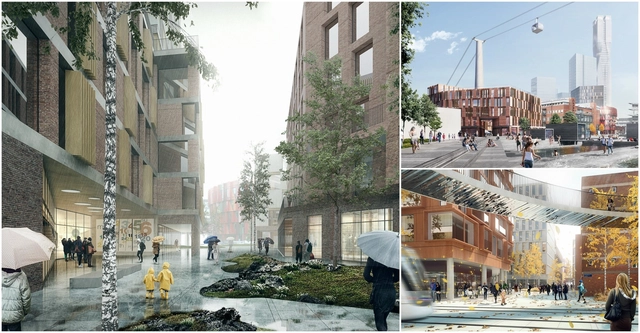
Like many European urban districts, the Swedish city of Gothenburg is in the process of transforming old industrial areas along its waterfront into mixed-use public realms. Against the backdrop of urban regeneration in Gothenburg, Danish firm Henning Larsen has unveiled a masterplan for the Lindholmen urban district, which following its completion in 2025, will offer a diverse environment for engagement between students, entrepreneurs, and public citizens.
Construction is an exercise in frugality and compromise. To see their work realized, architects have to juggle the demands of developers, contractors, clients, engineers—sometimes even governments. The resulting concessions often leave designers with a bruised ego and a dissatisfying architectural result. While these architects always do their best to rectify any problems, some disputes get so heated that the architect feels they have no choice but to walk away from their own work. Here are 6 of the most notable examples:
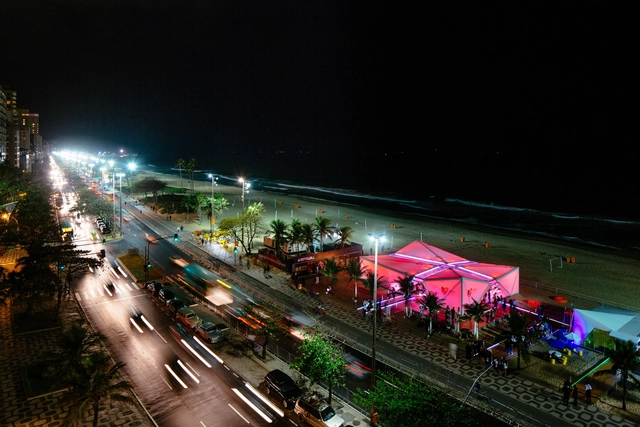
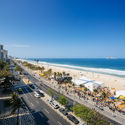
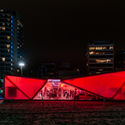
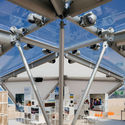
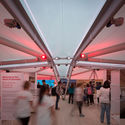
The Henning Larsen Architects-designed Danish Pavilion has opened to the public on Ipanema Beach to celebrate Denmark's participation in the Rio 2016 Olympic Games. The pavilion is the only national pavilion at the games, and contains displays featuring Danish companies and products. The design takes inspiration from the nation's seafaring and yachting traditions, while programmable LED lights allow the pavilion to resemble a number of different flags from bird's eye view.
Videos
Still from "Concrete Love" showing Gottfried Böhm's Neviges Mariendom. Image Courtesy of New York Architecture & Design Film Festival
October has become a busy month in the design world. If you’re living in the United States, New York specifically, it means Archtober: a portmanteau that means the city is flooded with architecture activities, programs and exhibitions, piled onto an already rich design calendar. One of these events is the New York Architecture & Design Film Festival, which started on Tuesday night and runs through Sunday October 18th, and will screen 30 films from around the world in 15 curated, themed programs.
This week, I was able to visit the festival to absorb the atmosphere and speak to the festival's director Kyle Bergman, to learn the ins and outs of this year’s festival, how things got started, and where it will go in the future.
Belatchew Arkitekter has presented a concept for transforming high-rise towers into power-generating factories. The Swedish firm's proposal involves covering a Stockholm skyscraper with "electricity-generating bristles". The tower in question is Henning Larsen's Söder Torn tower on Södermalm in Stockholm. Belatchew has designed a wind farm that will top the existing building with a 16-story extension, covering the facade with "hairy-looking plastic straws designed to move with the wind".
Join us after the break for more details and images of this proposal.

























.jpg?1445011714&format=webp&width=640&height=580)