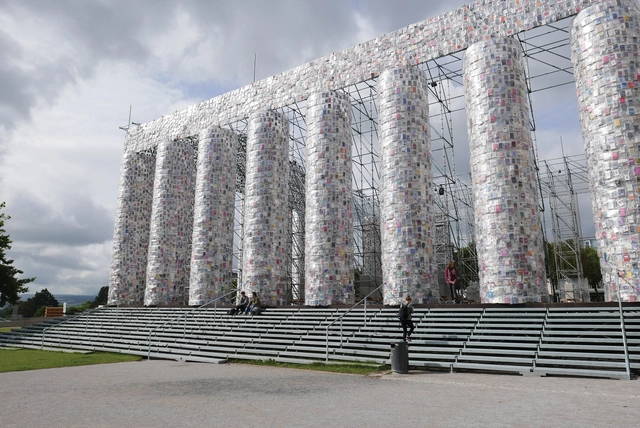
Marta Minujín, Parthenon of Books, Dokumenta 14, Kassel, Germany, 2017. Image by Anne-Catrin Schultz.. Image Courtesy of Real and Fake in Architecture–Close to the Original, Far from Authenticity?
The term “fake” has been in the media frequently in the early 21st century, referring to headlines and fictional statements that are perceived as real and are influencing public opinion and action. Replacing the historically more common term “propaganda,” fake news aims at misinformation and strives to “damage an agency, entity, or person, and/or gain financially or politically, often using sensationalist, dishonest, or outright fabricated headlines.” Tracing fake news and differentiating “real” information from personal opinions and identifying intentional (or unintentional) deceit can be complicated. It is similarly complex to trace the duality of fake and real in the built world. To explore the larger context of fake statements in architecture and environmental design, a look at the definition of fake and related terms might be necessary.
PARKROYAL COLLECTION Pickering, designed by WOHA and Tierra Design. Image Courtesy of WOHA
Singapore as of late is continually building its reputation as a City in Nature, with Singaporean design long having a strong consciousness to acknowledge that green spaces matter. Urban planners and architects alike have taken a conscientious decision to weave in nature throughout the city as it continues to uproot new buildings and developments, incorporating the implementation of plant life in any form, whether it be through green roofs, cascading vertical gardens, or verdant walls.
This article will explore the pioneering actions taking place in Singapore to create a more biodiverse city and nation, and how this provides a view of how other major cities can adopt similar initiatives over the next decade to provide a blueprint for the future.
Biodiversity has become ubiquitous in project descriptions as yet another mark of the design's environmental accomplishments. The increasing focus on sustainability, the standard inspired by the UN Sustainable Development Goals, prompts a deeper understanding of what biodiversity in urban environments means and how can architecture and urban design actively contribute to it. With species extinction rates soaring and urbanization over natural land continuing, cities become an essential factor in sustaining biodiversity, and the following explores how the built environment can foster multi-species habitats.
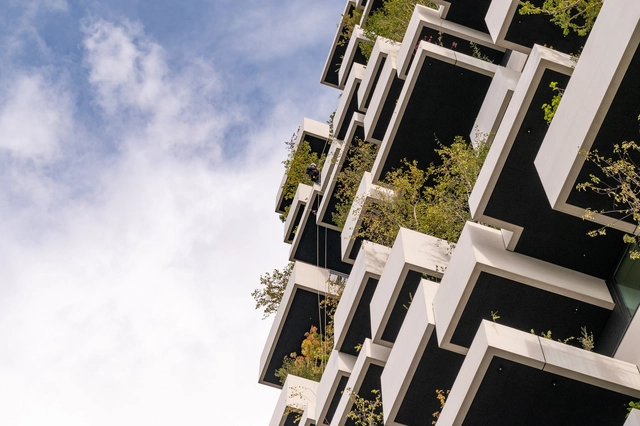
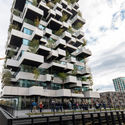
“Designing a house for trees”, as he puts it, Stefano Boeri is working across the planet, exporting his approach with trees from Mexico to Shenzhen. Building a whole ecosystem, rather than just a green facade, the architect understands the need to redefine our relationship with nature, especially in cities.
ArchDaily’s Christele Harrouk had the chance to interview the architect in Eindhoven, during the inauguration of the Trudo Tower, Stefano Boeri’s first social housing project, in collaboration with Francesca Cesa Bianchi, his partner at Stefano Boeri Architetti, Laura Gatti, botanist and plantation consultant, and Paolo Russo, Project leader. Discussing mainly his approach with nature, the environmental quality, and his exported perspective around the world, the conversation also tackled the 4 ongoing vertical forests in West Europe: A first that has just started in Utrecht, a second in Brussels, a ready to go building in Eindhoven and a last one in Antwerp.
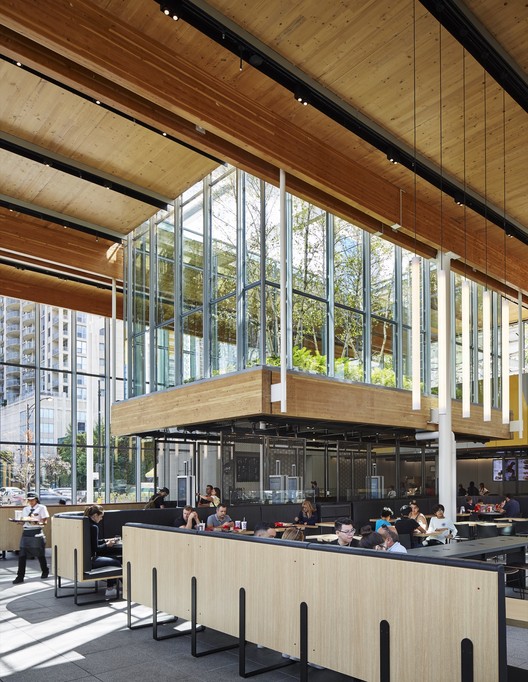
In an effort to reinvent an iconic American fast-food brand, McDonald’s U.S. has announced a new direction for the corporation, beginning with rethinking the restaurant’s current archetypal design both in its interior eating spaces and exterior urban landscape. A primary example of this commitment can be seen in the recently completed design for McDonald’s Global Flagship in Chicago by Ross Barney Architects.
The structure, which fills an entire city block in the heart of Chicago, was envisioned as a hallmark example of both the architect and the corporation's shared commitment to environmentally sustainable design. Cross Laminated Timber (CLT), an essential material for the project, replaced many of the commonly-used building materials such as steel, concrete, and plastics that have a larger environmental footprint.
Working remotely throughout the past year has accelerated the introduction of new approaches to real-time rendering, and with it, a new necessity was born: how can a person feel physically present inside a space, without actually being there? Ultimately, designers resorted to the virtual world, a vast realm of interactive built environments that can be accessed from the comfort of one's home. Even the tools utilized, such as headsets and goggles, have become more accessible to the vast majority of the public and are being sold at a lower price than they initially were. We have become accustomed to build, modify, and navigate between different environments, going back and forth between what is real and what isn't. Truth is, virtual has become the new normal.
The Shing Mun River in Sha Tin, a residential town in Hong Kong, has struggled with plastic waste pollution for years. Household waste that is not properly recycled will either end up in landfills or floating in the river. In 2018 almost 17 million plastic items, or 40,000 items daily, were found to be drained into the ocean via the Shing Mun River, mostly being food packaging, cutleries, and household plastic bottles. This quantity of plastic pollution in the river and surrounding environment could eventually jeopardize the natural ecosystem irreversibly.
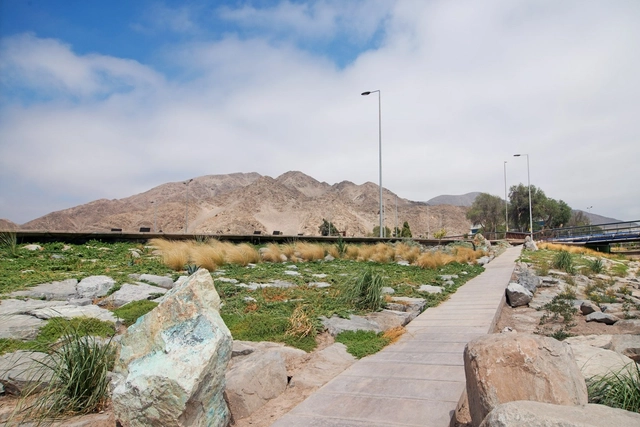
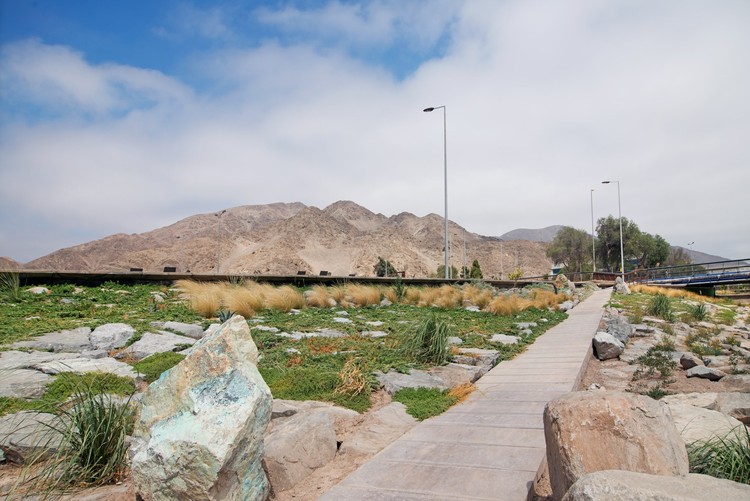
Does it make sense to design green parks in desert cities such as Casablanca, Dubai, or Lima? Ostensibly it does because they contribute freshness and greenness to the urban environment. In exchange, however, they disrupt native local ecosystems, incur high maintenance bills, and begin a constant struggle to ensure water availability.
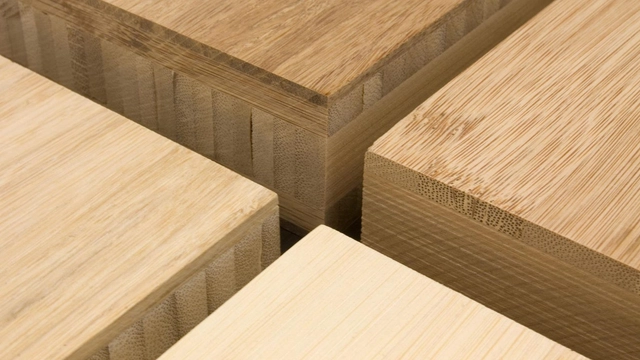
Mass timber has been hailed as the solution to architecture’s notorious sustainability problem – that buildings account for nearly 40% of global energy use is by now a worn and overcited fact. But timber isn’t the world’s only renewable material, and architects and engineers have begun looking elsewhere for other possible steel and concrete replacements. One such possibility that has recently come to light is engineered or laminated bamboo, a highly sustainable and structurally impressive material. Below, we investigate how laminated bamboo is made, what its primary qualities are, and how it compares to timber.
Today's designers have inherited unprecedented global challenges, a legacy which will require radically new ways of fashioning the buildings, places, and landscapes that harbor our diverse ways of life. The College of Environmental Design offers several introductory and advanced programs for those interested in confronting these challenges in the fields of architecture, landscape architecture and environmental planning, urban design, and sustainable city planning. Please visit UC Berkeley's Summer Programs website to view images of student work and learn more about the CED Summer experience.
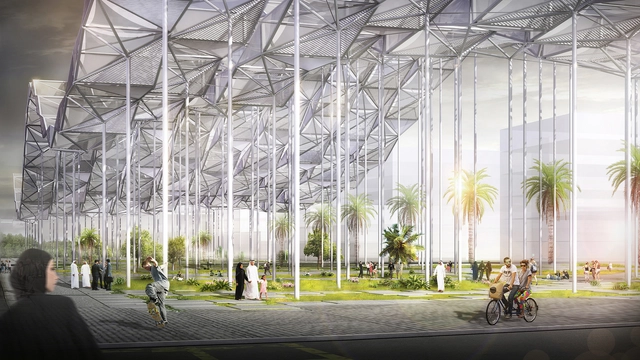
Chinese architect Mingfei Sun has designed an environmentally oriented urban hub for Masdar City, Abu Dhabi. Titled SURGE, its natural aesthetics and technological forwardness are intended to communicate a J.M.W. Turner-esque awe for the power of nature, making it an oasis of high aesthetic and ecological value.
https://www.archdaily.com/922010/surge-combines-high-aesthetics-with-environmentally-oriented-technologyLilly Cao
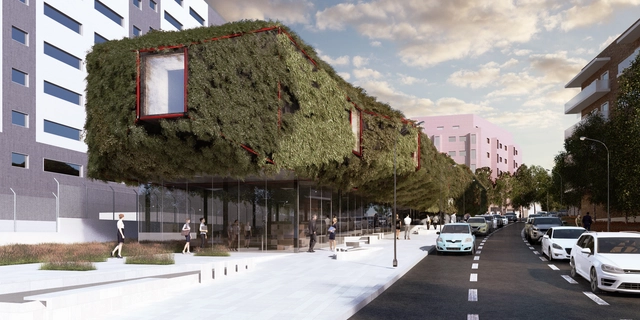
A Green Spaceship appears to have landed in Villaverde, Madrid, in design firm 3GATTI’s proposal for the new municipal library. The design for the landmark building employs the public’s curiosity to draw visitors in and create an iconic presence in the city. The library is split between two floors, both architecturally and conceptually. The ground level is transparent and open, meant to house the noisy, public aspects of the program; the upper floor is the architectural showpiece, floating above the ground and containing the more private, quiet study spaces.
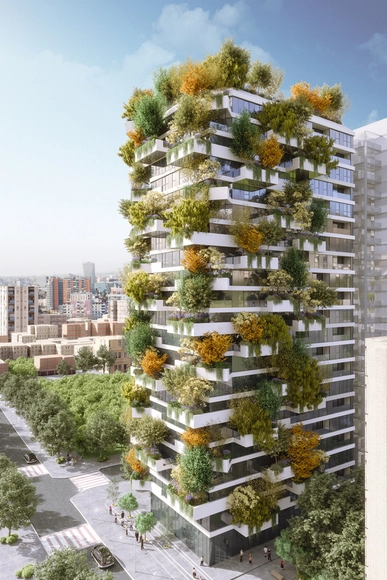
Albania’s capital city, Tirana, is slated to receive the country’s first Vertical Forest in a scheme designed by Milanese architecture firm, Stefano Boeri Architetti. Originating as part of the city’s new development master plan completed by the firm 3 years ago, the building will greatly increase the amount of greenery within and around the metropolitan area. Tirana’s Vertical Forest will contain 21 floors above ground with 4 more below and will be populated by 105 apartment units above a primarily commercial ground floor.
It is, once again, the time of year where we look towards the future to define the goals and approaches that we will take for our careers throughout the upcoming year. To help the millions of architects who visit ArchDaily every day from all over the world, we compiled a list of the most popular ideas of 2018, which will continue to be developed and consolidated throughout 2019.
Over 130 million users discovered new references, materials, and tools in 2018 alone, infusing their practice of architecture with the means to improve the quality of life for our cities and built spaces. As users demonstrated certain affinities and/or demonstrated greater interest in particular topics, these emerged as trends.
https://www.archdaily.com/910525/the-trends-that-will-influence-architecture-in-2019Pola Mora
Mundo Verde at Cook Campus / Studio Twenty Seven Architecture
A misconception often surfaces in design circles that architectural beauty and evidence-based environmental performance are mutually exclusive. To address this, the American Institute of Architects (AIA) Committee on the Environment (COTE) is releasing a new tool that can assist architecture firms in designing high-performance energy-efficient buildings.
Despite the federal stance on paramount environmental issues, the AIA upholds and advocates for the responsibility of architects to mitigate against the effects of climate change. Aware that the construction industry consumes nearly 40% of the energy supply nationwide, the AIA COTE® Top Ten Toolkit presents a series of strategies to promote sustainability without compromising the design.
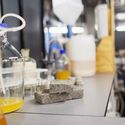
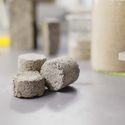
Some years ago, researchers in the United States previously tested the concept of using synthetic urine-based substances to fabricate building materials. However, new research conducted by Masters student Suzanne Lambert at the University of Cape Town, South Africa, puts forth a zero-waste process of producing urine-based bricks by using collected human urine for the first time.
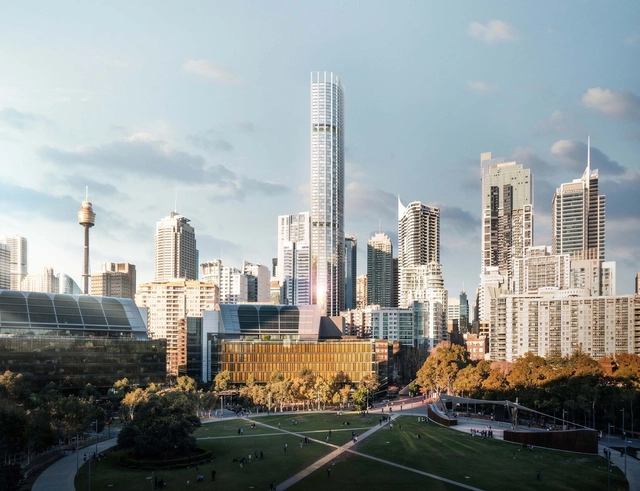
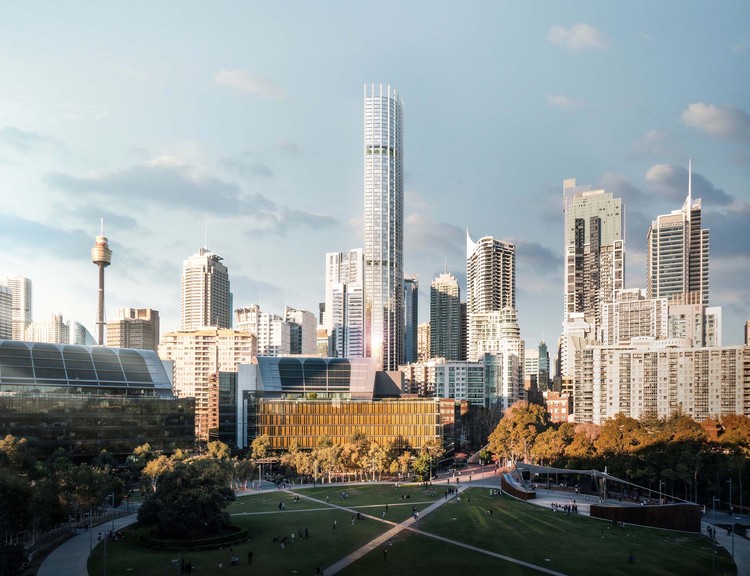
A beautifully delicate design by ingenhoven architects, in cooperation with architectus, has bested series of internationally acclaimed architects to design Sydney’s tallest residential tower at 505-523 George Street. The 79-storey skyscraper will reach 270m, and include several uses, ranging from high-quality living and retail to hotel and leisure. The designers hope the tower will be “a profoundly visible landmark standing for an economical, environmental and socially sustainable, future-oriented development”.




..jpg?1644514229&format=webp&width=640&height=580)

._1.jpg?1644514203 "Oasia Hotel Downtown, designed by WOHA and STX Landscape Architects. Image Courtesy of WOHA")

.jpg?1644514319 "Kampung Admiralty, designed by Ramboll Studio Dreiseitl and WOHA. Image Courtesy of WOHA")
..jpg?1644514229)


.jpg?1633431403 "Palazzo Verde . Image © Stefano Boeri Architetti")
.jpg?1633431510 "Palazzo Verde . Image © Stefano Boeri Architetti")







Stefano_Boeri_Architetti_tre_nuove_scuole_per_tirana_Scuola_3_total.jpg?1552748138 "24-hour school in Tirana. Image © Stefano Boeri Architetti")

StefanoBoeriArchietti_URBAN_SYSTEM_agriculture.jpg?1552748062 "Tirana 2030 - Agriculture. Image © Stefano Boeri Architetti")



.jpg?1548884950&format=webp&width=640&height=580)