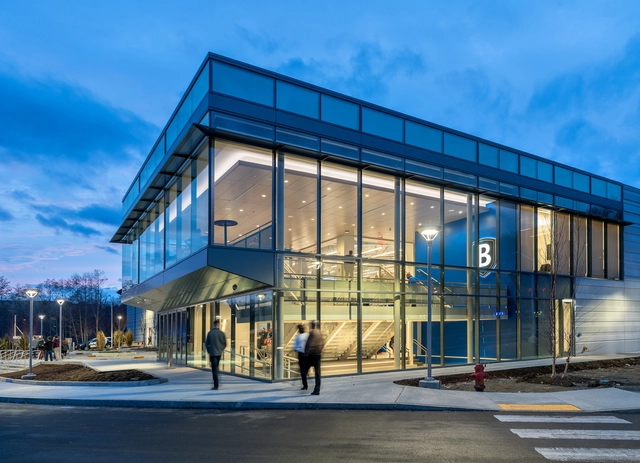
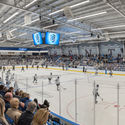
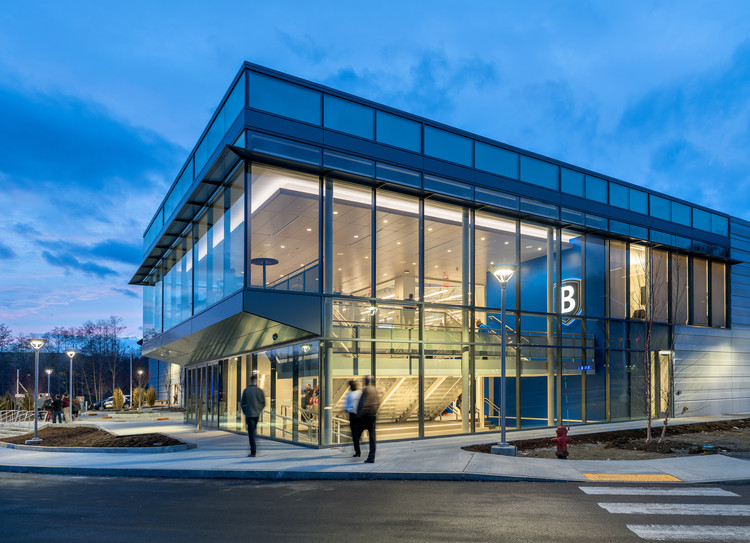
Massachusetts’ Bentley University Arena together with Architectural Resources Cambridge (ARC) have earned the LEED Platinum certification and was named the most environmentally sustainable arena in the United States. The 76,000 square foot arena emphasizes the university’s commitment to sustainability, energy efficiency, and goal to reach carbon neutrality by the year 2030. Bentley Unversity also offers a major in Sustainability Science and a program that will reduce more than 270 tons of material waste per year. This arena hosts several university events such as concerts, alumni events, career fairs, and is home to its NCAA Division I hockey team.
Videos
Immerse yourself in design this summer on the Berkeley campus!
UC Berkeley's College of Environmental Design is now accepting applications for the 2018 Summer [IN]STITUTE in Environmental Design! The Summer [IN]STITUTE gives participants the opportunity to test their enthusiasm for the material and culture of architecture, landscape architecture and sustainable city planning. The Institute is geared towards post-baccalaureate participants with no previous experience in design, or experienced designers who wish to explore an aspect of environmental design outside of their primary discipline.
Air pollution in urban areas is quickly racing to the forefront of the environmental discussion, with several major cities facing a serious deterioration of breathable air supply. New Delhi, Beijing, Los Angeles, Moscow and Karachi represent a handful of cities facing the world's worst urban pollution, each with recorded amounts of particulate matter exceeding acceptable levels. In 2014, the World Health Organization issued a report estimating that 7 million people suffered premature deaths in 2012 due to air pollution exposure.
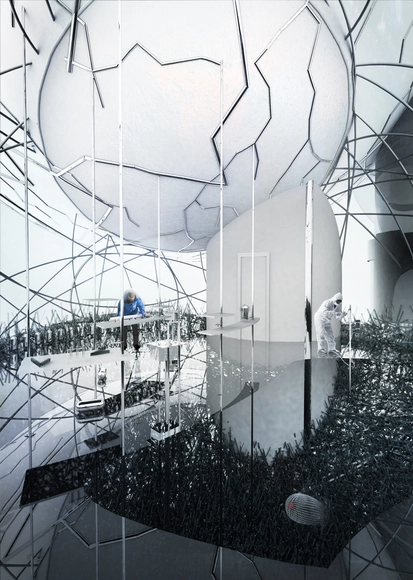
Enter Aeriform Ecologies: An Atmospheric Archive for Industrial Effluvium. Conceived as a thesis project by Jennifer Ng, University of Michigan with thesis advisor Kathy Velikov, Aeriform Ecologies delves into the possibilities for byproducts of petroleum production by proposing a network of solutions for the 'spatial runoffs' created by fossil fuel extraction. Based on a futuristic approach that includes a network of unmanned atmospheric gas harvesting dirigibles, the project blurs the lines between science, technology, and architecture.
Explore the effervescent world of Aeriform Ecologies after the break
BW International is now accepting entries for its Design a Beautiful House competition, an international call offering £25,000 (about $39,000 USD) to winner(s). The competition is open to all designers, students, artists, and others from anywhere across the globe, and requires no registration fee.
Entrants are asked to think about the definition of beauty in order to create a design that considers the ways that beauty and aesthetics can enhance the function of a home and the experiences of its users.
Global, the Winter 2014 issue of ArchitectureBoston magazine, out now, is an examination of the challenges and opportunities facing architects working abroad, from the Middle East to Africa to Asia. The topics explored in this issue include how to value resource-constrained approaches, honor local vernacular, and learn from the urbanization precedents set in other parts of the world. In this article, Jay Wickersham FAIA examines how in a globalized market, architecture firms can take steps to ensure that their designs act in the best interests of the foreign communities they affect.
The signs of architecture’s globalization are all around us. Foreign students flock to Boston to study architecture, prominent buildings are designed by foreign architects, American firms build practices around international projects. Globalization has allowed architects to work outside their own regions and cultures, at a scale and with a freedom of design they might never enjoy at home. But beneath the excitement and glamour of international practice, I sense an unease. Are we creating vital and original new architectures, or are we homogenizing cities and landscapes and obliterating regional differences? Are architects helping to strengthen and develop the economies of host communities, or are they acting as unwitting tools of inequality and repression?
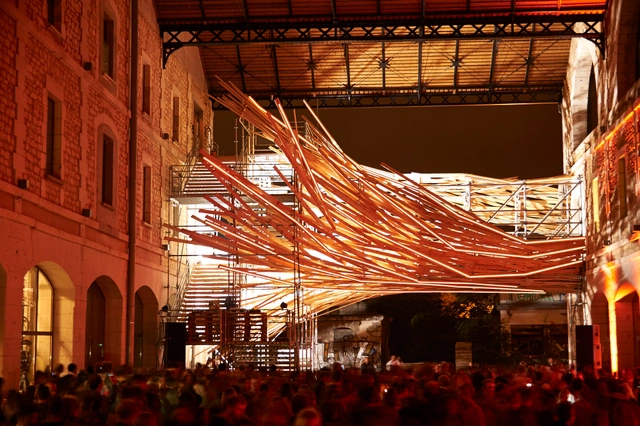
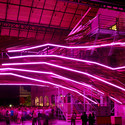
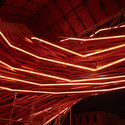
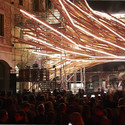
Paris-based firm 1024 architecture has created Vortex, a generative light sculpture located within the Darwin Ecosystem Project’s green building in Bordeaux, France. The “architectural fragment” consists of scaffolding, raw wood, and twelve lines of LED light. With colored LED lights appearing to shoot across the structure, a new spatial experience is created, which also informs viewers about energy consumption within the building.
Learn more about the structure and 1024 architecture after the break.
Imagine walking beneath an illuminated canopy of lush greenery, in the form of inverted pyramids sculpted to perfection. In early August 2014 visitors were welcomed by this succulent living roof to the Harmony Arts Festival in West Vancouver, British Columbia. Guests were guided through the fairgrounds beneath the 90-foot long canopy, creating an immersive sensory experience befitting the interdisciplinary creative arts festival. Designed by Matthew Soules Architecture and curated by the Museum of West Vancouver, Vermilion Sands was created as a temporary installation for the ten day festival.
Submerge yourself in Vermilion Sands with photos and more info after the break.
Numerous awards recognize innovative, forward-thinking and environmentally-friendly design, yet there is no way to recognize projects that are harming the environment or detrimental to the planet – until now. Created by Cameron Sinclair, one of the co-founders of Architecture for Humanity and current Executive Director of the Jolie-Pitt Foundation, the recently launched “DEAD Prize” seeks to highlight projects that have a negative impact on the planet, with the aim of inspiring designers to “see these failures as a challenge to create something new, to correct the mistakes of the past or to find the antidote for the project in question.” Tweet your nominations for the prize to @deadprize by November 1 and learn more about this tongue-in-cheek award at the DEAD Prize website.
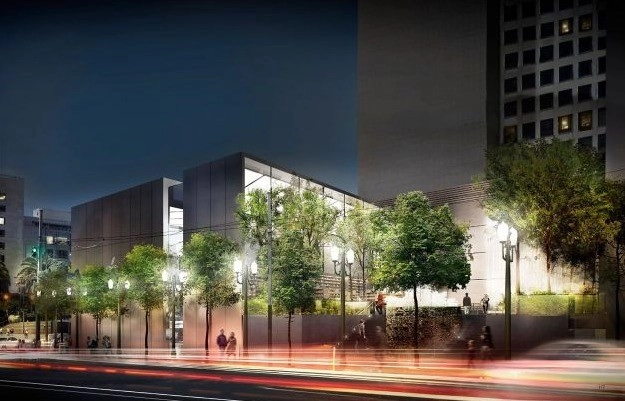
Apple's signature glass design has come with its fair share of mishaps - from errant snowblowers to, of course, dying birds. To determine the risk posed by Apple's latest approved store to San Francisco's protected bird population, Apple hired avian collision risk consultants (really) who determined that the risk is "acceptable" (for non-avian species at least). Read the full bird analysis here.
Liz Diller, one of the three partners of Diller Scofidio + Renfro, discusses the history of the High Line and the active design decisions which led to its success.
The elevated railroad, which was designed to penetrate city blocks rather than parallel an avenue, saw its last delivery (of frozen turkeys) in 1980. By 1999, a “very strange landscape had formed, with a whole eco system around it,” says Diller. Advocacy for the site’s preservation began with two local residents, and culminated in its reclamation with the multidisciplinary collaboration of city officials and impassioned designers (namely James Corner Field Operations, Diller Scofidio + Renfro, and planting designer Piet Oudolf). "The High Line project couldn’t have happened without the right people, the right time and the right administration."
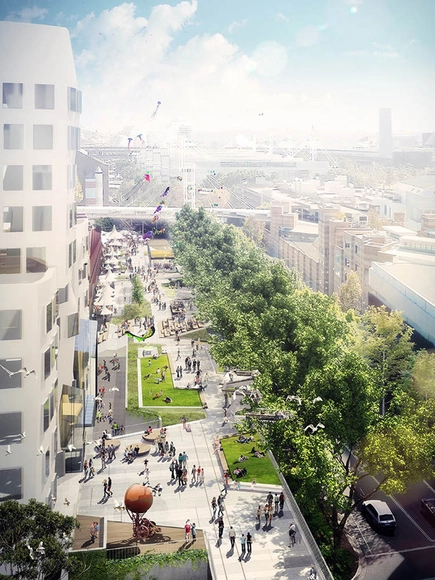
The Goods Line proposal. Image Courtesy of ASPECT Studios
As cities continue to attract more people, naturally vegetated areas slowly wither, leaving little to no green spaces for city dwellers to escape to, no trees to purify the air and enhance the environment. Australia plans to change this. The 202020 Vision is a concerted effort from the government, academic and private sectors to create twenty percent green areas in Australia's urban centers by 2020. “Urban heat islands, poor air quality, lack of enjoyable urban community areas are all poor outcomes when green spaces aren't incorporated into new developments and large scale building projects.” Read about the 202020 initiative here, "More green spaces in urban areas, says new national initiative."
https://www.archdaily.com/448875/australia-plans-for-greener-cities-by-2020Jose Luis Gabriel Cruz
Water scarcity is a profound challenge for designers of the built environment. Beyond looking for water sources and creating sustainable ecosystems, how can we begin to create cities and buildings that will help us to celebrate and mitigate hydro-logical concerns? Hadley and Peter Arnold, co-directors of the Arid Land Institute (ALI) at Woodbury University, have decided to tackle this problem around Los Angeles. With the support of the World Water Forum and the Metropolitan Water District of Southern California, they recently developed a high-resolution geospatial model to strategically identify and quantify the potential for improving storm water capture within urban areas.
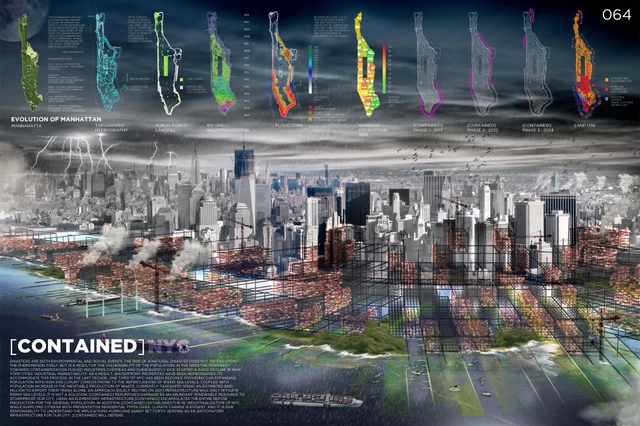
The finalists of the 2013 ONE Prize, a competition exploring the social, economic, and ecological possibilities of urban transformation, have just been announced. The 2013 competition focused on severe climate dynamism, calling for innovative and thoughtful design proposals and urban interventions that intend to alleviate storm impact and answer the question: "How can cities adapt to the future challenges of extreme weather?"
https://www.archdaily.com/444978/2013-one-prize-finalists-announcedKatherine Allen
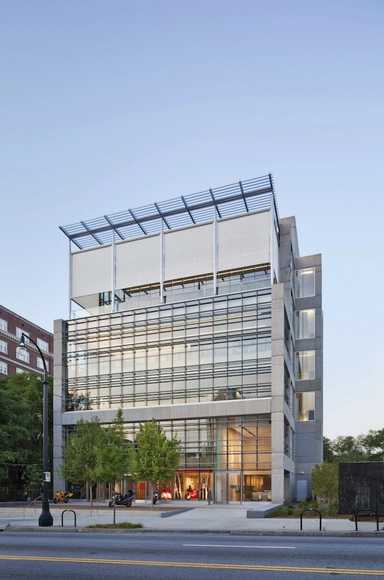
1315 Peachtree, in Atlanta, achieved LEED Platinum Certification. However, will newer buildings in Georgia be held to the same standards? . Image Courtesy of Perkins + Will
The US Green Building Council’s federally adopted LEED certification system has come under legislative siege with lobbyists from the timber, plastics and chemical industries crying out, “monopoly!” Mississippi, Georgia and Alabama have lead efforts to ban LEED, claiming the USGBC’s closed-door approach and narrow-minded material interests have shut out stakeholders in various industries that could otherwise aid in the sustainable construction of environmentally-sensitive buildings.


.jpg?1526040139 "Courtesy of InkHouse")

![Call for Submissions / 2018 Summer [IN]STITUTE in Environmental Design - Featured Image](https://snoopy.archdaily.com/images/archdaily/media/images/5a9d/9db2/f197/ccf8/6c00/012c/slideshow/open-uri20180305-14309-k3t69r.jpg?1520278953&format=webp&width=640&height=580)