This article is part of our new Opinion section, a format for argument-driven essays on critical questions shaping our field.
Who designs architecture today? In a professional landscape increasingly defined by collaborative workflows, generative software, and distributed teams, the figure of the architect as a singular creative author feels both anachronistic and inadequate. This article argues that architectural authorship is no longer an individual act, but a collective and distributed condition shaped by institutions, technologies, and shared forms of labor. The transition from individual to collective authorship is not simply a consequence of larger offices or digital tools; it signals a deeper structural shift in how architecture is produced, communicated, and validated.
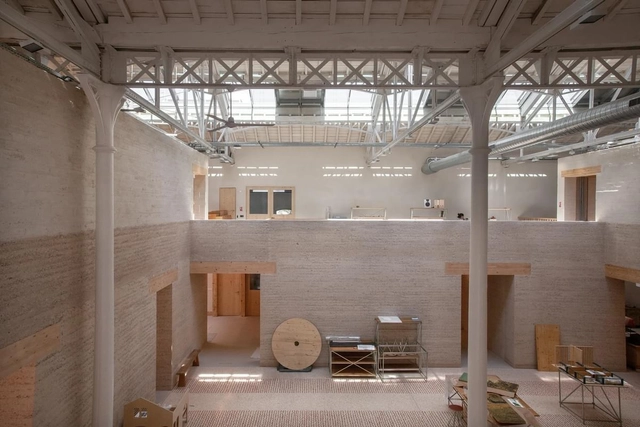
Adaptive reuse is shifting from simple preservation to active revitalization, a process of structurally rescuing and reprogramming architectural typologies whose original functions are no longer relevant. The obsolescence of architectural spaces occurs for varied reasons: sociological shifts, leaving spaces uninhabited; technological advances, phasing out specific machinery; and economic changes, making centralized functions necessary. The strategy of repurposingfocuses on achieving spatial and functional longevity through minimal interventions, allowing the original structure to serve as the memory anchor of the project.
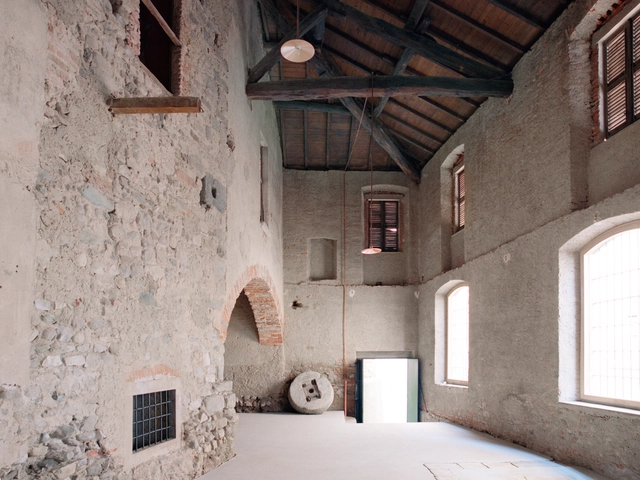
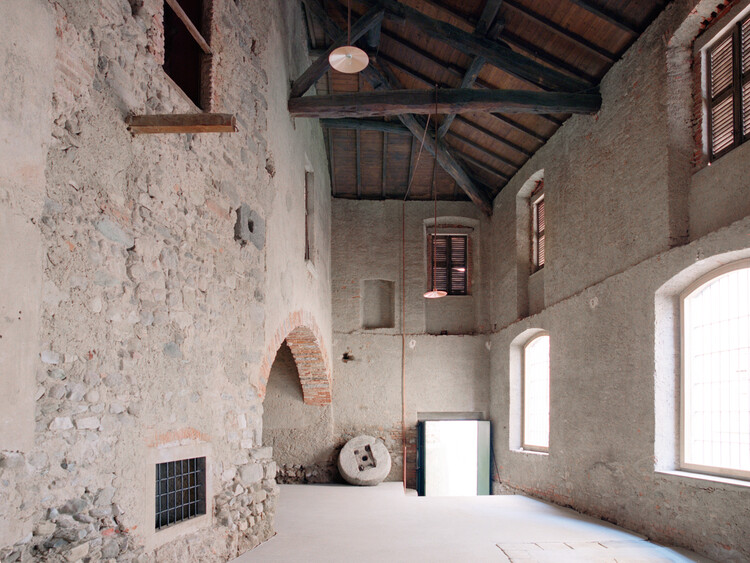
This wave of adaptive reuse treats the historic shell as a limited resource, prioritizing structural permanence over surface aesthetics. Designers are engaging in a sort of archaeological process by exposing the original structural essence: the heavy timber, raw concrete, or monumental masonry. Interventions are confined to meeting new programmatic needs, often appearing as an independent insertion within the ancient envelope. This contrast redefines the building's lifespan not as a singular narrative but as a layered story of continuous events.
Architecture is shaped not only by buildings, but by the ideas that make them possible. Before the constraints of capital, regulation, and procurement, there is a moment when architecture is allowed to think aloud. The first confrontation with this fertile moment usually takes place in academia, in the thesis. It is not merely a requirement for graduation, but a space of speculative freedom where architecture formulates hypotheses, builds arguments, and tests positions.
For many, it is also the first opportunity to think beyond the structure of academic programs — a first chance to explore something more personal, unresolved, or even unreasonable. While often seen as an endpoint, the thesis is better understood as a beginning: the first engagement with architecture as a form of reasoning, where the project is not yet a response, but a question.
Maria Lisogorskaya and Kaye Song of Assemble: Atelier LUMA 2023 Lot 8 Le Magasin Electrique Photo @ Joseph Halligan. Image Courtesy of Bauhaus Earth
Maria Lisogorskaya and Kaye Song from the London-based collective Assemble, along with Lviv-based architects Anna Pomazanna and Mykhailo Shevchenko, have been announced as the 2025 Experimental Fellows at Bauhaus Earth. Selected from 120 submissions, their projects are set to explore earth as a material in contemporary architecture. The annual Bauhaus Earth Fellowship program was established in 2022 by architect Prof. Regine Leibinger. It aims to support diverse projects that explore new modes of practice across various geographies, that can contribute to ecological and social resilience. Fellows receive financial support, mentorship, and access to a network encouraging collaboration among architects, manufacturers, and local stakeholders.
The world certainly looks different through the eyes of a young child; enormous, intriguing, and somewhat overwhelming, and it has long been believed that what we encounter as children shapes our perspective of the world. When asked about his childhood memories in Switzerland, Peter Zumthor shared that the memories of his youth contain the deepest architectural experience, which has become reservoirs of the architectural atmospheres and images that he explores in his work as an architect today.
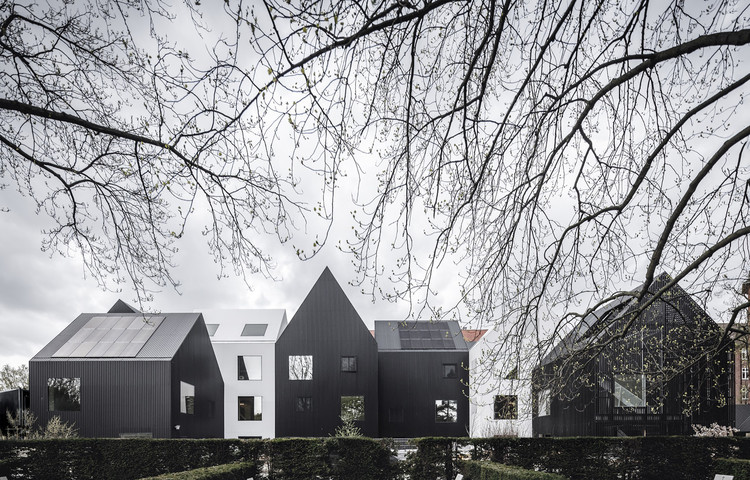
Having a complete understanding of how children change and grow physically and psychologically throughout their childhood requires an in-depth observation of different factors, such as their hereditary traits and genetics, the interactions they have with other children and adults, as well as the environment they are living, playing, and learning in. In celebration of World Children's Day on November 20th, we look at how architects and designers stimulated children's autonomy and promoted their mental and physical well-being through architecture and interior design. This initiative aligns with the theme of World Architecture Day 2024: "Mobilizing the Next Generation for Urban Transformation," emphasizing the crucial role that thoughtful design plays in shaping a sustainable and inclusive future for our cities and the communities within them.
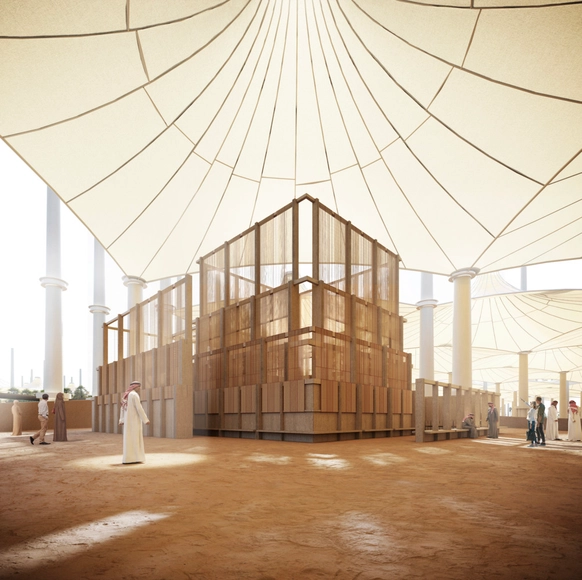
The Diriyah Biennale Foundation has announced Lebanon-based EAST Architecture Studio, in collaboration with artist Rayyane Tabet and engineering firm AKT II, as the winners of the inaugural AlMusalla Prize, a significant new architectural competition launched as part of the Islamic Arts Biennale. Their winning design, a modular structure inspired by regional weaving traditions, uses sustainable materials derived from local date palm waste, including palm fronds and fibers. After the four-month Biennale, the Musalla will be dismantled and reassembled at a new location.
Since 2001, Days of Oris has brought together some of the world's most interesting global architects, in Zagreb, Croatia. This year three global practices bring unique perspective from diverse geographies: Mary Anderson from Assemble (UK), a community oriented practice that does not only focus on the building, but rather on the social impact of their projects; Xu Tiantian from DnA Design and Architecture (China), with a focus on rural China and its communities, delivering an architecture with a strong identity; and Pritzker laureate Alejandro Aravena, whose practice ELEMENTAL (Chile) has brought new perspectives to social housing and public projects across the globe, focusing on the right answer that architecture should respond to.
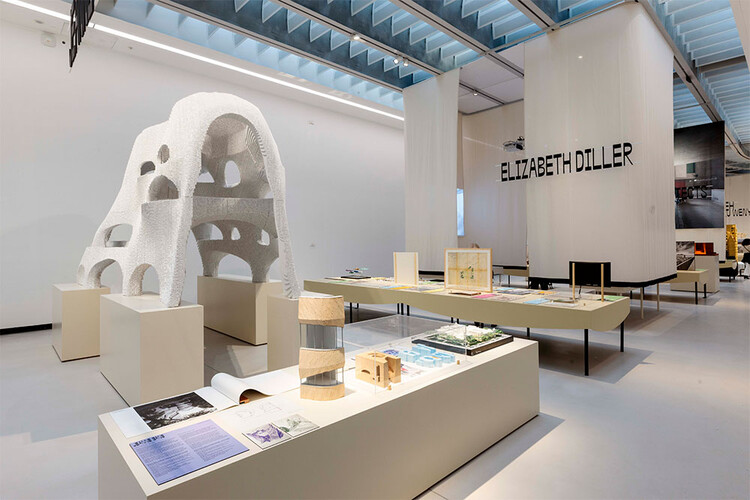
MAXXI Museum celebrates women in architecture in a new exhibition that documents the transformative role of female architects in the profession's evolution over the last century. Curated by Pippo Ciorra, Elena Motisi, Elena Tinacci, and with exhibition design by Matilde Cassani, Good News. Women in Architecture weaves together in four thematic sections the history of women in architecture, with the work of contemporary practitioners and the voices of young collectives, telling the stories of over eighty female architects.
Le Corbusier stated in his seminal text, Towards a New Architecture, that “...man looks at the creation of architecture with his eyes, which are 5 feet 6 inches from the ground.” Logical and rational codes such as this form the standard for much of architectural production - but of course, these "norms" are as constructed as architecture itself. This particular standard is especially irrelevant when designing for children, for whom the adult-centric assumptions of architecture do not and should not apply.
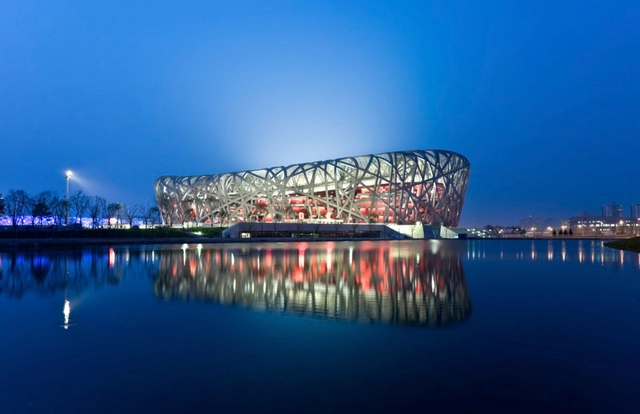
The apple of every athlete's eye, the Olympic Games direct the gaze of the world onto one host city every two years, showcasing the best that sport has to offer across both summer and winter events. In a haze of feel-good anticipation, the general buzz around the city before during the four week stretch is palpable, with tourists, media and athletes alike generating contributing to the fervour. With almost an almost exclusively positive public response (the majority of Olympic bids are met with 70% approval or higher), the Games become an opportunity for a nation to showcases their culture and all it has to offer. At first glance, it's an opportunity you'd be a fool to miss.
Yet as the dust settles, these ‘lucky’ host cities are often left with structures that lack the relevance and function of their initial, fleeting lives. Empty aquatics centers, derelict running tracks and rarely-used stadiums have become as much a trademark of the Games as the Rings, with the structural maintenance and social implications burdening former hosts for years to come. In recent years, fewer cities have been taking part in the bidding process, suggesting that the impact of the Games is beginning to catch up with the excitement. As many as 12 cities contended for the honor of hosting the 2004 games; only two were put forward for 2024/28.
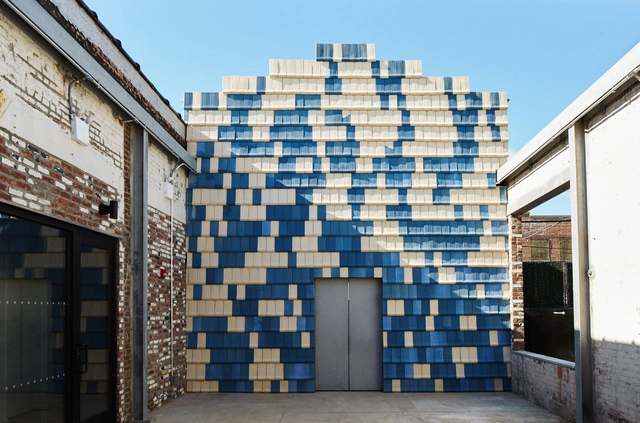
The installation is set at A/D/O's courtyard in Brooklyn. Image Courtesy of Sam Nixon
London-based architecture collective Assemble is set to transform an outdoor courtyard at A/D/O in Brooklyn into a ‘model factory’ to explore utopian ideals of work. The Turner Prize-winning architects will use their first site-specific installation in the U.S. entitled ‘A Factory As It Might Be’ to depict a vision of how society should build and function using abundant, malleable materials.
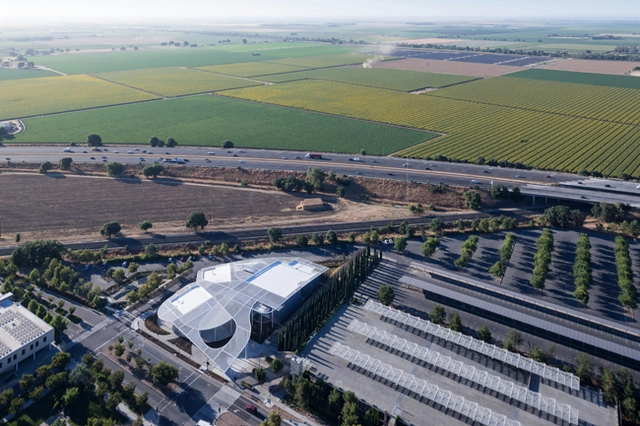
This November, the Manetti Shrem Museum on the University of California, Davis, campus opened to the public. Designed by New York City–based SO-IL with the San Francisco office of Bohlin Cywinski Jackson, the museum pays homage to the agricultural landscape of California’s Central Valley with an oversize roof canopy. The steel members of the 50,000-square-foot (4,650-square-meter) shade structure, nearly twice the size of the museum itself, reference the patterning of plowed fields and create a welcoming outdoor space for visitors. It is both expressive and practical, but getting that balance wasn’t easy.
SO-IL, founded by Florian Idenburg and Jing Liu in 2008, has a portfolio filled with smaller projects, installations, and exhibition-related work. The Manetti Shrem Museum is easily the firm’s largest work to date, demanding a rigorous design-build process while maintaining a strong conceptual vision. In short, it required architecture.
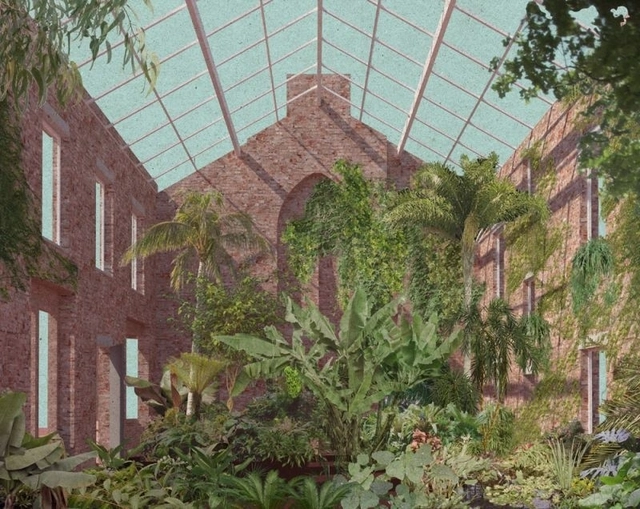
Design for a winter garden in a derelict home in Granby Four Streets. Image Courtesy of Assemble
Assemble, a London-based collective who "work across the fields of art, design and architecture to create projects in tandem with the communities who use and inhabit them," have been announced as the winners of the 2015 Turner Prize – Europe’s most prestigious contemporary visual art award. Their nomination was a surprise to many, not least because an architect (or architecture collective, in this case) has not been shortlisted before. Previous winners—some of whose work has intersected with the world of architecture—include Gilbert & George, Anish Kapoor (known for the Orbit at the 2012 London Olympic Games), Antony Gormley, Damien Hirst, Gillian Wearing and Grayson Perry (a collaborator on FAT's final built work).
The Real Estate Architecture Laboratory (REAL) have today announced a Kickstarter campaign in preparation for the launch of their flagship publication, the Real Review. Produced by an independent team of editors and designers, this bi-monthly magazine intends to "revive the review as a writing form" to a general readership within the architectural sphere and its orbital subjects.
The Real Review will be "a printed object of exceptional quality, featuring engaging texts by leading international commentators," alongside providing "a highly visible platform for emerging writers." Confirmed authors at this time include, among others, Assemble, Pier Vittorio Aureli (Dogma, AA), Reinier de Graaf (OMA), Sam Jacob (Sam Jacob Studio), and a rostra of journalists including the Financial Times' architecture critic Edwin Heathcote.
For this week's editions of Section D, Monocle 24's weekly review of design, architecture and craft, and The Urbanist, their weekly "guide to making better cities," the Monocle team investigate the how the act of playing can shape design and the role of luck in our cities.
In Section D, David Plaisant meets artist Simon Terrill at the new Brutalist Playground, currently on display at the RIBA in London. Terrill, along with Assemble, have reimagined a concrete childrens' playground from one of the UK's Brutalist housing estates, in foam – plus more. In this week's edition of The Urbanist, Andrew Tuck explores the role of luck (and misfortune) in our cities, from how architects apply the philosophy of feng shui to their work to a Brazilian district that it was given the name of Boa Sorte ('good luck' in Portuguese). The show also visits Moore – the city dubbed as "tornado alley of Tornado Alley" – in Oklahoma, US, to understand how best to build in such intense climactic environments.
An exploration of "post-war design for play," The Brutalist PlaygroundbyAssemble and artist Simon Terrill has opened to the public at RIBA's Architecture Gallery. The immersive installation draws on a number of historic London estates - Churchill Gardens, Pimlico; the Brunel Estate, Paddington and the Brownfield Estate in Poplar - where playgrounds were once made from concrete and cast into sculptural forms to offer children an abstract landscape for play. Now deemed unsafe, these playgrounds no longer exist. Thus, The Brutalist Playground was envisaged to explore play, "the Brutalist way."
Images of the complete installation, after the break.
Starting June 10, the RIBA will present The Brutalist Playground - an exhibition that is part sculpture, part architectural installation, which invites people of all ages to come and play, the Brutalist way. Occupying the entire Architecture Gallery, the immersive landscape is a new commission by Turner Prize nominated design and architecture collective Assemble and artist Simon Terrill. It explores the abstract concrete playgrounds that were designed as part of Brutalist housing estates in the mid-twentieth century, but which no longer exist. They became playgrounds unsuitable for play.