Drone photography has been one of the biggest advancements in aerial photography and cinematography. Drones began making a huge impact on filmmaking in the early 2000s, but vast advancements in aerial and camera technology have dramatically increased the use of and demand for aerial footage in nearly every industry focused on digital content.
The beginning of the fall semester is quickly approaching, and prospective architecture students are gearing up for the beginning of their future careers. While the next step may seem daunting, the first year of your architecture education helps set the pace for the remaining four to five years. So it's important to get started on the right foot.
Architecture studios are notorious for long nights, intensive model-making and desks overflowing with trace paper and parti diagrams. But there is one important aspect of studio life that is too often neglected: the student-professor relationship.
Read on for the four steps to start investing in this unique relationship to set yourself up for success.
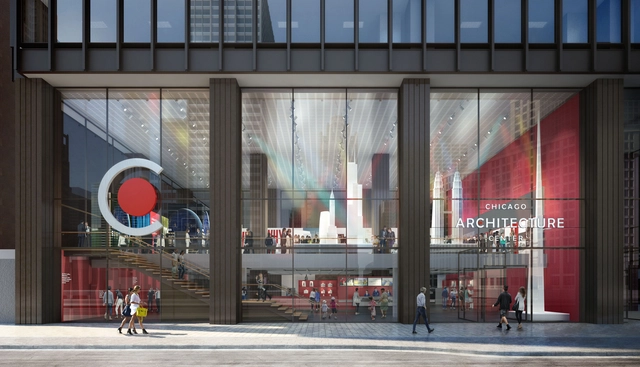
The Chicago Architecture Foundation (CAF) has announced the opening date for their new home, the Chicago Architecture Center (CAC). Set to open August 31 of this year, the CAC will be the "home to everything architecture in Chicago." The 20,000-square-foot structure is located at 111 East Wacker Drive, just above the dock for the River Cruise offered by the CAF.
Lynn Osmond, the CAF's president and CEO, said of the new Center, "We can't wait for people to visit and experience how Chicago architects have influenced the world through their innovation and vision. We've engineered a stimulating and immersive space where visitors can have fun discovering Chicago's groundbreaking architecture and appreciate its profound impact on the world."
Designed by Chicago-based firm Adrian Smith + Gordon Gill Architecture (AS+GG), the CAC will feature custom spaces designed for education, tour orientation, and other public programs, as well as a store and interactive exhibits.
Read on for more about the Chicago Architecture Center and its unique design experience.
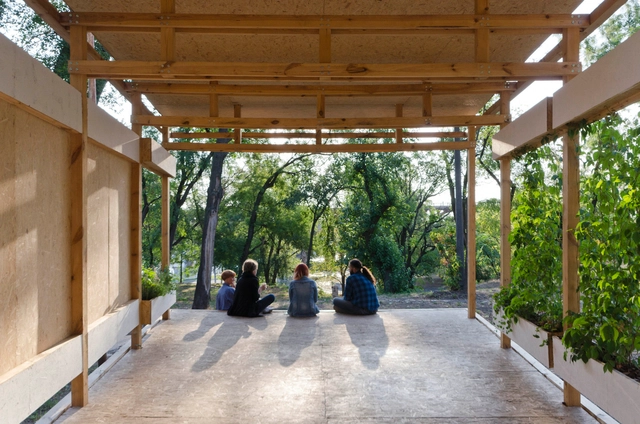
In Dnipro, Ukraine, sits a unique multi-purpose pavilion rich with historical roots and design influence. Stage is a collaborative project between architects from Ukraine, Poland, Denmark and Italy, crowdsourced and crowdfunded by the citizens of Dnipro. The site for the pavilion has been centered around community involvement throughout the complex history of Dnipro, but it has laid unused for over 70 years.
Stage is an emanation of the rich and vibrant culture and was built to accommodate the needs of dozens of artists, poets, painters and musicians, who previously relied on various spaces scattered around the city. Their "collective creative energy" was used to reactivate the lost community space. Stage was recently awarded Special Mention in the 2018 European Prize for Urban Public Space.
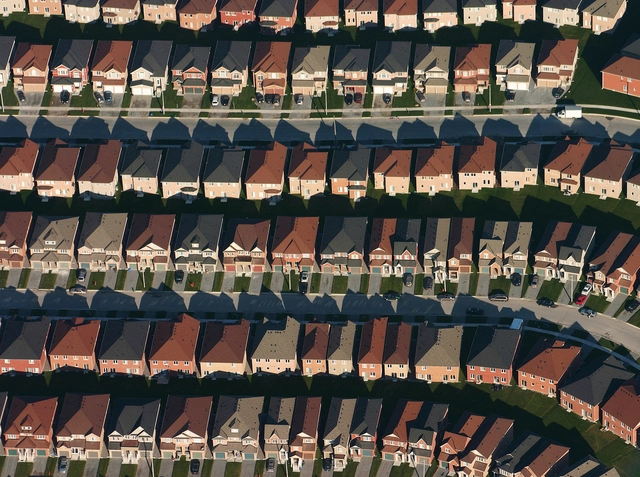
The growth and expansion of metropolitan areas has been evident over the past decade. Buildings are getting taller, and urban areas are getting larger. What if there was a way to predict this growth and expansion?
A new study by Spanish researchers from the University of A Coruna has discovered that the increase of skyscrapers in a city reflects the pattern “of certain self-organized biological systems,” as reported by ScienceDaily. The study uses "genetic evolutionary algorithms" to predict urban growth, looking specifically at Tokyo's Minato Ward. Architect Ivan Pazos, the lead author of the new study, explained the science behind the algorithm: "We operate within evolutionary computation, a branch of artificial intelligence and machine learning that uses the basic rules of genetics and Darwin’s natural selection logic to make predictions."
Read on for more about the study and what it could mean for the possibility of estimating vertical urban development.
A recent survey done by Chicago-based digital marketing firm Digital Third Coast asked 2,000 current or prospective homeowners for their feedback on their realistic dream house, along with their opinions on homeownership in general. Commissioned by an Illinois fireplace company, Northshore Fireplace, the survey presented respondents with a list of multiple choice questions, as well as open response questions to come up with an in-depth analysis of the 'American Dream Home of 2018.' The survey was done via the Amazon Mechanical Turk platform and included people from all across the country and different age groups. The main qualifying criteria for respondents was that they either owned a home currently or were looking to purchase a new home within the next 5 years.
Findings from the survey include ideal exterior and interior styles, most desired luxury, most popular words used to describe a dream home, average square footage, and much more. Based on the survey data, you can even compare design and finance ideas of GenX and Millenial homeowners to that of the Baby Boomers generation.
Read on for the detailed infographic that displays the resulting criteria for the 'American Dream Home of 2018.'
There has been a recent trend to monetize design businesses online. Outside the world of architecture, digital marketing is growing exponentially, and every day more and more companies are taking advantage of the benefits that come from curating an online presence.
The traditional architectural business model is largely dominated by the fees associated with design and construction. The actual structure of the billing is perhaps another argument to have all on its own, but relying on this type of income has been (and likely will continue to be) an efficient and successful model for the majority in the design industry. But what if there was another market to leverage to supply your design business with passive, additional income?
There has long been an understandable stigma associated with spec-house plan sets. Most spec plans lack any response to site, personalization, and even quality design. There is a relatively saturated market for these spec-type plan sets, but the untapped potential lies in this model's intersection with architectural practice.
Here are three ways you can begin to reverse the stigma associated with selling plan sets online while providing your design business with an additional revenue stream.
Architecture's reliance on digital tools is rapidly advancing. Building Information Modeling (BIM) and augmented and virtual reality are quickly becoming the industry standard, along with more and more design businesses putting more effort and money into creating a stronger online presence. Because of this recent shift in focus, many firms have also begun experimenting with digital marketing strategies.
Content creation is at the heart of any successful online business, so what does that look like in the field of architecture? These 4 examples of content could help you begin to monetize your designs and/or practice online. By no means are these 4 examples the only means to grow a design business, but all 4 take advantage of the present trajectory of architectural practice, leveraging the possibilities of an increasingly digital world.
The way we consume long-form content has transformed drastically in recent years. More and more parts of our everyday lives are now transitioning to new digital mediums to save us time.
If you are the type of person who enjoys plugging into a good hard rock or soft jazz playlist while hammering out those 10 sheets of section details, why not simultaneously gain some knowledge about self-motivation or the latest business tactics? These 6 audiobooks could be just what you need to hear to fuel your inner entrepreneur.
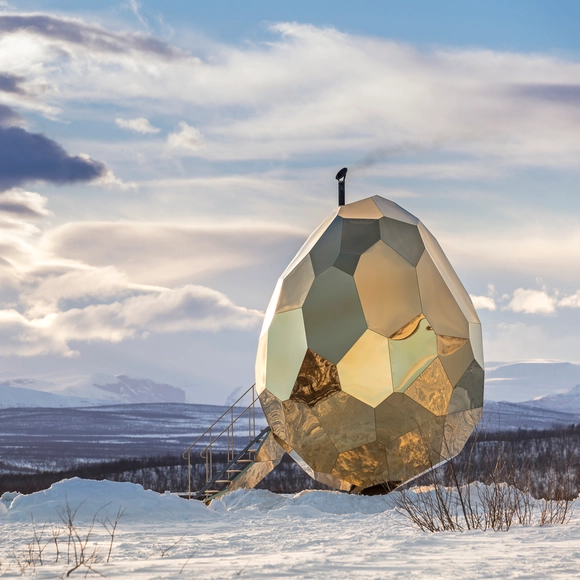
Solar Egg Public Sauna by Futurniture and Bigert & Bergström - Golden A' Design Award Winner for Architecture, Building and Structure Design Category in 2018. Image Courtesy of A' Design Award & Competition
A’ Design Award & Competition, the world’s largest and most diffuse international design awards, has announced results of their 2017–2018 design awards, featuring 1,962 Winners from 100 countries in 99 different design disciplines. Entries were evaluated by an internationally influential jury panel composed of established scholars, prominent press members, creative design professionals and experienced entrepreneurs who carefully analyzed each entry.
After being knighted in 1990 for services to architecture, winning the 1999 Pritzker Prize and then gaining peerage in the same year, it could be argued that there is no living architect that has had a larger impact on urban life than Norman Foster. In a recent talk, Foster addressed a sold-out Barbican Hall on the future of our growing urban landscape, in the seventh installment of the Architecture On Stage series organized by The Architecture Foundation with the Barbican. While the content was full of grandiose statements and predictions, of a scale similar to the projects Foster's practice undertakes, it was the problem-solving approach he showed that gave more of an insight into the man himself. The following 5 lessons gleaned from the presentation won't guarantee Foster-like levels of success, but they may be able to help you navigate the challenges that architecture can present, both personally and professionally.
Continuing their Time-Space-Existence series of monthly videos leading up to this year’s Venice Biennale, PLANE—SITE have released a new conversation with architect and former Harvard GSD chair of architecture Toshiko Mori. Each video highlights the ideas that drive the work of well-known designers, with this episode focusing on Mori’s philosophy of visual communication, dialogue with history and considering the future in her work.
We all know the typical architect’s look: a black turtleneck, slim fit pants, pointed toe boots, and minimalist jewelry pieces. Almost all of us, at one point or another, have tried to imitate the style of our favorite architect. Perhaps it was by sporting a pair of Corbusier and Philip Johnson’s iconic round glasses. Maybe it was through a chic statement haircut, or it could even have been by adopting the unofficial uniform of designers with the all-black outfit. If none of these sound appealing to you, there's no need to worry- there are still plenty of other ways to look like your favorite famous architect.
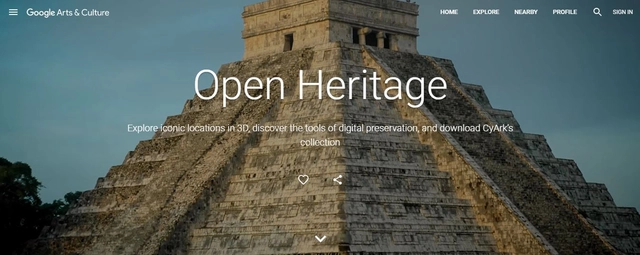
In partnership with a 3D laser-scanning nonprofit called CyArk, Google Arts & Culture began the Open Heritage Project, a new chapter for historic preservation in the form of virtual reality. By using advanced 3D laser scanning technology, high-res drone photography, and DSLR cameras, CyArk can virtually recreate historic architecture to be more easily explored and restored.
Cape Town native Alexis Christodoulou is a winemaker by day but also dabbles in the art of 3D visualization. His Instagram (@teaaalexis) is a striking composition of intricate spaces rich with color, light, and materiality. Crafted entirely from scratch, each of Christodoulou's digital worlds appears to be influenced by many of the modernist masters. In a recent interview with Curbed, Christodoulou lists Aldo Rossi, David Chipperfield and Le Corbusier among his inspirations.
Much has been said about the new "Instagram aesthetic." Put that together with the emerging role of Instagram and other social media platforms in the design process, and the result is a new type of digital art form. Christodoulou's page is the creative collection of a year-long personal challenge to regularly create and publish images of his own fantasy worlds, which has resulted in a community of nearly 20K followers.
The role of the architect—and even architecture itself—in society today is changing. A lack of interest in critical social issues from a profession that holds such high responsibility within a community is a problem that should no longer be avoided.
In an exhibit currently on show at the Center for Architecture and Design in Seattle titled "In the Public Interest," Garrett Nelli Assoc. AIA challenges the profession of architecture to establish a focus on more community-engaged design. With the help of the 2017 AIA Seattle Emerging Professionals Travel Scholarship, Nelli traveled to Los Angeles, rural Alabama, Haiti, Italy and New Orleans, all the while analyzing how the built environment has the ability to influence social change.
Read on for an edited interview with Nelli about his research and how you can begin to implement elements into your design practice to help promote social change in your own communities.
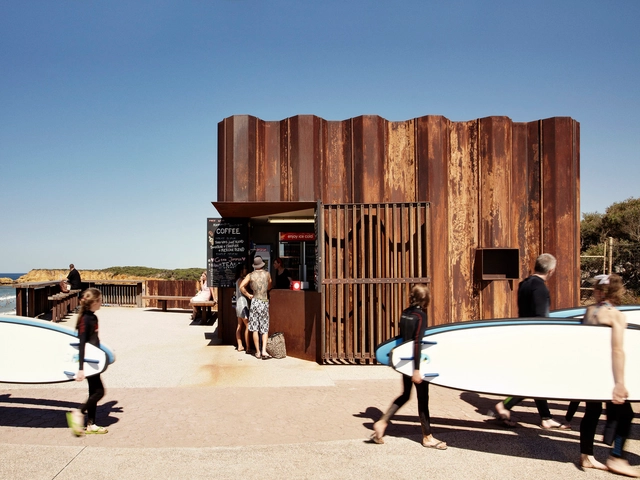
Often as architects we neglect how the buildings we design will develop once we hand them over to the elements. We spend so much time understanding how people will use the building that we may forget how it will be used and battered by the weather. It is an inevitable and uncertain process that raises the question of when is a building actually complete; when the final piece of furniture is moved in, when the final roof tile is placed or when it has spent years out in the open letting nature take its course?
Rather than detracting from the building, natural forces can add to the material’s integrity, softening its stark, characterless initial appearance. This continuation of the building process is an important one to consider in order to create a structure that will only grow in beauty over time. To help you achieve an ever-growing building, we have collated six different materials below that age with grace.
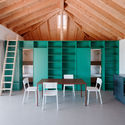
Over the centuries green has signified many emotions; love, jealousy, health, and more recently the environment. Particularly in the middle ages, it was used to suggest wealth and riches, being used by Leonardo da Vinci as the color of Mona Lisa’s dress. It has also been part of the important tradition to wear green on St. Patrick’s Day as part of the celebrations, a custom in Ireland that dates as far back as 1640.
When it comes to architecture, green color buildings stand out in cities that are usually abundant with brick, concrete and steel and their monochrome palette. In 2017 we saw the revitalizing shade of green, ‘greenery’, being named Pantone’s Color of the Year so it’s no wonder that there are copious numbers of buildings and interiors adorning such a refreshing tone.
Is green the new black? It’s up to you to decide as you scroll through the 18 gorgeous projects below featuring green with such pride.







_at_111_E._Wacker_above_dock_for_CAF_River_Cruise_aboard_Chicago's_First_Lady_Cruises.jpg?1529636740 "Courtesy of Chicago Architecture Foundation")


.jpg?1526900955&format=webp&width=640&height=580)

.jpg?1526385880)