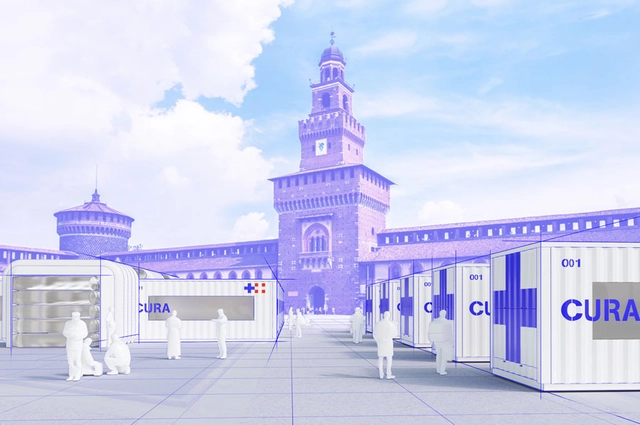
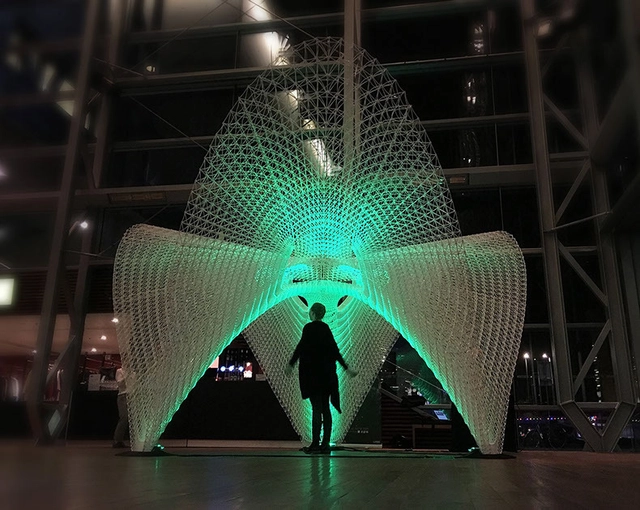
CURA pods. Image Courtesy of Carlo Ratti Associati
As the global health crisis continues, architects and designers are putting their expertise, technical capabilities and research skills in the service of the fight against the coronavirus. Metropolis Magazine has gathered together a list of several companies and their different initiatives for helping out in this novel situation. From 3d-printing personal protection equipment for medical staff, to designing modular intensive care units, and researching steps for converting buildings into hospitals, the creative community is bringing its own contribution to the efforts of tackling the pandemic.
It's no secret that adobe is one of the most widely utilized materials in construction. For centuries, it has been the go-to material for civilizations worldwide thanks to its aesthetic qualities and durability. Today, we continue using earthen materials like adobe for a wide array of building projects; however, to obtain optimal results, one cannot ignore the art and skill required in brickmaking. For many in the trade, it's a craft that has been passed down generation after generation.
Architects throughout the modern era have displayed their fantasies through their designs and their obsessions with how women have inhabited them. Take for example Corbusier’s infatuation with Eileen Gray and her home, E. 1027. Plagued with unconfirmed tales of how he broke into her home to paint murals on the white walls, he was also known to publicly downplay the home's design, while conversely praising it in a series of unreciprocated love letters to Gray. In the same vein, while Adolf Loos stood firmly against architectural decoration, he perhaps supported the elegance of women acting as a human ornament, an assumed notion in his envisioned home for the French Entertainer, Josephine Baker. The unbuilt proposal took on the form of a black and white striped solid which located a glass pool at the center of the space, forcing Baker to catch the male gaze of other occupants.
The relationship of sensuality and space doesn’t stop with the provocative desires of these three men, but lives on in one of the world’s most famous publications, Playboymagazine. Perhaps best known for its significance as a vanguard in the sexual revolution with its promotion of masculinity, the magazine also illustrated a showcase of swanky glass bachelor pads standing high above Beverly Hills that pushed forward a debonair lifestyle punctuated by modern design. As a generator of a glamorized lifestyle, the magazine highlighted architectural titans including Mies van der Rohe, Bucky Fuller, and Eero Saarinen, and made them palatable to a general audience.
In the midst of a pandemic that has already affected 184 countries and infected more than a million people around the world, we seek to cover all topics that relate the coronavirus within architecture and space, and ways to make social distancing less painful.
In this article, we tap into how AI could be augmenting, changing design processes, and how architects and other professionals are responding and incorporating these technological advancements into their design work. What kind of innovation can AI bring to this industry, and what has been experimented with so far? This selection of projects can help form an opinion on the architectural application of AI.
In honor of International Women’s Day celebrated on March 8, it’s important to reflect upon and acknowledge the progress that women across all design professions have made over the last several years. From more women being appointed to leadership roles in prominent academic institutions around the world, Jeanne Gang being named to Time 100’s Most Influential People in 2019, the all-female team of Counterspace being awarded the design of the Serpentine Pavilion in London, and the first female practice winning the prestigious Pritzker Prize only a few days ago, more women in architecture are gaining the recognition that they deserve in this traditionally male-dominated profession.
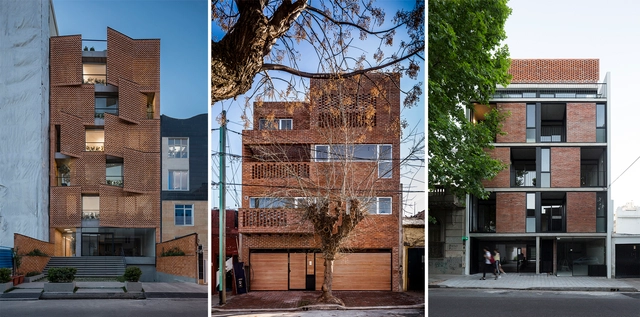
Rotation, displacement, and interleaving of blocks are some of the options that enable the diversity of raw brick patterns in architecture. The shape of these elements, usually used for the construction of walls, has been explored in a creative way to compose facades of residential buildings, representing the formal identity of the building itself and its relationship with its context.
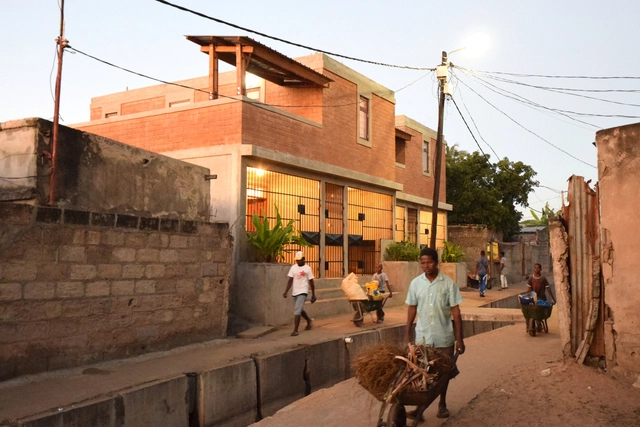
After centuries of Portuguese colonization and recent conquest of independence, Mozambique has undergone a difficult period with new challenges, such as the combat against poverty, the infrastructure deficit, and uncontrolled urban expansion. On the architecture field, it is possible to notice the impact of these challenges on the evolution of the Mozambican projects. Some examples are: the prediction of the need to expand the building in the future, the adoption of climate control passive measures and the utilization of vernacular constructive techniques adapted to the local context (as a way to minimize energy consumption in the different phases of building construction and its respective costs).
Studying the data that indicates a climate crisis that has been affecting the whole planet for the last decades, the reactionary attitudes may sound disappointing. However, at the same time that the news indicates a global average temperature rise, the political focus on the climate crisis is also intensified, according to the UN Environment report released in 2019, which is a reflection not only of the occurrence of manifestations and protests around the world but also of the so-called activist art expression.
The passage of time will alter, erode, and in most cases, degrade any architectural structure. Whether this be the result of climate, adaptation, misuse, or even war, all buildings are subject to the same life cycles of steady, or extreme, decline. In recent decades, “adaptive reuse” has gained significant traction as a means of breathing new life into an old structure, offering an often complex challenge for designers, architects, and indeed everyday users, who walk a fine line between a respectful restoration of history, and significant adaption for modern needs.
Halloween. A day plagued by ghost, ghouls, and goblins. Historically, on All Hallows' Evening, many believed that spirits could return to the earthly world. On this frightful occasion, we’re highlighting phantoms from the beyond that have entered the architectural realm. Below, 13 hellish projects and their supernatural counterparts. Scroll down if you dare.
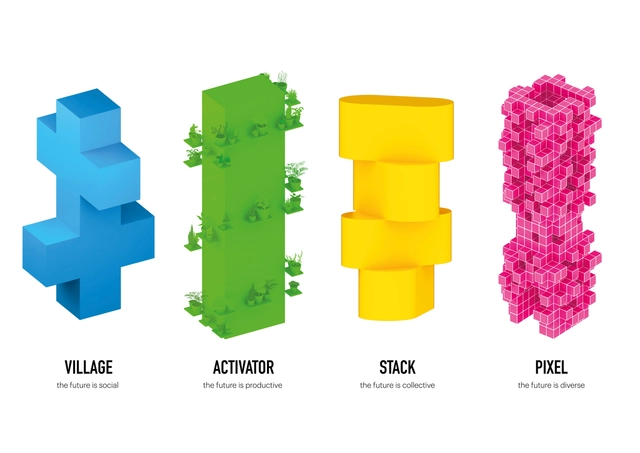
Opening on July 5th, “Architecture Speaks: The Language of MVRDV” will provide an immersive, diverse, multimedia experience for visitors to the Tyrolean Architecture Center (aut) in Innsbruck, Austria. The exhibition centers around a spatial intervention of 4 towers constructed inside the aut’s Adambräu Building, a former brewhouse. Each tower embodies a word that represents key concepts in MVRDV’s designs: stack, pixel, village, and activator. “Architecture Speaks” aims to present the concepts in an approachable, engaging manner, with the colorful towers enhanced by images, text, models, drawings, videos, audio, and interactive elements to present MVRDV’s projects.
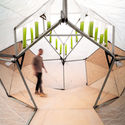
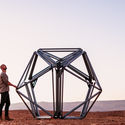
In the Negev Desert of Israel, SAGA Space Architects are collaborating with D-MARS to build a Mars Lab Habitat that will simulate the conditions of living in a confined space on the hazardous surface of the red planet. The laboratory structure they’ve designed is an addition to D-MARS' existing Mars simulation habitat and will be part of a larger experiment. This habitat will serve as a prototype for a longer mission scheduled for 2020.
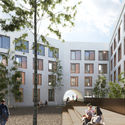
In their new student housing project, Walshe's Yard, Urban Agency has placed incredible importance on blending the building into its context while also providing a high quality of living for students. Located in Carlow, Ireland, the building is situated on the threshold between the looser urban periphery and the denser historic center of the town. The 3800 square meter project will include 125 bedspaces arranged into 32 “student houses” of either 3, 6, or 8 students, plus graduate studios on the top floor.
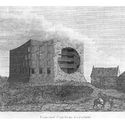
Etienne-Louis Boullée, though regarded as one of the most visionary and influential architects in French neoclassicism, saw none of his most extraordinary designs come to life. Throughout the late 1700s Boullée taught, theorized, and practiced architecture in a characteristic style consisting of geometric forms on an enormous scale, an excision of unnecessary ornamentation, and repetition of columns and other similar elements.
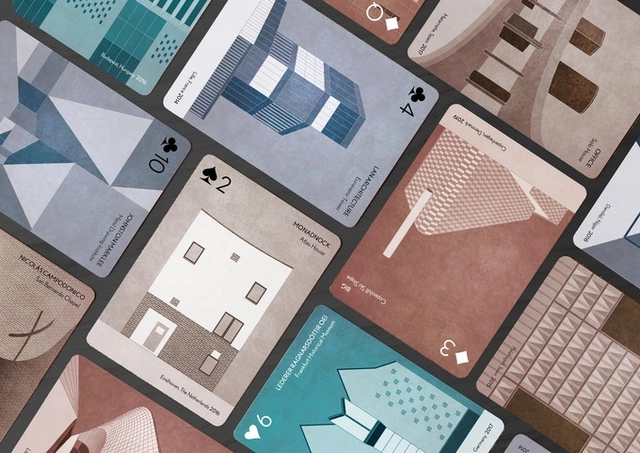
Now is your chance to build a house of cards from cards of houses with the Kickstarter campaign for the updated second edition of SCALA Architecture Playing Cards. "Arquitectura a Contrapelo", an architecture and design team based in Seville, Spain, are hoping to release a sequel to their previous successful deck of architecture-themed cards. The new edition keeps the collection current with additions of the most relevant contemporary architecture, as well as providing some upgrades and improvements from the previous deck.
Award-winning architect Tatiana Bilbao spoke in an interview released by Louisiana Channel about her frustrations with today’s concept of sustainability in architecture. Living in Mexico, which Bilbao describes as a “country with no resources,” she states that people are accustomed to not wasting resources and that “sustainability” is a natural part of daily life. “I hate the word ‘sustainability’ because I think it has become a word that can qualify a type of architecture, and for me it should be embedded.”
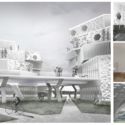
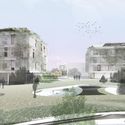
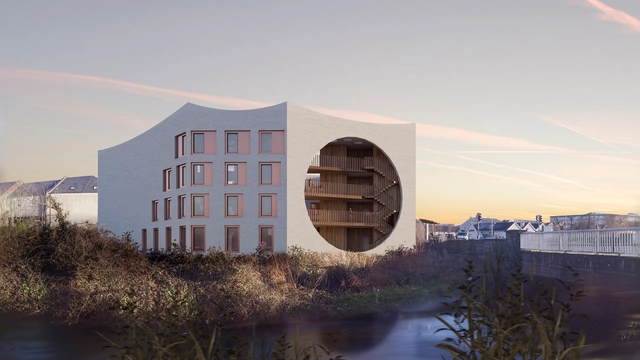
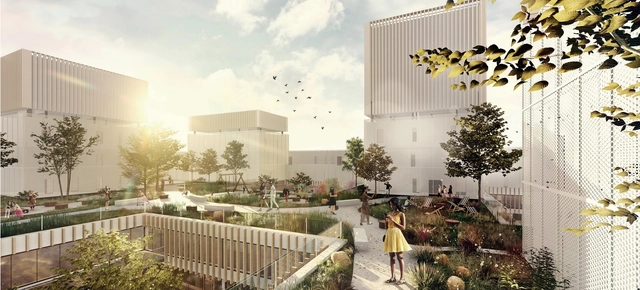
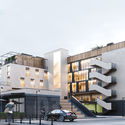
"Co.Living" - Exterior view. Image Courtesy of Saint-Gobain
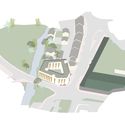
Competing in this year’s 15th annual Multi Comfort Student Contest, Saint-Gobain had over 2,200 students from 199 universities worldwide. The final was narrowed down to 60 competing teams from 34 countries, all of whom traveled to Milan to present their designs to an international panel of experts from the Municipality of Milan. This year’s brief was to design a project to rehabilitate and reconnect the urban area around Crescenzago subway station in Milan in line with the city’s #milano2030 development plan. The competition also focuses on Saint-Gobain’s concept of Multi Comfort: thermal, visual, and acoustic comfort, as well as good indoor air quality.




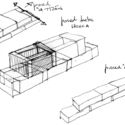












.jpg?1560394338 "\"Induction\" - Exterior view. Image Courtesy of Saint-Gobain")