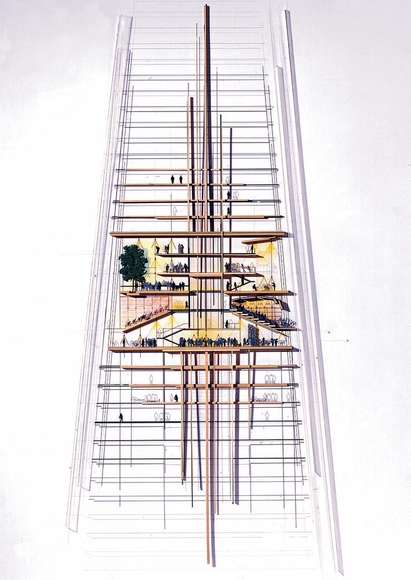
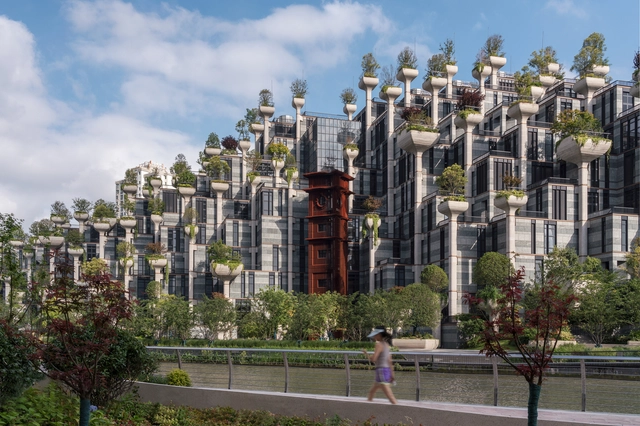
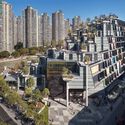
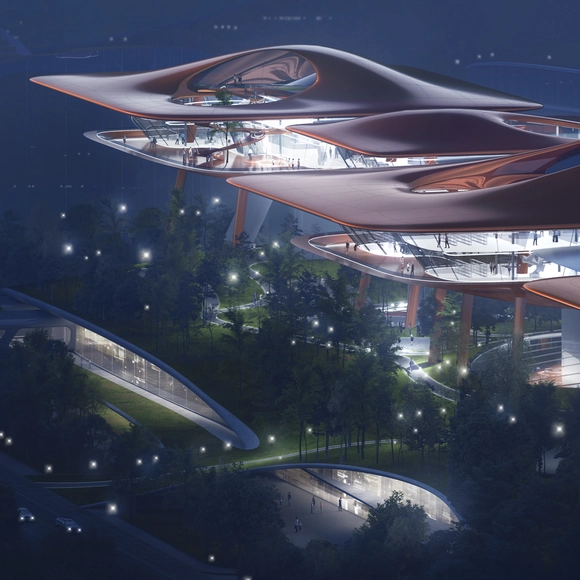
The first phase in the development of Heatherick Studio's 1,000 Trees project in Shanghai was recently inaugurated, showcasing the finished mountain-like structure. The design gives prominence to the structural columns, each topped by a large planter featuring a tree, which becomes the project's main feature. Balancing the requirements for a dense development with the search for a human scale, Heatherick Studio chose to approach the project as "a visual extension" of the neighbouring park, proposing a new topography defined by its integrated greenery.
We are starting to say goodbye to the year and after a review of all the contents developed, we find ourselves with a wide range of architectural advice that involves both interior and exterior spaces. Addressing issues from the domestic sphere to more technical and decisive questions, these are intended to serve as a guide and/or suggestions, rescuing those necessary considerations to take into account when planning our spaces, regardless of the use or the future they contemplate.
Across the globe, museums function as cultural landmarks – spaces of significance that quite often become defining symbols of a city’s architectural landscape. Historical examples such as the Museum de Fundatie in the Netherlands and The Louvre Museum in France continue to attract millions of visitors, with contemporary architectural interventions to them redefining their spatial contribution to their local context.
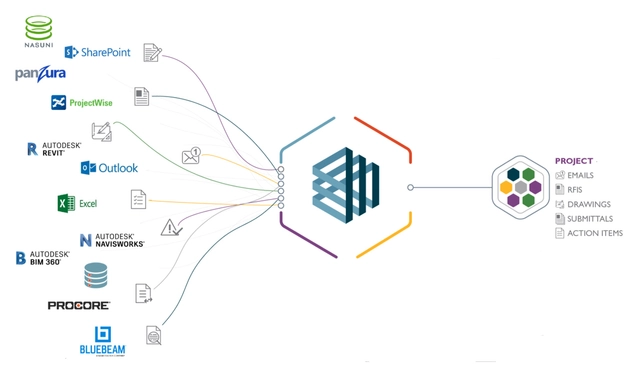
From planning to construction, architecture is more than designing buildings. With many multidisciplinary actors involved and the continuous flow of images, plans, and files, any project is also about managing large amounts of information. Because architects usually have tight deadlines – having to complete a certain number of buildings in a specific time frame – data must be managed productively and efficiently. However, as construction projects and delivery methods continue to increase in complexity, managing information has become more difficult than ever. And with the COVID-19 pandemic added to the mix, architecture firms now have a remote workforce which impacts how and where employees access information. Therefore, in order to ensure effective project delivery, the challenge lies in successfully managing project information.
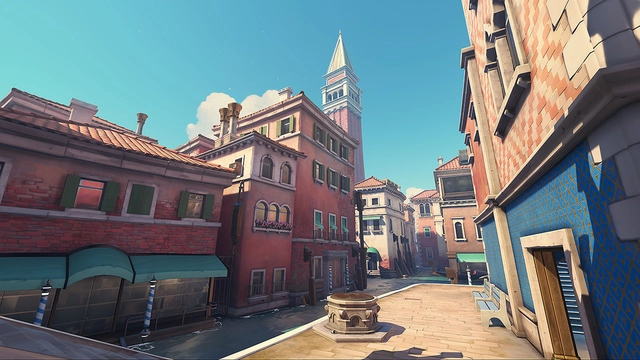
Video games and virtual worlds are jam-packed with imaginative environments to explore, time periods to peruse, and invented architectural styles to thumb through within every reality we choose to engross ourselves into. With recent advancements in technology, greater than ever are we witnessing the latest PC and console generations harboring the ability to produce life-like settings for players to roam around, get lost, and explore all the nuances the seemingly authentic reality holds.
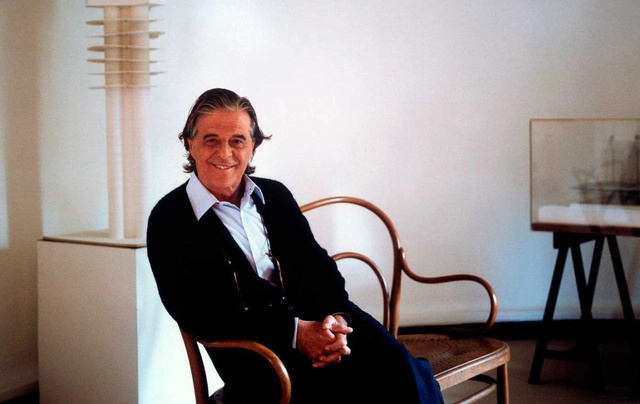
Ricardo Bofill, the Spanish architect founder of Taller de Arquitectura (RBTA), designer of the iconic Walden 7 and more than 1,000 projects in forty countries, has passed away at 82 in Barcelona on Friday, January 14, as officially announced by his own firm through a statement.
With its quantifiable objectives and measurable performance, sustainability often passes as a technological challenge. Its primary language is that of data, equipment, and engineered systems, most often translated into a hyper-technologized layer hidden within a design upholding pre-existing aesthetic norms. As architecture is the image of society at one moment in time, how does the focus on sustainability translate into architectural language, further legitimatizing the efforts to establish an equitable relationship with the environment? Architecture serves as an expression of attitudes, and since sustainability has become a fundamental value, it is worth looking at whether or not it has produced an aesthetic transformation.
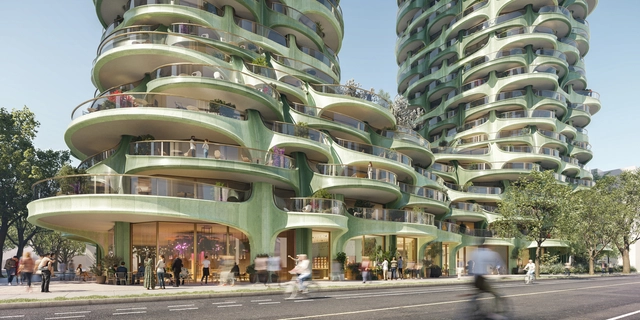
Heatherwick Studio has unveiled an entirely new update for its 1700 Alberni Towers residential project in Vancouver, British Columbia. The new design features extended outdoor living areas with soaring views of the surrounding built environment and landscape, inspired by the province's strong connection with the wilderness, as well as the use of long-lasting, local materials.
Unusual materials, vibrant colors and daring compositions are some adjectives that can be applied when talking about Superlimão's work. It all started in 2002 when Antonio Carlos Figueira de Mello, Lula Gouveia, Thiago Rodrigues and former partner Sergio Cabral founded the firm, naming it in honor of the Super Lemon candy – “sour at the beginning and sweet at the end”. Since then, this hint of humor - present even in the name itself - permeates all of the team's creations, hinting at new experiences and arousing curiosity as well as the taste of the candy.
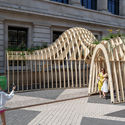
The London Festival of Architecture (LFA), the world’s largest annual architecture festival is returning for its 13th edition this summer, transforming the city's neighborhoods into a public display of installations, exhibitions, talks, and special events. Following two years of digitalized editions, this year's LFA falls under the theme of ‘act’, and will see a return of physical events alongside digital realms across the capital.
New Orleans was designed by its early settlers in 1721 as a Cartesian grid. You know it as the famous French Quarter or Vieux Carré. Such grids are named for the Cartesian coordinate system we learned to use in algebra or geometry class, perpendicular X and Y axes, used to measure units of distance on a plane. The invention of René Descartes (1596–1650), these grids reflect his rationalism, the view that reason, not embodied or empirical experience, is the only source and certain test of knowledge. William Penn used a similar grid in 1682 in selling Philadelphia as an urban paradise where industry would thrive in the newly settled wilderness. And just as the massive buildings of Italian Rationalist (i.e., Fascist) architecture express authoritarian control, so, too, Cartesian grids implicitly say: Someone is in charge here. We’ve got this. Trust us.
Led by Ma Yansong, MAD Architects and the China Academy of Building Research (CASR) have won an international competition to design the Cuntan International Cruise Center in Chongqing, China. Currently a cargo terminal, Gantry Crane will become a 65,000 sqm international cruise terminal and city complex, featuring a 15,000 sqm cruise port and over 50,000 sqm of commercial spaces.
The Barbican Centre is up for a substantial renovation, and the City of London Corporation revealed the five shortlisted teams for the refurbishment of the Brutalist icon, among which are practices like BIG, Diller Scofidio + Renfro, Adjaye Associates or Asif Khan Studio. The cultural venue at the heart of the eponymous post-war housing estate in central London was the subject of an international competition aiming to preserve its heritage while upgrading the ageing structure to contemporary requirements and artistic aspirations.
Emerged in a period marked by the development of the industry and the experimentation of new materials, the Art Nouveau artistic movement was opposed to historicism, favoring originality and a return to handicrafts. In this context, it is portrayed as an attempt at dialogue between art and industry, revaluing beauty and making it available to everyone through series production.
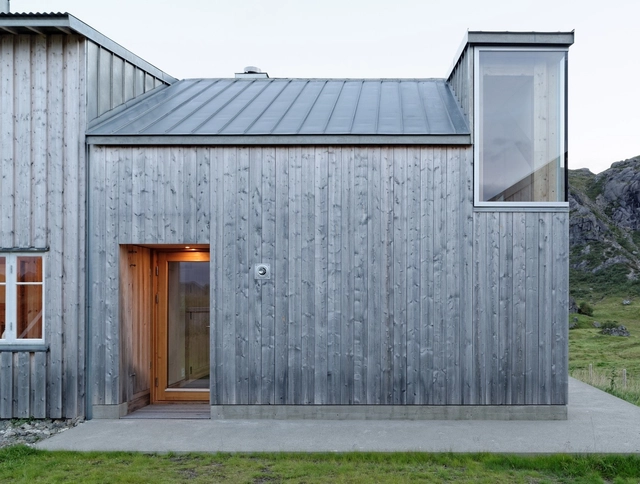
Summer House Gravråk / Carl-Viggo Hølmebakk. Image Cortesia de Carl-Viggo Hølmebakk
The moment a tree is cut down and its biological processes are interrupted, it can be said that the deterioration process of wood also begins. Steps such as the correct cutting of the trunk, drying and storage or the precise specification of the best species for each use will determine its durability. Composed basically of cellulose, hemicellulose and lignin, each wood species has a certain natural durability, also influenced by the environmental conditions of where it is inserted, such as temperature, humidity, oxygen content, and the microorganisms and insects present there. Generally, surface treatments are used to increase the protection of different parts, such as varnishes, oils and other chemical processes. But there are situations in which untreated wood can be used outdoors, achieving a gray and sober aesthetic that blends into the exterior and brings personality to the building.
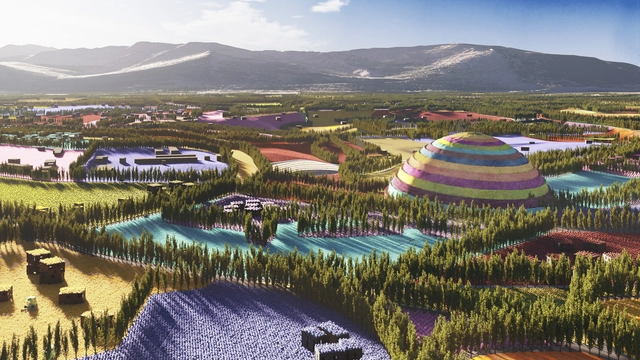
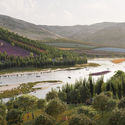
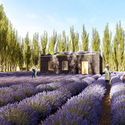
MVRDV has been commissioned by the Armenian non-profit organization DAR Foundation for Regional Development and Competitiveness to develop a masterplan that will transform Gagarin Valley's 34,000-hectare area into a more sustainable and ecologically diverse land. With the help of over 10,000 plant species, innovative facilities, and additional 12,000 housing units, the valley is set to become an ideal community for sustainable agriculture and ecotourism.
Last year, a series of new museums, expansions and several museum renovations have opened their doors to the public, adding a new dimension to the cultural landscape around the world. From the long-awaited re-opening of the Neue Nationalgalerie in Berlin, to Ryue Nishizawa's Jining Art Museum merging with the landscape, and MVRDV's reflective Art Depot, discover the architecture of the latest venues of art and culture.
The Shard / Renzo Piano Building Workshop | ArchDaily. Image via Middle Section
Architecture and engineering as we know it today are two distinct higher formations, which share similar scopes and which, therefore, have moments of intersection, but also preserve fundamental differences. Even though this overlapping of activities results in a lack of consensus both in relation to the history of the professions and current professional practice, it is important to highlight the differences and specificities that characterize each of these professions today.











.jpg?1642168917 "La Muralla Roja / Ricardo Bofill. Image Courtesy of Ricardo Bofill")
.jpg?1642169030 "The Factory . Image Courtesy of Ricardo Bofill")












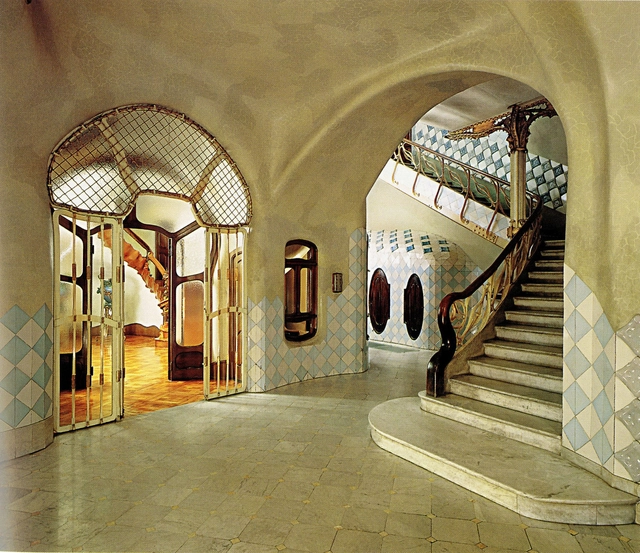


.jpg?1639596820 "Escadaria Victor Horta. Via Victor Horta The Architect of Art Nouveau by David Dernie and Alistair Carew-Cox")





.jpg?1641932763 "© Ossip van Duivenbode / MVRDV")