Cladding systems have important functions in buildings. They can confer thermal insulation, protect internal spaces from the weather and–just as important–give the building a "face", improving its appearance and clearly identifying the element of design. "Cladding" refers to the components that are linked to the structure of a building to form non-structural external surfaces. While in the past wooden cladding was the only option, there are currently multiple possibilities of materials, colors, weights, textures, anchoring systems, and many other variables available. Below, we outline some of the main materials used for façade cladding, and the projects that use them in a remarkable way:
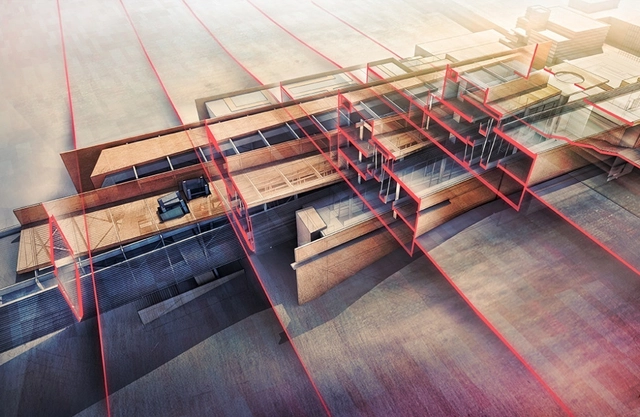
Drawings and visualizations are architecture in their own right. As means to reconsider what we see or what could be, drawing styles are as diverse as the mediums through which they are produced. For transparent drawings, observation and imagination go hand in hand. Not only does this unique style require critical examination, but also an ability to conceptualize new possibilities.
https://www.archdaily.com/978499/from-project-architect-to-industrial-designer-some-of-plus-100-architecture-and-design-jobs-offers-in-daaily-jobsDAAily jobs
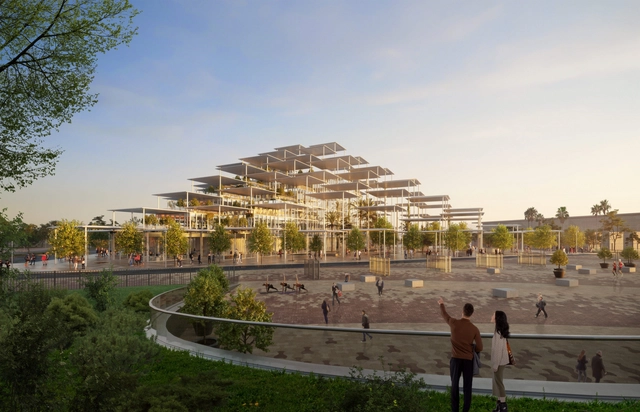
Bjarke Ingels Group, along with Argenia Ingeniería y Arquitectura, Buro Happold, and HCP Arquitectos y Urbanistas, have received the first prize in an international multidisciplinary competition for the design of the new Joint Research Center Site Headquarters in Seville, Spain. A "cloud of pergolas" inspired by the shaded plazas and streets of Sevilla will shelter the entire JRC site, plaza, garden, and the building underneath, supported by a series of columns covered with photovoltaics that contribute positively to the building’s operational footprint.
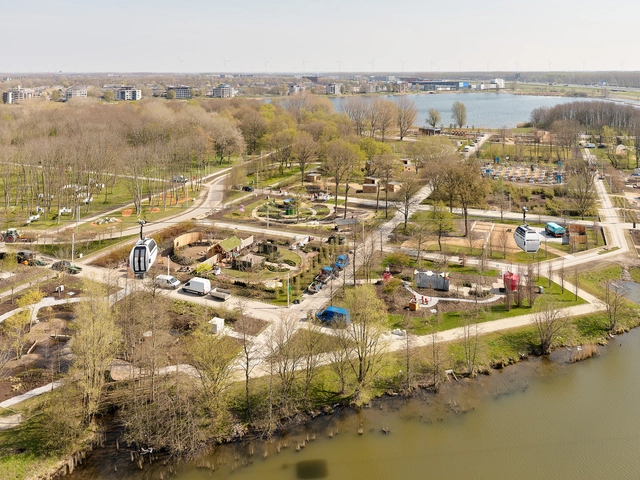
The international horticultural exhibition Floriade Expo 2022 opened to the public yesterday on the site of MVRDV's arboretum masterplan in Almere. The concept features an alphabetical library of trees and plants arranged into lots on a rigorous grid across the 60-hectare site. The masterplan was conceived as a framework for the Expo, and at the same time, as a blueprint for a sustainable city district, given that the park will be transformed into a new residential area after the event. Held every ten years and running for six months, the Expo showcases the latest innovations in the field, from nature-inclusive agriculture to a sustainable pilot home made from 93 per cent recycled plastic.
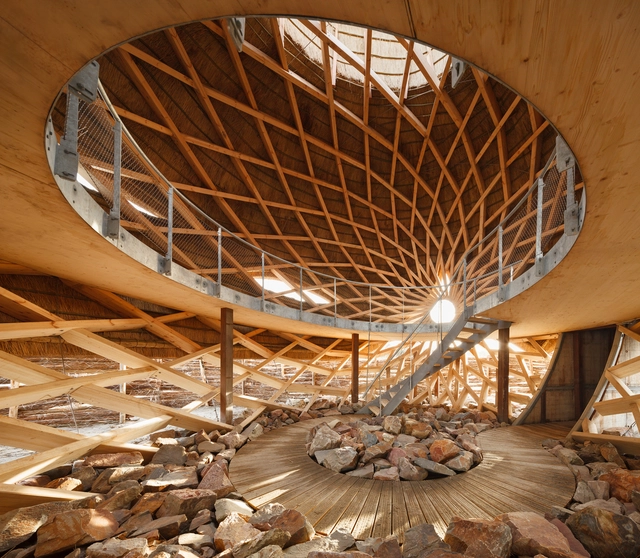
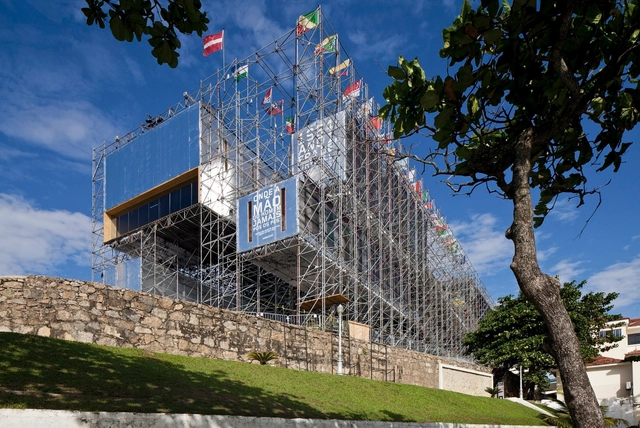
Technical precision combined with environmental concern and exploratory and investigative character make Carla Juaçaba one of the great representatives of Latin American architecture today. Carioca, born in 1976, Carla Juaçaba attended the University of Santa Úrsula and attributes much of her experimental and interdisciplinary style to this educational institution. It is not by chance that during her academic training her great inspiring masters were the architect Sergio Bernardes and the visual artist Lygia Pape, insinuating her interest in the multiple disciplinary branches that can compose architecture. In this sense, while still at graduation, Carla worked together with architect Gisela Magalhães, from Oscar Niemeyer’s generation, in scenography and expography projects.
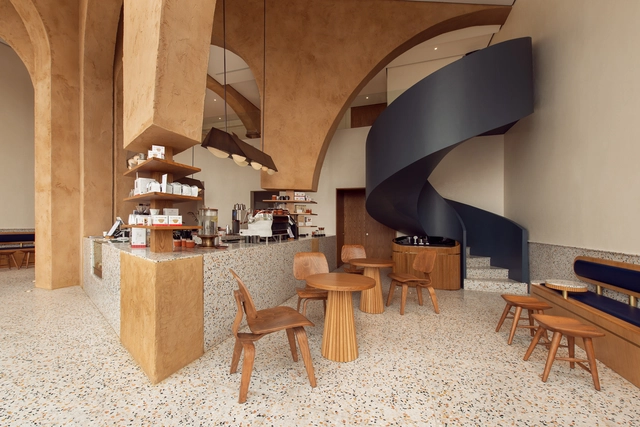
Coffee shops have always been popular gathering spaces among coffee lovers, but with the rise of remote working, especially post-pandemic, they have become a hotspot for remote workers and students as well. One of the many reasons why they are such a popular hangout spot, other than the fact that they serve one of the most globally-adored drinks, is because of their well-designed interior spaces that promote comfort, relaxation, and productivity simultaneously. After all, it's always been said that architects and coffee go hand in hand. In this interior focus, we explore how different design elements shape the user experience of a coffee shop, and look at how architects have employed them through 17 examples.
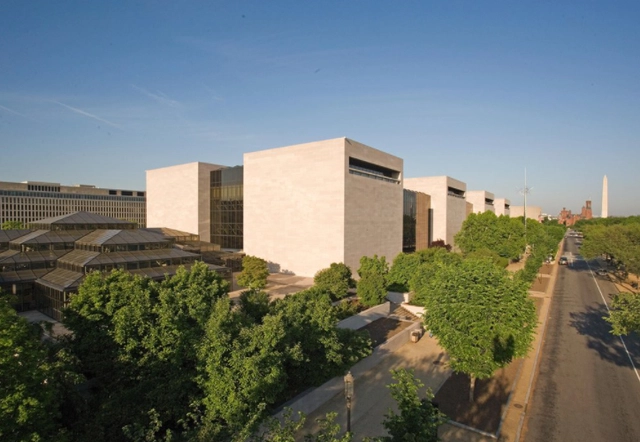
The Smithsonian Institution has announced that the glass-clad pyramid restaurant of Washington D.C's National Air and Space Museum, designed by Gyo Obata, FAIA, co-founder of renowned architecture firm HOK, will be demolished this spring and replaced with a new educational facility titled the Bezos Learning Center. The restaurant is one of two buildings designed by the late architect for the National Mall, originally constructed in 1988 as an additional structure to the National Air and Space Museum, that served as a dining area for the museum's visitors.
Tallinn Architecture Biennale (TAB 2022) announced the programme for its 6th edition that brings forward circularity in architecture. Under the theme "Edible; Or, The Architecture of Metabolism", this year's edition explores "architectural strategies for local production and self-sufficiency" and highlights ways of reusing waste resulting from urban environments. Curated by Lydia Kallipoliti and Areti Markopoulou, in collaboration with local advisor Ivan Sergejev and assistant curator Sonia Sobrino Ralston, TAB 2022 reflects on the possibilities that natural metabolical processes can bring to cities and buildings when transferred to the domain of architecture.
What would a project be like if user emotions were part of the program? Planning environments that can accommodate different sensations is, according to Pinterest Predicts 2022, one of the decoration trends for the coming years. More and more people have been looking for ways to set up rooms that provide the apotheosis of their feelings, no matter if the goal is to be more calm, express their anger, listen to music or a leisure activity, the focus of the so-called "emotional decor" is on make emotions flow freely and safely.
Selected the European Capital of Culture in 1994 and Ibero-American Capital of Culture 2017, Lisbon has been the destiny of tourists from many parts of the world over the past years. With thriving cultural programming, the city hosts important events related to art, music, movies and architecture. The Lisbon Architecture Trienniale and the Open House – event that coordinates free guided tours to remarkable buildings in cities around the world – are some of these relevant events in the architectural field, responsible to disseminate, discuss and reflect on issues of the area.
Besides programs related to architecture, in recent years, Lisbon has seen the emergence of new facilities, like museums, cultural centers and theaters, besides the requalification of public spaces. The construction or regeneration of these structures, directly or indirectly related to the cultural city movement, can be controversial, raising issues such as gentrification and the increase of mass tourism.
OMA / Reinier de Graaf and Squint/Opera have released a new video of the "Al Daayan Health District", a low-rise hospital prototype which responds to the medical field's rapid change through the potential of modularity, prefabrication, and automation. The project features prefabricated modular units, local farms for food and medicine, and high-tech facilities across gardens and water features.
Oolite Arts revealed the design of its new Miami headquarters designed by Spanish architecture practice Barozzi Veiga, making it the studio’s first built project in the United States. The design’s morphology echoes the idea of a village for artists through a collection of rooms and a rhythm of vertical structures. The structure incorporates rich vegetation and strives to balance public and private, thus prioritizing both artists and community needs. The project, created in collaboration with local firm Charles H. Benson & Associates, is set for completion in 2024.
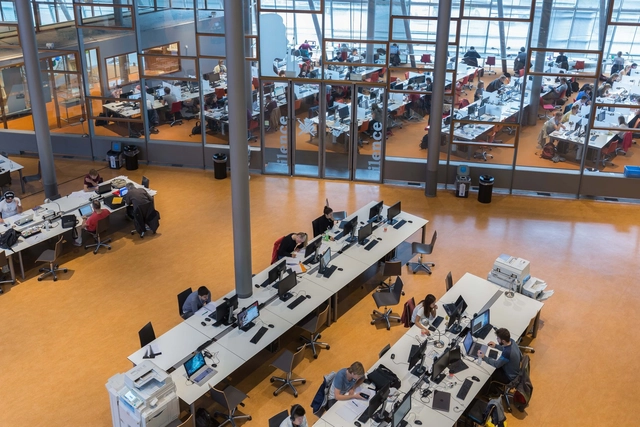
DELFT, THE NETHERLANDS - AUGUST 19, 2017: Students at work in the Library of the Technical University Delft, The Netherlands. Image via Shutterstock/ by T.W. van Urk
Delft University of Technology in the Netherlands took the second place while UCL, in the United Kingdom, came third. ETH Zurich, Harvard, and the National University of Singapore (NUS) maintained fourth, fifth, and sixth place. The Manchester School of Architecture was upgraded to seventh position this year, moving the University of California, Berkeley (UCB) to eighth place and the Tsinghua University in Beijing, China to the ninth. Politecnico di Milano, in Italy, remains a non-mover at 10.
The stage is set in one of the most iconic “end of the world” movie scenes: Citizens of New York City are scrambling on top of taxis, quickly attempting to escape the slow-moving giant tsunami heading their way. In the rear-view mirror of a bus, a giant wave can be seen rushing up the narrow city grid. Searching for higher ground, the main characters, Sam and Laura, run up the famed stairs into the famed New York Public Library, and just as the revolving doors shut behind them, the pressure of the water smashes the windows, and water begins to rise. Without seeing it, we know that New York City and its iconic architecture will soon be destroyed.
Sou Fujimoto Architects has unveiled its design for the Hida Furukawa Station Eastern Development, a regional community-based center that aims to enrich the life, leisure, and culture of the residents of Hida City, in Gifu Prefecture. The Center will include a university research base, student accommodation, an all-weather playing field, and commercial facilities, all interconnected to form one harmonious community.
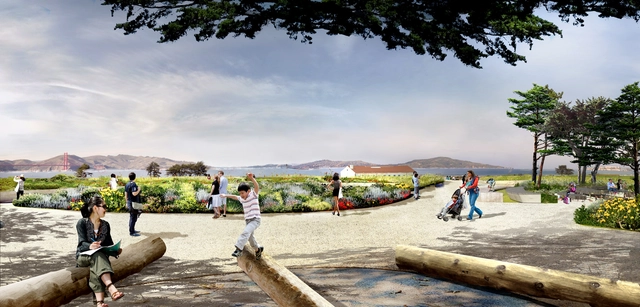
Presidio Tunnel Tops is San Francisco’s upcoming national park destination, set to welcome visitors starting July 17th. The project reconnects the park formerly split in two by the Doyle Drive by creating new landscaped land over the highway now moved underground. Designed by James Corner Field Operations, the firm behind New York’s High Line, the project brings 5.6 hectares (14 acres) of new parkland to the Bay Area, featuring trails, picnic areas, and scenic views over the city as well as a nature play area for kids.









.jpg?1648076854 "Casa Santa Teresa / Carla Juaçaba. © Federico Cairoli")