To celebrate Earth Day, real estate developers Urban Villages and Studio Gang have unveiled and broken ground on "Populus", the first carbon positive hotel in the United States. Set to open in late 2023, the 265-room hotel in Denver features a rooftop restaurant and bar, designed as a significant milestone for the future of sustainable travel that meets the needs of travelers, the community, and the environment.
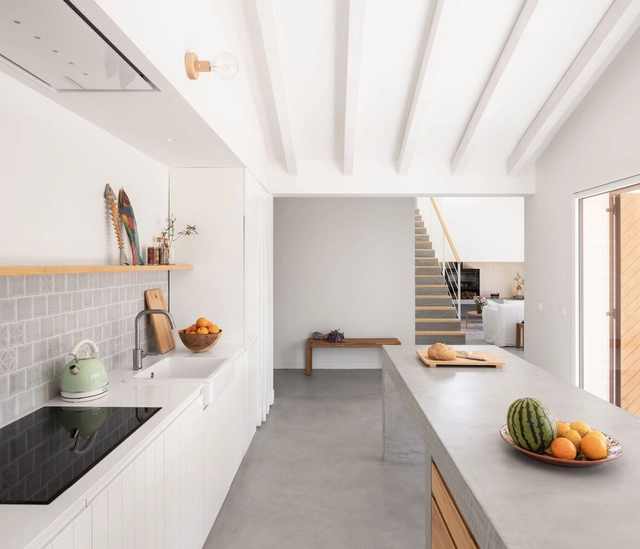
Kitchens as we know them today have functionality as their main feature and for that their space was historically organized from an industrial logic. The development of home appliances and the precise definition of the layout guarantee a functional floor plan and the optimization of work in the kitchen. As part of this layout we find the worktops, horizontal half-height surfaces that have multiple uses and, therefore, many possible configurations.
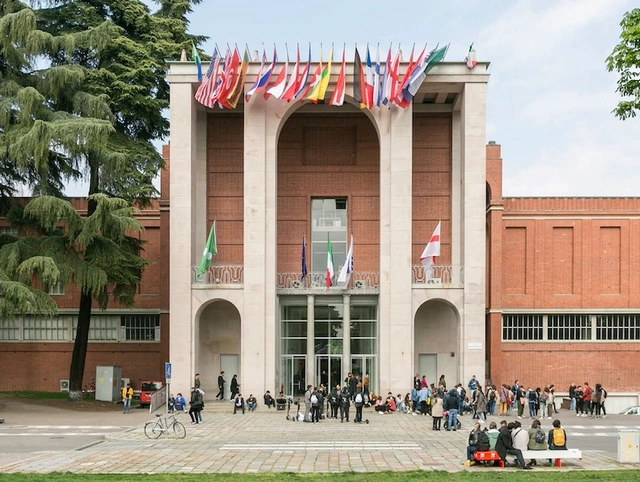
Under the theme Unknown Unknowns. An Introduction to Mysteries, the 23rd Triennale Milano International Exhibition will open to the public on July 15th until December 11th, 2022, with installations, interventions, and special projects that "question what we don’t know we don’t know". This year's exhibition will display an array of artwork and installations designed by notable architects and designers hailing from 40 countries, such as Francis Kéré, winner of the 2022 Pritzker Architecture Prize, who will design an installation that brings together the voices of Africa and its diaspora.
Una Mesa / AAA (Alejandro Lobo, Elías Martínez Ojeda, Federico Rodríguez). Image Cortesía de Concéntrico 08
From the 1st to the 6th of September 2022, the eighth edition of the International Architecture and Design Festival of Logroño, called Concéntrico, will take place, which invites us once a year to reflect on the urban environment and the city. Through installations, workshops, exhibitions, meetings and activities, it offers the opportunity to explore the city thinking about new collective uses that strengthen the character of community within public spaces.
A new kind of architecture distinguished by unique regional characteristics emerged in the mid-1990s when in China, architects started practicing independently from government-run design institutes. The leading Chinese architects of this time succeeded collectively in producing a unique architectural body of work when so many buildings built around the world were no longer rooted in their place and culture.
In China Dialogues, Vladimir Belogolovsky charts a panorama of Chinese architecture through the words of its main participants, lifting the veil on a prolific new generation of designers, each sharing a highly intellectualized and conceptual understanding of architecture. Following the course of 21 interviews accompanied by over 120 photographs and drawings of beautifully executed projects uprooted throughout the country since the early 2000s, China Dialogues opens up the thinking process of the country's top architects, providing an insight into their ideas, intentions, and visions in unusually revealing and candid ways.
For the past couple of years, the metaverse has been gaining prominence, prompting architects to consider its implications for our relationship with the physical environment and how can architecture contribute to this new virtual space. Architecture in the metaverse is no longer a fringe subject, having been embraced by established firms. "The metaverse is where much of the architectural action and innovation will be happening in the coming period,"says Patrick Schumacher. Unbound from restraints such as physics, material properties and construction costs, the metaverse unlocked a new realm of architectural expression. The following looks at some of the various ways the profession engages with the expanding field of digital environments.
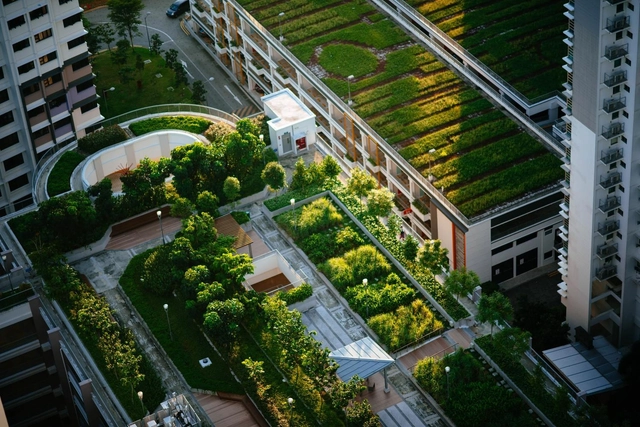
As the climate crisis continues to present itself as a significant threat to the future of the ecosystem and built environment, this year's IPCC report, titled Climate Change 2022: Impacts, Adaptation, and Vulnerability, found that while adaptation efforts are being observed across all sectors, the progress being implemented so far is greatly uneven, as there are gaps between the actions taken and what is needed. On this year's Earth Day, we explore the progress being made by governments and architects to achieve net-zero operations within the next decades.
Norman Foster met with the Mayor of Kharkiv, Ihor Terekhov, on Monday to discuss the city's rebuilding, following discussions at the 2nd UN Forum of Mayors in Geneva. Since the onset of Russia's invasion of Ukraine, the city of Kharkiv suffered significant damage due to heavy shelling, losing much of its infrastructure, including housing, hospitals, schools, cultural institutions, and historic buildings. The second-largest city in Ukraine is already planning its rebuilding, with Norman Foster undertaking the task of bringing together the "best minds" to envision the city's future.
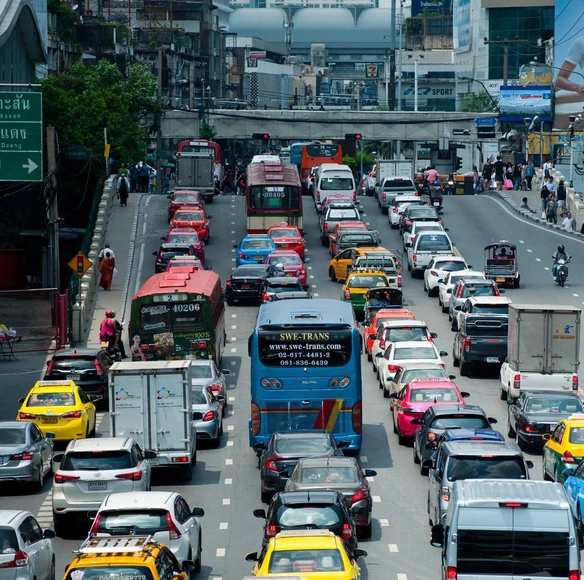
In 1854, the American writer Henry David Thoreau wrote the classic work “Walden”, recounting his experience of life in the woods and extolling the advantages of simple and self-sufficient life. Right at the beginning of the book, the author comments that, if someone wants to travel 48 km to visit the countryside, it would be faster to walk than to opt for a locomotive.
Once upon a time, long, long ago, I was lucky enough to get a summer job with Robert A.M. Stern while I was in graduate school. Stern’s new memoir, Between Memory and Invention: My Journey in Architecture (MonacelliPress, 2022), has prompted my own mini-memoir, with some relevant details not included in the book.
I arrived at the office in the early summer, not long after the dissolution of Stern & Hagmann and then Bob’s divorce. I found two young architects-to-be, a sweet but disorganized secretary-receptionist-bookkeeper, and Bob. The office grew during the summer and beyond—and today there are over 200 in the office, including 16 partners in Robert A.M. Stern Architects (aka RAMSA).
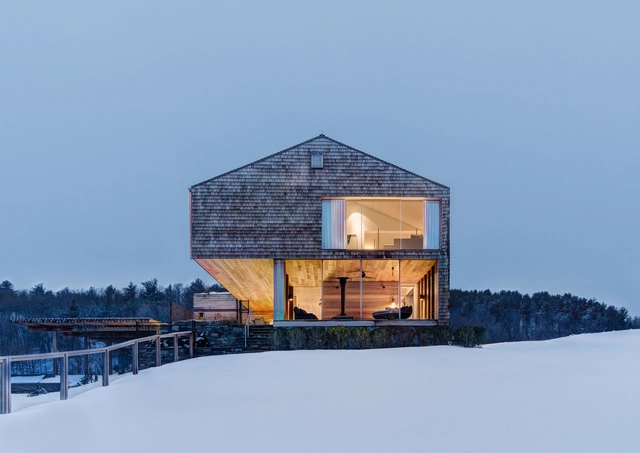
New York's residential design culture extends far beyond the Big Apple. The Hudson Valley is a region that stretches along the Hudson River from Westchester County to Albany. Known for its vineyards, orchards and farms, the river valley includes a series of small towns and remote homes. Today, these rural residences are being designed to explore the connections between people, nature and place.
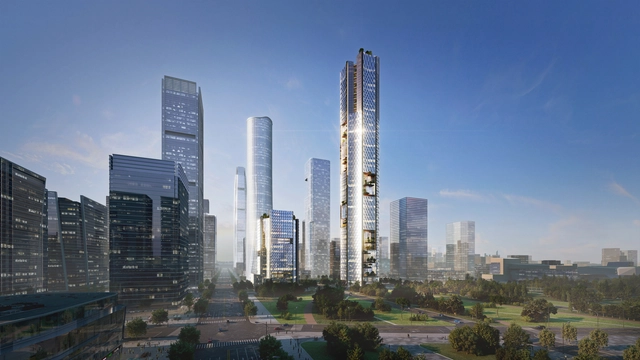
Büro Ole Scheeren has won an international design competition to build the 350-meter Nanjing Jiangbei New Financial Center Tower in China. The octagonal-silhouette skyscraper merges local tradition and culture within a mixed-use structure, aiming to become an iconic symbol of Nanjing’s new urban identity.
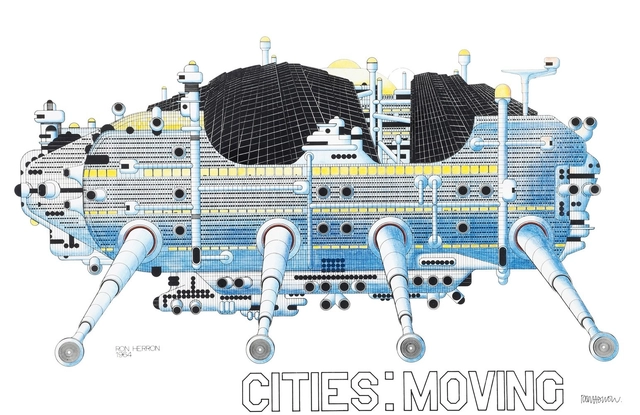
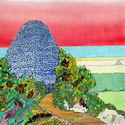
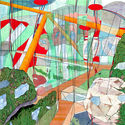
There’s the iconic Cenotaph for Newton drawing, the evocative monochrome illustration by Etienne-Louis Boullée. There are the experimental drawings of Lebbeus Woods, evocative urban visions of a distant future. There are also the well-known drawings of Le Corbusier’s utopian Ville Radieuse. Drawing, and in turn architectural visualizations, have always been a useful medium with which to contemplate architectural concepts of the future. It is fascinating to look back at the architectural visualizations of the future done in the past.
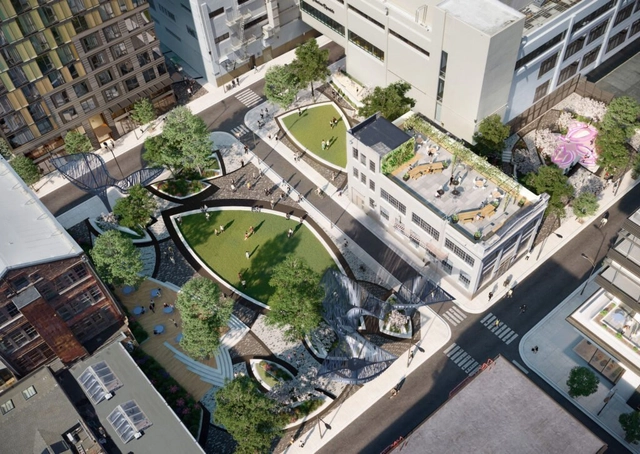
The chance to reimagine a four-and-a-half-acre site containing both historic buildings to be preserved and lots slated for development in a major American city is rare. For the team behind 5M, a project on a nodal site in downtown San Francisco, this prospect came with exciting potential to engage with all aspects of community building and place making. Completed by SITELAB, KPF, and a host of other firms, 5M reveals a transformed, multi-use downtown site following a decade-long process.
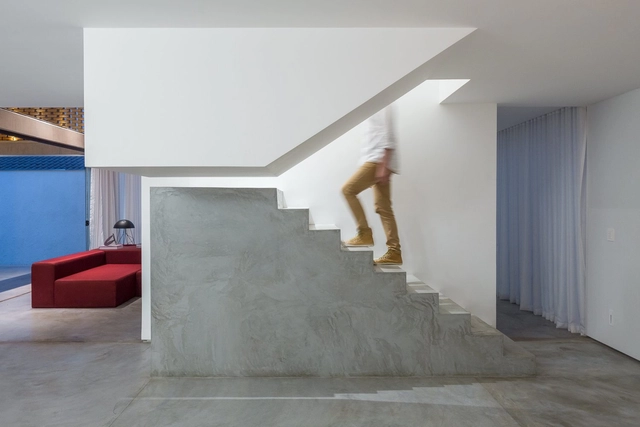
Whether to mark a change of direction, to highlight its first steps or its own presence in a room, stairs that combine two or more materials tend to draw attention by establishing dialogs between particular characteristics of each material. Concrete, steel and wood are some of the most common choices to compose the structure of stairs due to their high strength and versatility. But, when combined, these different materials expand their individual possibilities and reveal how the design can be tailored to their peculiarities and connections.
The combination of textures, colors, and finishes among materials can provide a number of creative solutions for these elements used for vertical circulation, as shown in LÂM’s Home, by AD+studio and House 9A, by 23o5Studio, characterized by stairs with a sturdy and rough base that meets a light and sleek structure of steps. The opposite composition order, a lighter base that meets a robust set of steps, thrives ingeniously in Luis Carbonell's Casa Chulavista and messina | rivas' Angatuba House, where the light wooden stairs' base is followed by raw concrete steps.
Circular Dimensions x Microscape by Cris Cichocki. Photo by Lance Gerber. Image Courtesy of Coachella Valley Music & Arts Festvial
The Coachella Valley Music and Arts Festival 2022, an annual festival held in the Colorado Desert in Indio, California, has opened to the public on Friday April 15th with immersive installations by 11 international architects, artists, and designers. Through explorations of scale, light, sound, and colors, the contextual installations explore global themes such as connectedness, environmental sustainability, immigration, social behavior and architecture, pop culture, and the community, and will be on display on April 15-17 and April 22-24, 2022.
Danish architecture practice Schmidt Hammer Lassen revealed the winning design of an international competition for the world’s tallest residential timber building. Located in the Swiss city of Winterthur, the 100-metre tall Rocket&Tigerli tower developed in close corporation with the local Swiss architecture studio Cometti Truffer Hodel echoes the 19th-century industrial architecture of the surrounding area through its facades of dark red and yellow terracotta bricks. The project proposes a variety of residential typologies and amenities that are set to create a vibrant neighbourhood.


_Studio_Gang.jpg?1650877866&format=webp&width=640&height=580)
_Studio_Gang.jpg?1650877933 "© Studio Gang")
_Studio_Gang.jpg?1650877902 "© Studio Gang")
_Studio_Gang.jpg?1650877802 "© Studio Gang")
_Studio_Gang.jpg?1650877866)
.jpg?1650379701&format=webp&width=640&height=580)




.jpg?1649183431&format=webp&width=640&height=580)
.jpg?1650549341&format=webp&width=640&height=580)
Adam_Mork.jpg?1650549635 "MAD Architects, Harbin Opera House, Harbin, China, 2015. Image © Adam Mørk")


_schranimage.jpg?1650549533 "Studio Zhu Pei, Jingdezhen Imperial Kiln Museum, Jingdezhen, Jiangxi Province, China, 2020. Image © schranimage")
.jpg?1650549341)
.jpg?1650608161)


.jpg?1650608161)
















.jpg?1650442901&format=webp&width=640&height=580)
.jpg?1650442892 "Circular Dimensions x Microscape by Cris Cichocki. Photo by Lance Gerber. Image Courtesy of Coachella Valley Music & Arts Festvial")
.jpg?1650443789 "The Playground by Architensions, photo by Lance Gerber. Image Courtesy of Coachella Valley Music & Arts Festvial")
.jpg?1650443636 "Mutts by Oana Stănescu, photo by Lance Gerber. Image Courtesy of Coachella Valley Music & Arts Festvial")
_by_Mart%C3%ADn_Huberman__photo_by_Lance_Gerber__courtesy_of_Coachella_Valley_Music___Arts_Festvial_(2).jpg?1650443369 "Cocoon (BKF + H300) by Martín Huberman, photo by Lance Gerber. Image Courtesy of Coachella Valley Music & Arts Festvial")
.jpg?1650442901)


