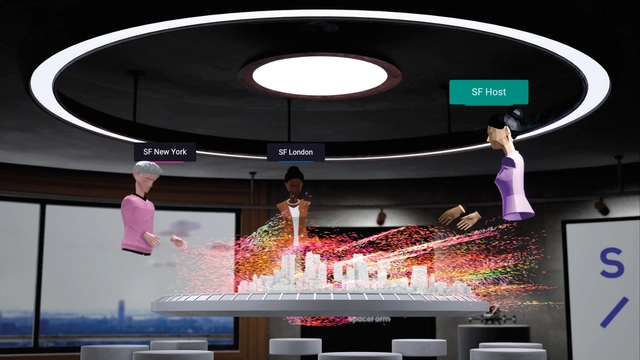
Metaverse is the name used to name an immersive, collective and hyper-realistic virtual environment, where people will be able to live together using 3D customized avatars.
It was coined by writer Neal Stephenson in his science fiction book “Snow Crash”, published in 1992. The work tells the story of “Hiro Protagonist”, a character who in real life is a pizza delivery boy, but in the virtual world – called metaverse in the story – is a samurai.
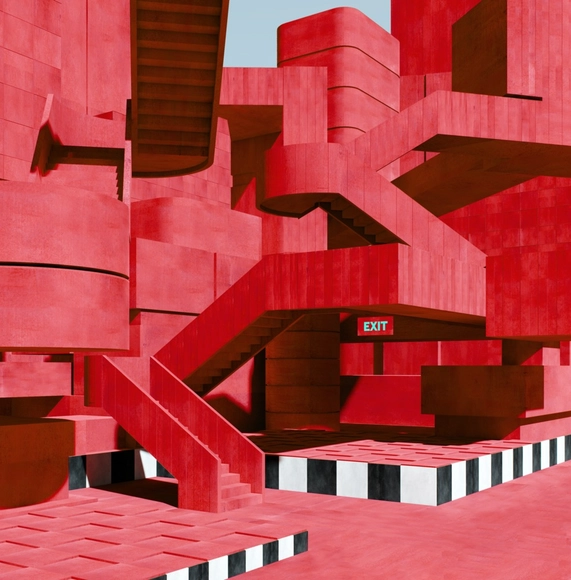
Beyond hyper-realistic renders and accurate depictions of what projects look like once completed, visualizations have become tools to communicate atmospheres and emotions portrayed by architects. The use of mixed media, combined with architectural compositions, art, lighting, and oftentimes music, have generated a new genre of architectural storytelling, one that combines reality with imagination. And as the world immerses in NFT's and experimenting with cutting-edge technologies to create digital environments, visualizations might soon become "the new reality".
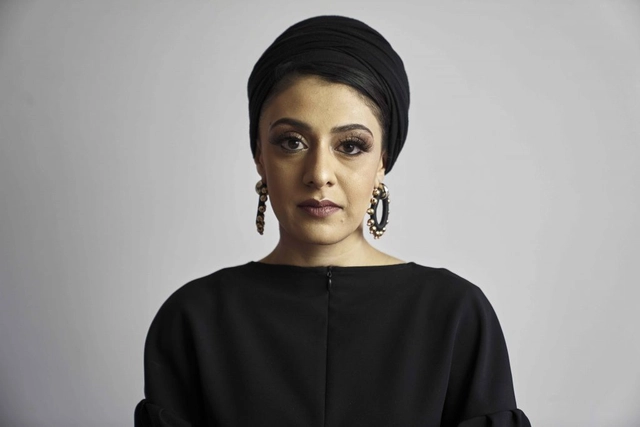
ArchDaily had the opportunity to talk to Visual Artist Ceren Arslan about branching out from the architecture practice, how she describes her creative process, her latest project EXIT, and what the future holds for architectural visualizations.
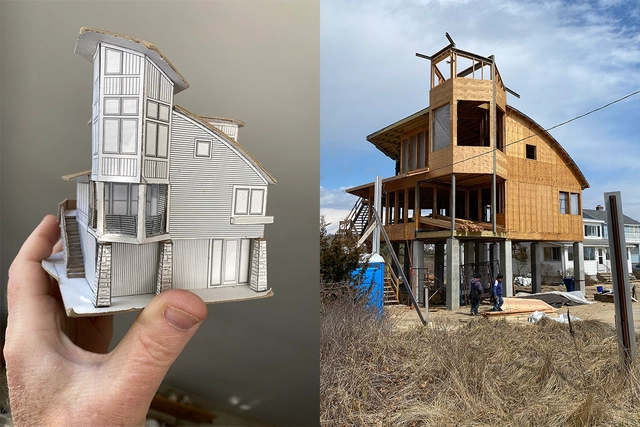
Model and Photograph. Image Courtesy of Duo Dickinson
We deal with buildings every day. We sleep in them, work in them, live our lives using their accommodation. But like a song or a painting, a person usually helps create them, with those who use and build them, then the world receives that work. But before they are built, buildings are just ideas.
The European Centre for Architecture Art Design and Urban Studies and The Chicago Athenaeum: Museum of Architecture and Design have announced the winners of the "Europe 40 under 40" program for 2021-2022. The selection gathers emerging architectural and design talents spread across Europe from Albania, Austria, France, Greece, Ireland, Italy, Poland, Portugal, Russia, Spain, The Netherlands, and Turkey.
“During these challenging times, it is crucial to keep insightful visions alive. Presenting Europe’s most hopeful personalities in the fields of architecture and design is what gives us hope for a better tomorrow”, explains the official brief. Providing an insight into the architectural scene in Europe, the program initiated by The European Centre highlights the next generation of young architects, landscape architects, urban planners, and industrial designers currently under the age of 40, who will impact future living and working environments, cities, and rural areas.
Diriyah Biennale Foundation recently revealed the curatorial team of Saudi Arabia's inaugural Islamic Arts Biennale, highlighting the past and present art of the Islamic culture. Among the curators is Sumayya Vally, co-founder of Johannesburg-based practice Counterspace, responsible for designing the 2021 Serpentine Pavilion. Taking place in Jeddah in early 2023, the Islamic Arts Biennale will foster artistic exchanges and further establish Saudi Arabia's status within the art scene.
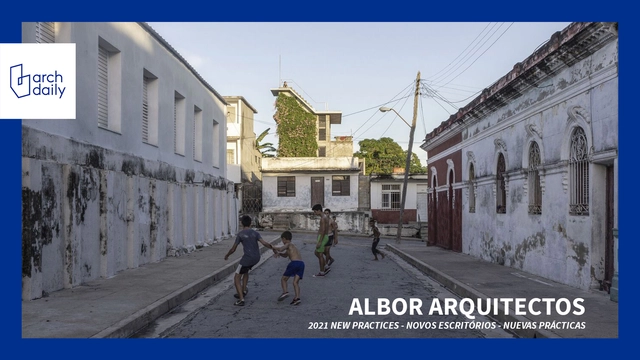
Albor Arquitectos is a Cuban architecture studio founded in 2016 by Carlos Manuel González Baute, Alain Rodríguez Sosa, Camilo José Cabrera Pérez and Merlyn González García. They say that building in Cuba is a complex task, a growing challenge due to the lack of materials, high costs and restrictions on the independent practice of the profession.
Even in this context, their work, such as Casa Soporte, Casa Casita and El Apartamento, stands out for the continuity of the inherited city, the rediscovery of construction techniques and an architecture based on proximity to the people and the prevailing social reality.
Selected by ArchDaily as one of the New Practices of 2021 and recently winner of second place in the Building of the Year Award 2022 for their project Casa Torre, we conducted the following interview to tell us more in detail about all their inspirations, motivations and ways of working from Cuba.
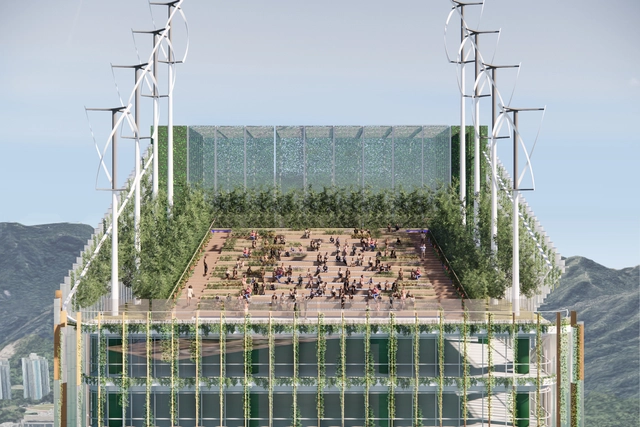
Torre Taikoo Green Ribbon / ARUP. Image Cortesia de ARUP
Discussing carbon neutrality in architecture should not only be based on local materials and new technologies, since there are many aspects that impact the construction production chain. From design to construction, without losing sight of the context and economic system of our society, the construction industry is responsible for a considerable part of the energy consumed worldwide. In order to interfere in this reality, it is necessary to expand the fronts of action, questioning the place of construction in our society.
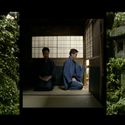
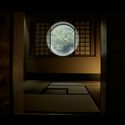
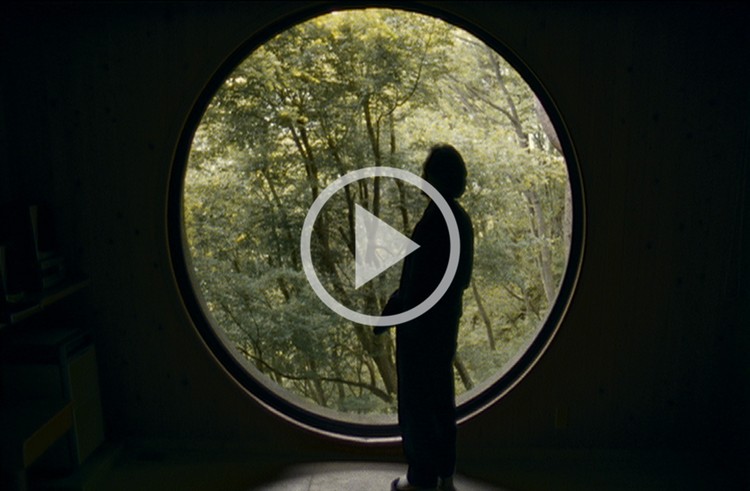
‘’In the background there is still invisible Japanese tradition’’, expresses Kisho Kurokawa, in an excerpt from the film ‘Kochuu’. He puts an emphasis on Japanese tradition, an architectural tradition that rejects symmetry despite the utilization of high-tech. He contemplates the Nakagin capsule tower (1972) a mixed-use residential and office tower located in Tokyo, Japan. The first of capsule architecture built for practical and permanent use.
Jesper Wachtmeister’s‘Kochuu’ is based upon the influence and origins of Modernist Japanese architecture. Through visions of the future, tradition and nature, it amplifies elements of Japanese tradition and its impact on Nordic design. The narrative tells us of how contemporary Japanese architects strive to unite the ways of modern man with old philosophies to create anew.
Pelli Clarke & Partners, in collaboration with Sichuan Provincial Architectural Design and Research Institute (SADI), won the international competition for the new Yibin Station Gateway Development masterplan. The project responds to the city's prospective status as a significant transportation hub, with two new high-speed rail lines planned to intersect in Yibin, making the city a crossroad between Western China's four major urban centres. The design takes inspiration from the neighbouring bamboo forest and its rhizomatic root system, focusing on resilience and interconnectivity.
Founded in 1997, the São Paulo architecture firm Andrade Morettin Arquitetos Associados began with a partnership between Vinicius Andrade and Marcelo Morettin, which later included the architects Marcelo Maia Rosa and Renata Andrulis. Today, the office has more than two decades of history and a wide range of activities.
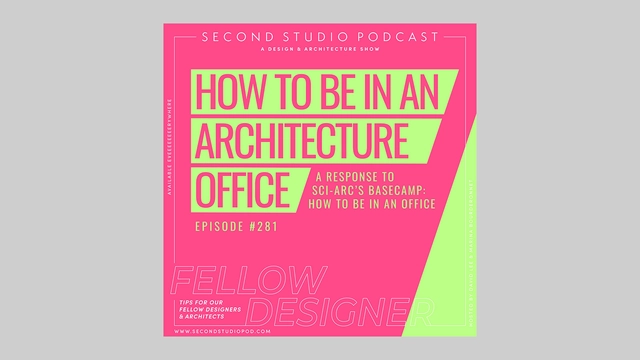
The Second Studio (formerly The Midnight Charette) is an explicit podcast about design, architecture, and the everyday. Hosted by Architects David Lee and Marina Bourderonnet, it features different creative professionals in unscripted conversations that allow for thoughtful takes and personal discussions.
A variety of subjects are covered with honesty and humor: some episodes are interviews, while others are tips for fellow designers, reviews of buildings and other projects, or casual explorations of everyday life and design. The Second Studio is also available on iTunes, Spotify, and YouTube.
This week, David and Marina break down SCI-Arc's controversial panel "Basecamp: How to be in an office" and share their own advice on "how to be in an office”. The two discuss choosing the right office to work at; why the idea of committing to an office is right, but also wrong; why side hustles are not the solution to low fees and/or low pay; why just ‘getting shit done’ is not enough; why being underpaid is not just a ‘personal choice’; why the profession is struggling with low pay and long hours; and the nuances of SCI-Arc’s panel discussion.
https://www.archdaily.com/980293/the-second-studio-podcast-a-response-to-sci-arcs-basecamp-how-to-be-in-an-officeThe Second Studio Podcast
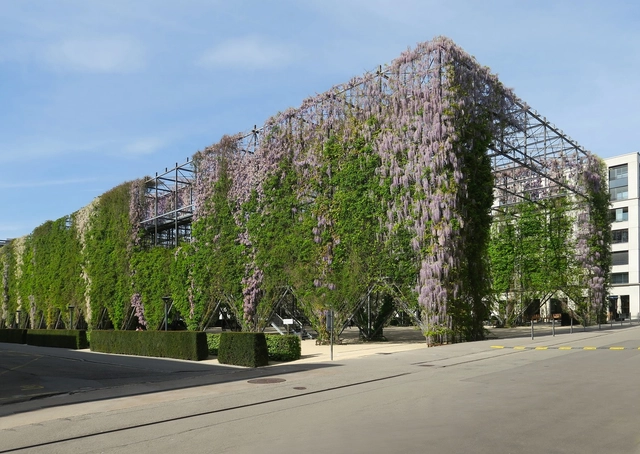
Paul Clemence’s capture of Zürich’s MFO Park is an evocative photo series for Archi-photo, demonstrating the juxtaposition between the metal shell of the man-made and the wild nature of the park itself. Vines intertwining themselves upon the skeleton of the structure create an attractive destination, replenishing the brownfield land and replacing it with a renewed and captivating image.
Zürich’s MFO park is a vibrant parkscape in Switzerland, previously a site used for around a century by the Oerlikon Machine Works (MFO). Saturated with construction debris and pollution during a long period of industrialization, it has been transformed into a green paradise with the nearby wooded Oerliker Park brimming with ash trees. Offering a diverse area of open space it is available to the public for a wide range of activities and events, with the presence of ‘Park House’, a large open hall, and trellis enveloped with climbing vegetation.
By digitizing architecture services, German firm baupal seeks to democratize sustainable and customized architecture, making design, energy assessments, permitting and cost evaluations more accessible and straightforward for private builders and smaller construction projects. Baupal is an online building application service that takes advantage of digital processes and efficient team structures to streamline design, planning and permitting processes for a range of small-scale projects.
Selected as one of Archdaily's Best New Practices of 2021, Baupal is a Berlin-based start-up co-founded in 2020 by Constantin Schmidt-Thomé, Justus Menten, and Max Schroeren with the purpose of "simplifying design and building application for everyday homeowners and their contractors. "With backgrounds in finance, entrepreneurship and architecture, the team set out to transform the design and planning approval process into a customer experience through digital and transparent workflows. The firm specializes in conversions, extensions and new single-family houses, while also providing building application services to construction companies.
After an extensive five-year restoration carried out by David Chipperfield Architects and Generali, the iconic Procuratie Vecchiein St. Mark's Square has opened again to the city, with an installation by Italian artist Edoardo Tresoldi. Titled "Monumento", the artwork responds to the new socially-driven functions presented by the vast space, "renewing the language of the monumental column and the values to which society aspires in order to reflect its own epoch".
Foster + Partners revealed the design of a new skyscraper at 270 Park Avenue that will host JPMorgan Chase’s New York headquarters. The 60-story tower is set to be the city’s largest all-electric tower with net-zero operational emissions powered by renewable energy sourced from a New York State hydroelectric plant and is designed around high standards regarding wellness and hospitality. The project’s morphology creates extensive ground-level outdoor space with green areas and a public plaza, accompanied by various amenities geared towards the neighbourhood’s residents. Under construction since 2021, the project replaces SOM's Union Carbide Building, which became the tallest voluntarily demolished building in the world.
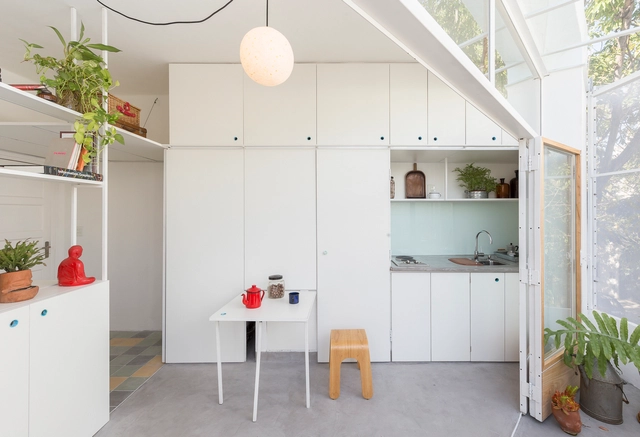
Regardless of the design adopted for kitchen spaces, for some years now and with increasing frequency, many architects have been deciding to design kitchens by integrating them into other rooms in the home. Free of dividing walls or joinery, integrated kitchens are implemented with the aim of leaving the activities that take place there in full view of everyone, encouraging interaction and communication between the inhabitants.
When the estimable Blair Kamin stepped down as architecture critic of the Chicago Tribune in early 2021, it left the city without a daily critic at any of the local news outlets. That sad state of affairs was partially corrected recently, when the Chicago Sun-Times announced that Lee Bey would begin a monthly architecture column. The writer, historian, photographer, and critic brings a wealth of experience to the task: he was architecture critic for the Sun-Times for five years in the late 1990s, served as deputy chief of staff for planning and design in Mayor Richard M. Daley’s administration, directed governmental affairs at SOM, and taught at IIT. His most recent book is Southern Exposure: The Overlooked Architecture of Chicago’s South Side. Last week I talked to Bey about the new role, how the city has changed since his last stint as a critic, and the unique importance of architecture to the city.
Cladding systems have important functions in buildings. They can confer thermal insulation, protect internal spaces from the weather and–just as important–give the building a "face", improving its appearance and clearly identifying the element of design. "Cladding" refers to the components that are linked to the structure of a building to form non-structural external surfaces. While in the past wooden cladding was the only option, there are currently multiple possibilities of materials, colors, weights, textures, anchoring systems, and many other variables available. Below, we outline some of the main materials used for façade cladding, and the projects that use them in a remarkable way: