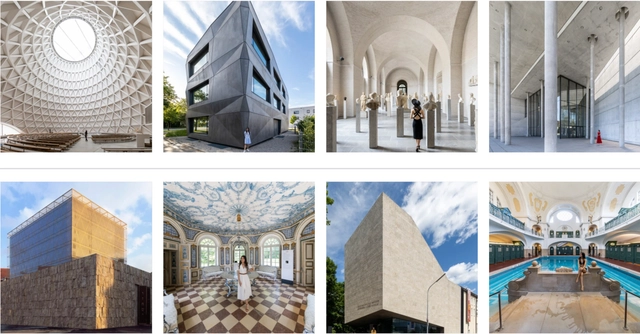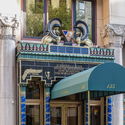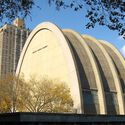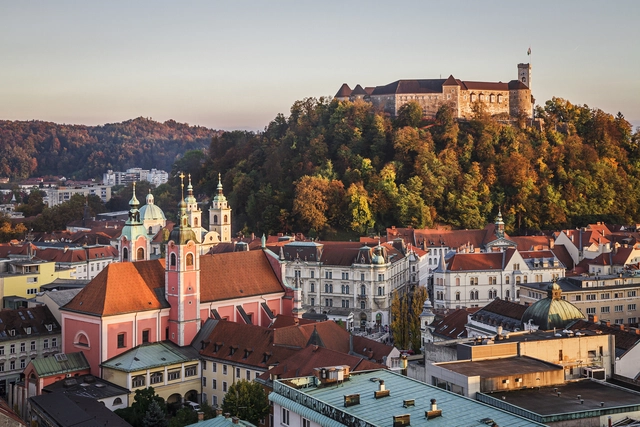
Ljubljana is Europe’s little secret. This small capital city (less than 300,000 inhabitants) is perhaps surprisingly big in terms of architecture, and the variety of its built history makes it a mandatory stop in your architectural journey. From richly painted churches to sobering Brutalism. From classical Baroque and Habsburg-inspired architecture to delightful Art Nouveau façades and interiors. And of course, abundant greenery (Ljubljana is Slovenia’s – and now Europe’s – green capital) and food.
Ljubljana is a city that has many layers. Its beginnings as a Roman city are still visible (a wall, the world’s oldest wooden wheel, and the roads in and out of the city to name a few). Its contemporary vestiges might have aged, but their meaning hasn’t – think of the Republic Square or Brutalist petrol stations. It’s when we visit in person that we are able to truly feel these places and understand these layers.
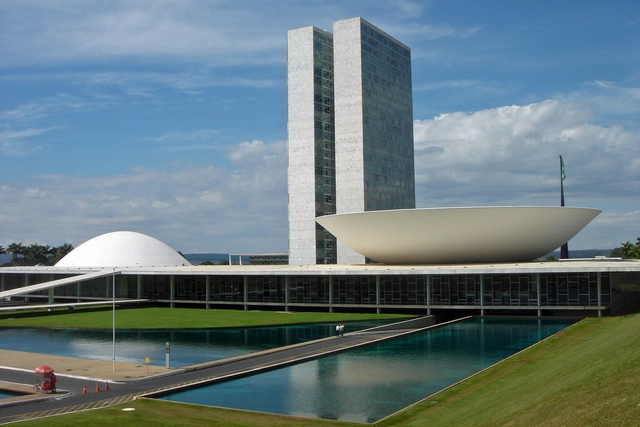
National Congress. Photo by Mario Duran-Ortiz, via Flickr. CC BY-SA 2.0 license
From the 19th century onwards, with the Industrial Revolution, the growing population, and the ever-more pressing demands for urban space in Europe, the first reflections on the city emerged. More than that, the process of disciplinary structuring of urban design begins as a theory and practice inherent to the new historical moment that was being consolidated and would have its product, concerning cities, as an attribute of the 20th century. Within this disciplinary logic, configured from a social or political demand linked to militaristic pretensions of order and urban control, the 20th century was the stage for the entire development of this industrial society, which had the city as its horizon.
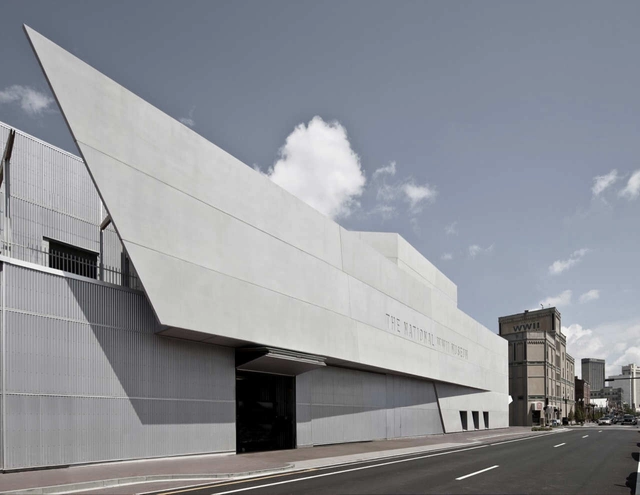
Home to architectural styles spanning almost three hundred years, the is no city like New Orleans. The meld of French, Spanish, and Caribbean architectural influences, in conjunction with the demands of the hot and humid climate, has impacted the urban fabric as much as the culture itself. Located along the Mississippi River and close to the Gulf of Mexico coast, the construction of ports, NOLA’s trading history, and forceful natural phenomena like Hurricane Katrina in 2005 illustrate how water has shaped the city.
Following Hurricane Katrina, Orleans adapted its values to respond to the changing needs of its recovering community. Although reconstruction is not only architectural responsibility, New Orleanspublic architecture has contributed to revitalizing and reinhabiting the city after the disaster. Museums, parks, and churches, each of these places connects people to each other in ways that define and support community.
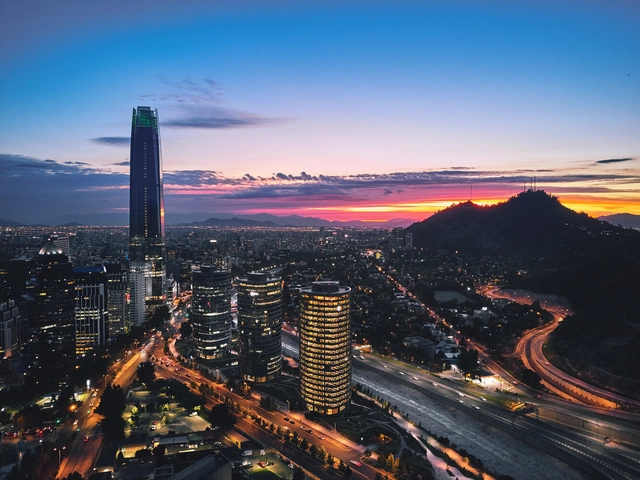
Founded in 1541 by the Spanish conquistador Pedro de Valdivia on indigenous settlements in the valley of the Mapocho River, Santiago is the capital and most populated city of Chile. This South American city is enframed by the Andes Mountains to the east and the Chilean Coast Range to the west, in addition to 26 island hills (cerros islas) scattered throughout the city. Some of these island hills have been converted into urban parks, such as Santa Lucía and San Cristóbal, while Chena, Calán, and Renca are in the process of expansion.
Byzantium, Constantinople and now Istanbul, the many names this city has had over the centuries are proof of the central role it has played throughout history. Founded by Greek settlers in the 7th century, the city served as an imperial capital for a cumulated period of over 1600 years. During the Roman/Byzantine, it played a crucial role in the advancement of Christianity before its transformation into an Islamic center and becoming the sear of the Ottoman Caliphate. Today, Istanbul is a vibrant city with a rich cultural scene and multiple historical layers to be discovered.
Straddling the Bosphorus strait, the city lies in both Europe and Asia, integrating architectural masterpieces that reflect the meeting of European and Asian cultures over the centuries. As the largest city in Turkey with a population of over 15 million residents, Istanbul also serves as the country’s economic, cultural, and historic center. Istanbul is the 15th largest city and the eighth most visited city in the world. The city is also home to several UNESCO World Heritage Sites.
Situated on the coast of the Mediterranean Sea, Beirut is one of the oldest cities in the world that has been shaped throughout its 5,000 year history by Phoenicians, Romans, Greeks, and the Ottomans. The Lebanese capital has been for decades a cosmopolitan city and a focal cultural and geographical link between Europe and the Middle East.
Often labeled as a resilient city, Beirut has been subject to numerous devastating events throughout its history, from a brutal 15-year civil war to one of the biggest non-nuclear blasts in history. Nowadays, the city boasts a skyline full of contrasts, where contemporary buildings rise alongside Ottoman, Roman, and Byzantine ruins. Its architecture, along with its renowned cuisine, distinguished night life, archaeological sites, and hospitable people have reclaimed it as a sought-after touristic destination.
The capital of South Korea, officially known as Seoul Special City, is the largest metropolis in the country. From modern skyscrapers, high-tech subways, and expressions of pop culture, to traditional temples, palaces, and pagodas, Seoul is a captivating melting pot of old and new that all are guaranteed to enjoy.
If you plan on visiting Seoul and taking in most of what the vibrant city has for locals and tourists alike, the following list features 30 unique projects for you to indulge in and explore, providing you with a starting point for your metropolitan travels.
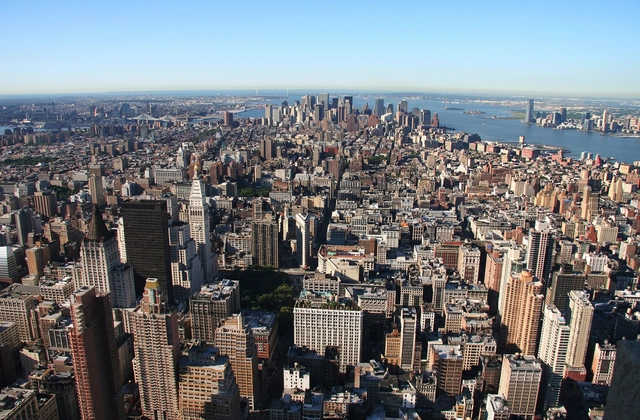
“A hundred times have I thought New York is a catastrophe, and fifty times: It is a beautiful catastrophe.” Le Corbusier. This architecture city guide celebrates Modernism in one of the world's greatest cities: New York. We embark on an architectural journey through nearly a century of innovative, revolutionary architecture: from early 20th century, revivalist Beaux-Arts; to machine-age Art Deco of the Inter-War period; to the elegant functionalism of the International Style; to the raw, exposed Brutalism characteristic of the Post-War years; and, finally, to the splendid forms of organic architecture. From world-renowned landmarks to undiscovered jewels, we invite you to explore the 2,028 blocks that make Manhattan an architectural mecca for citizens around the world.
As the largest city in the United States, New York City is one of the most diverse and vibrant cities in the world, recognized by many as the center for global media, culture, fashion art, and finance. The city was founded in 1624 by settlers from the Dutch Republic and has since grown into “the city that never sleeps”.
While almost every style of architecture exists in New York City, the metropolis is most well known for its skyscrapers, both in historical styles such as Neoclassical and Art Deco and in their varied contemporary expressions. The first building to bring the world's tallest title to New York was the New York World Building, in 1890. Later, New York City was home to the world's tallest building for 75 continuous years, starting with the Park Row Building in 1899.
In 1782, Bangkok became the capital of Siam – as Thailand was previously known. Its strategic position within the protective curve of Chao Phraya River to the West and the vast, swampy delta of the Sea of Mud that secured the city to the East was key. King Rama I modeled the new city on what had been the urban reference of Thailand since the 14th century: Ayutthaya, which by 1700 had become the largest city in the world with a total of 1 million inhabitants.
Bangkok progressively saw the construction of temples (wats), schools, libraries and hospitals. However, few other typologies were erected and the city lacked significant paved streets. Instead, the river and a network of interconnected canals served as the transport infrastructure of the city. With time, the floating houses anchored along the riverfront decreased and the pavements spread.
One of the world's leading metropolises, Tokyo is home to extraordinary architecture that fascinates through its blend of traditional values and high-tech expression. The 1923 earthquake and the bombardments of World War II dramatically influenced the image of the city and its architecture, giving rise to modern urban environments with complex infrastructure.
The Japanese capital constitutes the most populated metropolitan area in the world, housing 33 million inhabitants. Divided into 23 wards and numerous neighbourhoods, the city features a diverse blend of atmospheres and urban fabrics that support an amalgamation of architectural typologies.
Compared to that of the West and East, awareness and knowledge of the architecture of sub-Saharan Africa—Africa south of the Sahara Desert—is scant. A new book intends to mitigate this oversight, and it’s a significant accomplishment. Architectural Guide Sub-Saharan Africa (DOM publishers, 2021), edited by Philipp Meuser, Adil Dalbai, and Livingstone Mukasa, was more than six years in the making. The seven-volume guide presents architecture in the continent’s 49 sub-Saharan nation-states, includes contributions by nearly 340 authors, 5,000 photos, more than 850 buildings, and 49 articles expressly devoted to theorizing African architecture in its social, economic, historical, and cultural context. I interviewed two of the editors—Adil Dalbai, an architectural researcher and practitioner specializing in sub-Saharan Africa, and Livingstone Mukasa, a native Ugandan architect interested in the intersections of architectural history and cultural anthropology—about the challenges of creating the guide, some of its revelations about the architecture of Africa, and its potential impact.
https://www.archdaily.com/979526/a-remarkably-comprehensive-new-guide-to-the-architecture-of-sub-saharan-africaMichael J. Crosbie
Amsterdam is one of the most beautiful cities in Europe. Its origins lie in the 12th century when fishermen living along the banks of the River Amstel built a bridge across the waterway near the IJ, then a large saltwater inlet. Most of the city’s territory is below sea level and therefore it lies on land that has been reclaimed from the water.
Amsterdam is all about practical urban planning, amazing cycling infrastructure, tulip-lined canal bridges, and old merchant houses that tilt at impossible angles. I visited Amsterdam again last year and discovered some new places.
On August 12, 1833, the Town of Chicago had roughly 200 inhabitants. Four years later, in 1837, it was upgraded to The City of Chicago – an interesting fact given that there are still 19 incorporated towns in Illinois. The Great Chicago Fire of 1871 killed 300 people, destroyed about 3.3 square miles (9 km2), and left more than 100,000 residents homeless. However, by that time Chicago had become the world’s fastest-growing city and its population had risen over 300,000 inhabitants. The fire meant these ambitious citizens had to start again.
With admirable strength, the city was reborn from the ashes and some of Chicago’s best architecture was constructed immediately after. Structures like the Rookery Building (1888, Frank Lloyd Wright), the Auditorium Building (1889, Louis Sullivan) and the Monadnock Building (1893, Burnham & Root, Holabird & Roche) are a few examples of the high standards the city was aiming for.
The historical Roman town has been busy at work and new exciting buildings, squares, and public parks have bloomed across the city. Since my first trip to Zürich in 2014, a lot has happened around good old Turicum.
After a compelling trip organized by Visit Zürich and my friend Philipp Heer, we were able to visit some of the newest, most interesting and uplifting places of the city. Flitting hither and thither, Roc Isern, David Basulto, and I enjoyed the privilege of a tailored itinerary, access to Zürich's gems, and perhaps the most inspiring, the architects behind these amazing structures.
Paris, the city that was born on the banks of the Seine, grew from a small island – Île de la Cité – to the vast metropolis that nowadays extends beyond Ménilmontant, the vingtième arrondissement.
The French capital has so much to offer. Centuries of history have left behind meaningful structures which also have been the background of love stories, wars and revolutions. Whether you are seeking to admire hidden spots, the well-known landmarks and jewels soon to be opened, or filling your personal story with them, you'll find everything you want in this city.
This list, in no particular order, aims to provide some guidance and inspiration for your next trip to Paris. If you love architecture, dear friend, look no further.
Santa Caterina Market by Enric Miralles and Benedetta Tagliabue. Image Courtesy of Miralles Tagliabue EMBT
In Barcelona, the cradle of contemporary urbanism, the landscape is enriched with endless layers of history. Since its first settlers, Roman colonists, generation after generation built here, one on top of another.
Romans, Visigoths and a brief Islamic period are still embedded within the city's prettiest streets. These old architectural stories are delightfully present nowadays. At first glimpse, the traveler can spot a 14th century stone cathedral coexisting with a computer-generated undulating structure – in harmony. Not many cities manage temporary tension as good as Barcelona.
When members of the Bauhaus school fled Germany, many of these talented visionaries made their way to Tel Aviv. At the time, the city was in its fledgling stages and served as the ideal blank canvas for this idealistic concept. Today, the city boasts over 4,000 Bauhaus buildings and has earned distinction as a UNESCO World Cultural Heritage site. Last year, for the 100th anniversary of Bauhaus, the city opened the White City Center in partnership with the German government to actively promote the preservation of this iconic architectural style. The White City Center hosts exhibitions where visitors can learn more about this iconic style. The Bauhaus Center is also worth a visit and hosts weekly guided tours on Fridays for a small fee. For those who are planning a visit here’s our list of the top six must-see Bauhaus buildings in Tel Aviv.
https://www.archdaily.com/932625/tel-aviv-city-guide-6-bauhaus-buildings-to-see-in-the-white-cityThe White City Center