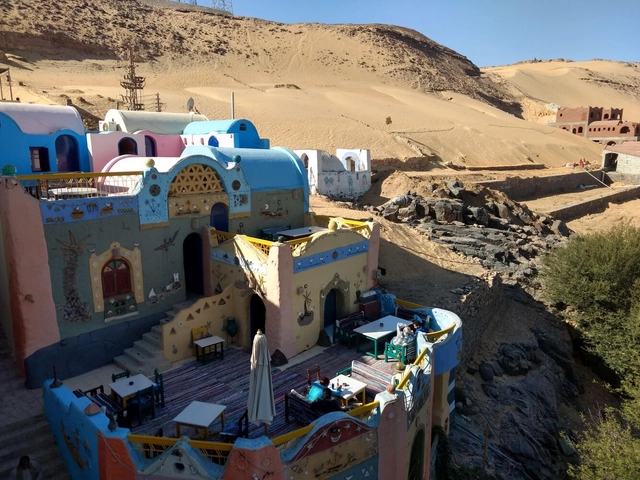
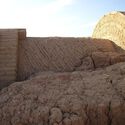
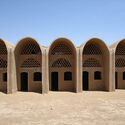
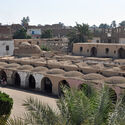
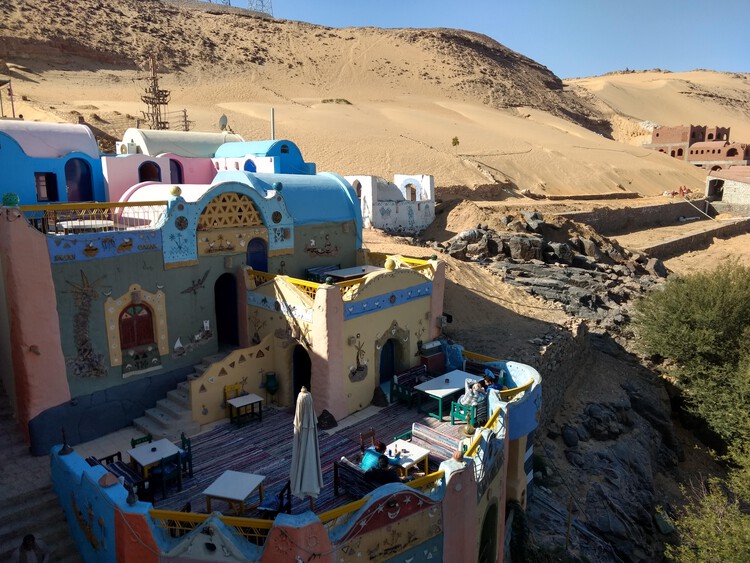
The colorful houses of Aswan in the south of modern-day Egypt attract tourists who venture that far up the River Nile. Accessed by small river boats, islands like Suheil West are the homes of Nubian communities, some of whom had had to relocate after the building of the Aswan High Dam in the 1960s. Behind the picturesque views of plastered walls covered in murals and motifs, perched on rocky hills overlooking the Nile, is a construction technique used locally for centuries. It uses locally sourced materials, conserves nature, and regulates internal temperatures against the heat in the day and the cold at night.
Videos
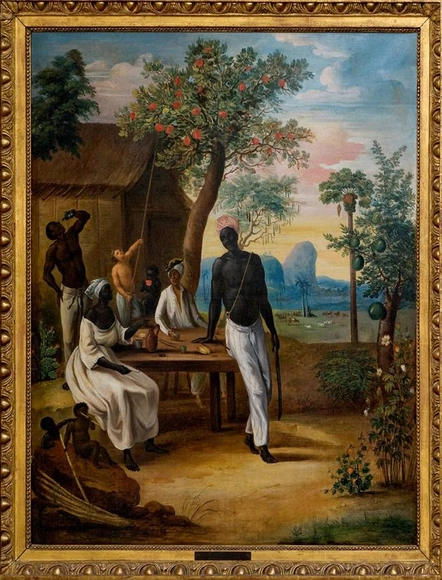
Le Masurier (documenté en 1769-1775). Esclaves noirs à la Martinique, 1775. Huile sur toile – 125 x 106 cm. Paris, ministère des Outre-mer / Archives nationales. Image Courtesy of Archives nationales
The institution of slavery shaped landscapes on both sides of the Atlantic Ocean. And in turn enslaved and free Africans and their descendants created new landscapes in the United States, the Caribbean, and Sub-Saharan Africa. African people had their own intimate relationships with the land, which enabled them to carve out their own agency and culture.
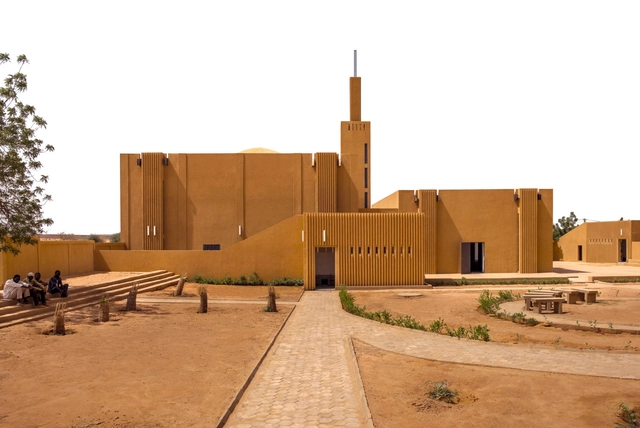
Compared to that of the West and East, awareness and knowledge of the architecture of sub-Saharan Africa—Africa south of the Sahara Desert—is scant. A new book intends to mitigate this oversight, and it’s a significant accomplishment. Architectural Guide Sub-Saharan Africa (DOM publishers, 2021), edited by Philipp Meuser, Adil Dalbai, and Livingstone Mukasa, was more than six years in the making. The seven-volume guide presents architecture in the continent’s 49 sub-Saharan nation-states, includes contributions by nearly 340 authors, 5,000 photos, more than 850 buildings, and 49 articles expressly devoted to theorizing African architecture in its social, economic, historical, and cultural context. I interviewed two of the editors—Adil Dalbai, an architectural researcher and practitioner specializing in sub-Saharan Africa, and Livingstone Mukasa, a native Ugandan architect interested in the intersections of architectural history and cultural anthropology—about the challenges of creating the guide, some of its revelations about the architecture of Africa, and its potential impact.
https://www.archdaily.com/979526/a-remarkably-comprehensive-new-guide-to-the-architecture-of-sub-saharan-africaMichael J. Crosbie
African nations are fighting climate change with an 8,000 kilometer long Great Green Wall meant to combat the desertification of the Sahel region, home to over 100 million people. Spanning the entire width of the African continent, the movement aims to restore 100 million hectares of degraded land, sequester 250 million tonnes of carbon and create 10 million jobs in rural Africa by 2030. Stretching from Senegal in the West to Djibouti in the East, the project is the joint effort of 21 African nations that strive to restore the once lush region and protect the livelihoods of local communities.
"Kaira Looro Competition" is an international architecture competition aimed at raising awareness of the international community towards emerging architecture in developing countries. The new edition of the competition has as its theme is to create a pavilion for the promotion of universal peace which inspires contemplation, reflection, and prayer for those who unjustly lost their lives. The competition is organized by the Nonprofit Organization “Balouo Salo” engaged in Africa for humanitarian projects of architecture and support of disadvantaged communities, with the collaboration of the University of Tokyo, Kengo Kuma & Associates, Direction de la Culture de Sedhiou, Conseil Municipal de Sedhiou and others relevant parts.
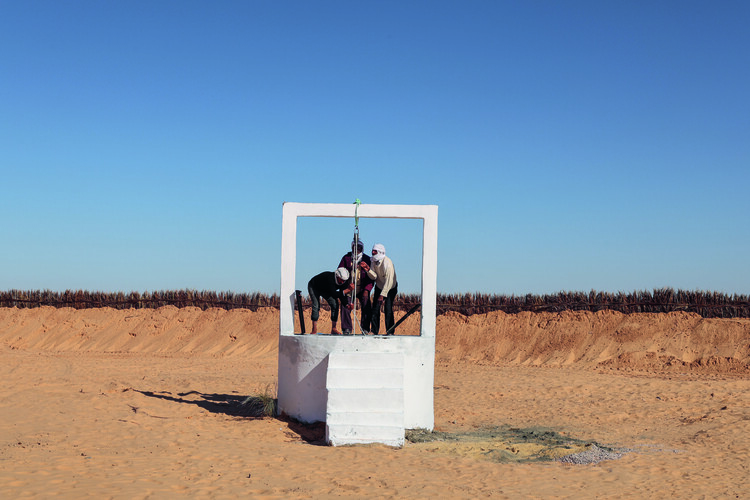
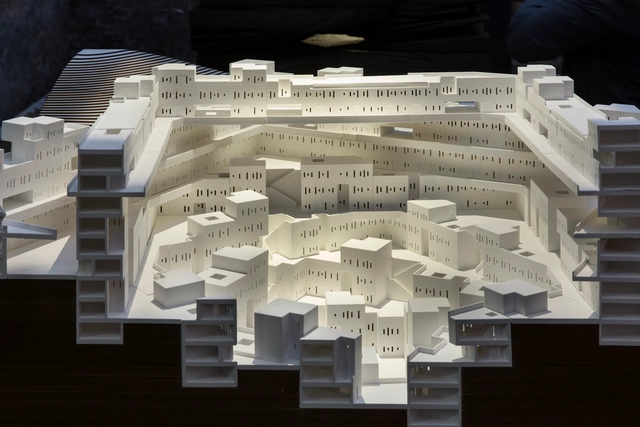
The Pavilion of Morocco at the 14th Venice Biennale, Fundamentals, focused on territorial speculations in the Sahara: Inhabiting the Uninhabitable. For the exhibition, which was the country's first representation at the Biennale, Paris-based practice OUALALOU+CHOI proposed an urban structure for this desert territory – "a means of putting down roots, implanting urbanity and civilization. The Sahara, with its extreme geography and climatic conditions, remains unexplored territory for architectural speculation."
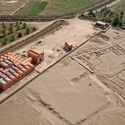
Since time immemorial, and more recently, humans have wondered what the world looks like from above. This fascination has historically manifested in the plan drawing and aerial photography. In this vein, and using a motorized paraglider, National Geographic photographer George Steinmetz has captured a stunning bird’s-eye view of the ancient city of Ghadames, in Libya.